Catching Up on MediaPolicy – #CanCon defined – streamer love and marriage – Rogers v Rogers

February 25, 2024

There’s been a burst of opinionating on the definition of “CanCon” programs. I thought I would get in on it. This week MediaPolicy posted Rule Canadiana: let’s experiment with the Canadian Content test. Carefully.

***

I am BritBox binging on movies staging Jane Austen novels. The plots invariably centre on the rotisserie of marriage courting. This is a handy segue to the spate of recent news in which Hollywood streamers search for partners, the most recent rumour concerning Viacom-owned Paramount and Comcast NBC Universal’s Peacock getting together.

Just before Christmas, the rumour was Paramount and Warner Bros Discovery (owners of HBO) hitching up. So Austen. If you know the books, at the end of every novel, everyone gets married. Sometimes for love and sometimes for money.

That’s the latest in entertainment streaming. Over in sports, last month we told you about the recently announced streaming joint venture between Fox Sports, Warner Bros Discovery’s TNT and Disney ESPN.

The strategy is to defend market share but also to recapture broadcast rights from digital-only upstarts DAZN and FuboTV. The New York-headquartered Fubo is best known in Canada for broadcasting English Premier League matches. Fubo is objecting to this marriage, challenging the Fox-WBD-Disney joint venture in the US on grounds of anti-trust.

***

Two recommendations for this weekend.

The first is to immediately buy Alexandra Posadzki’s Rogers v Rogers. I will spare you a plot summary, most readers already know it. It’s obviously about the family civil war for control of the telecommunications and media company and the dramatic Rogers-Shaw merger.

It’s page-turning storytelling full of some surprising and humanizing anecdotes and all of the industry backstories rendered decipherable for the lay person. Above all the book leaves you with deep thoughts about organizing economic activity in such a crucial industry. Four stars.

The other recommendation is a 50 minute Press Gazette podcast; an interview with media tech guru Ricky Sutton. The first half of the podcast is Sutton ripping the Big Tech platforms for backing away from a grand bargain to voluntarily provide billions in funding to news journalism; after the break he continues with a proposed solution, bringing together news organizations to license their content to Big Tech’s AI-LLM products.

***

If you would like regular notifications of future posts from MediaPolicy.ca you can follow this site by signing up under the Follow button in the bottom right corner of the home page; 

or e-mail howard.law@bell.net to be added to the weekly update; 

or follow @howardalaw on Twitter.

Rule, Canadiana: Let’s experiment with the “Canadian content” test. Carefully, please.

February 21, 2024

The public debate over defining subsidy-worthy “Canadian programs” has revved up lately, despite the fact that the CRTC will not formally review the definition until later this year.

The conservative opinion salon The Hub ran an article this week penned by Richard Stursberg which it headlined in my Google news feed as “Canadian content is a scam.” Stursberg said no such thing, but all is fair in love, war and click bait.

Stursberg is a Canadian cultural sovereigntist (my label) who has long advocated a “cultural test” of identifiable Canadiana as the threshold for earning production subsidies, replacing the forty-year-old “creative headcount” test.

At the same time, Robert Armstrong (author of the seminal textbook, Broadcasting in Canada) published a defence to the status quo test that awards subsidy points based on the domination of key creative roles by Canadians: screenwriters, directors, lead actors and most importantly producers. The gist of the headcount policy is that Canadians will make Canadiana.

The volleyed policy argument has been around for a while, worthy in its own right. But lately it has become a political football thanks to Netflix and the Hollywood studios demanding a change in policy during the Parliamentary debate over the Online Streaming Act Bill C-11 and the CRTC’s upcoming regulatory hearings that will review whether a new subsidy test is a good idea.

The purpose of this post is to suggest that the CRTC should follow its past instincts on this complex policy file: experiment a little. There’s a lot at stake here, culturally and economically, so much so that it would be a shame to turn this policy issue into a political prize to be seized by any number of actors who are self-interested or just plain troublemakers.

I say that not just because the Conservatives have decided that a Canadiana test is a delightful opportunity to prang the government and the industry establishment. Rather, it’s important to appreciate that this game is afoot at the behest of Netflix and the other US streamers.

The streamers are trying to game the CRTC and the Canadian public by supporting a cultural test for subsidies as a trade off for abolishing the “headcount” rules for using Canadian talent once the CRTC assigns them a spending quota on offering “Canadian shows.” That’s because what they really want is to use American showrunners (writers and producers) and Hollywood stars. The paying audience they have in mind is not just Canadian, it’s global.

Netflix can and has pointed to its 2020 production of the Québec wilderness thriller Jusqu’à Declin as a good example of how authentic an American-produced (but Canadian written and acted) piece of Canadiana can be. But when Netflix and the streamers tell the CRTC they want the British cultural test to replace the Canadian headcount test, one needs to look exactly at what they propose.

The UK “35-point test” is heavily weighted to scripts with identifiable British settings, themes, characters and so on. It’s so heavily weighted that the British people are subsidizing shows that are owned and made by American producers and potentially employing Hollywood directors, screenwriters and all-American casts (in practice, it’s rarely that extreme).

The cultural test is so goofy that the “British setting” points are available on the basis of fractions: a show earns 25% of subsidy points when a quarter of the plot is visibly on British soil, scaling up by 25% increments.

Also, you have to get your head around the fact that an arms-length industry committee administers the test.

But let the UK system not be a straw person. Presumably we Canadians could come up with a better cultural test than that!

I am getting to my point, dear reader. But one more thing you need to know is that any changes or tweaks to our subsidy test requires that multiple gatekeepers get on the same page. That’s no mean feat when the layered inventory of subsidies are dispensed by Heritage Canada, the Canada Media Fund, Telefilm, and the CRTC. The governance of those bodies is complicated enough that a willing Heritage Minister would have to be heavy handed to dictate any big changes.

It’s unlikely the current Heritage Minister Pascale St.-Onge would want to do that and thank goodness because any significant shift from the headcount model to a cultural test is rife with uncertainty and unintended consequences for Canada’s domestic television and film industry, successfully nurtured over four decades.

The last time anyone tinkered with the subsidy test, it didn’t go far. Under Jean-Pierre Blais’ CRTC in 2017, the Commission experimented with pilot projects for certifying broadcasters’ “Canadian” programs that fulfilled their programming obligations.

The first was to cut in half the requirements for Canadian creators (from six to three points out of ten) if the show was based on a novel written by a famous Canadian novelist (hypothetically, Margaret Atwood’s American dystopia, The Handmaid’s Tale). But the other gatekeepers wouldn’t change their subsidy rules in response to Blais’ experiment, so it went nowhere.

An earlier CRTC innovation was to green light Canadian-American co-ventures, relaxing the CRTC rule that producers of Canadian programs must be Canadian. That generated some modest injection of Hollywood financing into Canadian programs, although the co-venture could not draw subsidies from the other funding agencies who did not relax their rules. As soon as Netflix is ordered by the CRTC to produce (a lot more) Canadian programming, the co-venture program is going to draw more attention and is likely to be reconsidered.

Here’s three other back-of-the-napkin ideas we might try as pilot projects:

1. Continue the current “headcount” test for determining 100% of subsidy funding but create a 10% bonus for meeting a thematic standard (and please don’t use the British system!).

2. Without changing the subsidy tests at Heritage, CMF or Telefilm, the CRTC could permit streamers and broadcasters to reserve a modest portion of their Canadian programming budgets to meet a cultural test only. This would be similar to the “Canadian novelist” pilot project. It would allow Netflix to put its money where its mouth is and make Canadiana without CMF, Telefilm or Heritage subsidies.

3. The CRTC, coordinating with the other funding agencies, could give Netflix et al a quota for Canadian programming that exceeds the current benchmark of 30% and the extra program spend can be cultural-only and eligible for subsidies from all gatekeepers.

There are undoubtedly flaws in these ideas that I can’t see, but in the spirit of policy innovation, some successful experimentation could help.

Even if you are with me so far, there remains one big caveat.

What would really deep-six our domestic industry is if anyone watered down the Canadian content rule that prohibits broadcasters (and now streamers) from forcing our independent Canadian film and television producers to alienate the long-term intellectual property in their creations. That’s a vital issue, but grist for the policy mill on another day.

***

If you would like regular notifications of future posts from MediaPolicy.ca you can follow this site by signing up under the Follow button in the bottom right corner of the home page; 

or e-mail howard.law@bell.net to be added to the weekly update; 

or follow @howardalaw on Twitter.

Catching Up on MediaPolicy – The future of media – Québec’s media agenda – tax laws to save news journalism

Université de Montréal law professor Pierre Trudel weighed in this week in Le Devoir

February 18, 2024

Lately we’ve been following Doug Shapiro’s futurist projections of media consumption.

In the last of his four part series he repeats his belief that the world wide inventory of consumer attention has plateaued and future media creators —-whether selling premium video or DIY niche content—-will be fighting over the same pie. He believes that in the near term future the digital platforms hosting the creator economy —YouTube, TikTok etc.— will make out like bandits. But ultimately, he says, this is not the big story.

In this last instalment, Shapiro suggests two game-changers. The first is the debut of virtual reality media which he thinks will take the market in media consumption by storm. 

The other is driverless cars which would open up a new frontier on time spent on video consumption, an attention inventory that he suggests is fixed at the moment.

As for today’s winners, including the global streamers, “the challenges are immediate and the opportunities distant.

There are some variables unaccounted for in Shapiro’s projections. For one, the consumer demand for premium video —-which he sees as a diminishing force—- might be more price inelastic than he thinks. In other words, if Hollywood and other purveyors of premium content respond to adversity by charging higher prices, we’ll pay them. The product is that good.

The other variable is the sustainability of this expansion in consumer attention. Shapiro clearly believes it is robust and reminds us that it didn’t take long for consumers to adopt online dating and online purchasing, so why not virtual reality media? On the other hand, we are entering new territory in media saturation. Supersaturation really is possible. After all, there is doting on babies and walks in the woods. Unplug, anyone? 

***

Two weeks ago we posted on the Beaudoin Report commissioned by the Québec CAQ government on a political strategy to rectify the declining availability and consumption of French language media.

I am boldly predicting this issue has legs and we will keep hearing about it. A recent column in Le Devoir by Pierre Trudel, a highly influential commentator on media in the province, suggests that the political class in Québec is coming to grips with the probability that a Pierre Poilievre government will not be the friend of Québec’s cultural goals, at least not through the federal regulation of global streaming platforms.

On that score, Trudel expresses some politely worded disappointment in federal efforts to promote French language media (which MediaPolicy has covered here ). He speculates it won’t get better, only worse, under a Poilievre-led Conservative government:

But realism requires us to keep in mind that the outcomes [of producing and promoting French language media] that will result from [Bill C-11] are largely dependent on the determination of the CRTC to apply them. In the past, the Commission has not always been enthusiastic about imposing requirements for Canadian and French-speaking presence in digital spaces.

Above all, we cannot ignore the possibility that federal power will one day be held by leaders hostile to imposing diversity and discoverability requirements on online platforms.

And the understated punch-line:

Québec must therefore use all means to guarantee effective presence and discoverability French-speaking creations from here and elsewhere.

That seems to be political code for encouraging the CAQ government to pursue the political strategy suggested in the Beaudoin Report: the CRTC must produce better results on the discoverability of French language media on global platforms or else face demands for a formal sharing of regulatory jurisdiction between Ottawa and Québec City. 

***

Still in Québec, Radio-Canada published an opinion piece from Louis Audet last week. Audet owns the cable provider Cogeco and is probably best known outside of his home province as the man who said no to Rogers.

Audet is pushing a media policy that is regaining public attention: extending current federal tax rules that favour the purchase of advertising in Canadian print media, TV and radio to cover digital advertising.

Audet’s pitch is that Canadian businesses spent $14.3 billion last year on digital advertising, of which $10 billion went to American owned platforms instead of Canadian media. He thinks that if the ban on tax deductibility of advertising expenditures on foreign media were extended to online, the ensuing diversion of advertising to Canadian media would be considerable.

Alternatively, Audet says the law could go further than just limiting tax deductibility to advertising expenditures placed with online Canadian media: governments could even provide a refundable tax credit, ultimately a cash subsidy. 

A refundable tax credit for advertising expenditures would parallel the federal government’s current program for subsidizing reader subscriptions. In effect, this is the democratization of government subsidies to media: the gatekeepers are readers and advertisers instead of governments. For those opposed to government subsidies of journalist salaries, this is intriguing public policy. 

CAQ Culture Minister Mathieu Lacombe has already suggested that Québec could move into this policy sphere based on the claim that the tax regulation of online media  is within provincial jurisdiction. 

***

Here’s a riveting weekend podcast from the New York Times‘ “Matter of Opinion“: Men are from YouTube, Women are from TikTok. It’s not really about media, it’s about politics.

***

If you would like regular notifications of future posts from MediaPolicy.ca you can follow this site by signing up under the Follow button in the bottom right corner of the home page; 

or e-mail howard.law@bell.net to be added to the weekly update; 

or follow @howardalaw on Twitter.

Catching up on MediaPolicy – Bell cuts newscasts – post Peak TV is a downer – a sports streaming mega app?

February 9, 2024

The media headliner this week was yesterday’s report of 4800 layoffs at BCE, a follow up on 1300 layoffs from June. Bell’s layoff announcement was paraded as a contribution to the good news of increased profitability and a higher shareholder dividend.

As was the case in June, the vast majority of the layoffs are on the telco side of the Bell ledger, not media. Less than 10% of the 4800 cuts are in media, according to a Bell spokesperson (there are, or were, about 5000 Bell Media employees in total).

The media layoffs will be driven by CTV eliminating television newscasts: weekday noon and all weekend newscasts are gone, except for Toronto, Montréal and Ottawa. The investigative journalism show W5 is cancelled, two years short of its sixtieth anniversary. Bell is also selling off 45 of its small market radio stations, half of its overall network.

The Globe & Mail report pegs BCE’s motives. The cuts are a response to escalating pressure on profit margins and the domino effect on share price. Defending that share price is job one and ninety per cent of the company’s activity is broadband and mobility, not media.

While Bell spun the cost savings to Bay Street in one direction, it spun them another direction on the political front by grumping about the federal government and the CRTC’s indifference to the case they want to make for regulatory relief on broadcasting Canadian content and local news.

Bell’s biggest grump however is over the CRTC’s decision to force it to sell wholesale access to their latest generation fibre networks to independent telcos. That ruling hits Bell amidships, dead centre in their growth strategy. MediaPolicy wrote about that issue here. 

On Parliament Hill, Heritage Minister Pascale St.-Onge was asked by journalists how her government reacted to Bell punking the Liberals with the layoffs, given that Bell had been handed $40 million annually in licence fee relief in Bill C-11 (actually a Conservative amendment) and another $12 million from its share of compensation flowing from the Online News Act, Bill C-18. The $40 million savings on licence fees matches the $40 million Bell loses annually on news casts. I estimate this round of media layoffs will save them a further $40 million (of a company-wide savings of $250 million).

Previous Heritage Ministers might have deflected the question, but as a rule this one does not. She pointed out that her government toughed out the Big Tech news throttles to salvage $100 million in Google money for news (no thanks to the Conservatives). She also said that the CRTC “made changes to help company facing challenges.”

On the first point, the Minister neglected to mention that her government shortchanged news broadcasters including Bell on their pro rata share of the Google $100 million. Bell’s rightful share was about $28 million, not $12 million.

On the second, the CRTC has not as yet made any changes to support news broadcasting: the option of foreign streamers being required to contribute to a broadcasting news fund will not be determined by the CRTC until the spring or summer.

***

Every year the Canadian Media Producers Association convenes “Prime Time.” It’s the free-wheeling marketplace where television and film producers hawk their goods and story pitches to broadcasters and streamers. In addition, the CMPA puts on a series of speaker panels pronouncing on the state of the industry. If you can afford a hotel room in Ottawa, it’s the industry event of the year.

By all accounts, it was a gloomy affair this year. The cause of the gloom is not just the usual dread over the future of Canadian content made by independent Canadian TV and film producers. It’s the dimming prospects for lucrative “service” productions made by Canadian producers for the US market. Now that we are on the wrong side of “peak TV,” Hollywood studios and US networks are cutting acquisition budgets. That will hit Canadian producers; we will see how much in the next two annual reports from the CMPA (usually released in November).

***

Last week I flogged Doug Shapiro’s four part series on the future of media. He’s published parts two and three since then.

His analysis could be summarized by the aphorism “data is everything and Big Tech has all the data.” But Shapiro is also a bit of a futurist which lead him to speculate about the potential impact of Artificial Intelligence on how money will be made in a media world that looks nothing like today:

AI agents could intermediate platforms. The idea of autonomous agents that can understand and fulfill open ended natural language requests has been around for decades (“open the pod bay doors, HAL”) in science fiction. Following the launch of ChatGPT, plug-ins, various co-pilots and customizable GPTs, it’s a lot easier to see how this would work in reality. (Or, see the rabbit r1, an AI mobile device unveiled a few weeks ago.) Imagine that everyone has a personal AI agent that they grant (highly secure, encrypted) access to personal data, like online activity, content consumption, health history, financial information, etc. It could even have access to your wearable for a real-time understanding of your mood or, as Bill Gates suggests, an earbud that hears everything you do. Such an agent could act as a universal media aggregator and suggest content based on your prior preferences and its perception of your need state. For instance, let’s say it pulls up all the social posts that it anticipates you might find interesting, aggregating from X/Twitter, Instagram, Facebook and a potentially unlimited number of decentralized social networks. At that point, you would become indifferent to where something was posted, where you post and where your friends are or aren’t. A lot is unclear how these kinds of agents evolve (do you have one or many? what’s the UI? how do they monetize? are they created and owned by the largest platforms themselves? are platforms able to block or prohibit them?), but in theory they could insert a new layer between consumers and platforms and undermine the platforms’ network effects.

***

In the short run, media companies that enjoy the scale and wealth to protect their market power will find new ways to keep the engine of their business model turning over.

An example would be this week’s announcement from Fox, Disney and Warner Discovery of a new sports streaming consortium. The idea is to combine their impressive suites of major sports content on one platform. Fox’s Lachlan Murdoch insists it’s an expansion into the younger cord-never market, rather than a defensive strategy to contain cord-cutting (despite the risk that it may cannibalize its cable business to feed its streaming audience).

Whether this new consortium succeeds may require a few years’ grace while it attempts to consolidate existing broadcast rights, poach new rights from competitors, and woo major sports organizations with the kind of stupid cash that allowed sports streamers DAZN and FUBO to gain a foothold in the TV world. We are probably not past Peak Sports.

The American announcement also begs the question of whether Rogers and Bell could follow with their own sports streaming consortium. Old timers will recall that back in 2014 a tentative deal between Rogers, Bell, Shaw and Cineplex to collaborate in a Canadian-styled Netflix fell apart. Afterwards, the Rogers-Shaw Showmi platform went bust within two years while Bell went its own way with Crave, dependent upon renewals of its content deal with Warner Discovery’s HBO.

But that was 10 years and 2.5 million lost cable subscriptions ago. And arguably Rogers and Bell are now in a stronger position with their own sports content —controlling NHL rights and several sports franchises owned by the two companies— than they are in entertainment.

***

Here are three recommended reads for your weekend:

University of Calgary professor Emily Laidlaw published a critique of Bill S-210, legislation that would criminalize online platforms that “make available” pornography to minors unless the platform employs a rigorous age verification procedure. 

Laidlaw makes sensible recommendations to fix the flaws she sees in the Bill. But even more usefully to the layperson, she maps out some of the design challenges for the forthcoming Online Safety Bill that, according to Laidlaw, ought to make Bill S-210 redundant and unnecessary.

If you don’t know much about the regulatory path for online harms that we are about to embark upon, you’ll be much better primed after reading her post.

Second read: Harrison Lowman from TheHub has a post on what bugs him about today’s journalism students. He might be painting a whole generation with the same brush, but there are some intuitively valid points made. At the very least you will have a strong opinion on what he’s written.

Thirdly, a podcast. I will tout just about anything Paul Wells puts out and his podcasts are terrific. His latest is an interview of Canada’s foremost expert on international relations, Janice Stein, with an insightful look at the situation in Gaza. 

What I liked especially about the podcast wasn’t specific to Gaza, however. It was at the 27 minute mark where Stein summarizes the roles of commentators and politicians.

Commentators, especially those on the university payroll, should prioritize insight and intellectual humility, not activism. Politicians, she says, should be candid with Canadians about what we know, what we don’t know or can’t predict, and why the government believes it is offering the best policy choice in the circumstances.

Right on, professor.

***

If you would like regular notifications of future posts from MediaPolicy.ca you can follow this site by signing up under the Follow button in the bottom right corner of the home page; 

or e-mail howard.law@bell.net to be added to the weekly update; 

or follow @howardalaw on Twitter.

Catching Up on MediaPolicy – Québec claims regulatory powers- Is La Presse a template for success? – Doug Shapiro’s big media picture

February 3, 2024

This week Québec’s CAQ government received the report of its blue ribbon committee on promoting French language media, a momentous event that flew under the radar of the English language press. [Update: now reported on by Canadian Press]

The Report makes a resounding statement of cultural sovereignty, wrapped in robust claims of Québec’s constitutional jurisdiction over digital media. That’s the same jurisdiction over streaming media that is the focus of the federal Online Streaming Act.

There’s more than one important political and policy angle to the Report’s recommendations to CAQ Culture Minister Mathieu Lacombe.

The immediate goal put forward by the Report, written by a panel chaired by former Parti Québécois cabinet minister Louise Beaudoin, is to do something about the failed discoverability of French language music on the major streaming platforms.  This is a pressing policy issue in Québec that MediaPolicy pointed out on a couple of occasions.

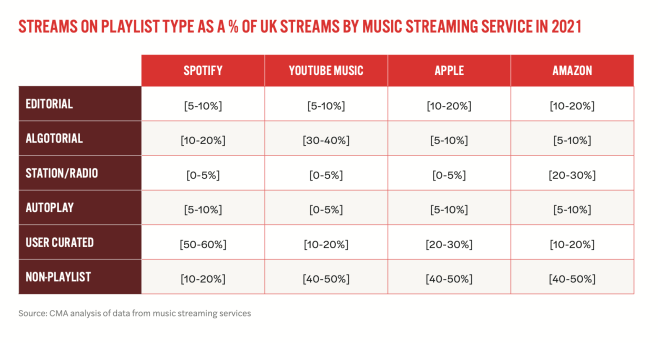
The Coles Notes version is that the consumption of French language music in Québec has plummeted from the lofty heights of 65% must-play of French language songs on francophone radio to 8% of streams on foreign owned platforms. During the Parliamentary debate on the Online Streaming Act, Bloc MP Martin Champoux won multi-party support to insert an amendment requiring streaming platforms to “recommend” French language content using “any means of control” (i.e. including algorithms).

In the days following the Parliamentary conclusion of Bill C-11, CRTC Chair Vicky Eatrides effectively announced she had no intention of enforcing Champoux’s amendment, at least not in the short term. The Liberals could have countermanded the Chair in their Policy Direction to the Commission but elected to say nothing.

As I said in previous posts, this policy issue isn’t going away. Now it’s politics.

The Beaudoin Report is of much broader significance than the discoverability of French language music. Perhaps it is posturing, but the Report’s authors claim it’s still up for constitutional debate whether the extension of the federal broadcasting power from existing platforms to the Internet is a valid exercise of federal jurisdiction.

While one or two English Canadian provinces might welcome provincial authority over streaming —making it easier to deregulate broadcasting— Québec politicians of all stripes would love to use provincial powers to regulate streaming platforms more aggressively in the promotion of French language culture and media.

The Beaudoin Report regards a claim of provincial jurisdiction over streaming as leverage to encourage Ottawa to negotiate a bilateral agreement which gives the Québec government a hands on role in implementing and enforcing the Online Streaming Act. As observed in Le Devoir, this would be similar to the delegation of power and policy from Ottawa to Québec City in some immigration matters.

The Report contemplates the CAQ pushing the Trudeau government hard on the culture file. With the nationalist Parti Québécois opposition breathing down the CAQ’s neck in the polls, Lacombe is in a win-win situation. Either the Liberals deliver, or the CAQ and the Bloc have an appealing plank in their respective election platforms.

***

In December I shared with you my discovery of big picture guy Doug Shapiro, media commentator extraordinaire on Substack (not to be confused with another big picture media commentator, Eric Shapiro). Based in the US, Shapiro is a mellifluous explainer of emerging media trends. I hadn’t seen anything from him recently and now I know why. He has begun a four part series on, what else, the big picture.

Shapiro goes out on a limb and says the attention pie is not growing and is unlikely to do so. He sees media viewing at a saturation point based on daily consumption data. The weak point in his argument is his assumption that household spending on media won’t expand. With the pie fixed, according to Shapiro, the future is about whether the size of pie slices enjoyed by creators, curators and distributors in the value chain will change.

In the first instalment of his new series, “fragmentation,” Shapiro describes the supply and demand sides of the media industry. On supply, he sketches out the well known portrait of the Internet’s “infinite” content, thanks to the explosion of low-cost creator content on social media, especially YouTube and TikTok. The potential for AI to goose supply by further lowering production costs seems likely too.

On the demand side of the coin, he points to a changing definition of “quality.” He’s not saying that the creator economy has cheapened taste, only that it has broadened appetites for the kaleidoscope of content at which social media excels. Podcasting and gaming are also making outsized gains, while premium video is treading water (he says it’s cinema and book publishing giving ground).

All of this proliferation of content supplied and demanded —the “fragmentation” of media —might threaten Hollywood’s production of premium video. Over the decades, Hollywood built the world’s dominant production cluster and succeeded in hedging for the unpredictability of hit content. But the more fragmented the media universe, the more difficult the task.

Don’t take this summary as an adequate description, Shapiro’s post is an excellent 12-minute read (fifteen minutes if you dwell on his wonderful charts and personally I’m a fool for charts).

***

The Globe’s Gary Mason had a dead-accurate column this week in which he asked, somewhat rhetorically, if news media is doomed. The gist of the article is, ‘yes of course.’

The recent events that give rise to such deep pessimism include the Canadian bankruptcies of the Black Press and Metroland chains of community newspapers and, in the US, mass newsroom layoffs at the LA Times, a billionaire-backed major metropolitan daily.

Mason offered this look-the-worst-in-the-eye comment:

More and more, there seems to be a class divide when it comes to the news media. There are those (the monied and educated) who can afford subscriptions that give them access to top-quality reporting and those who can’t, driving many in this group to seek their information elsewhere, often in cesspools of misinformation and propaganda. Consequently, there is a growing chasm between those who are informed and those vulnerable to con artists and shysters operating in the vast digital wasteland that is the internet.

On the other hand.

This week Montréal’s non-profit La Presse released its 2023 annual report. The headline is 13,000 new donors —as a non profit Registered Journalism Organization the news outlet can raise money through tax deductible donations. This brings La Presse to 56,000 donors, mostly under $5000. Sixty per cent of those donors are on automatic renewal, essentially pay-what-you-can subscribers.

The bottom line: La Presse was in the black for the fourth year in a row. It’s $13 million surplus will be reinvested, says CEO Pierre-Elliot Levasseur, in expanded editorial coverage and a deposit to its rainy-day reserve fund.

Of course, LaPresse is not paywalled. In fact 74% of its revenue is from advertising, the remainder from government subsidies, donors and syndication revenue.

Is La Presse a template for success for other unpaywalled metropolitan dailies?

The most distinguishing features of its success are, foremost, being a big fish in a small francophone market and, according to my sources, the smartest and most savvy leadership team going.

***

The winner of the good and valuable deeds award goes to the University of Toronto’s Investigative Journalism Bureau (IJB) for its recently unveiled Sunlight Project. You can hear more about it from Toronto Star reporter Rob Cribb in this video.

The Project is a collaboration between the IJB and the U of T Library that creates a searchable database of freedom of information requests made and answered since 2014 with respect to Ontario’s provincial government. A reporter’s dream, but also a great opportunity for bloggers and activists. 

Now for Canada’s other 13 jurisdictions…

***

If you would like regular notifications of future posts from MediaPolicy.ca you can follow this site by signing up under the Follow button in the bottom right corner of the home page; 

or e-mail howard.law@bell.net to be added to the weekly update; 

or follow @howardalaw on Twitter.

Catching Up on MediaPolicy – Leftist urban intellectual journalists – Netflix v. losers – Senator Simons says

January 27, 2024

The National Post published a very readable column from its Parliamentary Bureau Chief Stuart Thomson on public perceptions of media bias.

The gist of the column is that journalists lean “left” because their ranks are dominated by urban intellectuals. Plausible but arguable, I suppose. Meanwhile, the author exclusively interviewed conservative commentators. He published his conclusions in a conservative news outlet located in downtown Toronto.

My cynicism aside, there is no doubt that ‘bias in journalism’ as a matter of perception is important, fair or not. But that begs many follow up questions to poll respondents on what content they are perceiving: opinion columns or news coverage? Which news outlets?

Then there is the question of whether perception is affected by partisan loyalties (the Abacus public opinion survey that Thomson relies upon indicates it is) and whether continuous partisan complaining about alleged bias in news coverage is shaping public perception.

         Conservative Fundraising Post

And finally there is the question of actual bias, always a challenge to define and measure. Regardless of whether an ideological demography of news reporters suggests a ‘left-wing’ (or urban intellectual) bias in their personal views, the question arises of whether it exerts a gravitational pull on news content? My own view is that the bias and dominant ideology of journalism —- the thing that gets journalists fired up every day— is the desire to be the public’s watchdog, to hold the powerful to account.

***

The ongoing shakeup in the television economy was illustrated by a couple of news items this week.

Netflix announced strong quarterly results, beating expectations on both revenue and subscriber growth. Reuters quoted an analyst saying that “Netflix has won the streaming war.” 

All of that reinforces the prevailing wisdom that the streaming market in premium video is divided between Netflix and those who lose money. That would be misleading however because YouTube’s wildly successful creator-economy is thriving and at least two streamers (Amazon and Apple) are ballasted by their non-streaming business. Nonetheless, the other major streamers Disney Plus, Paramount Plus, NBC Universal, Max, etc are not quite so hedged.

For some reference points, check out the US Nielsen ratings represented in the graphic above. A similar pie chart for Canada would have a larger slice for cable TV because cord-cutting is less advanced than in the US.

On that point, the other weekly news item was Canadian telco provider Telus announcing its discount-priced bundle “Stream+” —-Netflix, Disney Plus and Amazon Prime— available to its cable and mobility subscribers.

The Canadian market of nine-million cable households represents a win-win opportunity for Canadian cable companies and American streamers. But in the long run it depends on whether it’s a win-win-win-win, including paying customers and advertisers.

***

This week the billionaire-owned LA Times laid off 115 journalists, a quarter of its newsroom.

It’s a morbid watching brief to constantly bring this kind of thing to your attention. 

On that note I recommend a Sean Speer podcast with perhaps the most engaging federal Senator of all time, former journalist Paula Simons, on “Canada’s News Media and the future of journalism.”

On the bright side, it’s 45 minutes of delightful ‘back in the day’ stories for media nerds. As well, at the host’s relentless prodding, the podcast episode grapples with the conundrum of public policy efforts to save Canadian news journalism.

Off the top, Simons makes it clear she hates the Online News Act. She characterizes it as a government “shakedown” of Big Tech; an illegitimate response to the market power of Google-Meta in digital advertising. In fact, at least in theory the bill was a response to Big Tech market power in news distribution, not advertising.  On that point, allow me to re-recommend my post from last weekend; “The Online News Act is law: a buzzer-beater win or epic miscalculation?”

But as for the conundrum about how to pay for news journalism without impairing its independence, Simons is hoping the public appetite for news reaches a tipping point where the public is more willing to pay for news; or perhaps innovative news providers figure out how to cover the news in a way that wins back advertisers.

That said, she doesn’t sound especially confident about the tipping point arriving any time soon. As pointed out on the podcast, the business model that worked for newspapers depended on that medium being the public square for shared local community and information. That was aided by a lucrative pre-Craigslist business in classified advertising that brought even more readers and further enlarged the mass audience. Today, the Senator observes, the “attention” marketplace for news and information, what was once the public square, is fragmented beyond repair.

***

If you would like regular notifications of future posts from MediaPolicy.ca you can follow this site by signing up under the Follow button in the bottom right corner of the home page; 

or e-mail howard.law@bell.net to be added to the weekly update; 

or follow @howardalaw on Twitter.

Catching Up on MediaPolicy – Was #C18 bust or boon? – Québec town sues citizens, muzzles local paper – Parti Québécois wants to Close the Loophole – Black Press on the block

January 21, 2024

This weekend MediaPolicy posted a long-form analysis (an 18-minute read) about whether the federal government’s Online News Act has, so far, been a win, draw or loss.

***

There is a press freedom drama unfolding in the village of Sainte-Pétronille (population 1000) on the Île d’Orléans, across the river from Québec City. The Globe’s report in English is here, but it’s worth reading the Radio-Canada account and the scathing La Presse column too.

The Québec Municipal Commission is investigating the village’s town council after it threatened to sue 100 of its own citizens and the community paper Autour d’Île over a citizen petition demanding answers about the controversial hiring of the Council’s new General Manager. 

The town paper knuckled under to the libel threat and spiked its news reporting. Adding colour to it all, the Council’s statement through its lawyer included a veiled threat to go after the Autour d’Île’s public funding (25% of its revenue, dispensed by the Regional Municipality but not the village Town Council).

It’s all blowing up on the Town Council now but the endgame may take a while.

***

This week the provincial opposition Parti Québécois laid out its ideas for supporting news journalism in Québec. Its program includes using the tax system to reward and/or punish advertisers for placing their business with online Québec news outlets rather than foreign digital platforms.

This is a familiar policy idea, sometimes referred to as “Close the Loophole,” to extend the long standing federal tax rules on writing off advertising expenses in print and broadcast media so that they apply to placing ads with online media. The proposal was raised in Parliament by the federal NDP as recently as last month.

A throw-away line in the La Presse story on the PQ announcement was that the CAQ Culture Minister Mathieu Lacombe is already in contact with the federal government on something similar. Do tell.

The PQ platform also includes a mandatory 4% spend of government advertising on community media.

***

I’ve buried the lede this week by leaving this item until last. 

Black Press Media has entered creditor protection for its chain of 150 community newspapers located in western Canada, the North and the United States. It has a consortium of buyers lined up, including the Canadian hedge fund Canso (freshly paid off as first lien creditor of Postmedia) and the Alabama-based Carpenter Media Group. 

Details will eventually leak out about how Black Press got into a liquidity crunch, what terms the retiring owner David Black is leaving on, and how the voting shares in a new company will be structured.

There are going to be important policy issues that emerge from this transaction. Canadian ownership is the most obvious. Another is the requirement in the Online News Act that the “Google money” —for which Black Press will be eligible at approximately $20,000 per journalist— be spent on news journalism (as opposed to making payments on 10% debt bonds) in “an appropriate” amount. The good news is that the staff are represented by Unifor whose task is to protect journalists, newsrooms and therefore the public interest. 

This does have the déja vu feel of the ugly Canwest/Postmedia story, so stay tuned.

***

If you would like regular notifications of future posts from MediaPolicy.ca you can follow this site by signing up under the Follow button in the bottom right corner of the home page; 

or e-mail howard.law@bell.net to be added to the weekly update; 

or follow @howardalaw on Twitter.

The Online News Act is law: a buzzer-beater win or epic miscalculation?

January 20, 2024

Last month Canada’s Online News Act Bill C-18 came into effect. Heritage Minister Pascale St.-Onge announced that despite Meta’s blackout of news for its Canadian audiences on Facebook and Instagram she had struck a deal with Google to avoid the news throttle spreading to its Search platform. Under the agreement, Google will provide Canadian online news publishers with $100 million annually in compensation for their news content appearing on Search. Those expecting a much larger figure —at one time the Parliamentary Budget Office speculated on a combined figure of $329 million to be paid by Meta and Google— no doubt were disappointed. Although further newsworthy events may unfold in the months ahead as Meta sticks to its news throttle and the Google cash is divided among publishers, now is an appropriate point in the policy timeline to pause and take stock of the bill once touted as indispensable to saving a failing news journalism industry. As many have argued back and forth, has Bill C-18 been a success, a disappointment, or an avoidable disaster?

Canada’s ‘news compensation’ legislation had its origins in a crisp policy idea: the unchecked market power of Big Tech’s leading digital news intermediaries, Google and Meta, made them so indispensable to news publishers seeking online audiences in search and social media that the state ought to intervene and ensure the intermediary platforms paid ‘fair compensation’ for news content to the publishers.

Critics of legislating this policy idea were unpersuaded. They lampooned the policy as an opportunistic shakedown of Big Tech, motivated not by a solid theory of intermediary chokeholds on news distribution but envy; green envy over the fact that the platforms offered better advertising distribution than publishers, once lords of mass media advertising. Whatever the remedy to the platforms cornering the advertising market might be, news publishers had no special claim to their lost advertising revenue. If critics had thoughts about the platforms’ market power over publishers’ news distribution, they offered no comment.

The ‘crisp policy idea’ of remedying the platforms’ market power in news distribution made little impact on the debate over the legislation. Instead, public debate over the bill focussed on how to divide up the compensation among news publishers; the independence of a news journalism industry that is increasingly reliant on government action; and the consequences of challenging Big Tech. Could a nation as small as Canada weather the Big Tech counteroffensive, or would  the whole thing backfire on Canadians and Canadian news publishing.

“Net Value Exchange”

When my daughter was six years old, she was distressed by her parents’ parsimony in dispensing cash. “You have so much money,” she cried. “And I have none!”

In truth there existed a kernel of legitimate complaint. We may never have signed a binding contract stipulating a weekly allowance, but nonetheless she had claims to good behaviour and limited needs, things of value to her parents. She had no other parents to give her money. Where was the fair compensation?

Sorry to say, but her parents exercised their market power, and our daughter went without remedy. I like to think it was because of ‘net value exchange,’ although in intellectual condescension I didn’t offer that explanation at the time. Even now I remain unmoved in my conviction that our generous parental supply of material and emotional sustenance obviated any requirement for a better (or any) children’s allowance. 

Net value exchange was at the core of Bill C-18. The original policy idea was advanced by Rod Sims, Australia’s Competition Commissioner and chief architect of the Morrison government’s New Media Bargaining Code. The “Australian model” of fair compensation for news content was enacted in March 2021 and became the footprint for Canada’s own bill tabled by Justin Trudeau’s governing Liberals in April 2022.

Sims’ policy idea was that the news intermediaries owed compensation to news publishers because the value of their news content to the platforms exceeded the countervailing value of the platforms’ free distribution of that content. That was the “net value exchange” between platforms and publishers.

He contended that the platforms’ market power was so great that the platforms could refuse to pay out because the publishers had nowhere else to go— no alternative distributors in Search (dominated 90% by Google) or Social (controlled 60% by Meta). To fix that, the state had to rebalance bargaining power between platforms and publishers over net value exchange by, one way or another, bringing government power to bear.

While Sims’ notion of net value exchange favouring news publishers was plausible and even likely, it was difficult to prove.

There were two problems. The first was establishing a “fair” market rate in the absence of brisk competition in the distribution of news in Search and Social. Ideally, the distribution market would offer ten Googles and ten Facebooks with whom publishers might negotiate. Without that competition in distribution, setting a fair market rate demands some kind of economic modelling.

The second was the lack of content consumption data that was indispensable to running an economic model of a hypothetically competitive market. Google and Meta owned all of the confidential data, each news publisher had some of its own, and independent researchers had access to almost none of it.

The lack of content consumption data could have been remedied by market studies carried out by national competition regulators in which they commanded the release of platform and publisher data, but this never happened in any jurisdiction. That left only research studies usually tied to one of the contestants that relied very much upon plausible suppositions.

Swiss study commissioned by publishers claimed that platforms owed publishers millions based on net exchange value. An independent American study made similar findings. Google and Meta both hired consultants estimating a dollar value of the platforms’ free news distribution bestowed upon publishers. Neither of the Big Tech intermediaries suggested a net value exchange (even in their own favour) because their unwavering public position was that publisher content delivered no monetizable benefit to the platforms. None at all. 

Australia’s Sims remarked that throughout his investigation Google and Meta had “asserted, without compelling evidence, that they provided more benefit to the news media businesses than they received in return, and in their view that was the end of the matter.”

This left the proponents of net value exchange making thoughtful economic arguments based on limited information, but lacking conclusive proof and allowing the platforms to deny net value exchange favoured publishers. The lengthy analysis put forward by Australia’s Sims was that Google and Meta demonstrably drew audiences to their platforms with news content; more easily documented for the information-searching Google audience than the content-sharing public who logged on to Facebook. 

Regardless of whether you could prove Google or Meta matched their advertising placements to individual pieces of news content, it was easy to satisfy any reasonable observer that news content was drawing users to the Google and Meta platforms. During their online engagement, consumers were digitally tracked as they were exposed to advertising impressions. That data tracking sold advertising for the platforms and enriched the data profiles at the heart of their business model of matching content tastes to individual consumers.

Confident that net value exchange in a truly competitive market in news distribution would favour the publishers, Sims recommended, and the Australian government agreed to redress the imbalance of bargaining power between publishers and platforms with a mandatory bargaining code with two key measures. 

First, the publishers could combine their bargaining power into one or more collective bargaining consortia —although this was mostly aimed at getting small publishers a seat at the table. 

More importantly the bargaining for net value exchange would be backstopped by binding arbitration. In the event of a bargaining impasse, the ‘baseball-style’ arbitration empowered an independent adjudicator to choose between one of two final offers by the warring sides. This was anticipated as being effective in soliciting reasonable offers and, as a bonus, relieve the arbitrator of detailing a defensible outcome in the absence of adequate data and an agreement on the best economic model. 

Most importantly, arbitration did two other things. It gave the platforms a forum where they could show up to prove their contention that they did not monetize news, and it provided state-enforced consequences, an “or else,” if they couldn’t or wouldn’t do it. 

“Grinding resistance”

The “or else” was vital to getting the Australian code to take flight. Both Big Tech companies fought the legislation. Google threatened to shutter its Search platform to Australians and Facebook notoriously blacked out Australian news for a week during fire season. 

But the Australian government —and the Canadian government as well—must have taken note of the years-long effort of the European Union states to achieve the same ends as the Australian code.

The Europeans took the first stab at creating an expanded definition of copyright for news publishers so they could negotiate content licensing with Google and Facebook. Initial efforts failed in Germany in 2013 —attributed to a weakly drafted law and an unsympathetic competition tribunal— and Spain in 2014. The Spanish law is often cited incorrectly as neutered by Google’s ruthless delisting of news content from Search, a warning for other nations. In fact, Spanish news continued to be found on Search, it was the Google News aggregation site that banned Spanish content. 

It wasn’t until March 2019 that the European Parliament decided to settle the matter by legislating Directive 2019/270, an amendment to existing copyright law that created intellectual property rights for news publishers who made their content available on Google and Facebook platforms. Like most EU Directives, the framework was downloaded to members states for implementation.

France was the first European member state to implement the Directive in October 2019, instructing the platforms to bargain with French news publishers. The French transposition of the Directive included a joint platform-publisher dispute resolution committee, chaired with a deciding vote by a high court judge.

When Google stalled the bargaining, the French Competition Authority ordered good faith negotiations. When Google thought they had triumphed by getting French publishers to sign a deal in which compensation was based solely on news content displayed on Google’s news aggregation site in January 2021, the Authority imposed an eye-watering 500 million euro fine in July 2021 (three months after the Australian code was passed) for trying to limit the scope of compensable news content, among other tactics. Google paid the fine and negotiated a more generous deal with publishers in March 2022, a month before Bill C-18 was tabled in the Canadian House of Commons. Facebook reached its own deal with French publishers in October 2021. 

The lessons that Canadian policy makers could draw from the European and Australian initiatives were there to be learned, not the least of which was the grinding resistance of Google and Meta.

“A Bargaining Code or a News Fund?”

When the Canadian federal government introduced Bill C-18, the Online News Act, it was picking up where Australian legislation had left off. But first the governing Liberals had to make an important choice about policy design. Once that was done, the legislation would face the normal Parliamentary hazing from the Opposition, quite a few upstart online news outlets, and a skeptical commentariat of critics.

The mainstream of the Canadian news industry—Newsmedia Canada, the Canadian Association of Broadcasters, and the CBC—wanted Ottawa to adopt the Australian bargaining code in Canada. To make that work, Parliament had to create an intellectual property right over online news content that publishers made available on Meta and Google’s intermediary platforms. The Canadian bill would replicate the Australian ‘net exchange value’ as the measuring stick of compensation. 

Finally, the legislation would need to rebalance bargaining power. It would enable publishers to obtain compensation from platforms by allowing news companies to combine into bargaining consortia and –if negotiations with Google or Meta failed—seek binding arbitration.

In April 2021, a month after the Australian bargaining code came into effect, the federal government began the public consultation that is typically conducted before tabling novel legislation. It already had the recommendation of the government advisory panel (the same panel that recommended the Online Streaming Act Bill C-11) to rebalance platform-publisher bargaining power. In 2019 the MPs reviewing Canadian copyright legislation had recommended the government study the EU Directive.  In Parliament’s senior chamber, Conservative Senator Claude Carignan was preparing Bill S-225 modelled on the French legislation. 

With all of that policy momentum propelling him forward, Heritage Minister Steven Guilbeault asked the public for opinions on adopting the Australian code. He also asked for input on an alternative model of an independent news fund to which platforms would contribute financially and online news publishers would draw. 

Guilbeault’s solicitation of opinion on an independent fund seemed like going through the motions: Australia and Europe had blazed the path with a bargaining model which gave it instant policy credibility and was what mainstream Canadian publishers wanted anyway.

On the other hand, independent funds had a track record in Canada. The federal government relied upon an independent committee to vet applications for its 2019 journalism labour tax credits, popularly known as the ‘QCJO’ program from its tax nomenclature “Qualified Canadian Journalism Organization.”  As well, the broadcasting regulator the Canadian Radio-television and Telecommunications Commission (CRTC) had since1994 tithed cable and satellite distribution companies to contribute five per cent of annual revenues to the public-private Canada Media Fund and community cable channels. Beginning in 2016, the contributions sponsored a news fund for 20 independently owned local television stations.

As expected, industry response to Heritage’s public consultation from Newsmedia Canada and the Canadian Association of Broadcasters favoured the bargaining code over an independent fund. 

In a separate submission Bell, the country’s largest media company and owner of the biggest news network CTV, offered some revealing arguments about why it preferred a bargaining code. As a large media company, Bell liked the idea of negotiating a bespoke arrangement directly with the Big Tech platforms with the latitude to substitute distribution arrangements for cash contributions. And with its eye on how quickly Australian media companies were signing agreements with the platforms, Bell assumed the same dispatch could be achieved in Canada. 

Lastly, as Bell representatives archly observed, “the creation and operation of an independent news compensation fund is likely to be highly politicized with the concomitant risk of undermining the freedom of the press.” This without a doubt was an allusion to political heat the governing Liberals had taken over the QCJO program of direct federal subsidies, two years earlier. In contrast, legislation that focussed on bilateral negotiations between private companies might escape those politics.

While the choosing between these two policy paths —platform/publisher bargaining versus a ‘contribution and draw’ fund — offered various pros and cons, the sleeper issue was about how compensation would be divided. 

In the bargaining model, the basic premise of ‘net value exchange’ did not necessarily drive an equitable distribution of compensation based on the number of employed journalists or any other metric. A rebalanced marketplace was still a market: some news content would fetch a higher price than others. Some platform distribution was of greater or lesser value to news organizations, depending upon the circumstances. These uncertain outcomes fed the fears of smaller news outlets that Bell and the other big media companies would manipulate the bargaining model to their own advantage and drink the waterhole dry. Convinced that the fix was in, many small and independently owned news outlets opposed the legislation.

On the other hand, an independent fund was almost certain to adopt a policy of equitable or proportional distribution of compensation, just as the government’s QCJO program had subsidized news outlets on the basis of payment per employed journalist. 

One of the few proponents of an independent fund was Unifor, the largest Canadian media trade union (I was Unifor’s Media Director at the time). An independent fund was better, according to Unifor, because “the public interest is squarely at the beginning, middle, and end of this process, as the government sets the levy rate and the distribution formula.”  Nevertheless, Unifor ranked the bargaining model as an expedient second choice.

Unifor’s submission to the public consultation also warned that Google or Facebook would look for a way to derail the government’s efforts:

We support the Australian model with the added caveat that the federal government must retain default power to impose a news fund as a remedy to shortcomings of the Australian model. We believe there are any number of ways that digital platforms might sabotage the government’s efforts in this exercise, as Facebook did in its week long capital strike in Australia earlier this year. We would be naïve to think that Facebook would never try that again, from the safety of their American corporate nationality and their billions of dollars in cash reserves. This is, after all, a warm up for the American political battle over the same issues, and the platforms will make every effort to win that battle. Unfortunately, Canada could easily be collateral damage. Accordingly, the power to impose a news fund model should remain within the discretion of the government, allowing them to impose a levy arrangement on a platform.

The recommended fail-safe option of a fund levy did not make it into Bill C-18.

the bill is tabled

Before the Trudeau government could table a bill, the October 2021 election intervened. In their election platform, the Liberals promised to implement a bargaining code modelled on Australian legislation. The Conservatives matched this with a detailed proposal to “adopt a made in Canada approach that incorporates the best practices of jurisdictions like Australia and France,” including binding arbitration and a proviso against government “picking and choosing who has access to the royalty framework.”

Re-elected to minority government, the Liberals tabled Bill C-18 six months later on April 5, 2022. Without explaining, Heritage chose its promised bargaining code over an independent fund.

Like the Australian code, the foundational element of the Canadian bill was the creation of a property right in the news content that publishers linked to Google and Meta’s sites with or without being able to secure a licence agreement. The legislation described this property right as “making content available” while opponents labelled it a “link tax.”

With the foundational property right established for publishers, the legislation replicated the Australian architecture with a bargaining regime between the platforms —dubbed Digital News Intermediaries (DNIs)— and “eligible news businesses” who were permitted to form collective bargaining coalitions. If bargaining did not produce a voluntary agreement, the publishers could seek “final offer” (baseball-style) arbitration. An arbitrator would apply the criterion of net value exchange. 

The Canadian bill differed from the Australian code in at least two important ways.

Like the Australian code, section 11(1) of the Canadian bill also offered Google and Meta—the only platforms big enough to qualify as DNIs—a pathway to a CRTC-dispensed exemption from arbitration if it negotiated “fair compensation” with “a significant portion” of Canadian news outlets from a wide diversity of news organizations. The diversity requirement was a Canadian innovation on the Australian approach.

The CRTC had a mandate to review a thorough checklist of policy goals reflected in the voluntary agreements between platforms and publishers. It would ensure that the deals reflected “fair compensation” for all news content made available by publishers and the Big Tech platform and that an “appropriate portion” of the compensation be used by online publishers for news production. The regulator would also ensure that the distribution benefits a diversity of the news industry—covering non-profit newsrooms, official minority language communities, local news, racialized and Indigenous communities, and so on.

There was another important difference between the Canadian “exemption” and the Australian “non-designation”  in their respective bargaining codes. Both codes allowed the DNIs to sign only a “sufficient” number of news outlets to voluntary agreements. But the key difference between the Canadian and Australian approach to exempting the DNIs from further regulation was that the gatekeeper of Australian non-designation was the Finance Minister acting by fiat (having taken the advice of the Competition Commissioner). By contrast, in Canada the CRTC ruled on exemption based on legislative criteria and subject to appeals.

The exemption provision in section 11(1) of the Online News Act baked into law the public policy goal of distributing compensation to a wide diversity of news organizations. The importance of that feature of the Canadian bill became more pronounced in 2022 when the Australian Finance Minister granted non-designation to Meta despite it refusing to negotiate with two prominent Australian news outlets.

One thing the Canadian legislation didn’t provide was a bottom line on compensation outcomes. But in light of the fact that Bill C-18 was replicating Australia’s bargaining code, there was a widespread assumption in public commentary and Parliamentary debate that Canadian news publishers would obtain similar results through bargaining or arbitration. The Australian dollar figures were shrouded in confidential agreements and the only information on the public record was Australian Competition Commissioner Rod Sims’ statement that the aggregate value of the various agreements was approximately $200M AUS ($190M CDN) and an assurance from small Australian news organizations that they had been treated fairly. 

Commentators assumed the value of the undisclosed Australian deals to compensate 30 per cent of publishers’ editorial salaries and costs (with Google and Meta dividing the payments, 20% and 10%). Perhaps based on this 30 per cent figure, Canada’s non-partisan Parliamentary Budget Office estimated that the DNIs would end up paying $329M CDN to Canadian publishers.

“A lie, a shakedown”

When the bill hit the Parliamentary order table the Conservative opposition abandoned its election promise and opposed the bill as “censorship.” 

An army of commentators also opposed C-18. They criticized the legislation as favouring big Canadian media companies over small news outlets, undermining the independence of the pressfueling public distrust of media, leading an unconstitutional federal foray into provincial jurisdiction, interfering with the free linking of content on the internet, and provoking the ire and news throttling power of the Big Tech platforms. Very few of these critics touted an independent news fund as an alternative.

Not one of these critics bought into Rod Sims’ formulation of net value exchange between platforms and publishers. Jen Gerson of The Line called it “a lie.” Several others suggested the entire scheme was simply a “shakedown” of Big Tech by politically connected Canadian media companies, driven by an illegitimate conviction that the platforms had stolen “their” advertising revenue. 

The argument in favour of net value exchange, while difficult to prove to the satisfaction of critics and skeptics, had one thing going for it: facts on the ground. For example, Google had long split advertising revenues with content providers on its YouTube platform (55% going to creators). Both Google and Facebook had made rich deals with the Australian publishers in 2021 and were in the process of settling accounts with French and Spanish publishers too. And perhaps in hopes of defusing the Liberals’ push for Bill C-18 in Canada, in 2021 and 2022 Google and Facebook reached voluntary compensation agreements with many Canadian print publishers.

All of these precedent setting licensing agreements strengthened policy arguments that net value exchange favoured publishers: otherwise, why would Google and Facebook pay so much? 

The bill’s opponents needed a less esoteric issue to rally around. Just as the Liberal MPs were hammering “Big Tech” in their public messaging, the Conservatives beat a familiar tattoo: attack “Big Media.” The criticism that got the most political traction during the public debate was that the bill, like it or hate it, would favour large Canadian publishers at the expense of small publishers. 

The “big” publishers included the large television companies owned by major telecommunications conglomerates Bell Media CTV, Rogers City TV and Québecor TVA; the incessantly pilloried public broadcaster CBC Radio-Canada; and (depending on who was doing the skewering) the right-wing Postmedia. Because the television companies and the public broadcaster provided the lion’s share of online news, the Parliamentary Budget Office estimated that on a pro rata basis they would win 75% of the final compensation paid out by the platforms. 

As we know, the Liberals’ bill was approved by the House of Commons anyway in December 2022 with the support of the NDP and the Bloc Québecois. A number of Parliamentary amendments were made without changing its basic policy design.

But what occurred the same month may have been the most influential event of all in the journey of Bill C-18; and it didn’t happen in Canada. In Washington D.C., a milder version of a news bargaining code almost made its way into law in December 2022 during the waning moments of the 117th congress—and remained to be retabled in the future. Google had finally settled its compensation dispute with French and Spanish publishers but others were queued up to implement the EU Directive, and legislators were planning a similar law for the United Kingdom. In July 2023 Google published a cheerful corporate blog in which it celebrated licensing arrangements with “1500 publications across 15 countries” from which one might infer that its strategy in the face of a transnational battle to discourage legislative action was to voluntarily sign licensing agreements at an agreeable price and threaten news throttles where necessary.

The global platforms faced the same challenge on numerous fronts and, to use a baseball analogy, they needed to strike out the side. Canada was in the batter’s box.

the news throttles

Early Canadian opinion polls suggested strong public support for greater regulation of the Internet, including Bill C-18, when Nanos released a survey in May 2022, shortly after the bill was tabled. Two weeks later, Newsmedia Canada released a Pollara poll finding that 79 per cent of Canadians (including 71 per cent of Conservative voters) agreed with the principle that “web giants should have to share revenue with Canadian media outlets.”

Opinion polls on detailed legislation invariably capture public sentiment at a general level, in principle perhaps, but subsequent events —more information, debate and criticism— can change results. When the bill got into prolonged debate at the Heritage Committee in the fall of 2022 the Conservatives pivoted to oppose the legislation and critics vied to influence the public narrative in media coverage. 

But the most impactful events were Google and Meta’s ominous threats to reprise news throttle tactics. Meta was more explicit in its threats (subsequently acted upon as we know now) to evade Bill C-18 by banning news on its Canadian Facebook and Instagram platforms. Google hired Canadian pollster Abacus to publish in mid-October a contentiously framed opinion survey suggesting a sudden drop in public support for the bill. On the other hand, a broadcaster-commissioned Nanos survey published at the end of the month and asking about “fair payment” suggested that public support for C-18 had hardly budged since earlier Nanos poll from May. 

The duelling polls settled nothing –-tellingly, the Abacus poll found that only eight per cent of respondents were familiar with details of the legislation—and the broader public only got engaged when Google and Meta acted on their threats of news throttles. Google fired a shot across the government’s bow when it ran a covert six-week news throttle test in February 2023 (while C-18 was before the Canadian Senate) that affected four per cent of its audience. 

When the bill received Royal Assent in June, Meta announced and then implemented its indefinite news throttle in August, still in effect in 2024. Once the platforms’ news throttles became a reality various opinion polls in July suggested public support for the goals of the bill slumped to 60% and more significantly half of respondents supported the government backing down in response to the news throttles. The results were skewed regionally and by voter preference, suggesting Conservative-leaning respondents were cloving to their Party’s messaging that the bill was “censorship.”

Canadians’ memories are still fresh about what happened next. Google threatened to join Meta in a permanent boycott of news in Canada when the Online News Act came into force in December 2023. The previous September, the new Heritage Minister Pascale St.-Onge had floated a draft regulation implementing C-18 that offered the platforms a tithe of compensation payments set at four per cent of revenue should they seek the bill’s exemption from bargaining and arbitration.  Fixing the levy at figures much lower than the Parliamentary Budget Office estimate from a year earlier (which made the assumption that compensation would be based on 30% of editorial costs), St.-Onge’s four per cent was equivalent to a $172 million annual payment from Google and $62 million from Meta. 

Google and Meta both rejected the Minister’s offer and the clock ticked down to the December 17th date when the Online News Act would take effect and Google had promised to begin its news throttle. 

But in a buzzer-beater moment on the last day of November, St.-Onge announced she had evaded the looming deadline by negotiating a $100 million annual compensation payment from Google to Canadian news publishers in compliance with Bill C-18. 

Hard numbers are difficult to come by when evaluating the bottom-line outcome. But a news-less Meta is paying no compensation under the bill to Canadian publishers and is set to claw back what its spokesperson described as $20 million in its voluntary licensing payments. In addition, Canadian publishers can no longer reach their audiences through Facebook or Instagram distribution, affecting their viewership and advertising reach. As for Google, its $100 million in compensation payments to publishers is far less than its projected $172 million share of the initial Heritage target of $234 million for Google and Meta combined. 

unfinished business

The Online News Act came into effect in December 2023 and rang in the new year 2024 with some unfinished business.

The Meta news throttle continues. The company’s public messaging is that it would restore Canadian publishers’ access to its platforms if the federal government exempted Facebook and Instagram from the Actwith no obligation to pay compensation. Meta’s previous $20 million worth of voluntary compensation payments—in the form of local journalism bursaries—are gone. A number of commentators have said that the loss of online distribution privileges will impair Canadian news publications, especially start-ups.

Another loose-end is the impact that C-18 may have in other jurisdictions that are showing halting progress towards a bargaining code—the United Kingdom, the United States, California, Brazil, and others. If the European, Australian and Canadian legislation tips political momentum for a similar law in the United States, that might have implications for Meta’s ongoing news throttle in Canada or even the amount of compensation paid.

Yet another long-term question mark is the future impact of artificial intelligence large language models (AI-LLM) on news organizations. All of the Big Tech companies are pursuing this market where they will directly compete with news organizations for information-seeking audiences. In competing with news outlets, the AI-LLM applications will be ingesting their online news content, with or without licences or compensation. The current version of the Online News Act does not address this scenario.

But the business immediately at hand is how Google’s $100 million is to be divided among Canadian news organizations. The September 2023 draft regulation contemplated the value of an individual news outlet’s compensation varying up to 20 per cent above or below the median compensation of all agreements.

“The intent of the criterion,” said the government’s summary, “is to promote equity across news agreements while preserving a degree of flexibility.”  The very flexible 20 per cent tolerance for unequal but “equitable” outcomes offered deference to how platforms and publishers might value news content and its distribution differently for some news publishers than others; in other words a rebalanced market for news. 

However, the Minister cancelled the 20% rule in the final regulation in December 2023 because the government went in an entirely different direction once it had to work with a smaller pool of money than anticipated. The regulation offered Google the choice of making a series of deals with different publisher groups —in which case the new regulation required “like for like” compensation outcomes— or one agreement with a single consortium of publishers in which case the compensation would be meted out on a headcount of employed journalists. 

So far, so equal. Except that the government made a bold move to severely limit the amount of compensation payable out of the $100 million to the public broadcaster CBC ($7 million) and private broadcasting companies ($30 million), leaving $63 million for online print publishers. That means that the final distribution of the $100 million will look approximately like $20,000 per journalist for print publishers, $7,300 for broadcasting companies, and $2,900 for the CBC and Radio-Canada. 

Heritage Minister St.-Onge characterized this outcome as “accounting for the dynamics of the news industry.” In briefing the press on the regulation, a Heritage spokesperson elaborated that the dependency of print publishers on the intermediary platforms is “more pronounced.”

Not done yet, in a calibrated policy move the government increased the direct federal subsidies to print publishers under the QCJO program (broadcasting companies are ineligible) by raising the subsidy from 25% to 35% of journalist salaries and raising the cap from $55,000 to $85,000 in annual salary. Combining Google money and QCJO subsidies, print publishers would be reimbursed up to $50,000 per journalist salary. In Québec, an additional provincial subsidy raises it further.

By juicing the QCJO program, the federal government was making weight for the disappointed expectations of the print publishers of up to $81 million from the flush Google-Meta payout previously projected by the Parliamentary Budget Office and the loss of the existing $20 million in Meta licensing payments, plus the lost value of the Facebook traffic referrals to news websites. It is impossible to measure how 570 different print publishers might have gained or lost from the final regulation. As a baseline, the existing voluntary compensation from Google and Facebook is believed to have been unequally distributed among print publishers. The numbers are confidential anyway. 

In this kind of information vacuum it becomes difficult to pass judgment on how print publishers fared under Bill C-18, but it is hyperbole for some critics to call it “an epic miscalculation” by the government.

The broadcasting companies, on the other hand, were aggrieved at getting the short end of the stick. The CBC’s claims to compensation for their news content fell easily to the pragmatism of the day, given the financial security of its Parliamentary funding. As for the broadcasting companies, it’s reasonable to assume that the Heritage Minister thought that Bell, Rogers and Québecor could afford to keep producing its many local news casts at a loss (as they had for the previous twelve years running).  That was of little solace to the other 35 independently owned local television stations.

For television stations this was the second occasion in which they suffered their free content being monetized without compensation by wealthy news distributors. The advertising-funded broadcasters had fought for years to get cable and satellite companies to pay “retransmission fees” for the broadcasters’ transmissions of programming pulled off their television signal towers. The cable companies meanwhile billed their customers every month for that programming and shared none of it with local broadcasters. 

Unlike in the United States, Canadian copyright law denies broadcasters any property rights in their “local signals.” Broadcasters pushed hard for US-style retransmission fees that might have been worth $1 billion in annual payments from Canadian cable companies, but in 2012 a narrowly split Supreme Court denied the CRTC the authority to levy such payments due to copyright rules. 

The Canadian Association of Broadcasters was no more thrilled with St.-Onge’s division of the Google spoils, pointing out that “television” news available on broadcasting and online platforms is by far the biggest source of Canadian local news. Yet Google is gatekeeper to 40 per cent of web traffic to CTV News, the country’s most popular news website (next to CBC-Radio Canada). 

The television companies nevertheless have one last shot—as the CRTC implements the Liberals’ other Internet bill—Bill C-11, the Online Streaming Act—it is considering proposals to create a news subsidy for television and radio stations with contributions levied from Netflix and a host of foreign video and audio streamers now entering the orbit of Canadian regulation. 

We can say one thing about the outcome of Bill C-18—with the government’s deliberate intervention in the distribution of the $100 million of Google compensation to news organizations and its boost to the QCJO financial aid to journalism, we have travelled a very long way from Rod Sims’ crisp policy idea of creating a rebalanced marketplace in which to capture the net value exchange between platforms and publishers. 

“a post mortem”

A proper post-mortem of legislating the Online News Act would have more information at its disposal. What we can say is that if the results of the bill are benchmarked against the Australian outcomes, there is far less money for news publishers in Google’s $100 million and Meta’s exit. 

The aggregate Australian figure of $190 million (CDN) was scaled up to $329 million by Canada’s Parliamentary Budget Office. Whether that was inflated or not, the $329 million for a Canadian population of 40 million is only slightly richer, on a proportional basis, than $190 million for an Australian population of 26 million. The bottom-line outcomes of the Google and Meta deals with French publishers remain undisclosed and unavailable as benchmarks.

It might have been different if not for Google and Meta deciding that the Canadian bill provided too much momentum for legislative efforts in the US and the UK. It might have been different if the platforms did not make the assessment that Canada was a small enough country —having failed to arm itself with an “or else” fail-safe mechanism in its legislation— to defy. It might have been different if the Conservative Opposition had stuck to its previous support for a bargaining code.

The public debate over the bill, and rescue planning for an impoverished news industry, is far from over. What will not change is the profound risk of a collapse in news reporting that is essential to democracy and, on the other hand, an indefinite stream of state-directed sponsorship of an independent press that is unrecognizable from the world in which advertising revenue once comfortably supported journalism. It may seem clinical to reduce such matters of deep principle to the calculus of “risk,” especially risks that are difficult to measure and only darkly predict. But risks they are.

It would not be fair to say the federal government has no plan to manage these risks, no strategy for news. But as is typical in public policy, the current situation is at best a palimpsest of overlapping regulatory initiatives and at worst a triaged scramble to sustain journalism. 

In December 2023, Members of Parliament sitting in the House of Commons Heritage Committee agreed to hold hearings in the new year to study the crisis in news media. The carefully drafted language of the resolution reflects MPs’ determination to manage the public policy risk of saving journalism without managing news journalism itself.

“Someone else should pay”

Finally, a postscript to this lengthy evaluation of the public policy goals and their execution in the Online News Act.

It’s the public polling I want to point out. Initially, polls ran strongly in favour of the government forcing Big Tech platforms to share revenue with Canadian news publishers. But that support took a hit when the platforms put their own price to the enterprise in the form of Meta’s blackout of news and Google’s threat to do the same. 

I’m extrapolating from that sequence of events in concluding that the public generally favours state action to aid news journalism provided it doesn’t cost us more. This is not unlike previous polling showing public support for sensible policy goals like supporting Canadian content but paired with strong opposition to the notion that consumers foot the bill for that. Even a public policy as conventional as charging sales tax on Netflix subscriptions barely garnered majority support in polling.

News journalism is a public good—both in the sense that Canadians value its importance, but also in the sense that Canadians prefer to consume it without paying. Mass media’s iron grip on the advertising market allowed us to enjoy free or nearly free news content for decades until disrupted by waves of market fragmentation beginning in the 1990s. Today, only 15% of Canadians pay for online news. If local news weren’t included by CRTC fiat in the basic cable TV subscription, we might discover something equally discouraging. 

The biggest obstacle, then, to a successful public policy in news journalism might be our stubborn desire that someone else pay for it.

How we devise a national news strategy while conceding that reality is our task. I was pleased to read a valiant attempt at this by Peter Menzies and Konrad von Finckenstein who, in And Now the News, come down decidedly against direct subsidies (except for CBC with a refreshed mandate) and in favour of tax incentives supporting reader subscriptions and enterprise innovation. Responding to their report, Ivor Shapiro and myself didn’t endorse phasing out subsidies, but we did offer support for creating new policy tools and putting them to the work.

If federal MPs really desire a national discussion of a news strategy, let’s give it to them.

***

If you would like regular notifications of future posts from MediaPolicy.ca you can follow this site by signing up under the Follow button in the bottom right corner of the home page; 

or e-mail howard.law@bell.net to be added to the weekly update; 

or follow @howardalaw on Twitter.

Catching Up on MediaPolicy – Menzies’ arrest – Sparks opinion poll on the CBC – Dwivedi to PMO – Press Gazette on 2024

January 13, 2024

This would not have been a good week to poll Canadians on their opinions of the media or public institutions.

As recounted in CTV News and Globe and Mail reports, Rebel News media personality David Menzies was arrested (and subsequently released without charge) by the RCMP for assaulting a member of Chrystia Freeland’s security detail.

The arrest was ridiculous. As Freeland walked briskly back to her vehicle, Menzies harangued her with accusations, not news questions (but watch the CTV clip and judge for yourself). The cop initiated physical contact with what pickup basketball enthusiasts would recognize as a “hard pick” on Menzies so that he couldn’t keep up with the Minister.

The officer then arrested Menzies, the equivalent of calling your own fouls. Handcuffed him too.

It was pathetic. But it was political theatre, which was Menzies’ mission anyway (it seems he has done this kind of thing before).

Well done, RCMP.

To continue the drama, Conservative leader Pierre Poilievre issued a statement attacking the Liberal government and a fundraising pitch distributed within a couple of hours:

Silliness as I say, but pointing yet again to the vexing problem of Rebel News, which MediaPolicy wrote about in a different context, here.

The vex is not just about the media/political-action outlet in question, it’s about the unresolved policy issue of how and where the state recognizes “journalism,” and “journalists.” In the Internet-facilitated world of self publishing and iPhone technology, anyone can be a journalist, a faux journalist, or a “citizen journalist.” Can they all claim the moral and legal privileges of a professional journalist?

Menzies claimed that privilege when he said he was “scrumming” the Deputy Prime Minister. Again, you be the judge. Scrumming usually involves legitimate news gathering questions and, in return, the patient compliance of the news subject.

Editors at the CTV and the Globe weighed in with their choice of descriptors on this. Menzies is variously referred to as a “personality,” “a commentator,” and an “employee of Rebel News which refers to itself as a generally conservative media outlet.” But not a journalist or reporter.

The root issue in this flap is the terms and conditions of journalist access to news subjects, especially politicians being held to account. Two years ago, the issue was accreditation of Rebel News for reporting on an election debate and keeps arising every time that freelance journalists embed with protesters defying injunctions.

This brings to mind the interview that MediaPolicy published in December with Ivor Shapiro, scholar-in-residence at the TMU Centre for Free Expression. His view is that our ad hoc and laissez-faire approach to defining “journalist” and “journalism” won’t do anymore. In an era where it’s all too easy for someone to to claim the mantle of “citizen journalist” and the state-protected privileges of a free press that come along with it (for example, access) we need a purposive policy debate on the matter.

***

Spark Insights has published a poll on public attitudes towards the CBC.

The key finding: the vast majority of Canadians, including Conservative voters, do not want to defund the CBC. But there is a very significant appetite for “a lot of change” at the public broadcaster.

As MediaPolicy quipped last week, we often hear “why can’t the CBC be more like PBS?” but you could expand that to include “why can’t the CBC be exactly what I personally think it should be?” That’s okay too: it’s never a bad time for the public shareholders to rethink the company mission:

***

Last week MediaPolicy recommended an article in Chatelaine commenting on the federal Liberals’ long promised Online Safety Act. The article was written by former journalist and media scholar Supriya Dwivedi who then published a related piece in the Toronto Star this week.

Dwivedi also announced this week she has been hired by the Prime Minister’s Office as a senior advisor in what seems like a timely hire.

***

There is an interesting Press Gazette update for journalism wonks that surveys news organizations about their views on the revenue and distribution opportunities in the year ahead.

Here’s the graph on distribution:

***

If you would like regular notifications of future posts from MediaPolicy.ca you can follow this site by signing up under the Follow button in the bottom right corner of the home page; 

or e-mail howard.law@bell.net to be added to the weekly update; 

or follow @howardalaw on Twitter.

Catching Up on MediaPolicy – St.Onge’s CBC review – Liberal poll on news journalism revealed – what an Online Safety bill might achieve

January 7, 2024

Just before the new year, Canadian Press interviewed Heritage Minister Pascale St.-Onge about the federal Liberals’ new commitment to re-think the CBC, to “define what the CBC should look like over the next year and decade.”

The outstanding question mark about the results of a CBC review, taking either the short or long path to government action, is whether there is anywhere near enough time left in the government’s mandate before an election intervenes.

“And I really want to achieve that before the next election, to make sure that our public broadcaster is (as) well-positioned as possible for the future,” St.-Onge told CP’s Mickey Djuric. 

As for what is to be done at the CBC —to reiterate Djuric’s report verbatim— when it comes to journalism, St.-Onge said she would like the public broadcaster’s new mandate to fill information gaps in local regions, include a strong online presence, invest in international reporting and ensure minority-language communities are supported. As for the cultural sector, she said she would also like to see the public broadcaster continuing to showcase local talent and finance shows “that would not see the daylight if it was just for the private sector.”

Now you can parse that statement without arriving at any conclusion of what that would change about the current CBC programming other than getting rid of its US programming, but some things that are clearly missing are the role of television advertising on one hand, and institutional governance and financial independence from Parliament on the other.

The Globe’s Konrad Yakabuski wrote a column suggesting the looming prospect of a Poilievre government is the CBC’s Waterloo. If I can paraphrase his point of view, shared by many, it’s the rhetorical question “why can’t the CBC be more like PBS?” 

Reached for comment by CP, Conservative Heritage critic Rachael Thomas obliged with “Canadians need an independent and free media, not a biased broadcaster that receives a billion taxpayer dollars every year to act as mouthpiece for the Liberal government.”

Chances are, she won’t be repeating that in French.

***

Global’s David Akin’s freedom of information request turned up an undisclosed opinion poll from last summer, commissioned by the Privy Council Office, that corroborates what other pollsters were finding at the time: the Google and Meta news throttles soured the previous public support for the recently enacted Online News Act, Bill C-18.

There were other findings too. The first of Heritage’s poll question was whether respondents trusted news organizations to “make decisions in the interests of the public.” That’s an odd phrasing that is popular among pollsters. But the discouraging results mark a continuity with previous polls in Canada and many other countries:

The results of the next question remind us that a majority of Canadians say they are alienated not only from news organizations but pretty much every powerful institution, and often they are equally alienated (except for a collective clear-eyed view of Social Media):

But it’s the counterfactual results of the third question that elicit groans —and are consistent with previous polls too:

***  

If the Liberals follow through on their promise to introduce Online Safety legislation in the upcoming session of Parliament, MediaPolicy will have plenty of posts following the debate. 

There is a good piece in Chatelaine from Supriya Dwivedi of McGill University’s Centre for Media, Technology & Democracy. She interviews several female Members of Parliament about the misogyny and racism they endure; a reality check for those of us not female or racialized. By the end of the article, she is recommending what the Liberals’ bill should or might look like:

As the federal government moves forward with regulating online harms, it should look to peer jurisdictions such as the U.K. and the E.U. Both have developed an approach to online harms that requires much more transparency from Big Tech in terms of how their algorithms work, as well as tackling the underlying incentives that lead to the amplification of harmful content. This includes mandated transparency reports and risk assessments, as well as algorithmic auditing powers by the regulator in both jurisdictions. Any online harms framework should also aim to bring Canada in line with the rest of the G7 and introduce intermediary liability, clarifying when platforms are liable for harms arising from content posted on their platforms by users.

***

Another reminder: the annual Digital Media at the Crossroads conference takes place January 19-20 in Toronto. A policy nerd’s delight. Here’s where to register.

***

If you would like regular notifications of future posts from MediaPolicy.ca you can follow this site by signing up under the Follow button in the bottom right corner of the home page; 

or e-mail howard.law@bell.net to be added to the weekly update; 

or follow @howardalaw on Twitter.