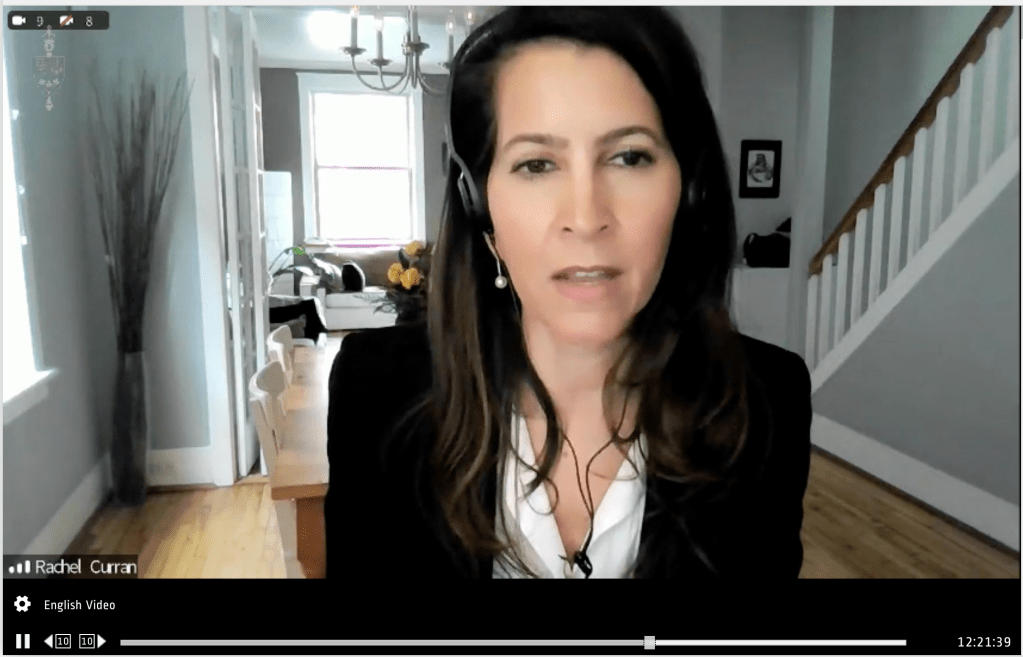
Meta’s Canadian spokesperson Rachel Curran told Members of Parliament on April 26th that Facebook’s platform is not responsible for misinformation and political polarization.
The finishing line for approvals or rejections of the Rogers-Shaw merger is near. With the CRTC approval of merging cable TV assets in the bag, Rogers now needs to peel off Shaw’s Freedom Wireless from the $26 billion deal in order to satisfy the federal government. They have at least two bidders.
Opponents of the merger are turning up the heat on the Liberals to exercise their veto. The Public Interest Advocacy Centre has filed a appeal of the CRTC ruling to the federal cabinet to stop the merger. PIAC says that Rogers will raise TV prices for Shaw customers by forcing them on to Rogers’ more expensive and fully featured IPTV platform. The difficulty for PIAC is that the CRTC considered this consumer issue and met it by accepting Rogers’ commitment not to do it:
The Commission finds that Rogers’ commitments will ensure that the interests of Shaw consumers will be adequately safeguarded. In particular, the Commission finds that Rogers’ commitment to continue offering television-only packages adequately addresses the Commission’s concerns regarding pricing increases for low-income households and seniors. Accordingly, the Commission expects Rogers to inform Shaw customers that their contracts will be honoured and, 90 days before the end of their current contracts with Shaw, to inform them of what options will be available once their contracts end, including how they will be able to continue to receive the same or a similar level of service. In addition, the Commission expects Rogers to maintain or improve the quality of service for current Shaw customers, as well as to maintain or improve the accessibility of all services for customers with disabilities. Further, the Commission expects Rogers to consult with the relevant communities and take their feedback into consideration with regard to the accessibility of its services.
As you can see, the Commission expressed an expectation of corporate behaviour, not a guarantee, which isn’t surprising given that the CRTC rarely regulates retail television pricing. In addition, Rogers is replacing Shaw in markets where it had no previous foothold, so that weakens any anti-merger case to the Competition Bureau based on the statutory test of “significantly reducing competition.”
In short, this merger is going through unless it is stopped politically.
Coincidentally, this was the week that merger and competition law reform was back in the news.
Senator Howard Wetston issued his report on a consultation he began in late 2021. Having gathered submissions from both establishment lawyers and reform scholars of competition law, the former federal judge and Competition Bureau prosecutor listed a handful of no-brainer reforms that already enjoy consensus support. He recommended assigning the contentious issues to an expert committee.
The Liberals’ federal budget omnibus Bill has picked up on some of the Wetston recommendations and will, for example, uncap the $10 million limitation on Competition Bureau fines in favour of a $15 million cap or 3% of the transgressor’s global revenues. In addition, the legislation clearly contemplates Silicon Valley market power by explicitly defining anti-competitive behaviour to include the “network effects” of users and data that make Big Tech mergers so controversial.
Bill C-18 was back in the news despite being paused at Second Reading. MPs at the Standing Committee on Public Safety and National Security (SECU) had Twitter and Meta officials on the witness stand on April 26th to discuss the “Rise of Ideologically Motivated Violent Extremism in Canada.”
While news coverage of the committee meeting reported Facebook’s Rachel Curran refusing to rule out a reprise of Mark Zuckerberg’s hardball tactics in Australia a year ago— when he yanked the Facebook Newsfeed for a week in a failed attempt to defeat pay-for-news legislation– in fact the video coverage (at the 12:20 mark) reveals Curran diplomatically evading the question raised by Conservative MP Raquel Dancho. She did however anger Heritage Minister Pablo Rodriguez by falsely claiming Facebook had not been consulted about C-18.
What was more interesting about the SECU meeting was Curran test-driving Facebook’s new political narrative: that the whistle-blower allegations made by Frances Haugen are wrong and in fact Facebook has the least influence on misinformation and political polarization compared to politicians and even mainstream media.
We’ll hear much more of that if and when we have an Online Safety Bill to debate.
Ed Rogers must be feeling good about himself. His latest quarterly report shows modest revenue growth combined with reduced content and labour expenditures. The stock price is up. Rogers credits it all to his decision to fire CEO Joe Natale in 2021 and replace him with Tony Staffieri.
There is more good news for Rogers. Federal government approval of his $26 billion merger with Shaw seems much closer now that he has submitted a potential deal to offload Shaw’s Freedom Wireless assets in Ontario, B.C., and Alberta to Xplornet, responding to Liberal ISED Minister François-Philippe Champagne’s ultimatum.
Champagne needs a plausible asset-shedding plan from Rogers in order to navigate the politics of approving the merger. The policy considerations behind the politics are polarized between big telco’s approach to building communications networks through heavy investment in infrastructure versus smaller re-seller telcos who want cheaper wholesale access to big telco networks.
Since 2015 the Liberals have sided with the big telco approach, mainly by supporting or overruling key CRTC decisions on wholesale access in ISP and mobile networks. The politics are tricky for Champagne. That was reinforced last month when Liberal MPs on the Industry parliamentary committee joined Opposition parties to endorse a Report frosty to the Shaw-Rogers merger and big telco in general.
A Rogers deal with Xplornet could be Champagne’s “Get Out of Jail Free” card: it would elevate Xplornet from a small to mid sized telco just as Shaw gets swallowed by Rogers. An interesting blog post from industry analyst Mark Goldberg considers the synergies of combining Xplornet and Freedom Wireless infrastructure and spectrum holdings.
(In addition to Champagne’s authority over the merger, the Competition Bureau also has a veto).
If things are looking up for Rogers, Netflix‘s quarterly report didn’t go quite so well.
The headline was the streaming giant’s engine-stall on global subscriber growth. It’s stock price got slaughtered, dropping 26%. Less noticed was that its earnings are up.
For years Netflix has spent aggressively on content, enjoyed steady subscriber and revenue growth, had few competitors, while losing or barely making money (depending upon how it amortized its content costs). If that was a teenage growth spurt, welcome to middle age.
The release date of Netflix’s quarterly report coincided with two other industry news stories suggesting real change in the streaming industry.
The first was a report in the New York Times that Netflix, Amazon Prime and Disney Plus are increasingly serious about a revenue strategy including commercials (chill goes down the spine of conventional TV broadcasters).
The second was an announcement by Telus that it will retail a bundle of streaming services: Netflix, Apple TV and Discovery Plus for $25 per month (a combination of specialty TV and streaming content).
For MPs debating the Online Streaming Act C-11 the trend is obvious: Canadian television continues to evolve into a hybrid of the old and the new, cable and streaming TV, delivered over big telco’s IPTV infrastructure.
Both C-11 and the Online News Act C-18 remain at second reading in the House of Commons so it may be a few weeks before they get handed off to the Heritage Committee. In the meantime, the policy debate is going strong: The Globe’s Andrew Coyne penned a scathing column on regulating Internet companies. MediaPolicy.ca offered a modest rebuttal.
It’s a temptation in opinion writing to make caricatures of your opponents’ views while lionizing your own beliefs.
The Globe and Mail’s Andrew Coyne does so (Trudeau’s Tangled Web) in romanticizing the Internet while ridiculing the Liberal government’s impulse to regulate the Internet (sardonic italics in the original).
No one is asking Mr. Coyne or his many libertarian confederates to curb their appetites for a wide open Internet; just leave room for achieving policy goals like a strong cultural footprint for Canadian news, information, sports and entertainment.
Start with the Online Streaming Act C-11, the digital-era update to the Broadcasting Act. In 1999 the CRTC –-the unelected CRTC— exempted the Internet from the plain wording of the statute covering all media platforms. Over the next twenty years the Commission refused to reconsider even as the Internet began its eclipse of conventional distribution platforms.
The chief goal of the Broadcasting Act has been to compel Canadian media companies to spend big on making Canadian news and entertainment programming, financed by profit-margins on retailing American-made shows.
The reason for this brazen nationalism legislated first by Trudeau Senior in 1968 and strengthened by Brian Mulroney in 1991 was to provide cultural oxygen to a small and bilingual country of less than 40 million people where authentic Canadian content vies for audience attention and advertiser dollars against American competitors who monetize on a global scale.
Justin Trudeau’s C-11 asks today’s global streaming and hosting platforms to play by the same rules: either make Canadian shows or chip in a fair share of production cash, all the while employing algorithms to recommend Canadian shows likely to appeal to individual viewer tastes. Allegations of the CRTC using C-11 to micromanage programming is misinformation and ignores the Commission’s half-century track record of not doing so.
Yet political lampooning often contains a grain of truth: if regulation exists to promote Canadian culture, why do the CRTC and Heritage Canada cling to an outdated definition of CanCon that relies on a headcount of Canadian-born producers, writers and actors while excluding any evaluation of “Canadianness” in movie plots? Our counterparts in the UK credit both home-grown talent and British-ness in film content. Bill C-11 doesn’t prevent that in Canada but updating the legislation is an opportunity for the government to adopt the British example and stamp a big maple leaf and fleur-de-lis on the Bill.
The second piece of the Liberals’ Internet trifecta, the Online News Act C-18, deserves the support of all Canadians concerned by the economic strangulation of news journalism, even libertarians who can usually be counted upon to support competition principles.
That’s because the Bill’s provisions for arbitrating fair compensation for news content is designed to remedy the outsized market power that Internet colossi Facebook and Google have acquired in both digital advertising and the distribution of content. That leaves relatively puny Canadian news outlets starved of their main source of cash on one hand and on the other having too little bargaining power to negotiate better compensation from “FaceGoogle” who monetize their news content.
Big Tech market power is unlikely to be broken up by US Congress, certainly not by Canada’s Competition Bureau, so C-18 provides a competition remedy to the externality created by FaceGoogle’s market power, namely the impoverishment of news journalism.
While Mr. Coyne joins Meta CEO Mark Zuckerberg in mocking the publishers’ views of the value exchange between news outlets and FaceGoogle, it is worth noting that FaceGoogle forked out $190 Million annually to Australian news organizations rather than face an arbitration ruling over how much that news content is worth to their digital advertising monopoly. Res ipsa loquitur, the thing speaks for itself.
There is a downside to aiding news journalism through competition remedies: it preserves FaceGoogle’s opportunity to pay more for national news, less for local news, and ignore news outlets deemed too narrow in audience appeal. C-18 gives the CRTC some authority to prevent that but also the discretion to give its blessing to the aggregate outcome of FaceGoogle’s deals on content compensation with “a significant portion of independent news businesses,” meaning some but not others. MPs considering C-18 need to talk about that.
A better C-18 policy tool might have been to impose a C-11 styled levy on FaceGoogle’s Canadian revenues and distribute the cash equitably to Canadian news outlets as do the federal government’s existing programs for Qualified Canadian Journalism Organizations and Aid to Publishers. This approach might have been possible under Parliament’s $900 million ‘audience tax’ on Big Tech legislated in 2021 but not proclaimed: the Digital Services Tax is expected to come off the books in 2024 in favour of an OECD agreement on minimum corporate tax rates.
Regardless of finding the perfect model for C-18, Parliament must fight for a healthy news industry. It’s delusional to imagine we can allow the flame of mainstream media to flicker out, counting upon a handful of advocacy websites to report on what is happening today and what the powerful are up to.
The final piece in puzzle is the Liberals’ promised legislation to regulate “Online Harms” (an exquisitely sanitized description of misinformation and hate infesting social media platforms). We have yet to see a draft Bill but lately the federal government has signaled a more restrained approach in its mandate letter appointing an expert advisory committee. That body is invited to recommend binding standards of self-regulation by social media platforms and perhaps rely less on the State policing millions of daily posts on social media.
Any kind of legislation curbing misinformation and hate will inevitably polarize Canadians of all opinions and political stripes. Fear of government overreach is healthy. Predictions of social media companies avoiding liability by self-censoring are well founded.
But maybe it’s better to wait for the experts’ recommendations and a Bill before dismissing the government’s good intentions on this file.
Colette Brin chairs the Independent Committee that approves or rejects applications to the Qualified Canadian Journalism Organization program.
April 14, 2022
Opponents of Heritage Minister Pablo Rodriguez’s Internet bills C-11 (Online Streaming) and C-18 (Online News) aren’t limited to Conservative MPs playing the expected Parliamentary game.
Joining them are a number of academics, Internet activists, former Harper-appointees to the CRTC, and populist news websites. The critics are mostly united in their deep-seated opposition to government regulation rather than the mechanics or design of the Bill. But some criticisms should concern even supporters of the Bill.
On that note, Jesse Brown and his band of Canadaland journalists have done well putting a spotlight on the lack of transparency in granting approvals of Qualified Canadian Journalism Organization (QCJO) status by the arms-length committee set up by the federal government to gatekeep the journalism labour and subscription tax credits that were legislated by the Liberals in 2019. If you dig this kind of thing, you should tune in to Brown’s riveting 45 minute podcast interview of Colette Brin, the journalism professor who chairs the approvals-committee for the tax credits. Her committee reports to the Minister of Revenue.
What emerges from the interview is that because the journalism tax credits are tax matters the reasons why some applicants are approved or rejected aren’t public information and can’t be prised out of the CRA’s hands by an FOI request either. (At least the Heritage website lists which news organizations have been accepted for the QCJO program and the related RJO program for philanthropic journalism.)
These waters are being roiled by clever politics played by two right-wing populist websites vying for QCJO recognition as legitimate news organizations, Rebel News and Western Standard. Rebel News was approved in 2020 but defunded by Brin’s committee in 2021 because its published content fell below the standard of “original news.”
Western Standard was approved as a QCJO, but then cheekily declined the tax credits, lampooning their application as an experiment in political science.
The transparency of who is a legitimate news organization, or more precisely whether a QCJO applicant publishes bone fide “original news,” takes on additional importance with the C-18 Online News Act sitting on the House of Commons’ order table. That’s because the eligibility of news organizations to participate in C-18’s commercial bargaining code will be determined by the CRTC using QCJO criteria including the publication of “original news.”
It’s doubtful this issue is going away, so stay tuned.
Another anti-regulatory missile that may find its mark is the C-11 critics’ claim that long standing film funding guidelines that define “Canadian content” produce unsatisfactory results.
The Minister’s Bill doesn’t affect the current rules one way or another, even if this would have been an opportunity to review it.
There’s a good case to be made that the current rules’ fixation on the headcount of Canadian talent without a proper consideration of Canadian plot lacks credibility. The UK has a hybrid system which considers both.
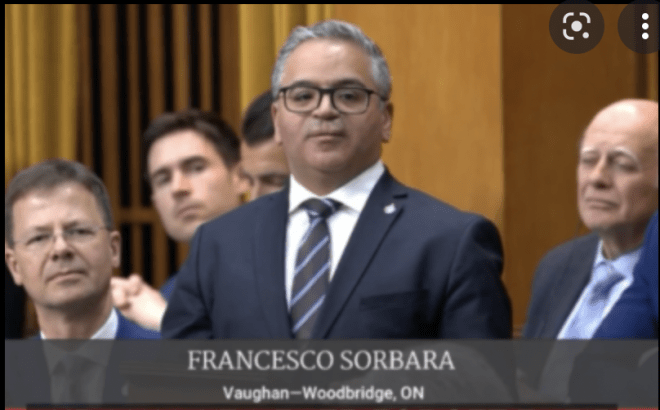
Liberal MP Francesco Sorbara announced important change to C-11 in the House of March 29th.
April 5, 2022
The Parliamentary sparring match over the Liberals’ Online Streaming Act has led Heritage Minister Pablo Rodriguez to guarantee no regulatory impact on videos uploaded by “digital first creators” to hosting platforms such as YouTube and TikTok.
On March 29th Liberal MP Francesco Sorbara announced in the Commons during second reading of Bill C-11 that a cabinet policy directive to the CRTC will exclude videos posted by “digital first creators” from being considered “programs” and therefore exempt from the hosting platforms’ obligations to host, fund, or promote Canadian video programming:
“For instance, a policy direction to the CRTC will make it clear that the content of digital first creators who create content only for social media platforms should be excluded.
“A policy direction will clarify that the content of digital first creators will not be part of the commercial content that can trigger obligations for platforms. This means that the content of digital first creators will not be included in the calculation of the social media platform’s revenues for the purposes of financial contributions. Content from digital first creators will not face any obligations related to showcasing and discoverability. Canada’s digital first creators have told us that they do not want to be part of this new regime, and we have listened.“
The surprise announcement raised unanswered questions.
For example, who is an exempted “digital first creator”? Does the exemption include all broadcasters operating in Canada other than licensed broadcasters?
Will the cabinet’s policy direction be circulated to the Heritage Committee prior to third reading?
Who did the government believe was speaking on behalf of digital creators in the first place? No organization represents them (the spokesperson for the newly created anti-C-11 website Digital First Canada acknowledged to Heritage Committee MPs that he doesn’t represent creators).
As a result of the announcement, C-11’s applicability to hosting platforms is in a muddle, awaiting a fulsome explanation of the government’s intentions.
The purpose of C-11 is to bring Internet platforms that distribute videos into our system of funding and promoting Canadian content.
For streaming platforms like Netflix, Disney Plus or Amazon Prime, the Bill is straightforward: streamers will make and broadcast their own Canadian shows or else support independent Canadian film makers through cash contributions to the Canada Media Fund. Or a mix of both.
In addition, the streamers will promote —make “discoverable”— an as yet unspecified number of Canadian films on viewers’ home pages
It’s less clear how the funding and promotion obligations of hosting platforms YouTube and TikTok would work. Prior to the Minister’s announcement last week, the government had not sketched this out in any detail. This invited C-11 critics to fill the void with a worst case scenario.
C-11 obliges hosting platforms to finance and promote Canadian content. But the uploaders —-whether independent artists or licensed broadcasting companies— have no obligations. Prior to the March 30th statement in the House, the only regulatory link between hosting platforms and their uploaders was that the hosting platforms would be counting uploaded Canadian videos for the purpose of meeting their own obligations to air Canadian “programs.”
What was not addressed by the government was the possibility (however remote or real) that the hosting platforms might meet their regulatory obligations to fund and promote Canadian content in a way that backfires on artist uploaders. Internet activist Michael Geist stated the backfire theory as a fact in blog and twitter posts.
This cued Conservative MPs to invite Canadian TikTok and YouTube artists to appear before the Heritage Committee to air their fears of being side swiped by C-11.
The Committee heard from Orbee Roy whose “Aunty Skates” show on TikTok combines skateboarding and personal empowerment and then from stand-up comic Darcy Michael. The latter has an impressive 2.7 million followers on TikTok, which appears from his testimony to supplement his appearances on conventional television platforms.
It was the questioning from Conservative MP Rachael Thomas —- twice publicly rebuked for spreading Covid vaccine misinformation— that revealed false assumptions about C-11’s impact on digital first creators:
“For those individuals with us today who are virtual creators, I pose this question. C-11 will have an impact on your ability to make an income. Bill C-11 will force you to pay 30% of your revenue off the top to go into the arts fund, which you will pay into but not have the opportunity to apply for funding from.“
Rachael Thomas is wrong.
First, C-11 will not force creators uploading to hosting platforms to pay anything to anybody. Any payment obligations under C-11 belong to the hosting platforms. Digital first creators pay nothing.
Second, digital first creators already apply to the “arts fund” (i.e. the Canada Media Fund) and in fact the CMF encourages digital first projects.
Ms. Thomas knows this. Nonetheless to offer her a little help, she could have argued that hosting platforms might try to recoup their financial contributions to the Canada Media Fund by clawing back revenue share from creators.
The flaw in that unmade argument is that videos posted by digital first creators like Orbee Roy and Darcy Michael qualify as Canadian content under CRTC and CAVCO rules because they are made by Canadians. That means the hosting platforms would not make additional Canadian content financial contributions for those videos, so there would be no question of clawing back revenue for them.
In spite of the weakness of these criticisms of C-11, the Liberals still beat a hasty retreat by exempting digital-first videos from regulation of hosting platforms. The ease of that concession suggests the government hopes for an easier ride through the Heritage Committee hearings than they got last year on C-10.
Pablo Rodriguez is getting better at this. The Heritage Minister who is trying to shepherd three Internet bills through Parliament in 2022 has filtered out the political noise on two of them and paid attention to important warnings that the public consultation for his proposed Online Harms Bill was going to blow up on him.
On March 30th Rodriguez announced a panel of twelve bone fide experts in Internet law and social policy who will advise Heritage on what to do about the reeking sludge of online speech that social media platforms can’t seem to keep at bay.
One of those experts is Taylor Owen, Director of the Center Media, Technology and Democracy. Owen took the opportunity to tweet that he was pleased that his expert panel was being mandated to “pivot” towards a “systems” approach:
If you are wondering how to interpret Owen’s semaphore, a “systems-based” approach means less emphasis on illegal speech policed by government-established monitoring requirements and more emphasis on getting platforms like Facebook to self-regulate with whatever methods work best under a general legal “duty of care.”
In other words, it means less government regulation and more incentive for Big Tech to develop a better sludge solution so as to avoid liability.
Keeping it real, we should acknowledge that Facebook and other platforms are like private sewage companies being told they must not leak a drop of shit.
On the other hand, they are monetizing shit.
The Heritage Department’s initial consultation paper leaned heavily towards the no-leaks approach by obliging platforms to pre-emptively filter, moderate, and delete posts so harmful they are illegal. And depending on the posts, the stakes are raised by requiring platforms to report the posts and the posters to the authorities.
That kind of regulation has civil libertarians in a lather, though many are prone to absolutist opposition to any regulation of communications.
And where Internet free speech is concerned, expect red-hot politics to follow. Even the most cautious Online Harms legislation will be seized upon by the Conservative Party and some advocacy groups as creeping digital communism. The fundraising opportunities are priceless.
The expert panel is to meet weekly up to 12 times to come up with advice for the Minister on how to design the legislation. It’s encouraging that the Minister will be publishing the panel’s discussion papers and, on a non-attributed basis, the experts’ views.
Where this might end up (or so I am hoping) is the panel advising the Minister to establish hardcore regulation of highly dangerous content —— probably terrorism, child exploitation, revenge porn, Criminal Code hate speech offences, and threats of imminent harm—- which would be regulated as illegal speech with strict enforcement and reporting requirements imposed on the platforms.
Beyond those core concerns lays all manner of harmful but not imminently dangerous content —-think dog-whistling bigotry and racism—— which can be managed in a more ad hoc fashion by the platforms themselves (including banning serial offenders). The platforms will avoid corporate liability so long as their efforts show continuous improvement and meet Canadians’ expectations of corporate responsibility.
By re-booting the consultation process and creating his impressive panel of experts, the Minister should build the necessary political credibility before tabling an inherently controversial piece of legislation.
In addition, the re-boot allows the United Kingdom to forge ahead with their Online Harms legislation, allowing Canada to learn from any mistakes.