November 26, 2023
If you will forgive the grandiosity of appropriating Emile Zola’s famous accusation, “j’accuse.”
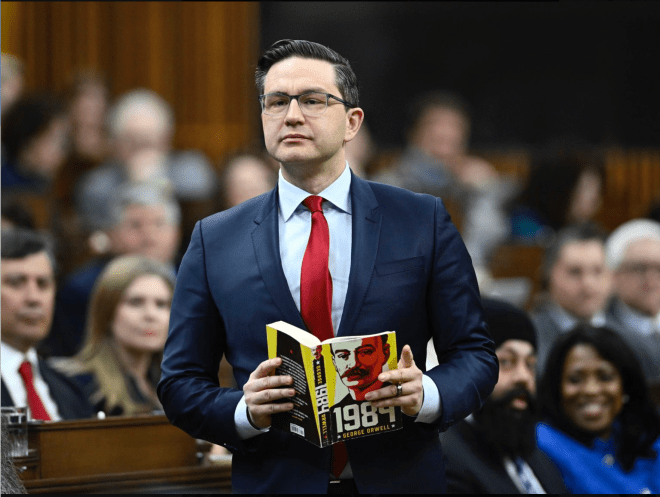
J’accuse Pierre Poilievre.
Last week the Opposition Leader resorted to his habitual vilification of the news media in response to a reporter’s question about whether he was too hasty in using Question Period to challenge the Prime Minister on national security after a car explosion at the Niagara Falls border crossing.
As Poilievre well knows, aping Donald Trump in his relentless demonization of the media for political gain endangers journalists.
Coincidentally on the same day of Poilievre’s performance, I received my first death threat by e-mail from “DG”:

That was in the subject line of the e-mail. The text field contained only a link to an article that I co-wrote in the summer regarding the funding of Canadian journalism.
I’m not having too much of a moan about this (and I’m not a journalist). Thanks to Trump and Poilievre, real journalists get these threats all of the time now. Neither am I suggesting a linear cause-and-effect relationship between DG and Pierre. But no other Canadian politician has done as much to incite contempt against journalists for the impertinence of asking politicians difficult questions.
***
The day before the Niagara Falls incident, the Liberals announced in their Fall Economic Statement that the expiring Qualified Canadian Journalism Organization (QCJO) program for federal aid to journalism would be extended and the per journalist subsidy increased.
The original program was established in 2019 with a $600 million price tag. The budget was spread over five years at $120M annually and divided into separate funding envelopes for subscription tax rebates for readers, per journalist subsidies for news organizations, and charitable status for donations to non-profit news outlets. The budgets for the latter two programs were significantly under-subscribed: the journalists subsidies were drawn down annually at $30M out of the allocated $95M, possibly because of the decline in journalism employment.
Under the revised spending program, the per journalist subsidy is increased from 25% to 35% of a maximum $85,000 salary (up from $55,000). The new subsidy cap rises from $14,000 to $30,000.
***
Last week the CRTC completed its first of three weeks of public hearings on “Step One” of implementing the Online Streaming Act, Bill C-11.
This first of three regulatory steps is focussed on cash contributions from Netflix, YouTube and the rest of the online streamers to Canadian media funds that support Canadian content.
The hearings are going according to script. Canadian broadcasters are telling the Commission that the first order of business ought to be emergency regulatory relief for them. American streamers refuse to discuss a cash contribution without the CRTC favourably watering down the definition of Canadian content.
The US streamers commissioned a two-question Canadian survey by former Abacus pollster Bruce Anderson to bootstrap their Commission arguments.
The responses to the first question suggested —no poll methodology was published— a significant level of public support for injecting a “Canadian themes” factor into the definition of a Canadian program. Currently the definition of a Canadian program —required in order to allocate subsidies or recognize CanCon efforts made by broadcasters– is based on Canadian ownership of the programming and a headcount of Canadian creative talent employed in making it. Those criteria also earned top scores in the Anderson survey.

Unfortunately the second Anderson question was misleading, asking respondents if it was better for the Commission to require streamers to make cash contributions to Canadian media funds or broadcast licensed Canadian programs on their platforms.

Putting aside the editorialized phrasing of the question, the Commission is proposing the streamers do both and not either as part of an overall contribution to Canadian content. The final split of in cash and in kind contributions may well be in the neighbourhood of 21/79.
This week the Commission will hear from Netflix, Amazon, Corus, Rogers and others.
***
Speaking of the CRTC, last week MediaPolicy digressed far beyond our core expertise to comment on the Commission’s decision to force Bell and Telus to open up their top-end fibre networks to the wholesale broadband market of ISP retailers.
The Commission’s decade long effort to drive down retail Internet bills has been chaotic at times. This recent move seems to have backfired.
***
If you would like regular notifications of future posts from MediaPolicy.ca you can follow this site by signing up under the Follow button in the bottom right corner of the home page;
or e-mail howard.law@bell.net to be added to the weekly update;
or follow @howardalaw on Twitter.

 MediaPolicy.ca
One thought on “Catching Up on MediaPolicy: J’accuse Pierre – News Funding Increased -C11 hearings continue – CRTC move on Internet bills may backfire”