February 24, 2026
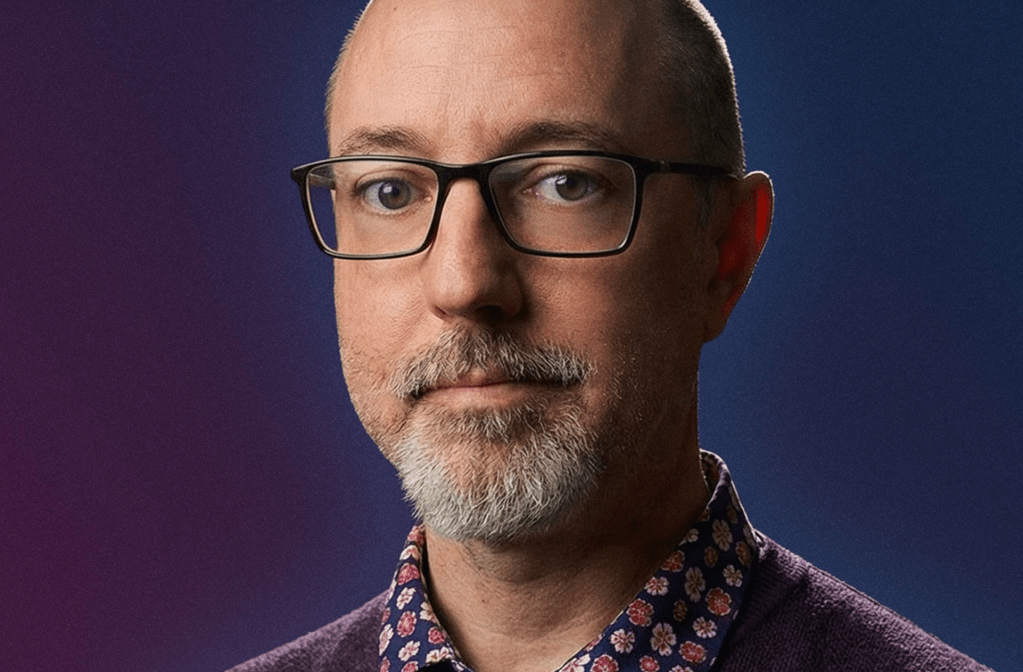
I am going to introduce this interview with Paul McGrath, the former flagbearer for CBC’s YouTube strategy, by thanking LinkedIn.
That’s where I first noticed McGrath and his Tigger-bouncing enthusiasm for YouTube’s creative universe.
Post after post, he diarized his journey at CBC bringing its content to YouTube. (Last week MediaPolicy published news of the historic partnership —-no other words for it— between the BBC and YouTube).
As for McGrath, here was a guy on a mission to make our CBC more relevant to millennials and Zeds. I was glued to his feed.
Then he quit. Or rather moved on to something new. I’ve done that myself a couple of times, so I could relate, even forgive.
Given the noise of apocalyptic foreboding we hear about legacy media, or about how AI is going to obliterate everything, Paul’s brimming optimism is just the thing.
MediaPolicy: I see you have a new job?
Paul McGrath: Yes, I do! I’ve joined Underknown as the Senior Vice President of Content & Operations. It’s a Canadian company and a modern creator studio headquartered in Toronto. We’re a creator-led digital media company behind popular brands like What If, How to Survive, and Animalogic. We manage more than 100 owned-and-operated programmatic channels. We’re a growing studio, employing about 100 to 150 people.
In my new role, I’m working to drive innovation and identify operational efficiencies across the organization. The core of the business is creating original content for digital platforms. We distribute across dozens of platforms, including 25 YouTube channels, social accounts like Facebook, Snapchat, and MSN, and through distribution to FAST and also recently some linear television. My focus is really on making the most out of our YouTube operations, and growing YouTube channels, which I did for years at CBC, so now I’m bringing that knowledge here.
I’m also setting up our services division, where we consult with traditional media companies and creators, leveraging my background in broadcast and digital transformation to help them thrive and make more money on digital platforms.
MP: What’s the difference between distributing on YouTube as a creator studio versus doing it as mainstream broadcasting, like Crave or Gem?
PM: That’s the question everyone asks, and after twenty years in traditional media and now just completing my first month at a creator studio, I’ve noticed two major differences that drive everything we do.
The first, and biggest, difference is how we view the platform itself: Is YouTube a Cost Centre or a Profit Centre?
For traditional media—where I came from—YouTube is generally viewed as a cost center. Its content is usually repurposed, derivative, or repackaged from the main line of business, like TV shows or films. It exists to support the core revenue through promotion, reach, or awareness, and it operates under a lot of pressure to justify its impacts as an expense.
For creator studios, YouTube is the main business. It pays the bills, and creators and creator studios live and die off of moneymaking on original content. There is no safety net—if we don’t grow, we don’t succeed. This forces us to be lean, mean, scrappy, agile, and profitable. This competition is fierce. We’re the junkyard dogs of the media world.
The second difference lies in how we use technology, specifically AI, to drive the workflow.
While traditional media is certainly adopting AI, creator media is using it to tool the entire workflow: leading, enabling, supporting, and automating. At a company like Underknown, we build AI agents to growth hack our own channels—data-nerding to analyze, diagnose, benchmark, and pinpoint growth opportunities. We use these agents as tools for everything from scripting to thumbnail ideation, and we connect them to platforms like YouTube Studio AI, VidIQ AI, and BigQuery.
This extensive and continuous use of AI is always overseen by people—the masters of the craft with a deep history on YouTube. That’s crucial. This combination of “Art plus Science,” creative plus data, and being totally audience-obsessed is what positions creator studios to excel in a highly fragmented audience environment.
MP: You were the face of the creator economy at the CBC. Did you leave CBC feeling that you had moved the yardsticks?
PM: Yes, for sure. The results speak for themselves, I helped manage teams to their highest ever views, highest ever watch time and highest revenue, year over year, for multiple years. This was really hockey stick-style growth. I think I left with 1.8 billion views in 2025, which was another all-time record high.
A case in point, at CBC, when I left our YouTube operations were reaching 1.5 billion impressions a month. That’s 1.5 billion screens we landed on every month. It’s a massive amount of audience reach that CBC wasn’t exploiting previously. To me that’s the remit of public service broadcasting, service audience where they consume.
I’ve always been interested in helping organizations work more effectively on digital platforms, and work together to scale success. [Former EVP] Barb Williams and [GM Entertainment] Sally Catto and others were always very supportive and encouraging to drive more collaboration and digital transformation.
So yes, I think we definitely moved the yardsticks.
MP: The BBC has got attention for its formal partnership with YouTube, announcing a digital first strategy. There is some hand wringing over it though. What did you think of it?
PM: I loved the move, and I think it was incredibly smart. The hand-wringing is understandable, but I see it as a sign of humility from the BBC. They acknowledged that to succeed in operating and creating original content on YouTube, which they hadn’t done before, they needed to partner with studios that already know how to do it, instead of trying to build that expertise completely on their own.
The CBC has not been far behind. They’ve been doing original content on YouTube for years, like with Street Cents. I helped set up a program where CBC worked with creators and licensed their content to distribute on CBC YouTube channels.
However, you have to imagine the blowback, not to mention the political reaction, if the CBC made a similar formal partnership and announcement to the BBC’s.
This is difficult to balance for a public broadcaster. You have to balance serving audiences on the platforms they consume, while also not getting too cosy with big Tech and maintaining ownership of your own platforms.
There’s no single, right answer. Ultimately, the digital strategy doesn’t have to be binary—it shouldn’t be YouTube First or proprietary platforms. Given the fragmented audience, you need multiple bets, it’s more of a “Yes, and…” scenario.
MP: Some media commentators talk about YouTube, and the creator supply chain that feeds it, as the juggernaut that will rule the media world. What do you think?
PM: I don’t think that’s the case at all—the need to relax with a comedy movie or get lost in a world of drama doesn’t disappear just because YouTube is growing. YouTube fulfills specific audience needs like how-to videos, parasocial updates, music, and podcasting extremely well. Its growth is a direct result of being highly effective at listening to its audience and fulfilling those specific needs.
That said, from a business perspective, the platform and the creator supply chain are certainly dominating the growth story. YouTube’s market share continues to increase, and almost all growth from the last few years is coming from the creator economy. Meanwhile, traditional media is not growing, and the audience age for a lot of linear channels is 60-plus. I expect this trend to continue, partly because traditional media is nowhere close to being as highly attuned to their audiences as creators or tech platforms are.
MP: What’s driving the growth?
PM: The reason the creator space is growing so much is because creators excel at making content more cheaply, that is more personal and relevant to smaller audience fragments than traditional media can. Creators are simply more attuned and more efficient in a highly fragmented audience environment.
Looking ahead, the AI is going to accelerate and amplify this dynamic. AI already enables a more efficient workflow in terms of production, so creators will get even more efficient. But, I feel like its true potential lies in versioning net new content that is micro-targeted to smaller and smaller fragments, allowing it to get more and more personally relevant. Think about your favourite YouTube generating a workout just for you, or your favourite band singing you Happy Birthday and having it get DM’d to you.
You’re already seeing this play out with dubbing and localization, next we’ll see this with versioning of the content themes and topics themselves, where AI generated content will be versioned and formatted to be personally more and more relevant to you, and your personal interests.
MP: That sounds less like art as a community experience, and more like a very different audience experience. What does that kind of art look like?
PM: Well, first off, I don’t know if it’s necessarily art. I don’t consider most things AI generates art. But either way, it’s most definitely a more fragmented experience, which comes with its own concerns of further fragmentation, isolation and diminishing shared experiences. This is the kind of stuff that Yuval Harari —Google it— warns about as the largest risk of media fragmentation.
***
If you would like regular notifications of future posts from MediaPolicy.ca you can follow this site by signing up under the Follow button in the bottom right corner of the home page;
or sign up for a free subscription to MediaPolicy.ca on Substack;
or follow @howardalaw on X or Howard Law on LinkedIn.
COMMENTS ARE WELCOME. But be advised they are public once I hit the “approve” button, so mark them private if you don’t want them approved.
I can be reached by e-mail at howard.law@bell.net.
This blog post is copyrighted by Howard Law, all rights reserved. 2026.

 MediaPolicy.ca