I am retired staff of Unifor, the union representing 300,000 Canadians in twenty different sectors of the economy, including 10,000 journalists and media workers. As the former Director of the Media Sector and as an unapologetic cultural nationalist, I have an abiding passion for public policy in Canadian media.
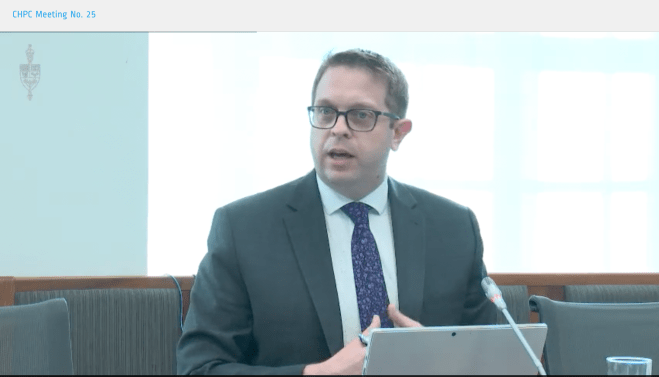
Heritage MPs unofficially kicked off their consideration of the Online Streaming Act Bill C-11 on the occasion of CRTC Chair Ian Scott appearing before them to answer questions about the Commission’s budget in preparation for implementing C-11 and the Online News Act C-18.
MPs asked if Scott believed the extra $8.5 million in special funding committed by Minister Pablo Rodriguez for the Commission to prepare for C-11 was adequate. Scott assured MPs that the Commission has had 100 of its approximately 600 staff working for the last year on issues expected to arise in the implementation of C-11. Asked how long that implementation might take after the Bill is passed, Scott suggested a year for the public consultation and key regulatory decisions and perhaps another year for knock-on changes in licensing.
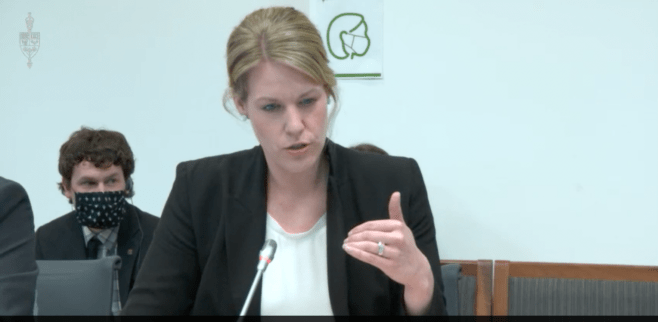
It was all very business like until it was CPC MP Rachael Thomas’ turn to ask questions. Thomas was parachuted into the Committee last year to lead the Conservative filibuster of Bill C-10. Now appointed to the Heritage Committee on a permanent basis, she gave every indication of carrying on where she left off, engaging in aggressive questioning and interruptions of Scott. As time ran out on her allotted six minutes, she accused Scott of “incompetence” for which she was admonished by Committee Chair Hedy Fry: View Video:
Today Heritage Committee (CHPC) MPs tabled their Report in the House of Commons following several days of hearings held on the Rogers-Shaw merger. While expressing a perfunctory opposition to the merger of broadcasting assets already approved by the CRTC, MPs of all parties are demanding the Liberal government mitigate the merger’s impact on local and community news coverage.
The significant threat to local news coverage by the merger will be felt in eight local markets —-Kelowna, Lethbridge, Saskatoon, Regina, Kingston, Peterborough, St.John and Halifax — currently served by Shaw-owned Global News stations that are not part of the merger. Because of existing CRTC regulations, $13 million of the Global network’s annual $131 million news budget will transfer automatically in a windfall to Rogers’ four western City TV stations in Vancouver, Edmonton, Calgary and Winnipeg.
(I’ve written previously in this blog about the complexities of CRTC funding rules for local and community news in the context of the Rogers-Shaw merger. There’s a summary at the bottom of this post.)
There’s some retail politics being played by Heritage MPs for whom support of local news is a must. To their credit (particularly Chair and Liberal MP Hedy Fry) the CHPC has long been an advocate of better regulatory and government funding of local news. Its 2017 Report was two years ahead of the Liberal cabinet in demanding support for journalism.
The Committee’s roster of mitigation measures address the eight local Global News markets, but also other hyperlocal community TVmarkets starved for news coverage:
Juicing the government journalism funding program “Local Journalism Initiative,” a modest $10 million per year fund that focusses on “news poverty” regions and communities.
Expanding the much larger federal journalist salary subsidy program to include broadcast journalism (currently it only applies to written journalism).
Diverting money from the Canada Media Fund (co-funded by cable companies and the federal government to support film production) to local news.
Reversing the impact of the CRTC’s 2016 decision that allowed Shaw Cable to reassign its $13 million funding of community news stations to its Global stations. This would require the CRTC to establish a new Community News fund.
Directing the CRTC to increase cable company contributions to the Independent Local News Fund which will now have the eight Global stations applying as newly independent stations (no longer owned by a cable company) to replace the lost $13 million funding that is moving from their former parent Shaw Cable to Rogers.
MPs would probably not deny the scattershot nature of their recommendations. That’s because funding of local TV news coverage is a patchwork of band-aid solutions developed by the CRTC over the last decade in response to year after year loss margins of nearly 10%.
For advocates of local news, it’s good timing that Heritage MPs are alive to the plight of broadcast journalism. As I wrote in a recent post, they will have an opportunity to do something about it when they convene to review Bill C-11.
***
How the CRTC makes cable companies and broadcasters sponsor local news coverage:
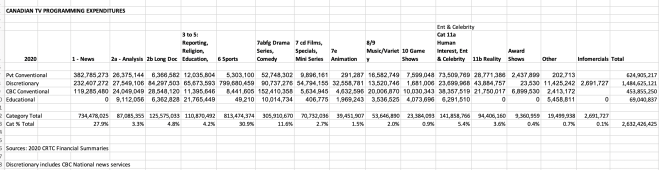
– Major networks Bell CTV, Rogers City-TV, Québecor TVA and Shaw/Corus’ Global News must spend 11% of total TV budgets (about $382 million) on news coverage by their 60 local stations.
– Community TV stations owned by cable companies were for many years the recipients of parent company cash mandated by the CRTC but in 2016 the Commission, in response to intense advocacy on behalf of local TV stations, robbed Peter to pay Paul and gave the option to cable companies to reassign those community TV funds to their own local stations. Shaw Cable took the CRTC up on its offer, transferring $13 million from their community stations to their Global local stations. If and when Shaw Cable is merged with Rogers Cable, that money will be spent by Rogers on its City TV stations.
– The Liberals’ $10 million annual “Local Journalism Initiative” to fund journalism in under serviced communities includes funding some community TV stations.
The drama of the Rogers-Shaw deal without a doubt demonstrates the ability of corporate mergers to focus the popular mind.
Last week Competition Bureau chief Matthew Boswell asked the Competition Tribunal to block the merger on the grounds it will prevent or lessen competition in the mobility markets in Ontario, BC and Alberta where Shaw’s Freedom Wireless business had made great strides in lowering consumer prices.
If there is no settlement or deal (like the mooted Québecor option) that satisfies the Bureau, it is possible that Rogers might surrender and pay off Shaw with a $1.2 billion break-fee. Or more likely, Ed Rogers will fight it out at the Competition Tribunal.
If the Bureau and Rogers decide to lawyer up, expect all manner of legal arguments. The most controversial will be the notorious “efficiencies defence” in section 96 of the Act.
Unique to Canadian competition law, the efficiency defence requires the Bureau to bless a merger —even the creation of a monopoly owned by a foreign corporation— if the gains in allocative efficiency (read: increased output and productivity) outweigh on a net basis the anti-competitive harm of higher consumer prices.
This happened previously in 1998 when Superior Propane bought ICG Propane and, in a number of regional markets, was poised to become the sole propane supplier with the ability to jack up retail prices. The Competition Bureau tried to block the merger. The Competition Tribunal approved it and the Federal Court of Appeal backed that decision.
Analysts at the time reminded everyone how we got the efficiency defence in the first place.
The Mulroney Conservatives had overhauled the Competition Act with Bill C-91 in 1986 and the efficiency defence was explicitly designed to drive the Canadian economy through the growth and success of large Canadian corporations (especially in the resource sector) against global competitors. A “national champions” policy if you will.
C-91 might be judged as just another corporate end-zone celebration amidst the deregulatory era of Thatcher-Reagan. It ran deeper than that, judging by the parliamentary record. The business community anxiety over Canada’s fate as an economic backwater was described this way by Bay Street analysts:
Supporting the debate lay the implicit assumption that, in order to survive, Canada needed disproportionately large enterprises to take on the larger world. Fostering efficiency therefore, was the way to achieve policy objectives. Canada has always been an economy dramatically dependent upon exports. The geographic extent and the small population of the nation itself has historically led to a concentrated industrial structure. The ability to maintain large capitally intensive enterprises in Canada’s essential mining, oil and gas, and forest industries has constantly focused competition law upon the need to foster efficiency.
The debate behind the Competition Act does clarify the perspective. In the Report of the Economic Council of Canada in 1969 it was boldly stated that “competition policy should aim primarily at bringing about more efficient performance by the economy as a whole. Competition should not itself be the objective but rather the most important single means by which efficiency is achieved.” The provisions of the four bills introduced from 1971 to 1983 prior to Bill C- 91, which finally became the Competition Act, all gave prominence to efficiencies. Bill C-913 played the trump card: efficiencies could overrule anti-competitive effects. Not surprisingly the Committee consideration of Bill C-91 contains clear statements of government intent: “Competition itself is not an end, but is rather the most effective means of stimulating efficiency and productivity and Canadian industrial growth … we have to be cognizant of efficiency, international competitiveness and fairness.”
The national champions philosophy underlying the efficiency defence may have prevailed at the Supreme Court but its Superior Propane ruling got a lot of public attention because it impacted retail energy costs. Liberal MP Dan McTeague was able to navigate a private member’s Bill C-249 through the House of Commons in 2003, watering down the efficiency defence to the point of irrelevance.
Bay Street pushed back by reminding everyone of the industrial strategy behind the Mulroney legislation. Analysts pointed out that retail prices should not always be the bottom line in considering allocative efficiency in an advanced economy. They argued that consumers were not always retail customers but other businesses in the supply chain. To them, it was not self evident that consumers are always more important than shareholders.
McTeague’s C-249 foundered for months in the Senate (perhaps an interesting tale to tell) before a federal election in May 2004 wiped the order table clear. It never came back.
Mergers rarely get litigated in a small country like Canada, so it wasn’t until 2015 that another efficiency defence case grabbed public attention. This time it was the Supreme Court’s decision in the Tervita case rooted in a small scale merger of two hazardous waste companies operating a total of three disposal sites in remote British Columbia.
The Tervita case is noted mostly for the slap down the Court gave the Competition Bureau for (in the Court’s view) a less than rigorous effort to prove anti-competitive impact on prices on one hand or to appreciate the the efficiency gains on the other. The merger was approved.
The fallout of that decision within the competition law community was a nearly unanimous call to overrule the Supreme Court through legislative amendment.
Last month the Liberals made a down payment on legislative changes to the Act in its omnibus budget bill, but it didn’t include the efficiency defence. Likely we will hear more about that during the 44th Parliament.
In the meantime the $26 billion Rogers-Shaw deal will keep merger law in the spotlight.
When that deal was brought before the CRTC last year to review the $5 Billion cable and satellite TV assets, the efficiency defence did not apply under the Broadcasting Act. Nevertheless, the rhetorical signature of Rogers’ pitch to the Commission strongly resembled the Mulroney era justification of the efficiency defence: that in the face of strong global communications competitors, Canadian companies must increase scale and investment. It’s similar to an argument that one Bay Street analyst posed hypothetically about a Bell-Corus merger of programming assets.
Oddly, this “national champions” argument didn’t need to be made to the CRTC.
The Commission kept it simple by ruling that retail price competition in cable and satellite retail was unlikely to be lessened, given the assurances provided by Rogers which is only replacing Shaw in markets that are new to Rogers. The Commission also ruled that corporate consumers —meaning the other media companies that buy and sell programming with a merged Rogers-Shaw— were not going to be disadvantaged once the Commission’s existing regulatory guardrails were strengthened.
The Competition Bureau clearly thinks that the situation is different in the $4 billion wireless segment of the overall deal (the wireline ISP business does not seem to be an issue).
For now, Rogers-Shaw has everyone’s attention and the open window on legislative reform provides an opportunity for important political decisions about industrial strategy and competition principles.
That’s a good thing or at the very least entertaining.
Competition Bureau Commissioner Matthew Boswell has without doubt put his organization on the map, an agency that until recently most Canadians had never heard of.
Boswell’s decision as the nation’s competition prosecutor to apply to the Competition Tribunal for an order blocking the $26 billion Rogers-Shaw merger is detailed in a 179 page brief (plus exhibits) posted online. Bottom line: Boswell says the transfer of Shaw’s $4 billion Freedom Wireless business in Ontario, British Columbia and Alberta to Rogers would “substantially lessen competition” in the mobility market, in violation of section 92 of the Competition Act.
The Bureau application took many by surprise, including consumer advocates opposed to the merger. Perhaps this was because on March 2nd ISED Minister François-Philippe Champagne (responsible for approving the transfer of federally regulated radio spectrum in this kind of a merger) publicly signalled that Rogers needed to sell off at least part of Freedom.
In response Rogers dutifully lined up an offer from Xplornet, with at least two other bidders chomping at the bit.
From a distance, it looked like the deal was getting approved. But on May 9th Boswell surprised everyone by saying the Xplornet proposal wasn’t strong enough to continue Freedom’s competitive impact on the wireless market.
Parsing Boswell’s document it appears that the Bureau gave Rogers and Shaw a heads up back in October that for competitive reasons Rogers could not expect to hang on to Freedom. But at the same time the Bureau expressed skepticism that the buyers of a stand-alone wireless operation could exert competitive pressure on mobility prices in the absence of a fibre wireline business providing backhaul transport for wireless traffic, as well as the potential to offer bundled wireline and wireless subscriptions to consumers.
We don’t know if Rogers and Shaw agreed with Boswell’s assessment about the viability of wireless as a stand alone business (although analyst Mark Goldberg has noted that Freedom’s biggest competitive impact is in Ontario where Shaw has no supporting wireline).
We do know that Shaw wanted out of the wireless business because it couldn’t afford the massive investment required to fund the next generation 5G technology. The crucial exchange of correspondence is redacted.
Where does this leave Ed Rogers’ deal?
The Bureau appears to be saying that Shaw can’t sell Freedom to a “big three” telco like Rogers (this would also apply to Telus or Bell).
The Bureau also says Shaw can’t sell Freedom to Xplornet because it is not a strong enough wireline-wireless operation, even though their investors obviously think they can make a go of it. How about rival bids to operate a stand-alone wireless business? Probably not.
That seems to leave P.K. Péledeau’s Québecor as a possibility. Although Québecor brings a solid telco business and deep pockets to the table, it doesn’t own matching wireline assets in Freedom’s coverage areas. So would it pony up an additional $20 billion to buy Shaw’s wireline business too?
The Bureau seems to be hoping for a perfect buyer for Freedom: a telco with a strong regional wireline business to match up to Freedom’s wireless coverage, as well as capital to invest in 5G. And it can’t be Telus, Bell or Rogers.
Or perhaps the Bureau thinks there isn’t a merger deal here at all.
If that’s the case, it’s off to the Tribunal and we can expect Canada’s competition law trial of the century.
A poll commissioned by the Globe and Mail has found that 55% of Canadians support the Liberal government’s push to regulate the Internet, while 37% are opposed. Support was strongest in Québec, opposition strongest on the Prairies. On an age demographic axis, support trended older rather than younger.
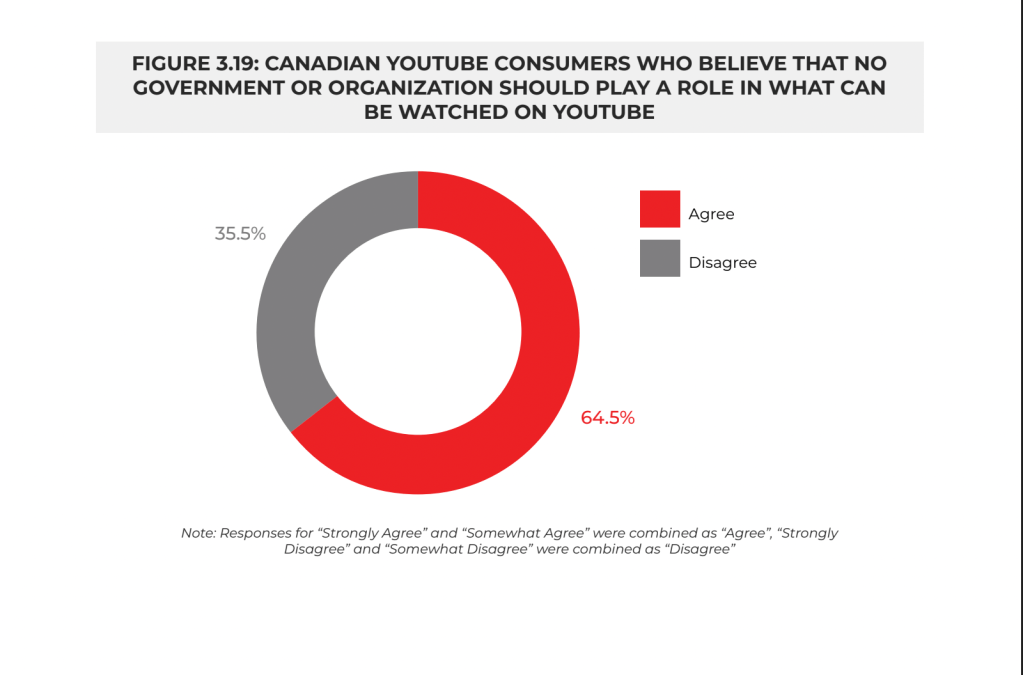
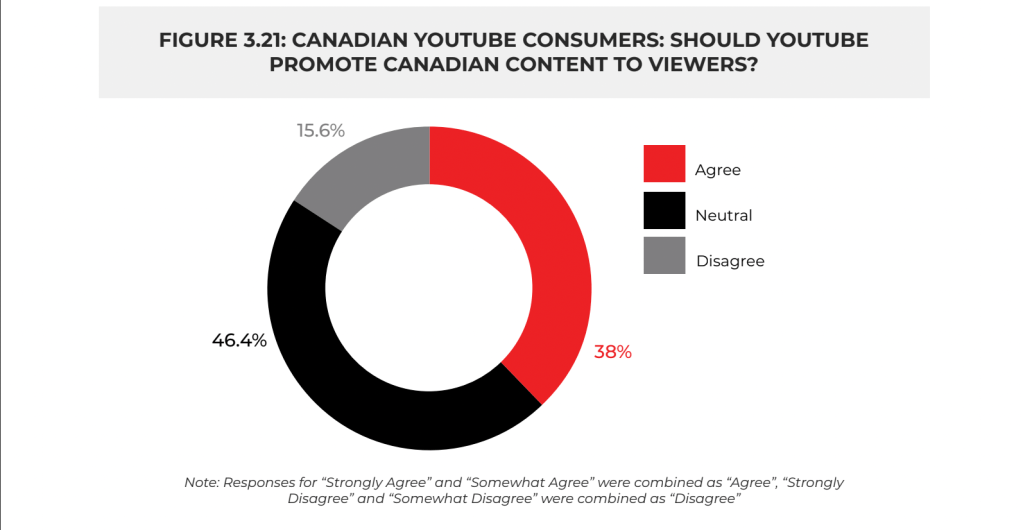
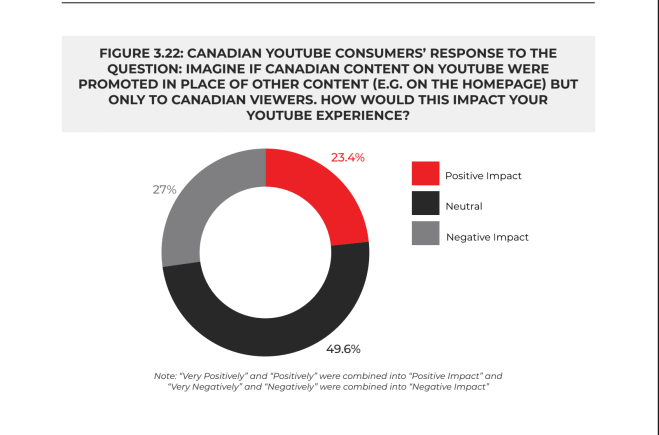
Heritage Minister Pablo Rodriguez is navigating three Internet bills through the House. The Online Streaming Act C-11 will apply the objectives of the existing Broadcasting Act —to create, finance and promote Canadian media content—- to global streaming and content hosting sites like Netflix and YouTube .
The Online News Act C-18 will compel Facebook and Google to pay a better price to news organizations for journalism posted or indexed on their sites.
Both Bills are at Second Reading in the House of Commons. A third regulatory scheme dealing with harmful content posted on the Internet is being discussed by the Minister’s blue ribbon committee and is likely months away from being tabled as legislation.
The Nanos Poll tested opinion for the three bills combined, but only asked for views on the individual pieces of legislation in the case of the C-11 Streaming Bill. Support was higher for this Bill on its own: 67% in favour and only 22% opposed despite a barrage of criticism over the last year from Conservatives and cyberlibertarian critics. This level of support suggests the public is further ahead than politicians, critics and even the Press which continues to cover the Bill as hotly controversial. Support for C-11 was highest in Québec, but otherwise support and opposition did not vary widely between regions.
The public debate will likely reach a fever pitch if the third piece, an Online Harms Bill, is introduced.
The government’s first steps towards managing toxic online speech in a 2021 working paper followed the German model of policing individual posts for harmful content with the preferred method of enforcement being take-down orders.
That approach got a lot of blowback, even from those (myself included) who don’t count themselves as free speech absolutists or cyberlibertarians. The pragmatic challenges of a government regulator drawing red-lines on billions of social media posts are considerable, especially if the go-to remedy is a take-down order followed by appeals and counter-appeals. The platforms themselves would likely protect themselves by over-filtering and over-censoring.
The Minister re-booted the entire process and appointed an expert committee. McGill University’s Taylor Owen, a high profile member of that committee, just published a paper under the banner of the Public Policy Forum and co-written with former Supreme Court Chief Justice Beverley McLachlin.
The McLachlin-Owen report emphasizes a preventative “systems” approach that incents social media platforms to be transparent to the public on how they filter and promote content. Importantly, they recommend a liability backstop “duty of responsibility” for the platforms to do a better overall job of reducing harmful posts without attaching corporate liability on a post-by-post basis.
It would be naive to think that any harms legislation can entirely avoid dealing with uncooperative platforms through coercive regulatory responses, be they fines or take down orders, but the McLachlin-Owen preventative approach is likely to get broader popular support than a straight-up policing of speech.
Meta’s Canadian spokesperson Rachel Curran told Members of Parliament on April 26th that Facebook’s platform is not responsible for misinformation and political polarization.
The finishing line for approvals or rejections of the Rogers-Shaw merger is near. With the CRTC approval of merging cable TV assets in the bag, Rogers now needs to peel off Shaw’s Freedom Wireless from the $26 billion deal in order to satisfy the federal government. They have at least two bidders.
Opponents of the merger are turning up the heat on the Liberals to exercise their veto. The Public Interest Advocacy Centre has filed a appeal of the CRTC ruling to the federal cabinet to stop the merger. PIAC says that Rogers will raise TV prices for Shaw customers by forcing them on to Rogers’ more expensive and fully featured IPTV platform. The difficulty for PIAC is that the CRTC considered this consumer issue and met it by accepting Rogers’ commitment not to do it:
The Commission finds that Rogers’ commitments will ensure that the interests of Shaw consumers will be adequately safeguarded. In particular, the Commission finds that Rogers’ commitment to continue offering television-only packages adequately addresses the Commission’s concerns regarding pricing increases for low-income households and seniors. Accordingly, the Commission expects Rogers to inform Shaw customers that their contracts will be honoured and, 90 days before the end of their current contracts with Shaw, to inform them of what options will be available once their contracts end, including how they will be able to continue to receive the same or a similar level of service. In addition, the Commission expects Rogers to maintain or improve the quality of service for current Shaw customers, as well as to maintain or improve the accessibility of all services for customers with disabilities. Further, the Commission expects Rogers to consult with the relevant communities and take their feedback into consideration with regard to the accessibility of its services.
As you can see, the Commission expressed an expectation of corporate behaviour, not a guarantee, which isn’t surprising given that the CRTC rarely regulates retail television pricing. In addition, Rogers is replacing Shaw in markets where it had no previous foothold, so that weakens any anti-merger case to the Competition Bureau based on the statutory test of “significantly reducing competition.”
In short, this merger is going through unless it is stopped politically.
Coincidentally, this was the week that merger and competition law reform was back in the news.
Senator Howard Wetston issued his report on a consultation he began in late 2021. Having gathered submissions from both establishment lawyers and reform scholars of competition law, the former federal judge and Competition Bureau prosecutor listed a handful of no-brainer reforms that already enjoy consensus support. He recommended assigning the contentious issues to an expert committee.
The Liberals’ federal budget omnibus Bill has picked up on some of the Wetston recommendations and will, for example, uncap the $10 million limitation on Competition Bureau fines in favour of a $15 million cap or 3% of the transgressor’s global revenues. In addition, the legislation clearly contemplates Silicon Valley market power by explicitly defining anti-competitive behaviour to include the “network effects” of users and data that make Big Tech mergers so controversial.
Bill C-18 was back in the news despite being paused at Second Reading. MPs at the Standing Committee on Public Safety and National Security (SECU) had Twitter and Meta officials on the witness stand on April 26th to discuss the “Rise of Ideologically Motivated Violent Extremism in Canada.”
While news coverage of the committee meeting reported Facebook’s Rachel Curran refusing to rule out a reprise of Mark Zuckerberg’s hardball tactics in Australia a year ago— when he yanked the Facebook Newsfeed for a week in a failed attempt to defeat pay-for-news legislation– in fact the video coverage (at the 12:20 mark) reveals Curran diplomatically evading the question raised by Conservative MP Raquel Dancho. She did however anger Heritage Minister Pablo Rodriguez by falsely claiming Facebook had not been consulted about C-18.
What was more interesting about the SECU meeting was Curran test-driving Facebook’s new political narrative: that the whistle-blower allegations made by Frances Haugen are wrong and in fact Facebook has the least influence on misinformation and political polarization compared to politicians and even mainstream media.
We’ll hear much more of that if and when we have an Online Safety Bill to debate.