Catching up on MediaPolicy.ca – The next media disruptor – Canadian film stars at the Oscars – The BBC Tweet Trap – A fresh take on C-18.

From Clement Virgo’s ‘Brother’

March 18, 2023

This week MediaPolicy wrote about a media disruptor coming straight at us at pace: Open AI’s version of an instant-Wikipedia tool called ‘ChatGPT.’ You can activate it by signing up on Microsoft’s Bing search engine.

We tested ChatGPT’s capabilities by asking it if the Online Streaming Act was a good piece of legislation. Then we asked the same thing about the Online News Act.

The results are here.

You may end up agreeing with our observation that ChatGPT’s promise and danger are tied to the quality of the news and information sources that it synthesizes.

That points up the importance of media monitoring organizations like NewsGuard whose ratings of reliable journalism could be vital to the programming of Bing’s ChatGPT and whatever Google Search comes up with. Media commentator Ben Smith discusses that here.

Of course the disinformation empire might strike back. The MAGA-booster US Congressman Matt Gaetz wants NewsGuard “investigated” for being too hard on MAGA-friendly news outlets.

Gaetz would like that investigation to be carried out by the House Republicans’ newly minted  Judiciary Select Subcommittee on the Weaponization of the Federal Government.

***

It was a good week for Canadian movie-making.

Sarah Polley won an Oscar for ‘Women Talking’ and Daniel Roher won for his documentary feature on Russian democrat and political prisoner ‘Navalny.’

On the CanCon side of the moon, Barry Hertz gives a rave review to the new release “Brother set in Toronto’s east end. Check out the trailer, here.

Another CanCon release on its way is the documentary 299 Queen Street West,” the success story of ‘80s upstart MuchMusic.

***

Journalists and media nerds can’t have missed the Gary Lineker/ BBC/ Conservative Party flap in the UK.

The former football star and top broadcaster Lineker was suspended by BBC management for reproaching the Conservative government on Twitter for its harsh policy on migrants. His fellow BBC sports commentators downed tools, BBC management relented, and the cozy connections between the BBC Chairman and the Conservative Party dominated coverage of the entire affair.

In the aftermath Press Gazette published an inventory of news outlet guidelines for social media activity of its journalists. 

***

Last week’s escalation of the battle over the Online News Act Bill C-18 by Meta —making its strongest threat yet to ban news from Facebook— was certain to get a strong response from the Liberal government.

The Liberals are reconvening the Commons Heritage Committee seeking all-party support for five days of investigation into Meta and Google market power internationally and their attempts, through threats or public campaigns, to bully legislators into backing off from regulatory efforts like C-18. The Globe and Mail story is here.

The motion includes summoning senior executives from both Google and Meta with Meta CEO Mark Zuckerberg as the headline attraction.

Zuckerberg won’t show up of course (he defied similar summonses issued by both Canadian and British Parliaments in the wake of the 2018 Cambridge Analytica scandal.)

The motion includes a subpoena of both Google and Meta’s internal communications about throttling Canadians’ access to news, a repeat of the Committee’s previous summons snubbed by Google.

It goes on to demand the platforms’ documentation of each company’s communications with possible proxy campaigners against C-18 and any Canadian who has communicated with them about regulation. That move from the investigatory to the inquisitorial is already attracting attention and the Liberals might not get support for that from the other parties.

It’s all political theatre since the die is cast on C-18: the Bill has long passed the House and is being prepared for consideration by the Senate Transportation and Communications Committee.

Nevertheless the threats by Meta (and Google) are reigniting the policy debate on how government ought to respond to Big Tech’s role in beggaring the Canadian news industry.

This brings us to our recommended weekend read penned by Konrad von Finckenstein and Peter Menzies.

Finckenstein and Menzies have never bought into the central policy argument underpinning Canada’s Bill C-18 and the Australian Newsmedia Bargaining Code, that Google and Facebook’s market power over news distribution results in news outlets being under compensated (or uncompensated) for their news content made available on those platforms.

But Finckenstein and Menzies do make a policy link to the platforms’ other oligopoly, their market power in digital advertising that has swept away market share from newspapers and broadcasters.

That leads them to propose abandoning C-18 and instead negotiating a news fund with Google:

Instead of forcing [Google and Facebook] into a forced and obviously loveless marriage based on a debatable economic foundation, a simpler immediate solution is available. Google has publicly said that it is willing to pay into a fund to support journalism producers.

Why not take them up on it?

Digital platforms over a certain size (say $75 million) would have to pay a given percentage (say five percent for the sake of argument) of their gross advertising revenue into a fund administered by a board set up by key journalistic bodies in Canada representing all sectors whose primary business is news.

The proceeds—in a manner somewhat similar to the Canada Media Fund but unburdened by its subjectivity and language politics—would be paid on a per (journalist) capita basis to each organization. The government would have nothing to do with it.

***

If you would like regular notifications of future posts from MediaPolicy.ca you can follow this site by signing up under the Follow button in the bottom right corner of the home page; 

or e-mail howard.law@bell.net to be added to the weekly update; 

or follow @howardalaw on Twitter.
ChatGPT, journalism and Bill C-18

March 15, 2023

OpenAI just released its latest version of ChatGPT and the imagination runs wild. ChatGPT-4 transcribes video into text. 

The first thing that jumps to MediaPolicy’s Luddite mind is that ChatGPT-4 will put the folks creating Described Video out of work.

A similar concern about automation has already struck both the makers and consumers of journalism, just as educators at universities and high schools wrestle with their torment.

There is a well-known aphorism about innovation: we tend to overestimate its impact in the short-run and underestimate it in the long-run.

Less than six months after OpenAI’s release of its prototype, these are early days. Perhaps you have already taken ChatGPT out for a test drive.

MediaPolicy.ca has done the same, starting with a couple of familiar topics, the federal Bills C-11 (Online Streaming Act) and C-18 (Online News Act).

Posed to ChatGPT through the Microsoft Bing search app:

Q. Is Bill C-11 the Online Streaming Act a good law?

The Online Streaming Act is a bill that aims to regulate how streaming platforms like Netflix, Disney+ and Spotify must treat all the audio-visual content posted online³. It would require them to contribute to the creation and promotion of Canadian content¹²⁴. The bill passed its third reading in the Senate last month with 26 amendments¹².

Whether it is a good law or not depends on your perspective and values. Some people may think it is a good law because it supports Canadian culture and diversity, creates more opportunities for Canadian creators, and ensures fair competition with traditional broadcasters⁴. Others may think it is a bad law because it interferes with consumer choice, imposes unnecessary costs on streaming platforms, and violates freedom of expression⁵.

Source: Conversation with Bing, 2023-03-14

(1) Bill C-11 – everything you need to know about Canada’s new Online …. https://http://www.techradar.com/features/bill-c-11-everything-you-need-to-know-about-canadas-new-online-streaming-act Accessed 2023-03-14.

(2) A new streaming bill is close to becoming law in Canada. Here’s how it …. https://http://www.cbc.ca/news/entertainment/bill-c-11-explained-1.6759878 Accessed 2023-03-14.

(3) A new streaming bill is close to becoming law in Canada. Here’s how it …. https://http://www.cbc.ca/news/entertainment/bill-c-11-explained-1.6759878 Accessed 2023-03-14.

(4) Pass Bill C-11 | CMPA. https://cmpa.ca/PassBillC11/ Accessed 2023-03-14.

(5) Online Streaming Act back in House, minister intends to reject some …. https://http://www.cbc.ca/news/politics/online-streaming-bill-final-debate-in-house-of-commons-1.6772177 Accessed 2023-03-14.

I tried a different question in hopes of a more in-depth answer. 

Q. How does Bill C-11 regulate media?

Bill C-11, also known as the Online Streaming Act, creates a framework to regulate digital streaming platforms like Netflix, Disney+ and Spotify, and would require them to contribute to the creation and promotion of Canadian content12. The bill passed its third reading in the Senate last month with 26 amendments32. The bill aims to modernize the 1991 Broadcasting Act and regulate how streaming platforms must treat all the audio-visual content posted online4.”

As you can see, a similar but shorter answer. 

I tried something more direct  —“write me a detailed summary of Bill C-11” — and ChatGPT generated an almost identical and terse reply to the previous question about how the legislation would regulate media.

But this time Microsoft supplemented the answer with several tiles of news stories (quaere do the news outlets have a commercial arrangement with Microsoft for making these available on Bing?) 

On to test number two. MediaPolicy asked Bing/ChatGPT if “Bill C-18 the Online News Act is a good law.

Bill C-18, also known as the Online News Act, is a Canadian bill that requires platforms like Facebook and Google to pay publishers for hosting links to news stories1. The bill has been criticized for being bad for journalism and bad for Canada1. The bill has also been criticized for mandating payments for merely facilitating access to news2. However, the Liberals argue that Bill C-18 would help the Canadian news industry, which has seen massive drops in advertising revenue over the past decade3.

I hope this helps. Let me know if you have any other questions.

The footnoted sources with this last reply were skewed towards the Bill’s critics (Michael Geist, Sue Gardner), but not one-sided: they included a debunker on the trade issue from Hugh Stephens and a good explainer of the legislation from the Globe and Mail. 

In this C-18 reply, ChatGPT’s shortcomings were of omission: the answer actually misleads the reader into thinking the Bill is about lost advertising revenue (that’s certainly relevant to the politics) and fails to inform the reader of the stated intent of the Bill: requiring Tech platforms with monopolistic market power over news distribution to pay compensation for ‘making available’ editorial content without a license.  

Following our tests, here are some provisional conclusions about the state of ChatGPT and journalism:

(1) It will get better as a research tool, especially in its use of links to further research. In that way, it threatens to put Wikipedia out of business (unless that’s a classic short-term overestimation).

(2) So far the sources are confined to legitimate news outlets and academic opinion blogs (overlooking the MediaPolicy firehose, reader be outraged).

(3) As a journalistic tool to explain the world, early ChatGPT is very much an unreflective minute-taker, an automated imitator of ‘both sides’ journalism. 

(4) It is a great commercial opportunity for somebody, presumably Microsoft with Google soon to follow.

(5) If Microsoft Bing was a “designated news intermediary” under Bill C-18, its explicit use of news tiles in its ChatGPT replies would certainly be “making news content available” as contemplated by the Act. As for Bing’s prose replies to reader interrogations, a question arises: if a new version of ChatGPT stripped out the news links and just scraped news content from multiple journalist sources, would Microsoft escape the applicability of C-18?

For more, have a read of The Logic CEO David Skok’s comments on this topic.

Here’s an enthusiastic product review of ChatGPT-4 from PC Magazine.

***

If you would like regular notifications of future posts from MediaPolicy.ca you can follow this site by signing up under the Follow button in the bottom right corner of the home page; 

or e-mail howard.law@bell.net to be added to the weekly update; 

or follow @howardalaw on Twitter.
Catching up on MediaPolicy.ca – Meta goes nuclear on C18 – Google defies MPs.

March 11, 2023

Yesterday morning MediaPolicy posted here to bring you up to date on the reaction to Heritage Minister Pablo Rodriguez’s rejection of the key Senate amendment to Bill C-11 limiting regulation of social media posts.

The same post updates you on CRTC Chair Vicky Eatrides’ dramatic re-boot of wholesale ISP regulation.

Yesterday afternoon Google Canada representatives appeared under summons at the Commons Heritage Committee to explain themselves on account of Google’s six-week throttling of Search results for Canadian news articles. The test, which ends March 16th, affects 1.2 million Canadians including pro rata thirteen Members of Parliament.

But today the focus shifts to Meta which told the Globe and Mail last night, in a renewed threat, that it will permanently block news posts on Canadian Facebook accounts should Bill C-18 pass the Senate. It was unclear from the Meta statement —-expressed in its most categorical terms yet—if the blocking of news would include breaching its existing commercial agreements with numerous publishers and deleting the pages of hundreds of Canadian news outlets.

Both companies used similar tactics in Australia two years ago before legislation was enacted requiring compulsory licensing payments for news posts. The legislation requires news outlets to prove that the platforms’ monetization of their news content exceeds the value of free distribution.

C-18 is modelled on the Australian law.

Meanwhile, the Heritage Committee’s hazing of Google representatives was a debacle.

Not surprisingly, Google’s American chief executives refused to obey the summons that has no extraterritorial effect (although they visited Ottawa previously to lobby against C-18).

Instead Google sent Canadian Vice President Sabrina Geremia to bob, weave and prevaricate in her answers to questions about the news throttle and whether it was done to influence votes in the Senate.

It also became clear that Google was defying the summons to provide the Committee with internal e-mails and texts related to the throttle.

Mid-way through the proceeding, MPs unanimously voted to require Geremia and her policy colleague Jason Kee to swear witness oaths in hopes of getting less mendacious answers. It didn’t change much.

This caused MPs to tee off in some memorable moments: here is Conservative MP Kevin Waugh doing his disappointed grandpa thing and Liberal MP Chris Bittle channeling Johnnie Cochran:

Several MPs pointed out that Google’s failure to notify the unsuspecting 1.2 million Canadians of the news throttle meant they were unaware of breaking news, potentially safety related.

Google’s Geremia did her best to state what the web giant wants.

It wants C-18 dead.

Instead, it would like the cost certainty of contributing a negotiated lump sum to a Canadian News Fund. To that end, Kee pointed to a deal that Google signed with Taiwan earlier this week.

The serendipitous agreement is notable for its cost certainty but also its price: $3 million USD annually for three years. That compares to the voluntary compensation agreements signed by Google in Australia —with a population similar to Taiwan—- reputedly worth around $100 million USD per year.

Geremia and Kee provided an inventory of objections to C-18.

Their main objection was to ‘payment for links.’ That’s a reference to a key provision in C-18 (and the Australian legislation) that scopes in news content ‘made available’ in Search results as opposed to the full alphanumeric text posted on the Results page (its also unclear how video news could be captured other than through ‘links’).

The debate over the trope ‘payment for links’ can be saved for another MediaPolicy post.

But what Google representatives claimed yesterday was that ‘made available’ means C-18 requires platforms to reward news outlets for each link posted, incentivizing media outlets to flood the Internet with a high volume of ‘click bait’ and low quality journalism.

Concerned about unlimited liability for each link to worthless news content, Geremia implied C-18 metes out compensation to news outlets at a fixed ‘per link’ price.

The Bill does no such thing.

First, it allows Google and Meta a crack at negotiating a lump sum for all news content provided by news outlets either as a group or individually (as they did in Australia). Practically that means Google can negotiate a series of News Funds.

If that negotiating opportunity doesn’t work out, an arbitrator will decide what a news outlet’s body of platform-linked journalism is worth (minus the free distribution) and there is no inkling of a ‘per link’ tariff in this key provision of C-18:

Factors

38 An arbitration panel must take the following factors into account in making its decision:

(a) the value added, monetary and otherwise, to the news content in question by each party, as assessed in terms of their investments, expenditures and other actions in relation to that content; and

(b) the benefits, monetary and otherwise, that each party receives from the content being made available by the digital news intermediary in question.

Another Google allegation is that House amendments to C-18 force the platforms to compensate certain news outlets even if they don’t produce news.

Again, this is false.

Likely the Google claim is a reference to amendments that pre-qualify campus and community news organizations as legitimate news outlets, as well as Indigenous news outlets, similar to the Bill’s pre-qualification of the many news outlets that have met the test of a legitimate news outlet under the government’s ‘QCJO’ aid to journalism program.

Those amendments do not however relieve those news organizations of being able to point to a body of news content that is of net benefit to the platforms under section 38, quoted above.

We could go on but that’s enough on C-18 for a Saturday morning.

***

If you would like regular notifications of future posts from MediaPolicy.ca you can follow this site by signing up under the Follow button in the bottom right corner of the home page; 

or e-mail howard.law@bell.net to be added to the weekly update; 

or follow @howardalaw on Twitter.
Is C-11 doing its final lap around the Parliamentary oval? Also, news on wholesale ISP pricing.

March 10, 2023

This week was so packed full of media news that the National Post’s beat reporter posted a tweet in which she good naturedly begged newsmakers to take a break, having written three stories in 20 hours.

One can already hear community news journalists reacting ‘three stories, that’s a morning’s work for us.’

But point taken and the week isn’t over: this afternoon at 1 p.m. Heritage Committee MPs will have a go at Google executives for throttling Canadian news in an oafish attempt to intimidate Canadian Parliament.

The update on the Liberals’ Online Streaming Act C-11 is that Heritage Minister Pablo Rodriguez has accepted most of the Senate’s amendments but not the most contentious.

The big change to C-11 the Senate wanted was to confine the regulation of uploaded videos and music streaming on YouTube, Spotify and TikTok to the commercial products of conventional broadcasters and music labels, forever ousting the CRTC from dealing with content uploaded by independent YouTube and TikTok artists but also any kind of ‘digital first’ content in the distant future.

That’s been rejected by the government. The MediaPolicy view is that the CRTC should retain the authority to regulate but exempt YouTuber and TikTok activity for now and review it all in a few years if the trends in content distribution change.

The Bill has gone back to the House, which must vote on the Minister’s yes’s and no’s to the Senate amendments.

The reaction of the two Independent Senators (Paula Simons and Julie Miville-Dechêne) who crafted the ‘YouTuber’ amendment, winning a majority of Senate support, was of course disappointment.

The Toronto Star spoke to Simons, the former Edmonton Journal columnist:

“I certainly fought for this amendment, in a way frankly, that I never have before as a senator,” Simons said, sharing how, behind the scenes, she and her Senate colleague had phoned, emailed and “buttonholed” a series of cabinet ministers to get them on board.

“We’re still trying to figure out what we do next, because I don’t think either of us is really prepared to just shrug and say, ‘Oh, well, we did our best.’”

The former Radio-Canada journalist Miville-Dechêne struck a less combative tone about a Senate push-back in an interview with La Presse Canadienne:

La sénatrice ne s’avance pas sur la possibilité qu’on assiste à un «ping-pong» législatif entre la Chambre des communes et le Sénat qui retarderait l’adoption du projet de loi.

«Il y a 80% des sénateurs en ce moment qui sont des indépendants, donc on va devoir voir. Je pense que tout le monde va réfléchir à ça, lire les amendements, réfléchir à ce qu’ils vont faire, mais je n’oserais pas prédire ce qui va se passer», dit Mme Miville-Dechêne.

The Minister’s revisions are destined to pass the House as neither the NDP nor the Bloc appear to have wavered in their support.

On the floor of the House the debating points haven’t changed much after two years and countless days of committee hearings. However Conservative MP Rachael Thomas had an amusing new talking point, that C-11 is being driven forward by not only traditional broadcasters but by “the big union bosses.”

It seems common ground that Senators would not be flouting Parliamentary convention if they voted down at least once a House version of C-11 missing their key amendment.

That bicameral ping-pong would be likely if it was only up to Senators on the Transportation and Communications Committee, but it’s anyone’s guess if the full plenary of Senators are similarly invested in their amendments given the clear will of the House.

***

Meanwhile in the world of paying the household bills, CRTC chair Vicky Eatrides didn’t take long to respond to the February 13th Policy Directive from Innovation Minister François-Philippe Champagne on wholesale ISP regulation.

The new chair announced a CRTC proceeding that she expects to result in lower wholesale prices offered by telcos to independent ISPs like TekSavvy.

Confident that a ‘just and reasonable’ wholesale price should be lower than the rates set by the Commission in 2021, Eatrides jump started a months-long legal process by ordering an immediate ten per cent cut to the portion of the wholesale rate calibrated to the Independents’ daily traffic on the telco networks.

That’s possibly a five per cent cost savings for the Independents that potentially could get passed along to consumers. A TekSavvy spokesperson dismissed the rate reduction as insignificant.

Eatrides also suggested the Commission was warm to an interim order granting the Independents access to Bell and Telus’ ‘last mile’ fibre-to-the-home (FTTH) networks which are key to Independents being able to offer customers download speeds greater than 50 mbps.

Only last week MediaPolicy opined that Eatrides was going to have produce some regulatory magic to ‘do something’ in response to the Minister’s clear demands for lower prices and more widely available high-speed downloading.

Eatrides managed this by pushing out a written decision on an outstanding (since the fall of 2021) CRTC proceeding on network configuration, declaring the Commission’s 15-year-old plan to transition Independents to a superior business model of ‘disaggregated’ network access to be dead as a door nail, a failed experiment that could never have worked.

This allows her to clear the legal decks for revisiting lower rates on the current ‘aggregated’ network and FTTH.

There’s more: the new chair also mused aloud that retail price regulation was back on the table if prices don’t come down, a regulatory verboten for a generation. 

An excellent summary of Eatrides’ announcement can be found in Cartt magazine here.

***

If you would like regular notifications of future posts from MediaPolicy.ca you can follow this site by signing up under the Follow button in the bottom right corner of the home page; 

or e-mail howard.law@bell.net to be added to the weekly update; 

or follow @howardalaw on Twitter.
Catching Up on MediaPolicy.ca – TekSavvy’s Gambit – ‘The Perfect Story’ of Ismael – Google subpoenaed by MPs

March 4, 2023

There is as yet no news about final approval or rejection of the Rogers-Shaw merger by ISED Minister François-Philippe Champagne. Possibly he will keep us guessing right up until the March 31st financing ‘deadline’ set by the two telcos.

Filling in the dramatic pause is TekSavvy’s complaint to the CRTC that the wireline and wireless network sharing arrangements made between Rogers and Vidéotron for British Columbia and Alberta is an illegal sweetheart deal.

The legal briefs from all and sundry are filed now. TekSavvy wants (a) to void the arrangements or (b) give TekSavvy the same deal as Vidéotron or (c) give all independent ISPs lower wholesale prices and full network access across the country.

MediaPolicy explains, here.

Also, Konrad Yakabuski has a good perspective piece on the merger approval itself.

***

You may have missed Canadian journalist Michelle Shepherd’s documentary The Perfect Story released last year. It’s about Ismael Abdulle, a Somali teenager brutalized by Al-Shabab whose story inspired Shepherd’s reporting. No spoilers here, but the perfect story of the perfect refugee has a twist and an unexpected emotional punch.

Shepherd’s focus on Ismael and his story is unswerving when it could easily have been about the journalist and that tension hangs over the entire project.

You can watch for free on the NFB site.

***

Google’s provocative censorship of news searches resulted in the Heritage Commons Committee meeting this week to summons senior Google executives to appear before MPs, with internal documents relevant to the manipulation of their news algorithm.

The Globe & Mail coverage of the Committee meeting tells you what you need to know.

The meeting is set for Monday March 6th. As of today it seems that top American officials are going to defy the MPs’ summonses, which have no extraterritorial power, leaving their Canadian employees Sabrina Geremia and Jason Kee to take the heat.

***

We are all drawn to dramatic inflection points in studying trends and there is another one coming up soon in the shifting market of global advertising revenues.

It’s expected in the next two years that the soaring ad revenues of Amazon —-in third place of US digital ad revenues behind Google and Facebook—- will surpass the market share of all ad revenues earned by every newspaper and magazine publisher combined. In the world.

***

If you would like regular notifications of future posts from MediaPolicy.ca you can follow this site by signing up under the Follow button in the bottom right corner of the home page; 

or e-mail howard.law@bell.net to be added to the weekly update; 

or follow @howardalaw on Twitter.
The big picture: TekSavvy’s ‘undue preference’ complaint against Rogers and Bell.

February 28, 2023

Throughout my career as a union representative in media I bored everyone with an overly precious aphorism about resolving employee grievances.

It’s never about what’s it about. It’s always about something else.

And so it is with independent ISP TekSavvy and its CRTC complaint arising out of the embers of the Rogers-Shaw merger litigation.

Last month TekSavvy responded to the Federal Court of Appeal’s approval of the merger by filing a CRTC complaint alleging that Rogers made the merger palatable only by striking a sweetheart deal with Vidéotron to provide the Québec-based telco with access to its Alberta and BC networks at favourable ISP wholesale rates.

The rates at which the major telcos sell wholesale access to their networks to independent ISPs are set in a ‘tariff’ of ‘just and reasonable rates’ by the CRTC —most recently in 2021— but ‘off tariff’ agreements are permitted and negotiated among the major telcos and between telcos and independents. 

Without knowing the confidential wholesale rates agreed between Rogers and Vidéotron, TekSavvy’s filing claimed they must be too generous to be anything other than an illegal ‘undue preference,’ contrary to section 27 of the Telecommunications Act.

Now the major telcos have all filed responses to Tek Savvy’s complaint. Rogers has provided the impugned rates negotiated with Vidéotron, redacted for the public.

We will see what the CRTC makes of them.

But all of that describes TekSavvy’s complaint far too narrowly as demonstrated by what TekSavvy has asked for, beyond the obvious request that it be offered the same deal Vidéotron is getting from Rogers to build an ISP business in the West.

To begin with, TekSavvy folded into its Rogers complaint a grievance against Bell for striking an OTA with the Québec-based ISP re-seller EBox, recently acquired by Bell.

The offending off-tariff privilege in this case would be Bell giving EBox network access to its prized ‘last mile’ fibre-to-the-home (FTTH); that fibre technology enables the sale of high-speed downloading to customers. This re-seller access to FTTH is not currently required by the CRTC and appears to be years away from becoming mandatory.

Bell’s regulatory filing makes short work of TekSavvy’s complaint. Since purchasing EBox a year ago Bell has absorbed its assets, dissolved the former corporation, and is running EBox as a flanker brand. There is no off-tariff agreement on favoured access to FTTH because Bell cannot sign an OTA with itself. Point final.

But winning that dispute is not really the point of TekSavvy’s application, either with respect to Bell’s FTTH or obtaining more favourable ISP rates from Rogers in two provinces where TekSavvy has a limited presence.

Neither is the real point of its application to put more heat on ISED Minister François-Philippe Champagne to reject the Shaw-Rogers merger now approved by the CRTC, the Competition Tribunal and the Federal Court of Appeal. The Minister will get around to that approval sooner or later and surely TekSavvy knows it.

No, the point of TekSavvy’s application is to light a fire under the CRTC on wholesale ISP rates and FTTH access across the country, especially in TekSavvy’s home turf in Ontario.

That’s why it’s real ‘ask’ of the Commission is to short circuit a number of tortoise-like regulatory reviews of wholesale ISP rates and access and immediately give TekSavvy lower rates and FTTH access on an interim basis.

That’s not going to happen either. 

As the telco filings point out, Tek Savvy’s real complaint is against the CRTC’s 2021 ruling on wholesale rates repealing its 2019 rate reductions because of costing errors in the Commission’s 2019 ruling. 

That’s a very long story that MediaPolicy.ca tells here.

As the telcos point out, TekSavvy’s appeal to federal cabinet to restore the 2019 rates failed. Its federal court appeal is pending (and doomed). It is out of time to file a ‘review and vary’ motion to the Commission itself. It is trying desperately to resurrect a dead file.

Except this file is anything but dead. Politically it is very much alive.

That life was injected by at least two things.

The Commission’s 15-year-long strategy to coax the growth of independent re-sellers as a competitive force in the ISP market is in tatters if one is judging outcomes by the number of re-sellers that have sold out to major telcos (VMedia, EBox, Distributel, and Oxia). 

The other intervention has come from Minister Champagne  —who would very much like this eternally troublesome file to cool down— in the form of his new Policy Directive to the CRTC.

That Policy Directive makes it clear the Minister is impatient for the CRTC to ‘do something’ to bring down ISP and mobility prices in Canada and to provide FTTH access to independents.

Judging from the messaging from newly appointed CRTC Chair Vicky Eatrides, she also wants to ‘do something’ and quickly.

TekSavvy’s wants that doing-something to be lower wholesale ISP rates.

We’ll see what regulatory magic the Commission has in mind. 

The CRTC has been convinced for twenty years that the two things needed to give Canadians better and cheaper Internet services are network investment and more competition, by which it is presumed to mean ‘more competitors.’ 

More investment and lower prices may or may not be perfectly compatible in whatever regulatory nirvana the CRTC comes up with.

In the meantime the Commission sails on, like a ship navigating to port through the fog.

***

If you would like regular notifications of future posts from MediaPolicy.ca you can follow this site by signing up under the Follow button in the bottom right corner of the home page; 

or e-mail howard.law@bell.net to be added to the weekly update; 

or follow @howardalaw on Twitter.

Catching Up on MediaPolicy.ca – Liability Exemptions for YouTube – Google fiddles with news searches – Legault’s last minute demand for C-11 amendments.

AP Photo from the 2015 Paris Massacre

February 25, 2023

All eyes were on the US Supreme Court last week as judges heard legal arguments against Google from the bereaved parents of Nohemi Gonzalez. An American student, Gonzalez was gunned down in the 2015 Paris massacre by ISIS terrorists who may have been recruited over YouTube.

It’s all about how broadly the courts should apply the liability exemption for platforming dangerous content granted by section 230 of the 1996 Communications Decency Act.

The urban legend about that exemption is that it created today’s Internet. There’s no matching exemption in Canada, but YouTube wants one in the Online Safety Bill that Heritage Minister Pablo Rodriguez has promised.

The judgment of the US court won’t be delivered for several months. The constitutional weight of First Amendment free speech rights will certainly affect the outcome.

If you would like to take the temperature on the sub-49th climate on social media and free speech, read the report on the lower court injunction ruling rendered by an Obama-appointed judge on a New York state law that required Rumble to adopt an anti-hate code of conduct.

***

Speaking of our friends at Google, the web giant cast a shadow over our Heritage Minister’s famously sunny disposition by launching a five-week test of deleting (or down-ranking?) search results for “varying degrees of Canadian or international news.”

“We’re briefly testing potential product responses to Bill C-18 that impact a very small percentage of Canadian users,” wrote a Google spokesperson. “We run thousands of tests each year to assess any potential changes to Search.”

The Google test affects one in twenty-five Canadian users, so even though it wasn’t formally announced as part of Google’s campaign against the Online News Act Bill C-18 it was meant to be noticed.

Google’s actions provoked the expected responses from those supporting and opposing C-18. Liberal and NDP members of the Commons Heritage Committee raised the possibility of summoning Google representatives for a grilling by MPs.

It’s not clear what Google’s end-game is.

The Bill will become law with support from the Bloc and the NDP. The most achievable amendment that Google desired —narrowing the ‘undue preference’ regulation of the news search algorithm— was passed by the House. The unachievable amendment that Google desires —-scrapping the Bill in favour of a Google donation to a journalism fund—- will not be passed.

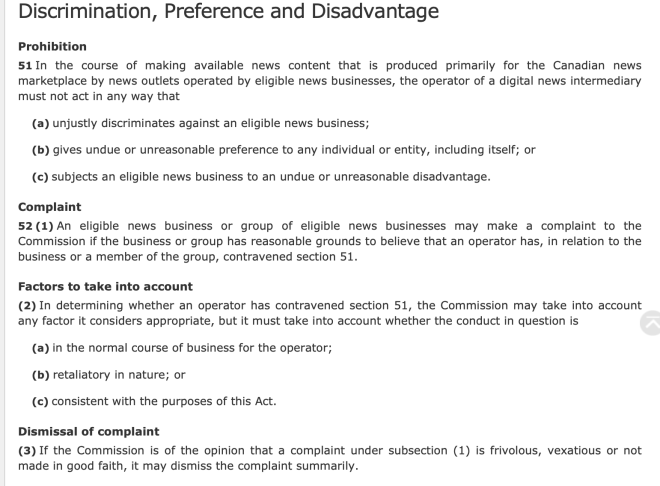
Once the Bill is enacted, such algorithm-tampering designed to penalize Canadian news businesses will be contrary to sections 51 and 52 and will be subject to a fine of up to $10 million for the first offence.

All Google is doing is convincing supporters of C-18 and regulation of Big Tech in general that they were right in the first place. The Toronto Star’s Navneet Alang wrote about that, here.

The Senate gets to work on C-18 next month in Committee. MediaPolicy.ca reported on the warm-up debate in Second reading in the upper chamber, here.

***

There was an odd twist (is there any other kind?) in the Parliamentary saga of Bill C-11, the Online Streaming Act.

After the Bill passed both the House and the Senate, the Legault government in Québec made public demands for new amendments as part of the final reconciliation of House and Senate versions of the Bill.

At the top of the Premier’s list, he wants Ottawa to embed in C-11 a special consultation with Québec on the draft Policy Directive that Heritage Minister Rodriguez is expected to release as broad guidance to the CRTC on implementing a long list of regulatory requirements for online undertakings.

In ordinary circumstances, Legault’s belated intervention would be summarily dismissed as posturing.

Whatever the outcome, Len St. Aubin wrote an excellent analysis of the Parliament Hill politics and competition for nationalist votes in Québec.

***

If you would like regular notifications of future posts from MediaPolicy.ca you can follow this site by signing up under the Follow button in the bottom right corner of the home page; 

or e-mail howard.law@bell.net to be added to the weekly update; 

or follow @howardalaw on Twitter.

Spring training for the Senate’s C-18 debate is over, get ready for Opening Day.

February 20, 2023

Senators sitting on the upper chamber’s Transportation and Communications Committee gave us a sneak preview of their opinions on the Online News Bill C-18 at Second Reading on February 7th and 9th.

The sponsor of C-18 in the Senate is Peter Harder of the Progressive Senate group. His lengthy resumé includes stints as chief of staff to Joe Clark as Leader of the Opposition and the Liberal Government Representative in the Senate.

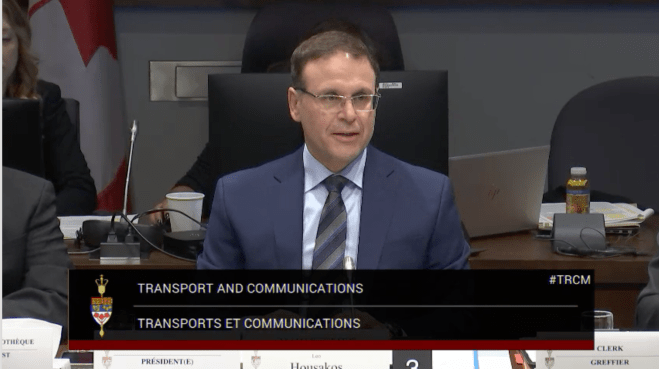
The other dramatis personae of the debate include familiar faces from the Senate’s hearings on Bill C-11: Conservative point-person Leo Housakos, former CTV News host Pamela Wallin, and the two Independent Senators (both former journalists) who co-authored a key C-11 amendment, Paula Simons and Julie Miville-Dechêne. 

As described in several MediaPolicy.ca posts, the policy idea behind Bill C-18 is that government should intervene in the highly concentrated marketplace of online news distribution and force Google and Facebook to pay license fees to news publishers and broadcasters.

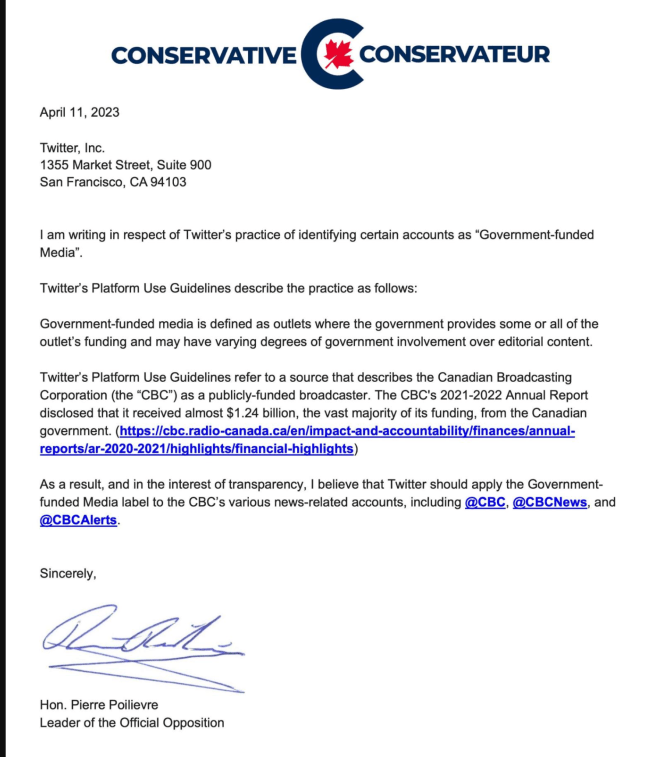
Once the Committee begins deliberations on C-18 in late March, expect the Conservatives to offer tightly scripted messaging carried over from the Commons Heritage Committee: that neither the CBC nor fat cats Bell CTV and Rogers should be compensated by the Big Tech platforms for their news product (but Québecor’s TVA and Postmedia should).

And if the C-11 debate is a guide, get ready for combat by metaphors: Senator Housakos has already suggested that compelling Google and Facebook to make compulsory license payments to news publishers is like Uber drivers demanding a cut of a restaurant bill for connecting diners with restaurant owners. (If you are confused by that metaphor, so am I).

Miville-Dechêne’s Second Reading speech expressed restrained enthusiasm in support of the Bill, her first choice would have been requiring Google and Facebook to finance a single source News Fund (ditto, MediaPolicy.ca). 

Simons on the other hand ran the skull and cross bones up the mast, offering almost every policy objection to C-18 available, beginning with Facebook’s claim that it doesn’t benefit financially from hosting news content (Simons also opposes the federal government’s QCJO subsidies to journalist wages).

The best argument she marshals against C-18 is the possibility of Google or Facebook acquiring undue influence over newsrooms once licensing payments begin to flow (or more precisely ‘flow more,’ as there are already some voluntary licensing agreements in place).

As a rule Simons (and several of the other Senators) bring a refreshing plain-speaking to policy debate. But their credibility as former journalists comes with a special responsibility to support the Bill or else offer a reasonable alternative.

One such alternative is the elimination of any government intervention to save news journalism. In that scenario, government denies all subsidies or regulatory supports, forcing news outlets to ‘adapt or die,’ and hold your breath for whatever kind of news journalism arises from the ashes of creative destruction.

If Senators have the sang froid for that gamble, we will need their plain-speech on the market-based business model they envision.

And what could that look like? No one contests that the advertising model of funding news journalism has been permanently reduced to a supplementary revenue stream. So what then?

Going all-in on subscriber-pay is the most desirable option of course. But after a decade of experience in the unregulated US market, only niche journalism (akin to magazines catering to a narrow demographic of loyal customers) or continentally-scaled newsrooms of three to six million subscribers (the New York Times, Washington Post or Wall Street Journal) have established themselves as sustainable businesses that are independent of the largesse of billionaires. It’s not a solution for the mass market of regional and local audiences who won’t pay for news.

Another model is relying upon the patronage of media barons and philanthropists.

That can work reasonably well, the Thomson-owned Globe and Mail (200,000 paid subscribers) being a case in point.

It also can work reasonably badly where the media baron is a political actor or a political action committee.

Needless to say, civic-minded billionaires willing to lose money are in limited supply and are not a business model.

Even grants from well-intentioned philanthropists (with expectations) are complicated, more of a supplement than a business model for core news coverage.

Without a compelling market solution, Senator Simons appears to advocate for refundable federal tax credits for subscribers and businesses that advertise in Canadian publications. 

It’s an attractive policy prescription. The Liberals introduced a modest subscription subsidy in 2019, worth a $75 refund on $500 of subscription expenditures. Thanks to Revenue Canada’s unhelpful disclosure practices, we still have no data on the program and we have no behavioural evidence as to whether it generates new subscriptions.

As for federal subsidies to advertising buys, our Income Tax legislation already permits full write-offs of those expenses (for print or broadcast but not online news).

The further tax measure mooted by the Senator (she attributes it to Vivek Krishnamurthy of the University of Ottawa) is for government to give money to private businesses so they can patronize the media of their choice.

You see how hard this is.

***

If you would like regular notifications of future posts from MediaPolicy.ca you can follow this site by signing up under the Follow button in the bottom right corner of the home page; 

or e-mail howard.law@bell.net to be added to the weekly update; 

or follow @howardalaw on Twitter.

Catching Up on MediaPolicy.ca – Matt Johnson’s ‘Blackberry’ – KvF’s Bill C-18 amendments – Senator Simons on C-11

From Blackberry. IMDB

February 18, 2023

This week’s round-up of media issues begins with a choice.

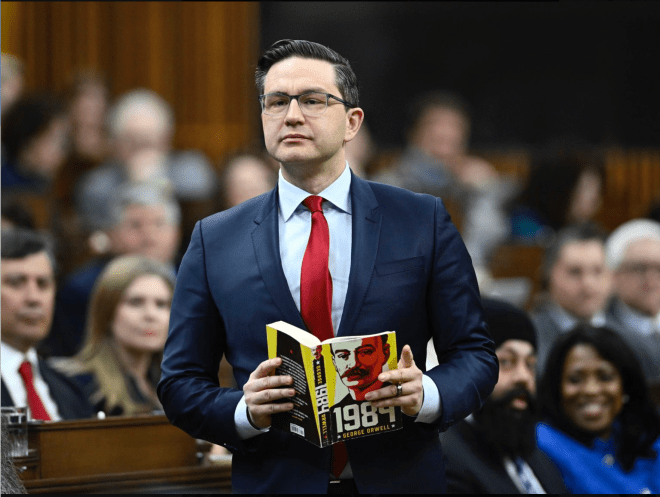
One: You can stick your finger in the Pierre Poilievre light socket and watch him tee off on the CBC yet again for asking a question he didn’t like.

Two: You can start your weekend on a different mood channel with Barry Hertz’s positive review of the new Blackberry film written and directed by Matt Johnson and starring Jay Baruchel.

The script is based on the book by Globe reporters Sean Silcoff and Jacquie McNish and will be released internationally by Paramount. (There are no YouTube trailers available yet).

***

Konrad von Finckenstein is a national treasure.

That endorsement may surprise, given contrary policy views expressed on this blog site. But the former trade negotiator, Competition Commissioner, CRTC Chair and federal judge offers an intellectual rigour in his criticism of Bills C-11 and C-18 that isn’t always available elsewhere.

Now that the Online News Act Bill C-18 has passed the House, von Finckenstein has revised his recommendations to the Senate, here.

The Senate’s Transportation and Communications Committee will take up C-18 in late March.

***

On the subject of Bill C-11, I recommend Michael Geist’s podcast interview of Senator Paula Simons, the co-author of the key Senate amendment on user generated content posted to hosting platforms like YouTube.

We are still waiting for Heritage Minister Pablo Rodriguez’s full reply to the Simons/Miville-Dechêne amendment and 25 other changes to C-11 proposed in the Senate. The Minister had implausibly suggested we would hear from him as soon as the week of February 9th.

No word yet, although Liberal House Leader Mark Holland told the Globe and Mail on February 15th that he was in talks about ‘next steps’ with Senate caucus leaders.

***

Last week Heritage officials attended their day of reckoning at the House committee on the hiring of Laith Marouf as an anti-racism consultant despite his many racist (Black, Indigenous and Québecois) and anti-semitic Twitter posts.

Despite intensive questioning by Heritage MPs we are left guessing about the true state of mind of various government officials who must accept responsibility for the baffling omission of a basic Internet search in vetting Marouf’s job application, the inexplicable failure of a 100-person communications team to pick up on Mark Goldberg‘s tweets alerting Heritage to Marouf’s posts in April 2022, and culminating with Heritage’s walking-pace response once the story was broken by journalist Jonathan Kay.

An interesting admission from Heritage officials: the lethargic response wasn’t caused by waiting for legal advice. That seems to leave either indifference or hand-wringing as the most likely explanations.

***

If you would like regular notifications of future posts from MediaPolicy.ca you can follow this site by signing up under the Follow button in the bottom right corner of the home page; 

or e-mail howard.law@bell.net to be added to the weekly update; 

or follow @howardalaw on Twitter.

Catching Up on MediaPolicy.ca – Margaret Atwood on C-11 – Banning Chinese state television – Is TV walking the plank? – Is my YouTube content censored or curated?

February 11, 2023

Bill C-11 continues to be the cultural wedge issue that won’t quit. The MediaPolicy view expressed (incessantly) over the last year is that the Bill is frequently misrepresented and misunderstood.

Those misunderstandings caught up to Margaret Atwood recently when she sympathetically retweeted a Michael Geist post featuring a video of fellow novelist and Canadian Senator David Adams Richards “tearing apart” C-11.

Senator Richards was denouncing the very notion of Canadian content as a state-sponsored assault on artistic expression. (Richards compared the ‘bureaucrat’ controlled funding and promotion of Canadian content to ‘cultural committees’ in Soviet Russia and Joseph Goebbels’ Ministry of Propaganda in Nazi Germany).

An enterprising Globe and Mail reporter got Atwood to elaborate on her endorsement of Richards’ comments.

The MediaPolicy report on the whole affair is here and seeks to clarify what if anything Bill C-11 changes in our decades-long federal policy on funding and promoting “Canadian” creators and their creations.

After that MediaPolicy post was published, Atwood revisited her Globe comments in a lighthearted Substack post and, suffice it to say, she hasn’t done any further reading on the subject matter.

However her post concludes as follows:

I think – I think – that the idea is to enlarge the space available to the creative folk in Canada by helping them profit fairly from their endeavours, insofar as that is possible, and to encourage the availability of platforms via which they may serve up their cheeseburgers. Is that it?

Yes, that’s it.

The facts aside, the Atwood-Richards episode of the C-11 soap opera begat its own epilogue.

The always controversial Guy Fournier wrote a pugnacious column in the Le Journal de Montréal accusing the two English Canadian authors of attacking Québec —see the quotation at the end of this post—- claiming without a shred of evidence that the two writers were insinuating that francophone supporters of the Bill were soft on fascism.

Michael Geist pounced on the column, suggesting Atwood and other critics of C-11 are being victimized by the Bill’s supporters, referencing by hyperlink “columnists” (in fact, only Fournier) and a tweet thread from the Writer’s Guild “respectfully disagreeing” with Atwood.

The victim politics are best left behind. Still, Richards’ cri de coeur on the Senate floor makes interesting reading.

The Senator offers up a straw-man description of Canadian content as a government-approved narrative of national experience that, as a Maritimer, doesn’t speak to his identity let alone what he wants to write about.

Such a narrative, official or otherwise, does not exist except in urban myth. But the enduring riddle of Canadian cultural identity is the subject of a longer MediaPolicy reflection published last year, ‘Telling Canadian Stories in Not a Slogan.’

***

On the subject of free expression and censorship on regulated platforms, Conservative MP Michael Chong wants the CRTC to ban state-supported Chinese TV from Canadian cable services.

Readers will recall that Canadian cable companies voluntarily pulled Russia Today television from distribution shortly after the invasion of Ukraine in February 2022.

The federal government jumped in anyway and more or less commanded the CRTC to officially confirm the expulsion. MediaPolicy covered that story here.

***

While we debate the appropriate regulatory approach to supporting Canadian content in the age of Internet broadcasting, industry leaders are beginning to talk out loud about ‘how much time television has left.’

A worthwhile read is a survey of American TV and streamer executives trying to answer just that question.

A useful Canadian side-bar to the US piece is a Globe report on the state-of-the-industry gathered from CMPA’s annual Prime Time conference.

***

One last dig on the C-11 story.

If you stop and start streaming subscriptions to avoid paying for those fallow months in between seasons of hit shows, you may discover those streamers want you back right away and they are relying on Google’s data-engorged combination of Ad Tech and YouTube to do it.

When I cancelled Paramount Plus this week Ad Tech bombarded me with Paramount ads on every website I visited and —here’s the C-11 hook– a Paramount Plus invasion of my YouTube recommendations.

Yet the prospect of the CRTC asking YouTube to include a few Canadian videos in those top-ranked recommendations —whatever Google chooses in its curatorial wisdom as responsive to your search history— is considered ‘censorship’ by C-11 opponents.

Have a look below. Including the unsolicited Paramount content, five of the eight recommendations do not match my YouTube viewing history.

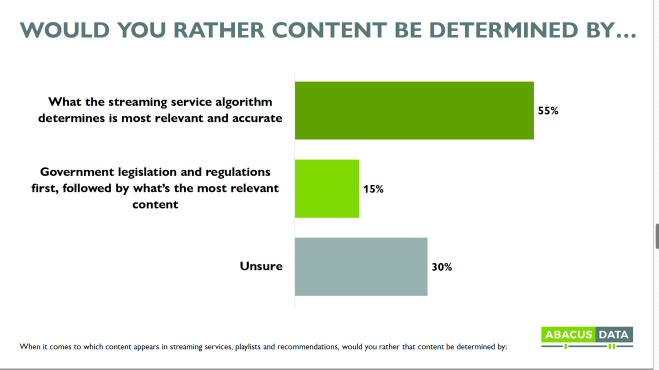
That means YouTube’s algorithm has downranked and removed the majority of content recommendations responsive to what I have told them I want, in favour of a 62.5% ‘Google content’ quota of what they want me to want.

(If you are trying to figure out the five out of eight, here’s a hint: I don’t golf, I’m stupid for dogs, and I subscribe to Bell Crave.)

***

From Guy Fournier’s column in Journal de Montréal:

Cette hargne contre le projet de loi C-11 ne cacherait-elle pas autre chose ? Comme la conviction secrète qu’ont certaines élites anglophones que les Québécois sont prêts à faire taire tous ceux qui ne pensent comme eux. Les lois 21 et 96 sont pour ces élites le début d’un nouveau fascisme. Comme pourrait bien l’être cette maudite loi sur la radiodiffusion. Le fait qu’elle ait été conçue, rédigée et défendue par trois ministres issus du Québec, Mélanie Joly, Steven Guilbeault et Pablo Rodriguez, ne la rend-elle pas suspecte d’emblée ?

***

If you would like regular notifications of future posts from MediaPolicy.ca you can follow this site by signing up under the Follow button in the bottom right corner of the home page; 

or e-mail howard.law@bell.net to be added to the weekly update; 

or follow @howardalaw on Twitter.