The Senate committee studying the Online Streaming Act Bill C-11 took a rare week off. It’s unclear how many more days of hearings (currently at 20 days and 125 witnesses) it will convene, although it has scheduled two more days and ten more witnesses next week. The unofficial agreement to have the Bill voted upon by the full Senate and returned to the House by November 18th obviously will not be met.
Other than the unusual length of the Committee proceedings, there is no overt sign of a filibuster. However the Québec-based Coalition for Diversity in Cultural Expression (CDCE) has drawn attention to the fact that spirited opposition to the Bill from the Chair of the Committee, Conservative Senator Leo Housakos, has spilled over into making partisan videos (in English and French) inviting the audience to sign the CPC’s anti C-11 petition . In the video, Housakos identifies himself as chair of the committee. He also says that the Committee hearings “will be wrapping up soon.”
In case the Committee moves on to amendments soon, I posted (“The Next Internet Czar”) on the biggest flaw in C-11 that the Senate should fix (and it’s not about YouTube videos).
The House debate on the Online News Act C-18 will begin clause-by-clause (amendments) consideration on November 18th. Earlier this week a Nanos poll sponsored by the Canadian Association of Broadcasters revealed strong public support for the legislation. I posted a brief evaluation of the questions and the results and then segued into comments on this year’s Reuters poll on “trust in news” which provides important context to public policy and regulation of the news industry.
McGill University’s Taylor Owen published his views on C-18 here. Owen is the school’s Chair in Media, Ethics and Communication and recently lead Heritage Canada’s study of online harms and safety.
The Globe’s Phillip Crawley posted a rare Publisher’s comment with a luke warm endorsement of C-18. Crawley indicates some discomfort with the CRTC’s stewardship of the new regime and a lot of discomfort with the Commission’s authority to compel disclosure of advertising rates charged by news organizations to their commercial clients.
The Rogers-Shaw merger hearings continued all week at the Competition Tribunal and the proceeding is really just getting started. So much hearing time was spent reviewing confidential documents in camera that the Globe had little to report and instead focussed on the lack of public transparency.
***
If you would like regular notifications of future posts from MediaPolicy.ca you can follow this site by signing up under the Follow button in the bottom right corner of the home page;
or e-mail howard.law@bell.net to be added to the weekly update;
“Polls, polls, polls.” (not Hamlet, Act II, Scene II)
Nanos Poll: Popular Support for Bill C-18
November 10, 2022
Nanos has released its public opinion polling on Bill C-18, sponsored by the Canadian Association of Broadcasters. Television companies are expected to benefit from the Online News Act currently before the House of Commons’ Heritage Committee.
The headline result is 77% popular support for the Bill, based on the poll’s following two questions and preamble:
“As you know, large foreign internet platforms like Google and Facebook are taking a large percentage of Canadian advertising dollars by collecting users’ search and browsing activities and selling targeted advertising against that data. This includes searches and links to news content. Do you support, somewhat support, somewhat support, somewhat oppose or oppose the following:
Q1.Having the Government of Canada encourage Google and Facebook negotiate with Canadian news organizations for the fair payment reflecting the value of their work. (Results: 52% Support, 25% Somewhat Support, 7% Somewhat Oppose, 10% Oppose, 7% Don’t Know.)
Q2. Google and Facebook paying nothing to Canadian news organizations for the value of their news content (Results: 6% Support, 6% Somewhat Support, 20% Somewhat Oppose, 60% Oppose, 9% Don’t Know.)
The Nanos poll corroborates outcomes favourable to C-18 from the May 2020 Pollara poll sponsored by Newsmedia Canada as well as a previous Globe/Nanos poll that surveyed Canadians on the Liberal government’s three Internet bills: Bill C-18, the Online Streaming Act C-11, and the yet to be tabled Online Safety legislation.
The results of the new Nanos poll also run contrary to conclusions in the Abacus C-18 survey sponsored by Google which MediaPolicy.ca opined was compromised by its loaded questions calibrated to Google’s objections to the legislation.
Aside from the Nanos poll’s verdict of public support for the legislation, it demonstrates the limits of broad public opinion polling on complex policy problems and solutions.
The questions in the Nanos and Pollara surveys test public attitudes towards “in-principle” support of the Bill compelling Facebook and Google to recognize the value of news content on their platforms rather than mining the public mind for nuanced opinions on policy issues. The Abacus poll acknowledged that only 8% of respondents believed they had a full understanding of C-18.
But the polling results don’t necessarily rebut informed criticisms of the legislation, which will continue. Those objections share an opposition to government involvement in media and regulation of communications over the Internet.
A central tenet of opposition to C-18 is that even the perception of government coming to the rescue of media (since the Bill does not involve public funds) will discredit the independence of news media.
Its trite but true that this analysis mostly (not entirely) comes from the Right where antagonism towards the publicly funded CBC is historic and opposition to the federal government’s 2019 subsidies to mainstream news journalism is equally well known.
On the latter point, funding of Qualified Canadian Journalism Organizations has been roiling in conservative political messaging ever since 2019 as a “bail out” and “buy out” of journalistic independence from the Liberal government.
Bill C-18 has drawn oppositionon the same grounds (although less prominent federal programs for journalism interns and small news publications drew more limited fire).
This concern for the credibility of independent news journalism is a good opportunity to take another look at the polling data released June 2022 in the Reuters Digital News Report covering 46 global markets including a segmented report from Canada. (A similar Canadian poll from Maru/Kaiser was released November 8th).
The Reuters report shows with brutal clarity that public trust in news is down and avoidance of news consumption is up.
The data allows us to make two important observations relevant to the impact of the federal QCJO program on Canadian public opinion regarding the independence of the media.
First, the twin threats of declining news trust and rising news avoidance were immediately apparent as Reuters tracking began in 2016 and do not appear to have reacted to the introduction of the QCJO program in 2019. Perhaps more significantly, those two threats have been tracked by Reuters since 2016 as nearly universal around the world, including the US, UK and France, where nothing like QCJO exists or is on the table.
If anything, those global trends from 2016 to 2022 correlate more closely to a rise in Internet disinformation and right-wing populist politics.
This leads MediaPolicy.ca to propose that the perception that QCJO or C-18 will undermine journalistic independence is limited to elites and/or a confirmation bias (“these programs prove that mainstream media is in already thrall to big government/federal Liberals/BigTech/Big Business”).
But take no solace in confirmation bias. The findings in the Reuters study ought not to be dismissed as political noise or the cynical gaming of the democratic process.
At 42%, trust in most news most of the time is at its lowest level in the seven years of Canada’s participation in the Digital News Report survey. This amounts to a decrease of three percentage points from 2021 and 13 in relation to 2016.
Only 27% of Canadians think the news media in their country are independent of undue political influence, a decrease of 10 points since 2017.
29% think the same about business influence, a decrease of nine points since 2017.
Half of respondents think the country’s news organizations are very or quite close together politically, with those respondents skewing Right and older. The same demographic correlates with low trust in news.
As mentioned, the trust trends are consistent with those in other nations around the world. Canadian results are in middle between some European nations (e.g. Finland, Germany) with higher trust in news and much lower trust in the UK, France and US. This suggests that different polities, and perhaps differential editorial traditions, influence trust levels, but the downward direction is everywhere.
The trending provokes the question “what is increasing the lack of trust”? Is it the static interference of Internet disinformation? The networking of contrarians finding each other on the Internet? A general alienation from mainstream institutions that haven’t solved the problems of our Age? Opportunistic politicians pandering to it all?
If those questions about trust in news aren’t sufficiently vexing, Reuters also reminds us of rising news avoidance.
In response to the question “do you find yourself trying to avoid news these days?” Canadians polled in 2017, 2019 and 2022 are increasingly fed up with the news:
A whopping 71% of Canadian respondents said they had at leastoccasionally (i.e. including “sometimes” and “often”) tried actively to avoid the news in the recent past, up 13 percentage points from 2019.
The “occasionally” avoiding news figure hasn’t changed much, but the “often” has doubled and the “sometimes” has grown about 40%. On the other end, “never” avoiding the news has shrunk twenty points from 44% to 24%.
These are hair-on-fire figures.
What’s driving the despair?
Reuters data suggests the common theme is negativity about the world journalists report on. This might be the problems we face (war, political polarization, climate change, pandemic) or their magnification by news reporting that dramatizes conflict and suffering:
The leading causes of the news avoidance (above) were potential negative effect on mood (47%) and excessive coverage of topics such as politics and Covid-19 (46%).
Other news avoidance stemmed from feeling worn out by the amount of news (32%) and considering news untrustworthy or biased (29%). (Unfortunately Reuters did not benchmark this data against 2017 or 2019 results).
As a corollary to news avoidance, respondents were asked why they seek out news. The answers were encouragingfrom the point of view of democratic participation:
In a word, respondents want to know what’s going on in civil society.
It’s gratifying that local news was the leading topic of interest (65%), followed by international news (53%), pandemic information (47%) political news (45%) and environment/climate change (39%) although those results are heavily generational (the under-35 crowd consumes less news in general).
The Reuters study provoked some soul searching advice from its lead author, Oxford University’s Nic Newman. Interviewed by Poynter, he said:
“Subjects that journalists consider most important, such as political crises, international conflicts and global pandemics, seem to be precisely the ones that are turning some people away…
“Some of this is a function of the move to digital — people feel they are being bombarded/overloaded often when they haven’t asked for it. Also that the abundance of other (more entertaining) choices means it is easier to avoid/select something less depressing.”
Newman also offered some solutions:
Addressing trust issues is part of the answer. Be sure that stories are evidence-based, avoid sensationalist hype and label opinion as such. Still, current “levels of partisanship” will block progress even with best practices.
“Making news more accessible/easier to understand. This is one of the other reasons why young people and less educated groups avoid. The news is often written for avid news consumers with a lot of knowledge. So more explanation, answering questions, easy to consume digital formats (e.g. video) that are fact-based and accessible. Avoiding jargon and insider speak will help.”
“Some publishers are working on personalization that automatically formats stories to fit consumption styles (bullet points or more videos, pictures). That may also help over time to make news more accessible and relevant … Television has an outsized influence on perceptions of ‘too much COVID, too much politics.’ So a wider and more diverse agenda there might help, but I suspect they think they will then lose their core avid news follower audience which is what matters commercially.”
If you would like regular notifications of future posts from MediaPolicy.ca you can follow this site by signing up under the Follow button in the bottom right corner of the home page;
or e-mail howard.law@bell.net to be added to the weekly update;
Adversaries in the House of Commons Heritage Committee, CPC MP Rachael Thomas and Liberal MP Chris Bittle
November 7, 2022
“Internet Czar” is a political trope stoking fears of an all-powerful Ottawa mandarin —either the Heritage Minister or CRTC Chair— imposing one-person rule over culture and freedom of expression.
All you have to do is imagine your worst partisan enemy being that person. Depending on your point of view, one day that could be either the Liberals’ Chris Bittle or the Conservatives’ Rachael Thomas elevated to cabinet as Heritage Minister with oversight of the newly amended Broadcasting Act.
No, that’s not because C-11 activates the CRTC’s long dormant jurisdiction over Internet broadcasting, although some would tell you that.
Rather it’s because a low-profile change to the Broadcasting Act in C-11 in section 7(7) would give the federal cabinet and future Heritage Ministers the power to pre-emptively “order” detailed terms of operation for broadcasting undertakings that are currently vested in the CRTC, our independent and arm’s length regulator.
You might recall that in September 2017 then-Heritage Minister Melanie Joly announced a $500M five-year deal with Netflix to spend studio money on film production in Canada. Presumably Joly’s end of the deal was to deflect rising public demands to regulate the foreign streamers, demands that Justin Trudeau refused for another three years (and one election) until he relented by tabling Bill C-10.
You might also recall the terms of the Netflix deal were secret, wrapped in cabinet confidentiality to escape Access to Information laws.
To this day, there is nothing to indicate that this deal required Netflix to dedicate a dollar of that $500M to Canadian content or French language programming, as opposed to just carrying on making movies for the American market while drawing upon the low Canadian dollar and generous Canadian tax credits.
Indeed Netflix surpassed the $500M in Canadian spending less than two years later. This allowed us to infer that the $500M was a lowballed commitment and that Joly had likely begged Netflix for the deal, any deal.
The substance of Joly’s secret Netflix deal was pre-emptive regulatory action. This was an expedient alternative to cabinet asking the CRTC to conduct public hearings and revive its dormant jurisdiction over Internet broadcasting.
So think of Bill C-11’s new section 7(7) as the Joly/Netflix scenario writ large.
Having said that, I am afraid the rest of this post is so technical it may seem like watching paint dry. But if Senators studying Bill C-11 don’t read every last word of it and take it to heart, they are in dereliction of their duty.
All are forgiven for overlooking the innocuous wording of section 7(7) in C-11:
(7) For greater certainty, an order may be made under subsection (1) with respect to orders made under subsection 9.1(1) or 11.1(2) or regulations made under subsection 10(1) or 11.1(1).
Here’s a tip, any time you see “for greater certainty” look under the hood.
Section 7(1) is where cabinet retains a political override to do two important things: clarify any of the encyclopedic broadcasting policies under section 3(1) of the Act and, at an operational level, give precise guidance to the CRTC in formulating regulations under section 5(2) implementing those policies on broadcasting undertakings:
7(1) Subject to subsection (2) and section 8, the Governor in Council may, by order, issue to the Commission directions of general application on broad policy matterswith respect to
(a) any of the objectives of the broadcasting policy set out in subsection 3(1); or
(b) any of the objectives of the regulatory policy set out in subsection 5(2).
Take note the existing section 7(1) confines the cabinet override to “general application on broad policy matters.” To give you a flavour of that, the last time cabinet used that power was in 2013 when the Harper government ordered the Commission to implement a general scheme of “pick and pay” of specialty TV channels.
C-11’s section 7(7) blows the doors off of section 7(1).
Far from “general application on broad policy matters,” s.7(7) authorizes the Heritage Minister/Internet Czar, through cabinet, to “order” anything in the long list of detailed broadcasting conditions historically carried out by the CRTC as conditions of licence or regulations.
Normally the CRTC must give public notice and hold hearings or accept submissions in licensing matters . Once completed, the conditions of licence can be appealed to Federal Court as an error of law or, more effectively, brought to federal cabinet on matters of policy.
But section 7(7) allows an Internet Czar to short circuit all of that with a pre-emptive order.
Here are the new powers cabinet will have.
First under section 9.1.(1), cabinet will have the same powers as the CRTC over critical programming policies that are implemented as operational terms (either as “licences” or “orders”) for individual broadcasting undertakings, on both linear and Internet platforms:
Programming objectives relating to priority genres (news, drama, etc.), languages, original content and discoverability;
“Must carry” orders for distribution platforms to carry public service or high priority programming;
Fair terms and conditions of consumer subscriptions;
Mergers (e.g. Rogers-Shaw);
Protecting Canadian ownership of the broadcasting system as a whole (e.g. foreign takeovers of Canadian broadcasters).
In addition, under sections 10.1 and 11.1 cabinet will have the same powers as the CRTC over equally critical programming policies as “regulations” covering several broadcasting undertakings at once:
The definition of Canadian content in programming;
For Canadian content, the obligations imposed on both domestic and foreign media companies (e.g. Crave, Netflix) to either finance or make Canadian content;
The exhibition of Canadian programming during evening prime time;
Programming standards including limits on abusive content and misinformation (except for user generated content which is unregulated under C-11);
Advertising;
Election advertising and broadcast time;
Allowing foreign channels to be carried by broadcasting undertakings (recall Russia Today being expelled from cable).
Not only would cabinet have the same powers as the CRTC, it could exercise them pre-emptively as a trump card over the CRTC.
No Canadian ever asked for section 7(7).
Possibly Netflix and the Hollywood studios did.
After all, an unrestricted cabinet power to carve in stone conditions acceptable to the Hollywood streamers without having to worry about the CRTC imposing tougher conditions would go a long way to neutralizing the hardball threats of trade complaints the studios always keep in their back pocket.
If that’s what’s driving section 7(7) it would be an unworthy justification. Canada must be pragmatic but principled about appeasing the Hollywood streamers.
We fought for, won and maintained Canadian cultural sovereignty in the 1988 FTA and 2018 CUSMA trade deals. That sovereignty may have a price tag (the US can retaliate with countervailing measures) but both Mulroney Conservatives and Trudeau Liberals rightfully bragged to Canadians about having preserved it.
Whatever the origins of section 7(7), Senators should send back C-11 to the House with the clause deleted.
Armstrong also reminded Senators of another problem with C-11. The Bill substitutes “orders” for “licences” governing online undertakings.
That could mean two unintended consequences, both bad.
Public hearings are not required for “orders,” still aren’t under C-11, and this would make it possible for either the CRTC or cabinet to short circuit the public consultation process for Netflix and any other online undertakings. As “licenced” television on linear platforms fades, orders will displace licences.
Secondly, C-11 does not update the Broadcasting Act’s “break glass in case of emergency” feature in case of the CRTC’s occasionally bad policy decision (the CBC licence renewal as a recent example). Specifically, C-11 does not amend the existing section 28(1) to expand the right to appeal “licensing” renewals to federal cabinet to encompass “orders,” at least insofar as “orders” are about to become the “licences” for online undertakings. The Coalition for the Diversity of Cultural Expression has submitted an amendment to the Senate fixing that.
Lastly, Professor Armstrong recommended deleting section 34.995 which allows cabinet to “order” additional regulations relevant to the CRTC’s powers to levy fines on non-compliant broadcasting undertakings.
However it is a familiar regulatory tool in Canadian public policy to leave cabinet elbow room to deal with unforeseeable enforcement challenges. That section should be left alone to stand.
***
If you would like regular notifications of future posts from MediaPolicy.ca you can follow this site by signing up under the Follow button in the bottom right corner of the home page;
or e-mail howard.law@bell.net to be added to the weekly update;
Meta’s Kevin Chan threatens MPs with a blackout of Canadian news on Facebook.
November 5, 2022
There was no MediaPolicy.ca round-up last weekend because I could not get near a computer. So there’s catching up to be done.
Both Bills C-18 (the “FaceGoogle” Online News Act) and C-11 (the Online Streaming Act) were on the boil, at the Commons Heritage and the Senate Transportation & Communications committees respectively.
The Commons Committee heard its last witnesses on C-18 yesterday afternoon (and will debate amendments beginning November 18th).
MediaPolicy.ca posted three reports on MP deliberations:
The first post was written October 27th in the aftermath of Facebook’s threat to shut down Canadian news in hopes of intimidating Canadian MPs, titled “Must it be war? A peace proposal for C-18.” The post recommends several amendments.
The second post is an account of Facebook’s ensuing appearance before the Heritage Committee on October 28th where Global Policy Chief Kevin Chan repeated the threat and got an angry response from most MPs…. followed by the cringeworthy supplication of Facebook representatives by CPC MP Marilyn Gladu. It was so bad that Toronto Sun columnist Brian Lilley wrote a column questioning the Conservatives’ support for Big Tech.
The third post covering the November 1st hearing delves into the debate over “link taxes,” the plight of small publishers, as well as the Conservatives’ proposal to ban news outlets CTV, City-TV or the CBC from receiving compensation for their news content from Facebook and Google.
On November 3rd a story appeared in the Globe and Mail noting Heritage MPs are likely to amend C-18 to cover more small news organizations, presumably by relaxing the eligibility criterion of “at least two journalists employed.” There’s also an op ed in the National Post and Le Devoir from Emma MacDonald of the Australian Minderoo Institute describing how her public interest group provided resources to small publishers who successfully negotiated as a group with Big Tech.
At yesterday’s hearing, CPC MP Kevin Waugh and Internet activist Michael Geist went all in against including major TV news organizations in the Bill: here’s video footage of what McGill University’s Taylor Owen had to say about that during his appearance before the Committee.
As for C-11, after 20 days of hearings the Senate Committee may be suffering from what Cartt.ca described as “witness exhaustion” (124 so far) although we haven’t reached the point yet of an obvious filibuster.
This week’s hearing raised at least two important issues. The first is what is described in a MediaPolicy.ca contribution to Cartt.ca as the Senators’ surprising disinterest in a Unifor amendment to remedy C-11’s neglect of local TV news.
The other, which appears to have grabbed the Committee’s attention, is C-11 massively expanding cabinet powers over almost every aspect of broadcasting regulation, including Internet broadcasting. You can expect a MediaPolicy.ca post on that early next week.
Turning to other matters, if you want to learn more about what the Competition Bureau’s dogged opposition to the Rogers-Shaw merger is all about, read one of the best pieces of business journalism of the year by the Globe’s Tim Kiladze.
And lastly, you might already know that Elon Musk fired half of Twitter’s workforce by e-mail notice. So if you want a good weekend read at Musk’s expense on his hellscapish future, try this from the Verge.
***
If you would like regular notifications of future posts from MediaPolicy.ca you can follow this site by signing up under the Follow button in the bottom right corner of the home page;
or e-mail howard.law@bell.net to be added to the weekly update;
If journalists in politics are the friends of news media, perhaps it needs new friends.
At the Commons Heritage Committee, former CTV reporter and Conservative MP Kevin Waugh continues to thunder that major TV networks Bell CTV, Rogers City-TV and CBC should be excluded from the “FaceGoogle” Bill C-18.
This Monday at the Senate committee studying the Online Streaming Act Bill C-11, former Edmonton Journal columnist Paula Simons and former CBC TV correspondent Julie Miville-Dechêne suggested Unifor’s recommendation for better cable and streamer funding of local news was unnecessary because TV companies are set to cash in under Bill C-18.
Meanwhile Senator Pamela Wallin, another former TV journalist, tried to get Unifor Media Director Randy Kitt to agree that the problem was the CBC competing in the advertising market with private networks.
One gets the feeling that off camera there are a lot of Senators and MPs stifling a big yawn about local TV news.
They would be in good company. Despite all of the piety and genuflection about the vital role of local TV news, the CRTC has done zilch in the last ten years. Ergo Unifor’s C-11 amendment to get the Commission to do its job.
In a 2006 study, the Commission projected the coming collapse of the advertising-only business model for local TV. By 2010 the Commission under Konrad Von Finckenstein —-no Leftie it’s safe to say—- came up with two separate schemes to compel the profitable cable companies to cross subsidize local broadcasters.
In 2012 the Supreme Court struck down the “fee-for-carriage” scheme on a 5 to 4 vote as contrary to copyright legislation. The same year, Von Finckenstein’s successor as Chair Leonard Katz terminated the other project, the Local Programming Improvement Fund (LPIF), on the rosy prediction that advertising revenues would rebound for TV.
In 2015 the next CRTC chair J.P. Blais pontificated from the Commission dais about how the major networks ought to be better corporate citizens and keep losing money on local news (private conventional TV has lost money every year since 2012, currently running at a 12% loss).
Blais remodelled and marginally increased an existing industry cross-subsidy for independent stations, the Independent Local News Fund, which since 2017 has shrunk from $23M to $17M in tandem with declining cable revenues.
The ILNF will be bankrupted next year when an additional twelve Global TV stations, divested by Shaw, become eligible.
That brings us to the Unifor amendment which MediaPolicy.ca wrote about here before it was rejected in the House by Liberal and Conservative MPs (who simultaneously approved abolishing $120M in “Part II” fees paid by TV companies to the CRTC):
Amend section 11.1(1) as follows:
The Commission may make regulations respecting expenditures to be made by persons carrying on broadcasting undertakings for the purposes of
…(d) developing, financing, producing or promoting local news and information programming, including through contributions made by distribution undertakings either to a related programming undertaking or by distribution undertakings or online undertakings to an independent fund. In making regulations for the distribution of these contributions, the Commission shall take into account the local presence and broadcast staffing of the programming undertaking.
Elegant, isn’t it? Full disclosure: as Unifor’s former Media Director when Bill C-10 was debated in 2021, I drafted it.
The amendment accomplishes two things.
First, the CRTC would have a fresh and explicit mandate from Parliament to increase the flow of internal cross subsidies from the cable and satellite businesses to local broadcasting stations.
This is exactly what the LPIF did before it was killed off ten years ago at the urging of the cable companies. The reference to “online undertakings” is future proofing: as Bell, Rogers, Telus and Videotron move from cable to digital, the obligation to fund local news would follow them to the new platform.
It’s worth noting that the cable companies’ financial ability to cross subsidize the expensive task of news journalism has diminished over time, with profit margins dropping to around 10% over the past few years.
However the windfall $120M from repealed Part II fees should go straight into local news, something CAB President Kevin Desjardins told Heritage MPs might happen, but the TV companies have made no such commitments.
Second, the CRTC would be instructed to consider tithing foreign online undertakings Netflix, Disney and others to support local news. Whether that’s a good idea would be up to the CRTC when it designs the overall scheme for streamer contributions to Canadian content. It might be the big streamers split their CanCon contribution between drama and news, or just do drama. It’s worth remembering that local news spending is a third of Canadian Programming Expenditures.
Some of the push back to the Unifor amendment was expressed by Senator Simons as skepticism about propping up local news on the declining linear TV platform:
I have boundless sympathy with argument you are making.
Second question, I think that we have seen such a disruption of our long standing media paradigm, people don’t watch the news on TV, some older people do. I don’t watch the news on TV ever anymore, I get my news on digital platforms. Even with all the money in the world do we get back to people watching the supper hour news on television sets.
But my first question is, won’t the problem be dealt with in some ways by C-18.
That sort of view chafes the CAB’s Desjardins, who had to remind senators earlier this fall that video “television” news may be made by journalists employed at Canada’s eighty or so local stations, but it’s distributed and consumed on all platforms: linear, web, and a bevy of social media apps:
On multiple platforms, “television” news is by far the biggest source of Canadian local news:
There is also the matter of whether TV companies should be better funded by both cable companies (Bill C-11) and digital platforms (Bill C-18). (You will note that public money is involved in neither of them.)
It was inevitable that an argument of “double recovery’ would be tendered with these two Bills in Parliament at the same time.
The policy basis for Bill C-18 is to rebalance the one-sided bargaining power between Canadian media companies and the digital platforms over fair compensation for monetizing and distributing the intellectual property in news content.
It could be there is no Facebook or Google money owing at all to TV companies, or perhaps there will be as much as the $247M predicted by the Parliamentary Budget Officer.
Once the dust settles and the bill is paid, the CRTC will be able to assess the financial stability of Canadian local TV stations and decide which if any of them still need the industry cross subsidies that the Unifor amendment would permit.
***
If you would like regular notifications of future posts from MediaPolicy.ca you can follow this site by signing up under the Follow button in the bottom right corner of the home page;
or e-mail howard.law@bell.net to be added to the weekly update;
Internet Society President Philip Palmer appeared before the Heritage Committee on November 1st.
November 1, 2022
The dark cloud of Meta’s threat to impose a blackout of Canadian news on Facebook will linger over the Heritage Committee’s study of the Online News Act Bill C-18 for weeks to come.
But the good news is that this morning’s line up of witnesses sharpened some of the policy and implementation issues in legislation that is aimed at better recognizing the value exchange between Facebook, Google and Canadian news organizations.
The big idea that some C-18 critics have begun to rally around as a deflection to the Bill is that the government should dump its scheme to rebalance bargaining power between platforms and news organizations in favour of imposing a special tax on digital platforms and then allocating the funds to Canadian journalism outlets in a manner similar to the federal government’s 2019 aid to journalism program.
Such a journalism fund bankrolled by a “FaceGoogle tax” might be a more elegant idea than C-18 in both policy and implementation. MediaPolicy.ca and other advocates such as Unifor have long supported it. Unfortunately the vehicle for that levy, the Digital Services Tax, is unlikely to come into effect because of its entanglement with multi-lateral discussions on minimum global corporate taxes.
Even so, the chances of the Conservatives holding fire on another government-administered fund to support journalism are precisely zero. Heck, they want to defund the CBC. This might be one reason the Liberals went with C-18’s regulation of bilateral commercial negotiations instead.
Here are some issues debated today in Committee:
Payments for Links.
FaceGoogle insists that forcing them to pay compensation for news content “made available” through hyperlinks (accompanied by titles and text snippets) is alien to how the Internet works, or more precisely how the Internet ought to work.
It’s a self-interested argument when made by Google and Facebook. After all Google already contributes millions to Wikipedia, its biggest contributor of Search replies, in what very much looks like pay for links. You don’t hear much about that breaking the Internet.
Other critics of C-18 such as the Internet Society (“extortion by legislation”), Michael Geist, or Open Media fear that once a precedent is set by paying news organizations for posting content on the Internet, every content creator posting to the web will lobby for equal legislative treatment and, at some point, the cost of that will drive digital platforms to charge user fees for content that has been free.
Of course that would require government giving a C-18 to anyone who asked.
But more importantly, given that in pre-Internet days our media platforms thrived on advertising-only business models, it seems a speculative point that Facebook and Google would undermine their immensely profitable digital advertising business by charging link fees.
Another FaceGoogle objection is that payment for links posted by content creators means unlimited liability for the platforms. In other words, if payment is trigged by publishing a link, news organizations will milk the platforms by posting an endless stream of worthless content or clickbait and then claim compensation.
There is a reason that didn’t happen in Australia and won’t happen under C-18. When FaceGoogle bargains with news organizations, the platforms will be sure to negotiate a fixed or capped payment for news content. Even if the parties end up in arbitration, the same result will prevail.
Internet Society President Philip Palmer suggested to MPs that small news organizations would be out gunned by FaceGoogle in negotiations or arbitrations under C-18 because of the lack of resources to pay lawyers, economists and digital experts.
However almost all of the smaller organizations belong either to Newsmedia Canada or the Canadian Association of Broadcasters. As well, the CRTC will have the power under sections 44 and 80 to award them costs.
In Australia, the philanthropic public interest organization Minderoo successfully coordinated and resourced FaceGoogle bargaining on behalf small news organizations.
Big News Organizations.
The Conservatives have discovered Canada’s worst kept political secret, that Telco bashing always pays.
MP Kevin Waugh doubled down yesterday on his theory that large and small news organizations are gathered around the same FaceGoogle waterhole and that the telco TV companies Bell and Rogers (with the CBC thrown in for good measure) will drink it dry.
The inconvenient truth is that there is not one waterhole.
Each news organization entering the C-18 bargaining scheme, whether it’s a big or small broadcaster or a big or small publisher, will have to negotiate with Facebook and Google for what their own content is worth, not someone else’s. Section 38 of the Act compels an arbitrator to focus exclusively on the value exchange between the news organization and the platform: how much or little the platform has already spent on other deals will be inadmissible.
But the platforms will undoubtedly try to satisfy all of their C-18 obligations by negotiating a comprehensive series of voluntary agreements and then approaching the CRTC for an “exemption” from the Act.
The criteria for that exemption is found in section 11(1) and the language suggests the CRTC must ensure that news businesses receive fair compensation, not that Google or Facebook merely create an adequate pot of money:
Exemption order
11 (1) The Commission must make an exemption order in relation to a digital news intermediary if its operator requests the exemption and the following conditions are met:
(a) the operator has entered into agreements with news businesses that operate news outlets that produce news content primarily for the Canadian news marketplace and the Commission is of the opinion that, taken as a whole, the agreements satisfy the following criteria:
(i) they provide for fair compensation to the news businesses for the news content that is made available by the intermediary,
(ii) they ensure that an appropriate portion of the compensation will be used by the news businesses to support the production of local, regional and national news content,
(iii) they do not allow corporate influence to undermine the freedom of expression and journalistic independence enjoyed by news outlets,
(iv) they contribute to the sustainability of the Canadian news marketplace,
(v) they ensure a significant portion of independent local news businesses benefit from them, they contribute to the sustainability of those businesses and they encourage innovative business models in the Canadian news marketplace, and
(vi) they involve a range of news outlets that reflect the diversity of the Canadian news marketplace, including diversity with respect to language, racialized groups, Indigenous communities, local news and business models; and
(b) any condition set out in regulations made by the Governor in Council.
Journalist Headcount.
Bloc MP Martin Champoux has been a dog with a bone on quality journalism.
He’s been determined to link the eligibility of news organizations to professional standards and today he focussed on journalist headcount as a metric of quality journalism.
The existing federal aid to journalism is tied to such a headcount because the labour subsidy is per editorial employee.
That headcount could be replicated under C-18 in its provisions instructing the CRTC to certify voluntary agreements, in particular section 11(1)(a)(ii) quoted above, but it should be more explicit if headcount is a key metric.
Unlike the criteria in section 11(1) dealing with voluntary agreements, there is no indication in section 38 of the Act that the arbitrator should concern itself with quality journalism:
Factors
38An arbitration panel must take the following factors into account in making its decision:
a) the value added, monetary and otherwise, to the news content in question by each party, as assessed in terms of their investments, expenditures and other actions in relation to that content; and
b) the benefits, monetary and otherwise, that each party receives from the content being made available by the digital news intermediary in question.
By contrast, the Australian Newsmedia Bargaining Code adds at least one criterion relevant to quality journalism in the arbitrator’s mandate:
(c) the reasonable cost to the registered news business of producing covered news content;
That text introduces the notion of newsgathering costs. If the Heritage Committee adopts journalist headcount as a key arbitral criterion, it should be even more explicit.
The Committee resumes on C-18 hearings on Friday and then will begin debate on amendments on November 18th.
Meta’s Global Policy Chief Kevin Chan appeared before the Heritage Committee on October 28th 2022
October 31, 2022
Australia, February 2021:
[From the Wall Street Journal]...[W]hen Facebook blocked news in Australia in response to potential legislation making platforms pay publishers for content, it also took down the pages of Australian hospitals, emergency services and charities. It publicly called the resulting chaos “inadvertent.”
Internally, the pre-emptive strike was hailed as a strategic masterstroke…
The goal, according to the whistleblowers and documents, was to exert maximum negotiating leverage over the Australian Parliament, which was voting on the first law in the world that would require platforms such as Google and Facebook to pay news outlets for content.
Despite saying it was targeting only news outlets, the company deployed an algorithm for deciding what pages to take down that it knew was certain to affect more than publishers, according to the documents and people familiar with the matter…
“We landed exactly where we wanted to,” wrote Campbell Brown [in an internal e-mail], Facebook’s head of partnerships, who pressed for the company’s aggressive stance, in a congratulatory email to her team minutes after the Australian Senate voted to approve the watered-down bill at the end of February 2021.
Facebook CEO Mark Zuckerberg and COO Sheryl Sandberg chimed in with congratulations as well, with Ms. Sandberg praising the “thoughtfulness of the strategy” and “precision of execution.”
Heritage Committee hearing – Ottawa, October 28, 2022
“Faced with adverse legislation based on false assumptions that defy the logic of how Facebook works, and which, if passed, will create globally unprecedented forms of financial liability for news links and content, we feel it is important to be transparent about the possibility that we may be forced to consider whether we continue to allow the sharing of news content on Facebook in Canada” — Meta’s Global Policy Director Kevin Chan to Heritage Committee MPs studying Bill C-18, the Online News Act.
It was expected that when Meta appeared before the Heritage Committee to double down on its threat to blackout Canadian news in response to Bill C-18 that MPs would react angrily.
Canadian-born Kevin Chan, Meta’s Global Chief of Policy, obliged in the first minute of his remarks.
At the first opportunity Liberal MP Anthony Housefather grilled Chan and his Canadian Partnerships colleague Marc Dinsdale on the Wall Street Journal reporting on Facebook’s strategic blackout of Australian news designed to water down pending legislation.
The Canadian-based Dinsdale said he had no personal knowledge of Facebook’s Australian news blackout but claimed its broad scope was inadvertent. Chan, the Global Policy Chief, provided no further information.
Next in the question queue, Conservative MP Marilyn Gladu asked Chan solicitously which amendments Facebook had won in Australia by imposing a blackout and what changes he would like in Canada so Meta doesn’t do the same here.
Chan responded he would submit Meta’s Canadian amendments (its Australian amendments are already incorporated into C-18).
Liberal MP Chris Bittle, a civil litigation lawyer before entering politics, delivered a courtroom-like series of rhetorical questions (video linkhere) in which he demanded to know if Facebook believed they could bully Canadian MPs.
Liberal MP Chris Bittle (St.Catharines)
Dinsdale mostly couldn’t get a word in edgewise and Bittle concluded by asking him if the California-based Meta intended to make the same threat to US Congress currently considering its own version of C-18.
Alas, time expired before Dinsdale could reply. Interesting question though.
Central to Chan’s pitch to the Committee was his claim —unchallenged in the absence of supporting data— that Facebook provides Canadian news organizations with nearly 2 billion clicks worth $230M annually in “free marketing” of their content.
Chan’s figure was an estimate of what publishers would have to pay to post their content at Facebook’s advertising rate. If measured by relevant data however, the value of what the Australian Competition Commission calls “media referral services” would have to come from news organizations’ data on subscription and advertising revenue linked to Facebook referrals.
As for the countervailing value of news content to Facebook’s own advertising sales and aggregation of consumer data, Chan offered neither a word nor a number.
That is consistent with Facebook’s position that it does not monetize news content.
If news is worthless to Facebook, asked Bloc MP Martin Champoux, why did Meta fork out millions in settlements with Australian news organizations and then sign a series of confidential agreements with major Canadian news publishers?
Chan denied those agreements were compensation for news content but rather the deals, whose terms he had said he would not divulge to MPs because of non-disclosure clauses, were to develop “new innovation models” on the platform.
“Yes of course,” Champoux responded. “I am sure Facebook could win the Nobel Prize for generosity.” Chan’s claim has been refuted by Canadian news organizations who say the deals were for news content.
The discussion moved on to Facebook’s argument, echoed by many opponents of C-18, that hyperlinks to news content posted outside of Facebook’s platform should not be considered “news content” because that would be a “link tax” and anathema to the notion of free content being available on the Internet.
On this point, Conservative MP Gladu asked Chan if Facebook planned to charge Canada’s 22 million Facebook users a fee equal to the cost of compensating news organizations “for links.”
Chan replied cryptically that “taxes are leaky” but moments later added “we haven’t discussed it.”
Amid all of the jousting, there was at least one exchange of value to policy debate.
Dinsdale criticized the Bill’s undue preference provisions allowing CRTC-recognized news outlets to challenge “unjust” algorithmic ranking of news content on Facebook.
The question is whether a faux news organization that managed to obtain the stamp of legitimacy from the CRTC would then successfully contest Facebook’s curated suppression of their misinformation and inflammatory content.
That concern goes straight to the adequacy of the eligibility provisions in section 27 of the Act which as yet does not require legitimate news organizations to certify their professional standards or belong to a recognized Press Council: think Epoch Times or Rebel News. The latter publication was decertified by the independent journalism panel that administers the federal government’s “QCJO” aid to journalism grants.
The Toronto Star’s coverage of the October 28th Committee meeting is posted here.The C-18 debate continues this week on November 1st and November 4th.
***
Facebook’s threat to blackout Canadian news in retaliation against Bill C-18 raises the question of how vital news content is to their business model. The same question would arise in respect of Google should it make a similar threat. In other words, are they bluffing?
It’s difficult to generate the data required to determine authoritatively the extent to which either platform relies on monetizing news content, as opposed to any other content. That is because neither Facebook nor Google share data with governments, economists, or the general public for that matter.
Elliott estimates that in the UK the two platforms earn the equivalent of 1.2 billion to 1.6 billion Canadian dollars from British news content, split two to one between Google and Facebook. This would not be a final figure for “compensation owed” under a British version of C-18 because it doesn’t subtract the benefit accruing to news organizations of referrals from the platforms.
Elliott contends that posts or links to news content are of especially high value to the platforms because they attract consumer eyeballs looking for reliable and up to date information.
Because of that, the platforms harvest high grade data from these news consumers: past, current and intentional interests for the purpose of showing ads to those consumers but also to aggregate more data for the platforms’ third party ad targeting businesses.
It is easier to verify how much of Google’s traffic is news-related because Search is a purposeful platform: a user entering a keyword search allows researchers to measure how often consumers are looking for news organizations’ content or posing questions that news organizations often answer.
For Google, Elliott drew on US and UK data that showed a high proportion of search activity is for news content and that the results appear on pages displaying paid advertising.
His survey data also revealed that if news were removed by Google, it would take an unsustainable hit of consumers migrating to other Search engines even though it currently has 92% of the market.
It’s harder for researchers to run scenarios pinning down the value of news content to Facebook without obtaining data from Meta.
Feed has less focussed consumer intentionality than Search. But we know that Facebook, like any media, sells ads in anticipation of users looking for content.
Compared to key word searching, checking our Facebook Feed is passive and experiential in a manner similar to channel surfing on cable television, radio or free ad-supported online TV. Consumers log on to Facebook with general expectations and tastes about content that might be found but they don’t know very precisely what they are going to get (which might be the attraction).
That expected content might be “what are my neighbours or family posting today,” funny memes or goofy videos. But it is also news, hence the oft-cited Pew data that 36% of Facebook users regularly check their Facebook Feed for news.
Regardless of what proportion of all Feed posts are news, it’s the consumer demand for news that will determine its prominence, consumption, and monetization by advertising.
Facebook’s Dinsdale told Canadian MPs that Meta plans to downgrade the priority of news for its Canadian users, citing an undisclosed internal survey in which 21% of respondents wanted less news in Feed and only 3% wanted more (the opinions of the other 76% was not disclosed).
Facebook famously tweakedits algorithm in 2018 to favour emotionally engaging content over straight up news reporting by prioritizing engagement responses (i.e. likes, anger emojis, shares).
Facebook whistleblower Frances Haugen said this tweak diminished the demand for conventional news reporting and increased the consumption of inflammatory opinion and disinformation.
But the real question is what impact the 2018 tweak had on news consumption on Facebook’s Feed and if so how much.
The answer to that question is relevant not only to Facebook’s threats to retaliate against Bill C-18, but also its announced intentions to further downgrade news in favour of non-news content (memes, what-my-neighbour-is doing).
But the uncertainty over how badly Facebook needs news content and how much or little it will prioritize news in Feed doesn’t affect the policy considerations for Bill C-18, only the compensation outcomes.
The Act sets up a basic math to establish a fair market price for news on these platforms —-attempting to factor out the distortion of the platforms’ overwhelming market power over digital advertising, audience data, and distribution—- by establishing the monetized value of news content to the platforms and then subtracting the value of the platform’s media referrals to the news organizations’ websites.
If Facebook publishes less news (as a business strategy, not a regulatory retaliation) then they will owe less money to news organizations.
In 2021 in Australia, three years after the 2018 news downgrade in the Facebook Feed algorithm, it is estimated Meta paid out $65M (a third of the rumoured $190M).
As of today’s date we don’t know if the House of Commons Heritage Committee will keep hearing witnesses on the Online News Act Bill C-18 —-the “FaceGoogle-must-pay” legislation— or when they will move on to debate amendments. (Update: the Committee has announced it will hold three more days of witness hearings followed by clause by clause debate beginning November 18th).
Regardless, the serendipitous timing of Facebook’s threat to blackout Canadian news and the release of Google’s gerrymandered opinion poll on the legislation suggest that sidebar discussions with Heritage Minister Pablo Rodriguez on changes to C-18 ended in stalemate.
The federal government appears unmoved. The Bloc and NDP are onside with the Liberals so far.
It’s melodramatic to summarize FaceGoogle’s messaging as “it’s war.” But it sure isn’t peace.
At some point journalists may uncover the backstory on how it came to this. It’s a bad day for public policy given that the Liberals and Erin O’Toole’s Conservatives both promised in the 2021 election to pass legislation rebalancing the bargaining power between FaceGoogle and news organizations over news content.
To be fair, the Tories didn’t pre-approve C-18 but endorsed the “best practices” of French and Australian legislation. More on that below.
The backstory is probably this: Facebook and Google think they overpaid in Australia with $190M to broadcasters and publishers. They see C-18 as greasing the skids to a similar and a far more expensive deal in the United States. The American version of C-18 has bipartisan support in the Senate and debate ought to resume after the November 8th midterms are over.
Unlike the Australian scenario where a right-wing government stared down threats from both Facebook and Google, the web giants believe they have allies in the Conservative Party of Canada.
Google is irked by two points in C-18, which I will get to in a moment. Facebook’s messaging recycles its long standing talking points that failed to persuade in Australia, chiefly that it owes nothing to news organizations.
We may never know the parry and thrust of the lobby meetings Facebook and Google had with the Minister since C-18 was tabled April 5th. But it appears the government did not give an inch. That could be because there is no deal the Liberals could make with FaceGoogle that would stick with Pierre Poilievre: blowing up Bill C-18 (and Bill C-11) is too important to the Conservatives’ branding and fundraising.
Google has its list of criticisms of C-18. The two biggest are the so-called “link tax” and the “undue preference” provisions.
“Link tax” is the pejorative description of money changing hands between Google and the owners of intellectual property on the web, the property being “made available” by a hyperlink on Google Search accompanied by a headline or a snippet of text. In other words, the speculation over money changing hands is not a “tax” or fee paid to government.
Internet activist Michael Geist claims the “made available” legislative text supporting the so called link tax is an unwarranted Canadian embellishment on the Australian legislation and is “an approach not found anywhere else in the world.” Any compensation for intellectual property, he says, should be restricted to the display of full text articles on Search. In other words, never.
Geist is wrong about the Australian legislation. “Availability,” “link” and “index” are explicit in both its Newsmedia Bargaining Code and Canada’s Bill C-18. Here’s the Australian text followed by C-18:
52A Definitions
core news content means content that reports, investigates or explains:
(a) issues or events that are relevant in engaging Australians in public debate and in informing democratic decision‑making; or
(b) current issues or events of public significance for Australians at a local, regional or national level.
covered news content meanscontent that is any of the following:
(a) core news content;
(b) content that reports, investigates or explains current issues or events of interest to Australians.
52B Making content available
(1) For the purposes of this Part, a service makes content available if:
(a) the content is reproduced on the service, or is otherwise placed on the service; or
(b) a link to the content is provided on the service; or
(c) an extract of the content is provided on the service.
(2) Subsection (1) does not limit, for the purposes of this Part, the ways in which a service makes content available.
52C Interacting with content
(1) For the purposes of this Part, a user of a service interacts with content made available by the service if:
(a) the content is reproduced on the service, or is otherwise placed on the service, and the user interacts with the content; or
(b) a link to the content is provided on the service and the user interacts with the link; or
(c) an extract of the content is provided on the service and the user interacts with the extract.
(2) Subsection (1) does not limit, for the purposes of this Part, the ways in which a user of a service interacts with content made available by a service.
And here are the brief but parallel provisions in C-18:
Making available of news content
(2) For the purposes of this Act, news content is made available if
(a) the news content, or any portion of it, is reproduced; or
(b)access to the news content, or any portion of it, is facilitated by any means, including an index, aggregation or ranking of news content.
More to the point, Google settled voluntarily with Australian news organizations for upwards of $100M. If that wasn’t for hyperlinks on Google Search, what was it for?
Google’s link tax obfuscation is understandable: it wants to pay less, or not at all.
On the other hand, Geist’s messaging about a link tax is advocacy for free-flowing information on the world wide web, a vision that requires a narrow interpretation of copyright and an expansive interpretation of “fair use” i.e. free access to the intellectual property of others.
In the same vein, Neiman Lab’s Joshua Benton asked rhetorically in a recent column opposing C-18, why should news organizations get special access to payment for Google links?
The short answer is: for the public good of sustainable news journalism, currently in crisis.
That’s good enough for most of us and all federal political parties, given that FaceGoogle has acquired enormousmarket power in digital advertising, audience data, search and social media, thereby leaving news organizations no choice but to accept the price (if any) put on their content by Big Tech for distribution on their must-have platforms.
As the Australian Competition Bureau stated, simply unlinking their online journalism and walking away from the planet’s go-to search and social media platforms is a non-starter for any sustainable news business.
Aside from links, Google’s real priority is defeating the “undue preference” provisions of C-18 which contemplate news organizations (once certified as legitimate) filing complaints to the CRTC alleging the ranking of their news by Google’s algorithm is “unjust, undue, or unreasonable.”
Credit to Google, it rightfully concedes a role for Bill C-18 in banning retaliation by platforms against news businesses for exercising their bargaining rights under the legislation. The Australian legislation did just that and consequently is drafted far more tightly (see the end of this post for the full text).
As a matter of good public policy, C-18’s more expansive version of undue preference is defensible as supervision of privately curated distribution platforms, although free speech absolutists will disagree. But they are not critical to a Bill concerned about fair bargaining and are more suited to inclusion in the government’s forthcoming Online Safety Act.
Other criticisms of C-18 are in the realm of political gamesmanship. Geist’s post reporting that TV news organizations might be in line for as much as $250M in compensation from FaceGoogle seemed designed to provoke a populist outcry against the much-maligned CBC and pantomime villains Bell Media and Rogers City-TV. He also tweeted that Bell Media CTV’s firing of Lisa LaFlamme was relevant to the policy discussion:
It’s clever news cycle politics. But Geist (and Conservative MP Kevin Waugh who proclaimed that TV companies are “at the trough”) now need to state publicly which television news outlets they wish to disqualify from legislation designed to compensate for the abuse of market power by American Big Tech.
It was after all the Conservative election platform that promised legislation where “a government won’t be able to pick and choose who has access to the royalty framework.”
It’s a notable point that US Republicans only co-sponsored their version of C-18 after excluding the liberal-leaning New York Times and Washington Post from its scope.
It’s no wonder that Google and Facebook need Canadians to make this argument for them.
***
As for the peace proposal, here are MediaPolicy.ca’s recommended and non-recommended amendments:
The CRTC:
This agency does not currently possess the journalism chops, time or staff resources to carry out a frictionless implementation of C-18. A special tribunal would have been better. But there is no changing course now and the CRTC will have to do.
The Minister has announced the extra financial resources for implementation. Let’s hope the government also takes the deficit of journalism experience into consideration when making appointments to the Commission.
News Content:
Eligible news organizations must produce news content.
The definition of news content in section 2(1) contemplates “reporting, investigating or explaining”—emphasizing news over opinion— but imposes no quantitative requirement for fact-driven news reporting.
The Australian legislation gives its regulator that authority and C-18 should do so as well:
(1) The requirement in this subsection is met in relation to a news business if the primary purpose of each news source covered by subsection (2) is to create content that is core news content.
(2) This subsection covers a news source if it comprises, whether by itself or together with other news sources, the news business.
(3) For the purposes of subsection (1), in determining whether the primary purpose of a news source is to create content that is core news content, take into account the following matters:
(a) the amount of core news content created by the news source;
(b) the frequency with which the news source creates core news content;
(c) the degree of prominence given to core news content created by the news source, compared with the degree of prominence given to other content created by the news source;
(d) any other relevant matter.
Eligible News Organizations and Professional Standards:
The Bill does not require that eligible news organizations demonstrate their legitimacy and public accountability by belonging to any of Canada’s self-governing media press councils.
It’s not clear why C-18 is missing this important safeguard. In Committee, Bloc MP Martin Champoux unsuccessfully pressed Heritage Minister Pablo Rodriguez on this point.
(1) The requirement in this subsection is met in relation to a news business if:
(a) every news source covered by subsection (2):
(i) is subject to the rules of the Australian Press Council Standards of Practice or the Independent Media Council Code of Conduct; or
(ii) is subject to the rules of the Commercial Television Industry Code of Practice, the Commercial Radio Code of Practice or the Subscription Broadcast Television Codes of Practice; or
(iii) is subject to the rules of a code of practice mentioned in paragraph 8(1)(e) of the Australian Broadcasting Corporation Act 1983 or paragraph 10(1)(j) of the Special Broadcasting Service Act 1991; or
(iv) is subject to internal editorial standards that are analogous to the rules mentioned in subparagraph (i), (ii) or (iii) to the extent that they relate to the provision of quality journalism; or
(v) is subject to rules specified in the regulations that replace those mentioned in subparagraph (i), (ii) or (iii); or
(vi) is subject to other rules specified in the regulations; and
(b) every news source covered by subsection (2) has editorial independence from the subjects of its news coverage.
Platform Exemption Criteria and no news organization left behind:
There are two ways for deals to be made between FaceGoogle and news organizations. One is through arbitration. The other is through a comprehensive series of voluntary agreements with news organizations, regardless of whether they have sought certification as Eligible News Organizations (ENOs).
There is wiggle room in C-18, as there was in Australia, for the platforms to exclude a handful of news organizations that might otherwise qualify as ENOs so long as the CRTC deems the voluntary agreements as being good enough and covering enough news organizations.
This was how Facebook got away with excluding two important news outlets in Australia: the investigative website The Conversation and the television outlet Special Broadcasting Service (similar to Canada’s OMNI-TV)
This wiggle room in C-18 ought to be removed by explicitly providing that, under the exemption criteria listed in section 11, deals must be made with all news organizations that demonstrate they can qualify under the Act as eligible news organizations.
Transparency of Bargaining Information:
Once bargaining begins under the Bill, the two platforms Facebook and Google will of course know all of the details of their own deals with individual news organizations, or different groups of them. But news organizations won’t know each other’s outcomes and will be in the dark about what a fair settlement looks like.
This is grossly disadvantageous to news organizations, especially the smaller ones with less resources, in a Bill designed to rebalance bargaining power. This kind of information vacuum does not exist in comparable bargaining forums, for example labour negotiations.
The Independent Online News Publishers have tabled the following amendment:
44.1 An eligible news business shall file a covered agreement with the Commission within 30 days of theconclusion of the agreement or from the date of an arbitration panel decision made under section 41 and the Commission shall make the agreement public in a database of covered agreements.
A similar clause was tabled by Friends.
If MPs want to support smaller news organizations, this amendment is the best way to do it.
Small Publishers and the Two Journalist Rule:
The publishers of small rural weeklies have become the poster children for the news outlets potentially left behind by C-18.
The problem is the threshold requirement that an ENO must keep on staff at least two “regularly employed” journalists (and freelancers don’t count). The requirement stems from Income Tax regulations supporting the federal QCJO aid program for news journalism where it’s explicit that the two journalists can be part-time employees.
The “part-time” interpretation of “regularly employed” likely solves the problem and it should be acknowledged that the drafters of C-18 are trying to prevent self-employed freelancers claiming status under the Act.
An amendment is not strictly necessary given that Heritage Canada has financial aid programs available for small weeklies without the two-journalist requirement.
Also, publishers can always convert freelancers to part-time employees. Under C-18 they will have the financial means to do so.
Undue Preference:
The Bill’s fulsome “undue preference” provisions holding FaceGoogle to account for their algorithm rankings of news seemed aggressive until Facebook’s threat last week to de-platform Canadian news as a political tactic: talk about self-preferencing curation!
But in the spirit of turning the other cheek, perhaps an amendment to section 51 would be the government’s peace offering to Big Tech and the Conservatives if they are willing to accept it.
The undue preference provisions can be pared down to the protection of news organizations from algorithm manipulation by the platforms that is retaliatory or undermines a news organization’s bargaining rights. A similar concept exists in labour codes regulating collective bargaining between employers and unions.
(1) This section applies if a responsible digital platform corporation for a designated digital platform service, either by itself or together with other corporations, operates or controls a digital service (whether or not the designated digital platform service).
(2) The responsible digital platform corporation must ensure that the supply of the digital service does not, in relation to crawling, indexing, making available and distributing news businesses’ covered news content:
(a) differentiate between registered news businesses, because of any of the following matters:
(ia) a corporation being registered under section 52G, or being endorsed under that section as the registered news business corporation for a news business;
(i) a bargaining news business representative for a registered news business making a notification under 52ZE(1), or not making such a notification;
(ii) a bargaining news business representative for a registered news business giving a notice under 52ZL(2), or not giving such a notice;
(iii) a registered news business being paid, or not being paid, an amount of remuneration for the making available of the registered news business’ covered news content by a designated digital platform service (whether or not the remuneration is paid in accordance with a determination of a panel under section 52ZX));
(iv) a registered news business being the subject of, or not being the subject of, an agreement of a kind described in section 52ZZK or 52ZZL;
(v) a registered news business being the subject of, or not being the subject of, an agreement resulting from the acceptance of an offer of a kind described in section 52ZZM; or
(b) differentiate between registered news businesses and news businesses that are not registered news businesses, because of any of the following matters:
(i) a matter mentioned in subparagraph (a)(ia), (i), (ii), (iii), (iv) or (v);
(ii) a news business covered by subsection (3) being paid, or not being paid, an amount of remuneration for the making available of the news business’ covered news content by a designated digital platform service;
(iii) a news business covered by subsection (3) being the subject of, or not being the subject of, an agreement of a kind described in section 52ZZK or 52ZZL;
(iv) a news business covered by subsection (3) being the subject of, or not being the subject of, an agreement resulting from the acceptance of an offer of a kind described in section 52ZZM; or
(c) differentiate between news businesses that are not registered news businesses, because of any of the following matters:
(i) a corporation being eligible to be registered under section 52G, or being eligible to be endorsed under that section as the registered news business corporation for a news business;
(ii) a corporation applying under section 52F for registration of itself, or of a news business, or for endorsement of itself as the registered news business corporation for a news business.
(3) This subsection covers a news business if:
(a) the news business is not a registered news businesses; and
(b) none of the news sources that comprise the business form part of a registered news business.
(4) Subsection (2) does not apply in relation to differentiation if:
(a) there is an agreement between:
(i) the responsible digital platform corporation, or a related body corporate of the responsible digital platform corporation; and
(ii) a corporation that is registered (or is eligible to be registered) under section 52G and, either by itself or together with other corporations, operates or controls a news business; and
(b) the agreement provides that a corporation mentioned in subparagraph (a)(i) will ensure that remuneration is to be paid to the news business for the making available of the news business’ covered news content by the digital service; and
(c) the differentiation arises solely from the amount of that remuneration.
(5) Subsection (2) does not apply in relation to differentiation if:
(a) there is an agreement between:
(i) the responsible digital platform corporation, or a related body corporate of the responsible digital platform corporation; and
(ii) a corporation that is registered (or is eligible to be registered) under section 52G and, either by itself or together with other corporations, operates or controls a news business; and
(b) the agreement provides that:
(i) a corporation mentioned in subparagraph (a)(ii) will ensure the provision of a specified type of coverednews content to be made available by the digital service; and
(ii) a corporation mentioned in subparagraph (a)(i) will ensure that the content is ranked preferentially when the digital service distributes the covered news content; and
(c) the differentiation arises solely from that preferential ranking.
(6) For the purposes of this section:
(a) treat the reference in the definition of news source in section 52A to “it produces” as instead being a reference to “it regularly produces”; and
(b) treat the reference in that definition to “news content” as instead being a reference to “covered news content”.
Facebook Canada’s Rachel Curran (formerly PM Stephen Harper’s chief communications officer) appeared at a Heritage Committee hearing in April 2022 where she did not rule out a Facebook blackout of news in Canada in retaliation against Bill C-18. Facebook has now issued the threat.
October 22, 2022
Late yesterday Facebook announced it is reaching for the ‘nuclear’ option by threatening to block Canadian news stories on its platform as a response to the “FaceGoogle” Bill C-18, a threat that it followed through in Australia in February 2021 for a weeklong blackout before backing down.
In its statement, Facebook repeated its familiar arguments that the value of its platform runs heavily in favour of news organizations.
The legislation allows the disagreement to be settled by arbitration: in Australia the platforms elected to settle for voluntary agreements worth about $190M rather than face an arbitrator.
Similar legislation is being considered in the UK and the all-important US Congress where the Journalism Competition and Preservation Act has bipartisan sponsorship and is expected to be debated in the Senate after the November 8th mid-term elections.
Google has also ramped up its publicity campaign against C-18. This included an Abacus opinion poll that Google commissioned to garner public support for its criticisms of the Bill a few days prior to appearing before the Commons Heritage Committee on Tuesday. I postedabout how the argumentative and misleading poll questions rendered the survey results unusable.
At Tuesday’s Heritage committee hearing, Bloc MP Martin Champoux told Google representatives he considered the Abacus poll a “pseudo-poll” full of “misinformation.” My report on Google’s appearance before the committee including my comments on its critique of C-18 is posted here.
The committee reconvened on Friday afternoon to hear from CRTC Chair Ian Scott and Heritage Minister Pablo Rodriguez on C-18.
By then a story in the Globe and Mail had drawn attention to the Parliamentary Budget Officer’s report estimating that Canadian television companies and the CBC might be in line for $248M in compensation from FaceGoogle and newspapers were likely to receive $81M once negotiations were complete.
The overall estimate of $329M was based on an assumption that each Canadian news organization would be able to obtain settlements from FaceGoogle covering 30% of editorial expenditures (which is not in the Bill but rumoured to have been the consistent outcome in Australia where all deals were shielded by non-disclosure agreements).
Conservative MP Kevin Waugh picked up on the Globe report, suggesting “Bell, Rogers and the CBC” were “at the trough” gorging on FaceGoogle dollars earmarked for newspapers as if the overall estimate of $329M was a fixed sum to be divided up between news organizations.
Of course, there is no such “pie,” only a bargaining framework that will produce as yet unknown results. Each news organization, TV or newspaper, has an opportunity under C-18 to negotiate compensation for its own news content regardless of what other news organizations might obtain for their content.
Perhaps the subtext to the Globe story and Waugh’s comments is an argument that the CBC and the major TV networks don’t need or deserve the money for local news, and neither do their audiences. If Mr. Waugh keeps at it, I am sure I will be posting on that very soon.
The Friday committee hearing itself was a disappointment. The Minister deflected most of the specific questions he didn’t want to debate.
Bloc MP Champoux was persistent in asking why C-18 does not include tougher criteria for news organizations to establish their journalistic legitimacy, but the Minister seemed cool to any amendments.
He also discouraged suggestions that the rule requiring news publishers employ at least two journalists should be changed, citing existing government programs that support those news minnows. In doing so, he erroneously stated that these small publishers would have to choose between C-18 funding and government programs.
The Senate hearings on C-11 continue as well.
I postedan account of the Senate’s customary twice weekly review of C-11 and queried what might spill out if everyone downed a shotglass of truth serum.
The Bill continues its march towards a self-imposed November 18th deadline to amend the legislation and return it to the House. There is speculation that Conservative senators may renege on that deadline which would mean a third filibuster on the same Bill.
If you want a crash course on C-11 (besides all my posts!), there’s a 40 minute Toronto Star podcast here.
The first half is packed full of some polarized views about the Bill, supplemented with analysis by Star reporter Raisa Patel.
The second half of the podcast is the most intelligent discussion about C-11 I’ve heard yet, hosted by the Star’s Althia Raj in conversation with two Senators and former journalists, Julie Miville-Dechêne and Paula Simons.
Last but not least, Conservative Leader Pierre Poilievre has declined to attend the Parliamentary Press Gallery gala, the annual event where party leaders put down Parliamentary cudgels to indulge in self-deprecating and other-deprecating humour.
And no, he’s not sending Jenny Byrne as a stand-in.
YouTuber Stewart “Brittlestar” Reynolds of Stratford ON addressed the Senate on October 19th
October 20, 2022
I keep thinking I have written my last post on the Bill C-11 debate over regulation of User Generated Content and discoverability, but I am always wrong.
The issue continues to consume almost all the Parliamentary oxygen available. The Conservatives have made it a big part of their branding and fundraising. Now there is speculation that the Poilievre leadership is thinking about a third filibuster, this time in the Senate which had previously agreed to return the Bill to the House by November 18th.
C-11 has given us our own Canadian culture wars, divisive on the basis of ideology, fear-mongering, and opportunistic party politics.
If all concerned were administered a dose of truth serum, here is what we might discover.
First, the Liberals don’t need the controversial sections 4.1 and 4.2 of the Bill that set out how the CRTC would regulate uploaded video and music “programs.”
No question, the legal text is a demanding read: but it does no more than give general instructions to the CRTC to scale the dollar amount on the cheques YouTube and TikTok will make out to the Canadian video and music industries to the amount of revenue the platforms earn from commercial broadcasters using those platforms to reach Canadian audiences. It also helps to identify which Canadian “programs” might be made more “discoverable” by the platforms.
Those limited purposes should be clear from a close reading of the text (which gives the Commission considerable room for interpretation) and also from the Minister’s repeated explanations to the Heritage Committee on June 6th.
In fact the Liberals could have accomplished the same goal, with fewer headaches, by omitting article 4 entirely and leaving it to the CRTC’s general powers over broadcasting, the same powers the Commission uses to levy similar financial commitments from conventional cable and broadcasting companies. Instead of tiptoeing past this political abyss, the Liberals transparently issued the CRTC specific instructions in the Bill. No good deed goes unpunished, they say.
Second, the video and music creators who have almost unanimously panned sections 4.1 and 4.2 would have to acknowledge that the content of their videos and music will not be regulated by the Commission: sections 2.1, 3(1)(g), 4.2(1) and 9.1(6) make that crystal clear.
They would also have to admit that their fears of the Commission messing up recommendation algorithms under section 9.1(8) could only materialize if future CRTC Commissioners get reckless and adopt the opposite of current Chair Ian Scott’s minimalist philosophy of discoverability.
The added value the digital first creator lobby has brought to the table consists of two things.
On the video side, its compelling message is that they trust YouTube’s algorithms, they want to keep the platform as an end-run past the gatekeeping of dominant media companies, and quite simply they don’t want Ottawa messing up a good gig. Yesterday YouTuber Stewart Reynolds (“Brittlestar”) told Senators the only help Canadian YouTubers need from Ottawa is a getting hosting platforms to share revenue with them (now there’s an amendment that should be put on the table!).
This kind of “supply-side” regulation of industry subsidies for video creators —while leaving “demand side” promotion strategies entirely in the hands of the platforms— is the same thing Andrew Cash requested on September 21ston behalf of the English Canadian independent music companies. Cash told the Senate Committee that radio airtime quotas for Canadian music no longer drive music sales and he believes they won’t work online either.
That’s the point the French language music industry does not accept. Its spokespersons are expressing an existential desperation to replicate the consumption outcomes of French language radio in the online environment. They are unapologetic about seeking discoverability regulations as the way to do that.
If the Commission took the C-11 truth serum they would have to admit they don’t really need to fiddle with algorithms to enforce consumption quotas, no matter how draconian or trivial those targets might be. They could simply set out a number of streams and then, if not met, fine the platform. Next to fines, algorithm tweaks might look benevolent by comparison and there’s plenty of room in the Act to tailor discoverability to different language markets.
You can see why there is no “cut the Gordian knot” solution for C-11 on these issues: simply removing sections 4.1, 4.2 and 9.1(8) doesn’t stop the Commission from regulating broadcasting over the Internet.
As Canada’s leading broadcasting expert Robert Armstrongreminded the Senate Committee yesterday, the CRTC has had that authority over Internet broadcasting since the Act was made technology-neutral in 1991 by the Mulroney government: in 1999 the CRTC declined to exercise that power until an elected government (with the support of two Opposition parties) decided in 2021 to revive it.
As Armstrong pointed out, the Commission’s common sense will prevail. He reminded Senators of section 9(4) in the existing Act where Parliament instructs the Commission as follows:
Exemptions
(4) The Commission shall, by order, on such terms and conditions as it deems appropriate, exempt persons who carry on broadcasting undertakings of any class specified in the order from any or all of the requirements of this Part or of a regulation made under this Part where the Commission is satisfied that compliance with those requirements will not contribute in a material manner to the implementation of the broadcasting policy set out in subsection 3(1).
In other words, the Commission routinely acknowledges when the regulatory squeeze isn’t worth the juice by granting exemptions to small creators and media distributors. As commentators (including myself) have predicted, the Commission will do just that for YouTubers.
But in exempting YouTubers and finding a sensible solution on music distribution, the Commission will also keep in mind that big media companies —Hollywood studios, Canadian broadcasters, and global music labels— will increasingly rely on YouTube and other hosting platforms to reach Canadian audiences. The media technologies and ecosystems of 2022 may look quite different in 2032, so C-11 must be built to last.
After all, I don’t think any of us want to do this again soon.


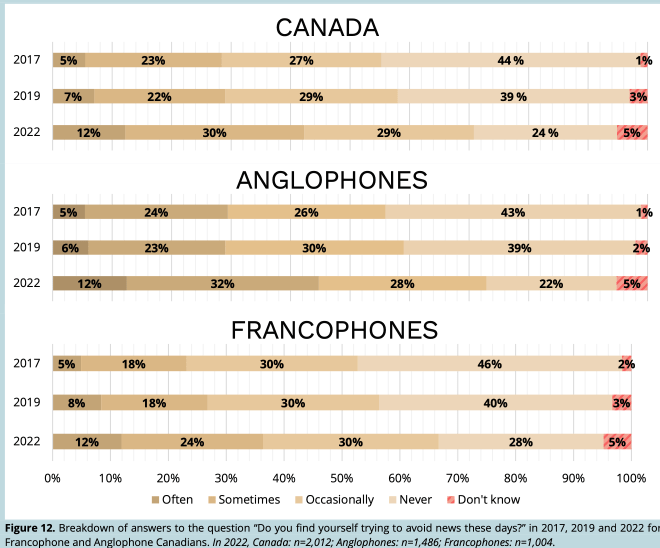

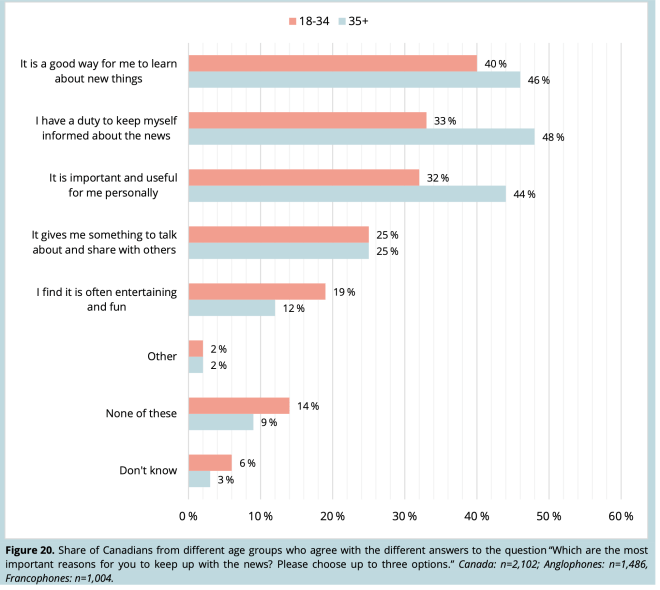


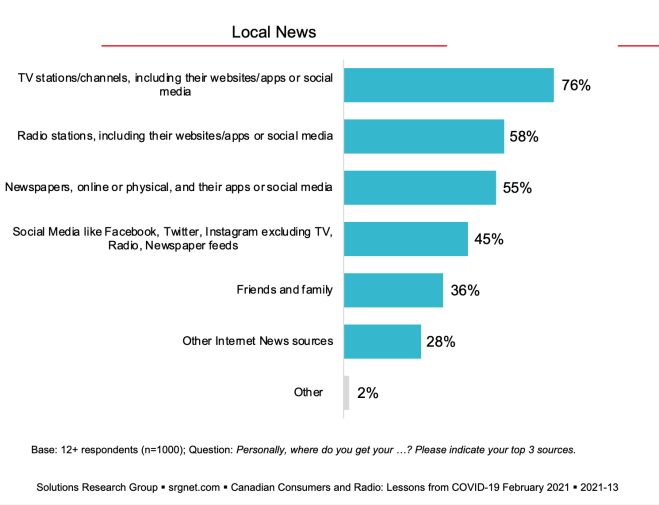
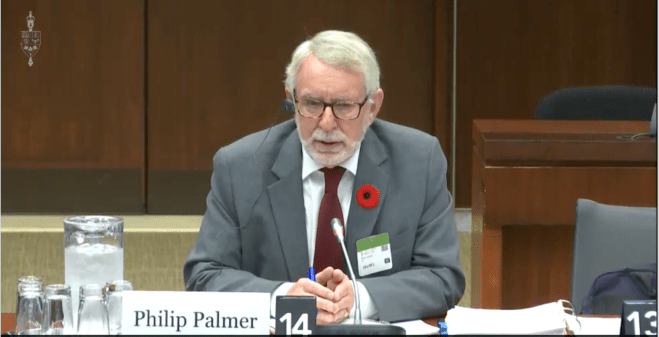
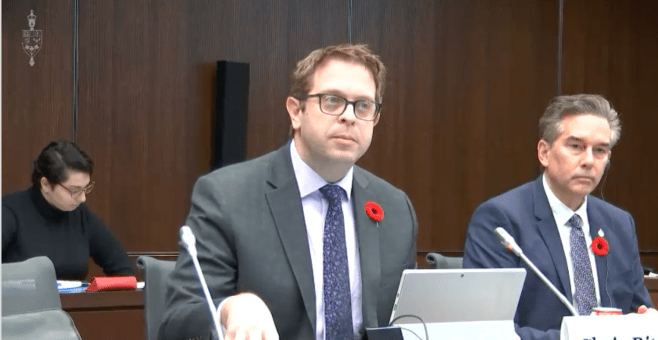




 MediaPolicy.ca