June 30, 2025
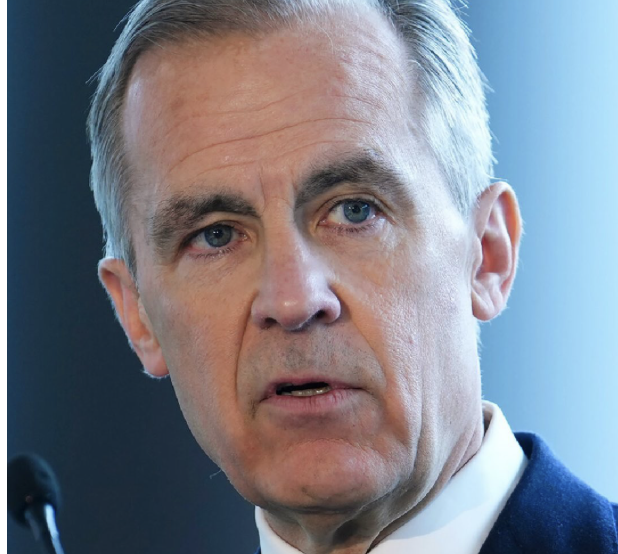
Mark Carney blinked. He blinked hard and killed the billion-dollar Canadian digital services tax on US tech giants. He did it because Donald Trump threatened to punch Canada in the nose.
After years of calling the shots as a business CEO and bank governor, the Prime Minister is discovering how tough it is to play the weaker hand when negotiating —-well, trying to negotiate—- with a bully like the United States.
Trump not only wanted the DST to be cancelled, he demanded on Sunday morning it be repealed as a condition of further negotiations over tariffs, trade and continental security. On Sunday evening Canada folded.
Carney cancelled the DST literally hours before the Silicon Valley titans were obliged to send us about a couple of billion dollars in corporate tax remittances, after years of Canada delaying the tax in the hope of coming up with an alternative measure to address the problem of US tech giants reducing their global tax bill by offshoring revenues earned in Canada and countless other jurisdictions. A deal with former President Joe Biden fell through because US Congress would not ratify it.
The rapid chain of events on Sunday had a whiff of Kabuki theatre: it’s plausible that weeks ago Carney made the decision to clear ballast from his trade agenda, much as he did with a carbon tax he once endorsed, but he needed Trump’s threat of walking away from the trade talks to do so. Whether Carney and Canada got anything from Trump in exchange for this unilateral concession we may never know.
It’s an understatement to say there is a disturbing pattern taking hold. Canada spent $1.3 billion on border security to rebuff Trump’s first round of trade tariffs triggered on the phony pretext of fentanyl smuggling.
We enacted and then suspended most of our retaliatory tariffs in hopes of expedited trade negotiations.
We joined hands with NATO allies to click our heels at Trump’s demand that NATO countries more than double their defence spending to 5% of GDP.
And as a ten out of ten on the cringe scale, who can forget Ontario Premier Doug Ford’s bumbling bluff to cut electrical power exports to the United States.
Carney is gambling that Trump won’t see the DST climb-down as weakness and be emboldened. If Canada was the European Union of 400 million souls, an ocean away from the US, the Prime Minister might have chosen a different strategy.
What’s the right way for Carney to play this in the next few weeks?
I spent my trade union career negotiating against powerful companies, usually playing the weaker hand unless the rank and file were angry enough, for a long enough period of time, to face down their employers. One of the key responsibilities of the negotiator is to figure out your own strength.
This is Carney’s challenge. How resilient are Canadians in our collective commitment to economic defence against the Trump onslaught? We get riled up by Trump’s “51st state” threats. But are we tough enough for a grinding trade war of attrition that lasts until Trump’s economy tanks and he has to face mid-term voters next year?
This is a question that the Prime Minister must ask himself every day. It is a question we must ask ourselves.
Our first test of bargaining solidarity is for our politicians, especially our provincial premiers. I suppose we could ask them to just shut up and let the winner of the federal election speak for Canada and certainly not head south to cut their own deal with the US President at Mar-a-Lago.

But voters expect their elected officials to speak up for their constituencies —-Alberta Premier Danielle Smith has every right to remind us that the oil patch is as important as the auto industry— or else they will no longer be elected officials. But there is a line to be drawn and respected.
The same test of solidarity can be expected of non-elected political agents. The chorus of domestic critics of the tax on Uber, Google, and the other digital titans has mischaracterized the tax as just another cynical cash-grab from Big Tech companies that are better left unregulated.
Canadian journalists have tried to correct that misimpression, reporting on the DST as a story of global tax policy. The story is that Canada was a relative latecomer to the international consensus among OECD nations that US Big Tech was offshoring revenues earned in other countries to tax havens like Ireland and that national digital taxes were the best way to combat it until the cheating stopped.
Most European Union nations have already implemented their digital services taxes. While the US President still has those levies in his trade crosshairs, any changes will come at the negotiating table where the EU can pursue a solution to the offshoring problem. In a recent announcement, US Treasury Secretary Scott Bessent said that the US was prepared to mirror OECD/G20 nations’ tax policies on a minimum corporate tax even though the US will not ratify a tax treaty on the matter.

The details of this recent understanding between the OECD and the US are still hazy.
The EU is keeping its DSTs, for now, because it has some things that Canada doesn’t. Like, the EU nations’ DSTs were already implemented and they had not delayed them out of good will as Canada did. Like the trade of EU nations is less exposed to the United States than Canada’s is. Like, the EU can fall back on an internal trading bloc of 400 million.
The EU will discover, as Canada is, that a solid front at the bargaining table is the only way to defend economic opportunity and political sovereignty against Trump’s trade war.
If it’s all over quickly because we can’t keep a grip on our internal solidarity, we will have lost the trade war. And losing the trade war could mean losing our country.
***
If you would like regular notifications of future posts from MediaPolicy.ca you can follow this site by signing up under the Follow button in the bottom right corner of the home page;
or sign up for a free subscription to MediaPolicy.ca on Substack;
or follow @howardalaw on X or Howard Law on LinkedIn.
I can be reached by e-mail at howard.law@bell.net.
This blog post is copyrighted by Howard Law, all rights reserved. 2025.

 MediaPolicy.ca
Superb piece. Couldn’t have said it better. This is very disappointing.
LikeLiked by 1 person
“. . . are we tough enough for a grinding trade war of attrition that lasts until Trump’s economy tanks . . . ” So long as DJT’s “big beautiful bill” passes Congress, which I believe it will, Howard Law’s implication that the US economy would ‘tank’ in a year given Canadian resolve is very likely wrong. Thing is, Canada is in an even weaker postion in the US trade negotiations than even Mr. Law believes.
LikeLike