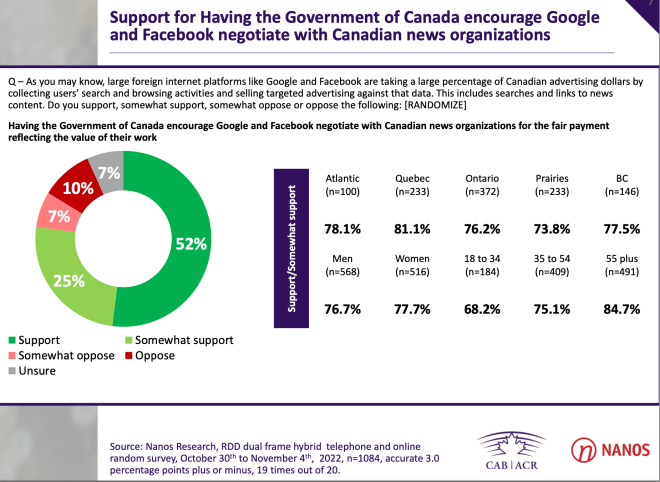
The Liberals need an end-game strategy to deal with Big Tech.

June 30, 2023

Let’s begin this post about US Big Tech setting a deadline to blackout Canadian news with an analogy.

It’s common at the beginning of a labour strike for both sides to dig in and dedicate themselves to showing resolve. No negotiations. No flinching. No weakness. The other side may cave next week. We aren’t at the end game yet.

You can see where I am going with this. The war of words over Bill C-18 between the federal government and the Silicon Valley giants Google and Facebook remains just that for now, words. The end game with real consequences appears to be some months away as we get closer to the implementation date of the legislation.

It’s getting real sooner than that for the six dailies in the CN2i group in Québec: Facebook says its not renewing their news compensation agreements when they expire later this month. Google just gave notice of non-renewal to The National Observer.

For the rest of Canadian news outlets, it’s living on nerves for the next few months. Almost all, even the financially secure Globe and Mail, have to figure out a Plan B for how a significant slice of their audience that accesses their news through Facebook is going to make the conscious effort to go to their news websites.

Maybe we should cave. After all, let’s consider Big Tech’s objectives in this impasse with our elected federal government, in order of how they would prefer to be governed:

1. Not governed at all. No more national precedents for government regulation.

2. If they must submit, an ‘opt-out’ of regulation on the condition they pay enough compensation to enough news organizations, of their choosing. There shall be no recourse for the news outlets not chosen by them. In Australia, they worked out the details in a closed door meeting with the Finance Minister.

3. Other than compensation, no other regulatory obligations: certainly not any obligation to treat news outlets equally or respect non-discrimination rules for the distribution of news content.

4. Limited liability, meaning the right price and a fixed price of compensation to news outlets, preferably very low. Unless they decide later not to renew those agreements.

Seem reasonable?

Now there are Canadian voices who didn’t like Bill C-18 in the first place and say we brought this on ourselves.

I say ‘we,’ not the Liberals, because just as a note-to-self the Liberals and the Conservatives campaigned on Bill C-18 less than two years ago. And it is supported by the Bloc and the NDP.

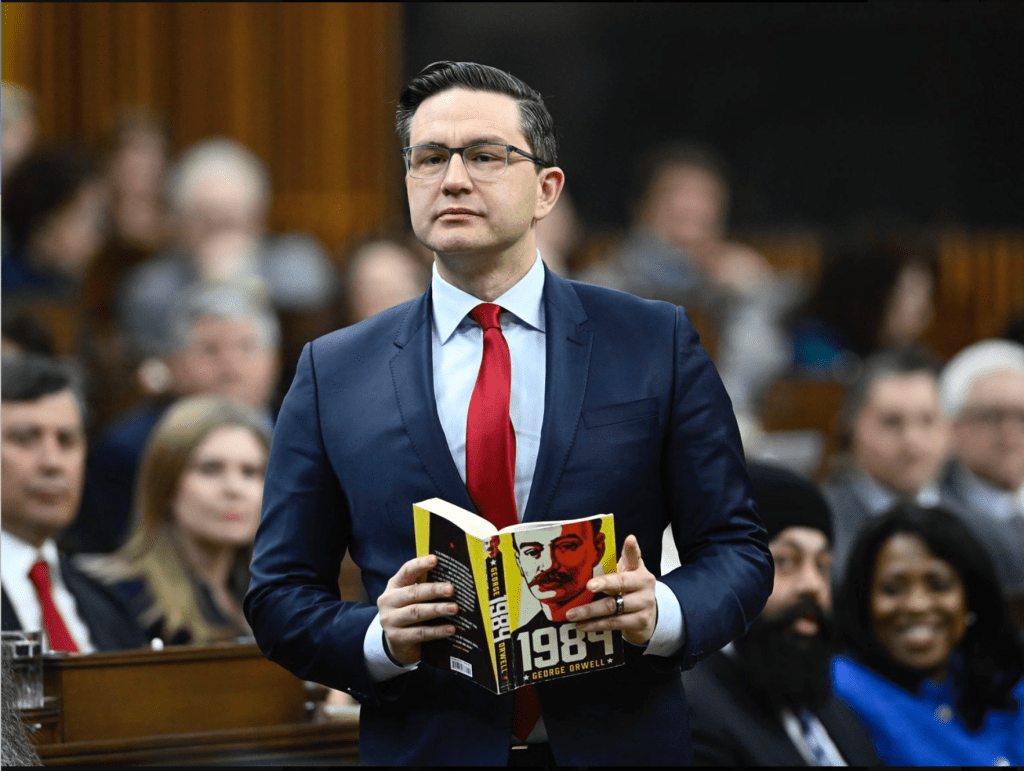
Now that the heat is on Canada, here’s Pierre Poilievre’s take:

The Liberals won’t stop until the only media you have access to is their propaganda arm in the CBC.

Meta and Google have now both announced Canadians will no longer have access to news on their platforms.

This is Trudeau’s Canada.

The Liberals are trying to pass a law that would funnel money into their preferred media outlets.

The result?

Media blackout.

Bill C-18 subsidizes big corporate media outlets while shoving new, innovative, and grassroots journalism by the wayside.

If Meta and Google won’t do it, the Liberals have said they’re just going to tack on more money to the big media outlets’ already massive subsidies.

Enough.

Pierre Poilievre and the Common Sense Conservatives will reject the woke agenda of the NDP-Liberal coalition, end the news blackout, and restore the promise of our great country.

We will put the Canadian people first.

Let’s Bring Home freedom of the press.

The final invocation is inspiring, coming from a political party that wants to, um, blackout the nation’s number one news site, CBC News.

I may be topping it the nob —-one of my favourite old fashioned expressions—- but now that everyone has clearly expressed their opinion on C-18 it may be time to back our elected government if only to support the principle that powerful foreign corporations don’t get to tell the Canadian electorate how to run our own country.

And while I am offering free advice, here’s the summer homework for the Liberals.

Come up with a Plan A for the end-game. The announcement this week of more government media subsidies, other than as a triage measure, is not an ideal solution. It’s time to move forward with the Digital Services Tax on the largest Big Tech companies, already on the books and ready to go.

***

If you would like regular notifications of future posts from MediaPolicy.ca you can follow this site by signing up under the Follow button in the bottom right corner of the home page; 

or e-mail howard.law@bell.net to be added to the weekly update; 

or follow @howardalaw on Twitter.

Catching Up on MediaPolicy.ca: the latest in C-18 showdown – big shakeout in Hollywood’s streaming industry – Canadian broadcasters want less CanCon

Meta’s Global Policy chief, Kevin Chan

June 24, 2023

A couple of years ago on a conference call, in an uncharacteristic moment of uncivil behaviour, I heckled Facebook’s global policy chief, Canada’s own Kevin Chan, by suggesting he worked for the digital equivalent of a tobacco company.

He seemed to take offence. So it’s possible I am responsible for the current mess with Bill C-18.

This week C-18 received Royal Assent and Facebook immediately renewed its threat to block Canadian news. 

The breathless news reporting of that threat may obscure the fact that the end-game in this confrontation over Bill C-18 could be several months away. Helpfully, press reports offered some new information: there have been direct talks between the Prime Minister’s Office and the Big Tech twins, Meta and Google.

After a career of negotiating collective agreements I have learned that press reports of negotiations are often gamed by the participants. I know I did my best. You have to take it all with a grain of salt.

What is Google and Facebook’s price of non-defiance? Do they have one, or is Canada a convenient punching bag for their global strategy to defeat regulation by sovereign governments, no matter what the contents of C-18? If that’s the case, it’s an easy choice for Canada to make between defending our sovereignty or capitulating to a private company. 

If press reports have it right (they may not through no fault of their own), what the web giants want is to pay off the Canadian news industry with a privately negotiated agreement and put C-18 into deep freeze; on the books but not implemented.

This is what Google and Facebook did in Australia and, two years later, they are making it clear that they aren’t keen on renewing those agreements.

Nobody ever stays bought in this business. 

***

If clear and honest policy commentary counts for anything in this difficult environment, I highly recommend a recent podcast on Sean Speer’s The Hub with his guest Taylor Owen of McGill University. Owen talks informatively about Bills C-11, C-18 and the promised legislation on Online Safety.

*** 

The focus on the policy goals of our Netflix Bill C-11 often overlooks what’s happening to the streaming industry in real time.

Ever since Netflix’s subscription growth stalled —-coinciding with other Hollywood studios and web giants jumping into direct-to-consumer video streaming—- the industry has been scaling back from the spending spree that normally fuels an all out battle for market share (you may recall that Disney recently announced a production pause in Canada, ascribed to Bill C-11 by Michael Geist and Senator Leo Housakos.)

In a rhapsodic narrative published in Vulture, Joseph Adalian and Lane Brown describe the industry retrenchment in apocalyptic terms. 

It’s difficult to know if this is just the expected dread of a market shake-out of winners and losers or if the streaming industry is discovering a similar fate previously revealed to the news industry, which is that monetizing content in digital is much harder than expected.

The article suggests there never was a streaming business model based on margin, only market share and stock price. Now there is a shake-out and a possibly a realignment of the business model. One aspect of that realignment may be rethinking the monetization arc of shows from first run to licensing and long term library revenue.

The article is thought provoking given its relevance to how we are going to make Canadian entertainment programming in this environment.

***

Speaking of Bill C-11, let the implementation games begin.

Our Canadian broadcasters would have been delighted to read the Minister’s June 8th Policy Direction to the CRTC reminding everyone that, in the end, the financial contributions made by foreign streamers to Canadian content must measure up ‘equitably’ to those made by our broadcasters.

The broadcasters would like their current obligations slashed by up to a third and the streamers can meet them in the middle. MediaPolicy wrote about that here. Steve Faguy had a similar take here. Broadcast Dialogue did a straight news piece, here.

Another issue is the dry regulatory business of mapping out what digital services are in or out of regulation based on a media company’s threshold of annual earnings.

On one level, this consists of big media companies trying to save millions by carving their business, or parts of their business, out of the regulatory sphere. The CRTC will be inclined to agree to much of it, as including smaller digital services or those on the periphery of ‘broadcasting’ may sweep in more financial contributions but create unnecessary regulation.

However setting a bar for regulatory registration based on revenue thresholds has consequences for small Canadian programmers and the Canadian public. MediaPolicy covered that here.

***

If you would like regular notifications of future posts from MediaPolicy.ca you can follow this site by signing up under the Follow button in the bottom right corner of the home page; 

or e-mail howard.law@bell.net to be added to the weekly update; 

or follow @howardalaw on Twitter.

Nothing is simple in C-11. Welcome to stealth deregulation.

June 22, 2023

When the CRTC issued notices of public consultation for the implementation of Bill C-11 in three different files, it packed the big money issues into file ‘2023-138.’ That’s where it will fix a basic financial contribution for all online undertakings, equitable to those already made by licensed broadcasters.

For policy nerds and regulatory lawyers, the CRTC also opened file ‘2023-139’ on ‘registration’ of online undertakings, a colourless label for ‘which online media companies are too small to be regulated?’

The Commission asked everyone if there should be a $10 million threshold —referring to annual gross Canadian revenues earned by a domestic or foreign undertaking— below which a business would be exempted from registration and therefore from regulation.

Bids are coming in. Many are from media companies asking for the CRTC’s proposed $10 million to be raised so they can get under it. For example, the channel aggregator The Roku Channel wants to limbo under that bar.

The Independent Broadcasting Group of small Canadian programmers has filed the most interesting submission, pointing out that the CRTC seems to be creating an entry port not only for financial contributions to Canadian content but all regulatory issues.

The IBG’s most compelling point is that small programmers and online undertakings that fall well below a dollar-fixed registration requirement might be unable to take advantage of regulatory assistance, such as a complaint to the CRTC that they are being shut out from distribution from Roku or some other online platform. That’s would be a huge problem and C-11 observers will recall that a lot of legislative time was spent on securing access for small Canadian programmers to carriage on online platforms serving Canadian audiences.

Another registration-related issue is content regulation. Licensed broadcasters are subject to basic editorial codes in the Broadcasting Act’s 1986 television and radio regulations on ‘abusive comment’ and ‘equitable portrayal.’ Bill C-11 was drafted so that these regulations cannot be mapped over to social media platforms, but there is no jurisdictional bar to the CRTC creating something similar for streamers and other online platforms that control and curate their content.

What the CRTC may choose to do is an issue provoked earlier this year when Égale Canada filed a TV regulation complaint to the CRTC asking for Fox News to be kicked off of Canadian cable TV.

The merits of the case aside, this scenario will also arise online. The CRTC will have to figure out how and whether to apply the abusive comment TV regulation to online undertakings that broadcast to Canadians. It’s straightforward in the cable world: the CRTC can order the cable platforms to defenestrate the offending channel (as it did in the case of Russia Today). It’s more complex in an open Internet.

The reason this is all relevant to registration is that there will be small online undertakings making themselves available in Canada who would like nothing more than to test the boundaries of regulating ‘awful but lawful’ content. If they aren’t registered, they may not be accountable.

Another angle on this issue is that Bell and Corus have both asked the CRTC to exempt online news undertakings in their entirety. Fox News is an online undertaking too.

So the issue for the CRTC will be whether they will make sure that exemption from ‘registration’ is not an automatic exemption from all regulation.

Finally, one other issue that bubbled up in the submissions to the CRTC from foreign online undertakings. Far from humbly accepting their ‘win’ in the Heritage Minister’s direction to exclude social media creators and their programs from regulation, TikTok Canada wants its entire platform excluded from regulation even if they host media company content (or their own). Not even Meta or YouTube asked for that.

These observations are only from the first round of written submissions on ‘139’ registration issues. Experienced CRTC players normally hold back their most interesting comments for the rebuttal round of submissions, due June 27th. We’ll see what pops up.

***

If you would like regular notifications of future posts from MediaPolicy.ca you can follow this site by signing up under the Follow button in the bottom right corner of the home page; 

or e-mail howard.law@bell.net to be added to the weekly update; 

or follow @howardalaw on Twitter.

Under the radar, Canadian broadcasters want to spend less on Canadian content

June 21, 2023

Last week’s Bell announcement of 1300 job cuts and closings of six AM-radio station woke up a lot of people who may have acclimatized themselves to the steady drip-drip of television layoffs over the last ten years. The number of bodies headed out the door in Bell Media CTV is — a guesstimate— around 340. There is no fudging the impact of a six per cent staffing reduction on productivity and programming .

So naturally Bell chose last week as the right time to file an application to the CRTC asking to eliminate their twin regulatory requirements for weekly hours of local news on its 35 CTV stations and the minimum news spending to support them.

But no worries, Bell’s application says it will be fine, it’s really they just don’t like being told where to allocate their budgets:

Bell Media’s local television stations have always been committed to ensuring the coverage of such stories and if our Application is approved, we will continue to do so.  Having the flexibility on how to achieve those goals rather than Commission mandated rules will allow us to provide a better news service to the local communities that we serve. 

There is something much bigger going on here.

Bell simultaneously filed CRTC papers asking for reductions in all other television commitments to Canadian programming. It asked for a reduction in its Canadian Programming Expenditures (CPE) —which includes spending on local news and entertainment— from 30% of revenues to 20%. It also wants to reduce its obligations to air shows in the prestige (and expensive) categories of dramas, comedy, documentaries and award shows, this time from 7.5% to 5% (this spending on ‘Programs of National Interest’ (PNI) is an envelope within the larger CPE budget, as is the 11% spending envelope for local news).

And for good measure, Bell wants to reduce its cable division’s contributions to the Canada Media Fund and local news from 5% of annual revenue to 4%.

Guess what, Corus wants something very similar. Back in November 2022 the Shaw family-owned broadcaster quietly filed a request to have its CPE reduced from 30% to 25% and its PNI from 8.5% to 5%. The Commission hasn’t scheduled a hearing yet.

Wait, not done yet. This month Québecor filed CRTC papers asking to cut its TVA local news programming in the Quebec City region and —before the CRTC could do so much as establish a file number— cut its weekend shows as a cheeky fait accompli. Rebuked by the CRTC, Québecor CEO P.K. Pélédeau reinstated the programming and announced layoffs instead.

Here’s how this all fits together.

Now that Bill C-11 is law, the CRTC has begun a lengthy public consultation on a long list of regulatory issues flowing from the new legislation.

Two issues entwined helix-like are what Netflix and the foreign streamers are going to pay into the financing of Canadian programming and how that will be ‘equitable’ to what licensed Canadian broadcasters are already doing with their CPE, PNI and spending on local news. That ‘equitability’ is at the heart of C-11. At the moment, the streamers pay nothing. So the gap is, well, 30% or so.

The ‘30% of revenue’ figure understates the pride of place for Canadian content in programming budgets. In 2021, the ratio of broadcasters’ expenditures on Canadian programming compared to acquisitions of foreign programming was $1.95 billion to $1.35 billion for private broadcasters and $638 million to $25 million for CBC-Radio Canada which has an 85% CPE. Overall, those programming expenditures favour Canadian programming at a rate of two to one. 

By now, you’ve figured it out what’s happening here. The Canadian broadcasters want the gap between them and the streamers closed from both ends, including a reduction of their own spending commitments. Hence, their CRTC applications noted above.

As tales of woe go, the broadcasters have a good one and the fair minded cannot disagree.

Here’s some industry context to demonstrate it.

The CRTC’s tracking of local news dollars falls in the ‘conventional television’ bucket, meaning local stations that are stand-alone or belong to the major networks. Conventional TV has been in the red every year since 2012, usually in double-figure percentages.

For the network stations like CTV, Global, City or TVA, their operations have always been directly cross-subsidized by their profitable ‘specialty’ TV channels and indirectly by their cable operations.

That specialty TV profit margin hasn’t declined too much since 2013 in percentage terms (steady at approximately 25% operating profit) but the revenue has declined 25% from $5.2 billion to $4 billion. As you can’t eat margin, only dollars, there is less profit available to cross subsidize programming that loses money: chiefly, PNI and local news. And that specialty TV blood bag is getting drained by the rising costs of acquiring the cheap US programming that audiences demand.

Bell, Corus and Québecor —we haven’t heard from Rogers as yet— say they can’t wait for the Bill C-11 hearings to result in lower regulatory obligations (presumptuous, yes). They want relief now, and so their applications are for mid-term license relief (to be fair, their five-year licenses expired in 2022 but have been extended twice by the CRTC until August 31, 2024).

Besides wanting to pay less, both Bell and Corus have something more structural in mind and of central importance to how we have always financed Canadian content. They want to shift their mandatory PNI spending to popular genres like lifestyle and reality TV where they think they can make money and not lose money competing head-on with the dramas streamed by Netflix, Disney and Amazon.

But reducing PNI has a knock-on effect upon the independent Canadian producers who make the bulk of Canadian television dramas.

More to come.

***

If you would like regular notifications of future posts from MediaPolicy.ca you can follow this site by signing up under the Follow button in the bottom right corner of the home page; 

or e-mail howard.law@bell.net to be added to the weekly update; 

or follow @howardalaw on Twitter.

This was the week in news journalism. All bad.

June 17, 2021

Joyce Napier laid off. Let that sink in.

This was not a feel-good week for Canadian news media.

BCE’s announcement of 1300 layoffs, or three per cent of its workforce, across its telecommunications and media businesses shook people up. The Bell Media division will shed approximately 340 jobs.

It wasn’t just the big number, it was also the elimination of CTV’s foreign bureaus and its veteran journalists who are households names. Bell closed six AM radio stations in Vancouver, Edmonton, Calgary, Winnipeg and London Ontario which only makes you wonder if FM stations and small town television stations are next in line.

Andrew MacDougall was prompted to write a dirge for the news industry in the Ottawa Citizen, a column I have written in my own head too often.

For those of us who have been dwelling on little else for the last ten years (coinciding with ten years of significant annual losses in local television and the hollowing out of newspaper advertising revenue), these layoffs were just another big bump in a bad road. The only silver lining in this cloud is the bump jolted more people awake.

Yes, it’s Bell’s fault. Bell should always suck it up.

That was the general tenor of social media posts I observed all week: that Bell was whining and blaming its regulatory load. Actually the corporate commentary included very little of that. Here’s CEO Mirko Bibic’s note to staff:

The ‘blame Bell’ distraction even went so far that a Toronto Star story noted that Bell Media made $52 million last year across its profitable specialty news channels CTV News, BNN and CP24. In fact, Bibic reported that CTV’s overall news operation —adding in its 35 local television channels and many radio stations— lost $40 million last year. Those numbers are consistent with published CRTC data.

And we haven’t even begun to talk about Corus’ Global News, the nation’s second largest private television chain at 15 stations across the country. They no longer have the luxury of being owned by a cable parent company with healthy profit margins (although it’s allowed them to make the transition to its StackTV streaming service more quickly). The finances at Global are even worse than CTV and there’s the matter of the CRTC’s unkept promise to review the funding of the $20 million Independent Local News Fund that is meant to support independents like Global.

The timing of Bell’s announcement was cynical of course. It came a day after the Online News Act Bill C-18 was approved with amendments in the Senate. The layoffs also set the table for the CRTC’s regulatory hearings to implement Bill C-11 in which the Commission will consider the regulatory load of all broadcasters. Québecor, Corus and Bell have all applied to the CRTC for relief from CanCon spending obligations even though their licenses have a year to run. Québecor’s ownership especially distinguished themselves by cutting the programming before the CRTC even held a hearing. Stay tuned on that one.

If this wasn’t a sufficiently discouraging situation for news media, this week Reuters published its 11th annual global report on news consumption and trust. The Canadian segment revealed big drops in both consumption and trust.

The overall global trend suggested a strong pivot of Gen Z (those born after the year 2000) to getting their news from social media services (that isn’t reported as occurring yet in the US or Canada). This lead one commentator to conclude that in the long run news organizations won’t control their own distribution platforms at all. That kind of trend sounds familiar —think broadcasting convergence circa 2000— and opens up a under discussed future scenario in which Big Tech companies seek to own the strongest brands in news.

Here’s the Reuters report, the two-page segment on Canada is at page 114. The US summary is at page 108:

***

If you would like regular notifications of future posts from MediaPolicy.ca you can follow this site by signing up under the Follow button in the bottom right corner of the home page; 

or e-mail howard.law@bell.net to be added to the weekly update; 

or follow @howardalaw on Twitter.

The Radio-Canada/N-Word ruling: Court of Appeal gives CRTC a lesson about its statute

June 13, 2023

By now you may have read press reports of the Federal Court of Appeal overturning the CRTC’s censure of CBC-Radio Canada for two of its Montréal radio hosts saying the ‘n-word’ over the air.

The controversy began a year ago when the CRTC ordered the CBC to apologize on behalf of its journalists and put them through diversity training after the hosts repeated the full ‘mot d’n’ four times in a six-minute segment about Concordia students objecting to their professor speaking aloud the book title of the Pierre Vallières 1968 indépendantiste classic “N—— blancs d’ Amérique.”

CBC Head Office in Toronto responded with the mandatory apology.

But the CRTC’s rebuke of Radio-Canada and its journalists resulted in a powerful backlash of public opinion in Québec. An outcry demanding CBC appeal the CRTC ruling struck home and the case was sent to the Federal Court of Appeal. In December the federal Attorney-General —representing the CRTC as agent of the Crown—- volunteered its legal surrender and invited the Court to overturn the Commission.

MediaPolicy commented on the story here, here and here.

The Attorney-General offering his sword was an admission that the legal reasoning behind the ruling was sub-standard.

The complaint from a Black Montréalais wasn’t without merit. In fact the CRTC probably had a valid point that no matter how well intentioned the radio hosts’ desire to convene a public discussion over censorship and racism they ought to have kicked off the show with a disclaimer giving context to the reasons for identifying the book by its full title including the racial insult.

However the Commission squeezing a forced apology out of Radio-Canada on behalf of its professional journalists was an enormous misjudgment. (Forced apologies are usually a poor investment, just ask the Toronto Blue Jays).

Legally, the Commission’s majority ruling from three of five commissioners just botched it.

Inexplicably, they ignored their well known 1986 Radio Regulations —written right into the CBC’s license conditions—-that provide a legal test of ‘abusive comment.’ The regulation says that offensive language may be acceptable for purposes of artistic expression, satire or journalist analysis.

For reasons best known to themselves, the majority commissioners built their case on three ‘policy objectives’ in section 3(1) of the Broadcasting Act touting the importance of diverse and multi-cultural programming and also the section mandating that all programming on radio and TV ought to be “of a high standard.”

The latter policy objective in section 3(1)(g) of the Act authorized the Commission to pass the aforementioned code on abusive comment in its Radio Regulations forty years ago. In citing general objectives of the Act —instead of the Radio Regulations and its considerations of free expression and context— the commissioners compounded their error by ignoring other policy objectives in the Act which defended journalistic free expression. To cap it off, the Commission did not consider freedom of expression under the Charter of Rights and Freedoms.

It was a legal cluster-nut and ripe for appeal.

At this point, the Attorney-General stepped in to spare the Commission the humiliation of the Court’s inevitable smackdown. As the Commission’s legal representative, the A-G filed a brief to the Court asking for the Commission to be overturned.

You would think the Commission would listen to its friend the A-G and —as you might be told after getting knocked out in a bar fight—- ‘stay down.’

Nope.

The Commission asked the Court to be allowed to defend itself if the A-G wouldn’t. The Chief Justice denied the request but then took the unusual step of appointing University of Ottawa law professor Paul Daly as a ‘friend of the court’ to make the best case he could for the Commission.

This is where we get into some serious legal nerdship that is important beyond the immediate importance of how the CRTC navigates freedom of expression and harmful content. It goes to how the Commission interprets its powers and jurisdiction under the Broadcasting Act in any number of situations.

The fatal flaw in the Commission’s N-Word ruling was that it did not levy sanctions on Radio-Canada on the basis of the Radio Regulations which were lawfully enacted under the head of powers in section 10 of the Broadcasting Act authorizing the Commission to pass regulations aligned with the policy objectives of the Act found in sections 3 and 5. In effect, the Commission moved directly from policy considerations to sanctions without applying its regulations (which provided a proscription against abusive comment but also mitigating factors such as journalistic activity).

The law professor argued before the Court that the Commission remained in bounds because of the wording of Section 5 of the Act, seizing upon the Commission’s authority to both “regulate and supervise” broadcasting. He suggested this meant that the Commission was “supervising” when it sanctioned Radio-Canada and therefore wasn’t obliged to follow “regulations.”

Yes, you could drive a dumpster truck through the hole that legal argument makes.

To make a long story a little shorter, Chief Justice Marc Noël wasn’t buying it. If you are interested in the legal play-by-play, you can read it for yourself in paragraphs 42 to 61 of the Court decision.

The reason it’s an important ruling, and not just angels dancing on a pinhead, is readily apparent if you read the motherhood policy objectives in section 3 of the Act next to the specifics of CRTC regulations that tell broadcasters what they can and cannot do.

Could the Radio-Canada journalists have defended themselves from the charge of abusive comment under the Radio Regulations? They never got that chance.

The Chief Justice has ordered the Commission to go back to square one and apply the Radio Regulations.

A word of advice to the Commission: stay down.

***

If you would like regular notifications of future posts from MediaPolicy.ca you can follow this site by signing up under the Follow button in the bottom right corner of the home page; 

or e-mail howard.law@bell.net to be added to the weekly update; 

or follow @howardalaw on Twitter.
Catching Up on MediaPolicy.ca – C-11 direction to CRTC is Gazetted – Whyte on Reisman and Indigo Books – JT gives Big Tech the steely eye

June 11, 2023

Heritage Minister Pablo Rodriguez has Gazetted his draft Policy Direction intended to guide the CRTC in its implementation of key regulatory issues within our spanking new Broadcasting Act, as amended by Bill C-11. 

MediaPolicy.ca posted some highlights. It’s no surprise that YouTubers and algorithms top the list. 

***

The best read of the week is from Ken Whyte, if only because anything the lad writes sounds like he was born speaking in iambic pentameter.

Whyte has written more than once about Indigo Books, owned by Heather Reisman and Gerry Schwartz, and offers his insights on whether things are about to change.

The other read of the week is a policy piece advocating for a national news strategy for Canada. Co-written by two ex-Commissioners of the CRTRC, former Chair Konrad von Finckenstein and Peter Menzies, it’s a thoughtful manifesto worth the thirty minutes of your time.

The authors invite a continuation of the dialogue and MediaPolicy.ca hopes to take them up on it soon.

***

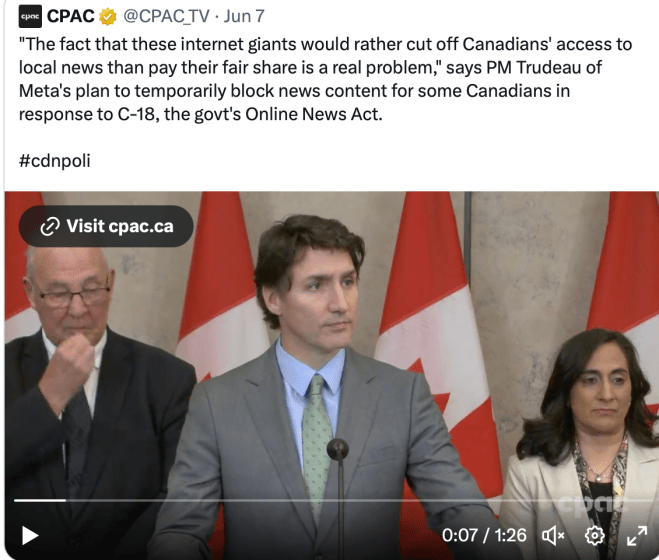
As for our current dogfight between the federal government and Big Tech over the Online News Act Bill C-18, we appear to be stuck in the ‘no, f**k you‘ phase as the government’s anger over Meta and Google tactics is now being voiced in defiance by the Prime Minister (see the video above).

***

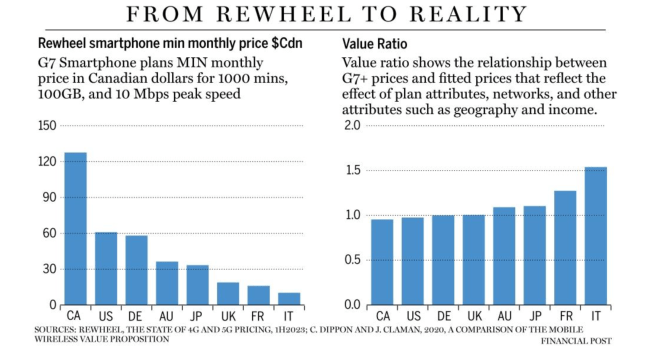
The back and forth about Canadian mobility prices —well its more like a Punch and Judy show— rests on the bedrock assumption that monthly bills are not internationally competitive. It seems to be orthodoxy now that the Heritage Committee, CRTC, Competition Bureau and ISED Minister Champagne have endorsed it. Because after all, who believes the telcos saying it isn’t so?

For the skeptical mind, have a read of Mark Goldberg’s latest post.

***

If you would like regular notifications of future posts from MediaPolicy.ca you can follow this site by signing up under the Follow button in the bottom right corner of the home page; 

or e-mail howard.law@bell.net to be added to the weekly update; 

or follow @howardalaw on Twitter.
Heritage Minister’s Policy Direction to the CRTC gives few C-11 hints

June 9, 2023

Yesterday, Heritage Minister Pablo Rodriguez issued his draft Policy Direction to the CRTC on implementing Bill C-11. 

Policy directions can be maddingly vague. This is deliberate and mostly a reflection of the Broadcasting Act’s restrictions on the federal government giving specific instructions to the independent regulator. It means we have to heavily parse every word and read between the lines.

Here are highlights of some of the more contentious issues:

YouTubers

The Minister has fulfilled his promise —previously made both verbally and in writing— to forbear from regulating videos and music uploaded by YouTubers. That means the CRTC cannot impose ‘discoverability’ regulations affecting the search rankings of those programs.

The legalese is that YouTubers are defined in the Policy Direction as ‘social media creators’ which ‘means a person who creates programs that are primarily intended for online distribution as user uploaded programs through social media services.’ 

As for YouTubers’ video and music, section 4(2) of the Act excludes that content from the CRTC’s jurisdiction unless they are specifically included by a CRTC-made regulation.  The Minister has directed the CRTC to regulate only “in respect of programs that have been broadcast, in whole or in significant part, by a broadcasting undertaking that is required to be carried on under a licence or that is required to be registered with the Commission but does not provide a social media service.”

Translated, that means the only way that third party uploads to YouTube or TikTok can be regulated for discoverability is if the content already appears on other regulated platforms such as television, radio and online services such as Netflix, Crave, Roku or StackTV. (YouTube’s own proprietary music service, YouTubeMusic, is not a third party upload and therefore is subject to regulation).

Algorithms

Consistent with his testimony before Parliamentary committees, the Minister has directed the CRTC to focus on ‘outcomes’ when devising discoverability regulations in support of showcasing Canadian content. 

This is code for giving online broadcasters free reign in how they choose to promote Canadian content. The prospect of the CRTC ordering online undertakings to improve their ‘outcomes’ by manipulating their algorithm-based content rankings appears to be described as a last resort:

Discoverability and showcasing – The Commission is directed to consider both established and emerging means of discoverability and showcasing to promote a wide range of Canadian programming. In making regulations or imposing conditions in respect of discoverability and showcasing requirements, the Commission is directed to prioritize outcome-based regulations and conditions that minimize the need for broadcasting undertakings to make changes to their computer algorithms that impact the presentation of programs.

This does raise the possibility that online undertakings can minimize their ‘discoverability outcomes’ by maximizing the acquisition of Canadian content instead. The CRTC left that route open in its recent notice of public consultation on the implementation of C-11.

The Definition of Canadian Programming

The Minister has made statements over the last two years in which he seemed receptive to revising the 40-year-old point system defining a Canadian program for the purpose of subsidies and regulation. The new legislative text in section 10 (1.1) of Bill C-11 did not drive any particular change. 

The contentious issues are twofold. The current headcount-method (what counts is the nationality of producers, talent and crews) does not give credit for identifiable national themes in the content. Secondly, the current requirement that Canadian producers retain the intellectual property rights in the Canadian programs they sell to broadcasters is opposed by Netflix and the US streamers. 

The Minister’s Policy Direction gives few hints and no discernible direction to the CRTC on how to handle these issues other than a subject heading in a backgrounder which instructs the CRTC to ‘redefine’ Canadian programs without saying how. 

Level Playing Field

The main reason for legislating Bill C-11 was to require Netflix and the other foreign broadcasters to pull their weight in financing and promoting Canadian programming in comparison to the expectations on Canadian broadcasters.

The Act was a little mushy on this point, requiring in section 3(1)(a.1) that the US contributions have to be ‘appropriate.’ The government rejected an amendment proposed by Bell to upgrade the American contributions to ‘fair and equitable.’

The Minister has now told the CRTC that the streamers’ contributions, both financial and non-financial, “must be equitable given the size and nature of the undertaking and equitable as between foreign online undertakings and Canadian broadcasting undertakings.” This is not what the Hollywood streamers wanted to hear. 

On the other hand, the Policy Direction on the ‘use of Canadian human resources’ is teasingly vague. It asserts that the Commission should ‘ensure that the [broadcasting] sector maximizes the use of Canadian and other human resources in the creation, production and presentation of programming in the Canadian broadcasting system.’ 

This means that the mulligan the Liberals handed to the foreign streamers in section 3(1)(f.1) of the Act —essentially a weaker requirement to hire Canadians on the shows they make or commission— is still very much in play and up to the CRTC to figure out. In the worst case scenario, it could even mean that Netflix will get credit for hiring Canadians on the US shows they make so they can hire fewer Canadians on the Canadian shows they produce.

Special Attention

The Minister has followed through with the commitments in C-11 to focus on more involvement of Indigenous peoples, equity-seeking communities and official language minority communities in the growth of programming serving those audiences.

Related to that, the Minister has also directed the CRTC to “support broadcasting undertakings that offer programming services that are of exceptional importance to the achievement of the broadcasting policy set out in subsection 3(1) of the Act.” That is policy semaphore for the CRTC to look at creating an industry subsidy for existing television channels that serve the LGBTQ+, multi-ethnic, disabled, and English and French language minority audiences that were disadvantaged by Bill C-11. The Minister had suggested as much when he appeared before the Senate.

And finally, the Minister gave faint hope to the local news stations that were studiously ignored in Bill C-11 by directing the CRTC to “consider the importance of sustainable support by the entire Canadian broadcasting system for news and current events programming, including a broad range of original local and regional news and community programming.”

Up Next

The CRTC has set June 27th as the deadline for interested parties to make written submissions on how to implement C-11. A request to extend the deadline is outstanding. [Update: the Commission has extended the deadline to July 12].

The draft Policy Direction will be posted in the Canada Gazette tomorrow and will be subject to public comment, possible changes and then final publication.

***

If you would like regular notifications of future posts from MediaPolicy.ca you can follow this site by signing up under the Follow button in the bottom right corner of the home page; 

or e-mail howard.law@bell.net to be added to the weekly update; 

or follow @howardalaw on Twitter.

Catching Up on MediaPolicy.ca – Meta throttles Canadians – the broadcasting weathervane twirls – no action on CBC’s mandate

June 3, 2023

The big media news story of the week was Meta’s announcement that they will perform an experiment on Canadians. As Google did in February, Meta CEO Mark Zuckerberg has decided to hobble the Facebook accounts of a million Canadians by preventing the sharing of news articles. That may include news organization accounts too.

This is in retaliation against Canada’s House of Commons for passing the Online News Act Bill C-18, a public policy remedy to Google and Meta’s monopolistic control of news distribution on digital platforms.

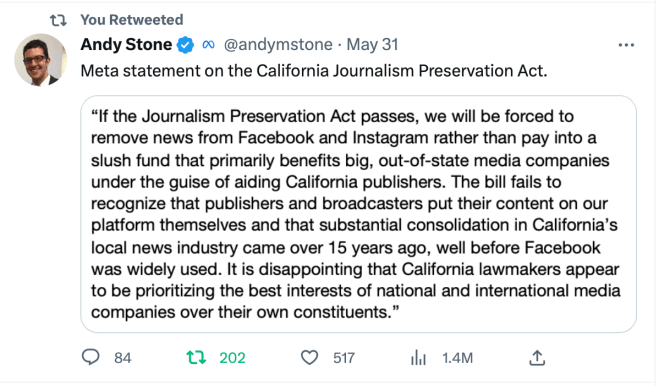
As the publisher of the Montréal news site La Presse told the Senate Committee reviewing C-18 this week, Big Tech is making a demonstration project out of Canada so that US Congress gets the message. By coincidence, Big Tech is doing the same in its home state of California where the a far milder version of C-18 was passed by the legislature on Thursday. (Check out the tweet above: the global hydra Meta lashing out at ‘out of state’ news organizations).

MediaPolicy.ca took a closer look (sorry, Seth Meyers) at what is at stake in a report on this week’s Senate Committee’s deliberations on C-18.

Either the Heritage Minister Pablo Rodriguez doesn’t know how to counter these Big Tech intimidation tactics or he has some political judo in mind and is waiting for the right moment. He wasn’t giving anything away in a recent CBC interview.

MediaPolicy.ca has been offering the Minister some free advice from time to time. Here’s some more: pull all government advertising from Google and Facebook until the experiments are stopped and the threats are withdrawn. Go a step further, challenge all political parties to do the same in unison.

In the meantime you won’t be able to share our posts on Facebook, I have disabled the button. Zuckerberg, take note. Our posts will only be shared on Elon Musk’s Twitter. As for Google, I am personally moving to Bing Search but you will note that the CBC video link above is to YouTube. There is no escaping some monopolies.

***

There have been two television industry developments that flew under the radar (or at least MediaPolicy’s notice).

Bell Media announced at the beginning of May that it has negotiated the renewal of its exclusive Canadian licensing and distribution deal for Warner Brothers’ Home Box Office and Discovery channel (i.e. the content distributed direct-to-consumer in the US by Warner Brothers’ Max) . That means Bell retains this very profitable stream of US programming for its linear and streaming Crave service.

Another development and perhaps another weathervane event is that Eastlink, the mid-sized telco and cable provider based in Halifax, broke off talks to renew its carriage of Corus channels. It’s about price of course and the public statements from each party displayed the expected measure of commercial bravado. It’s one to watch.

***

When the Heritage Minister appeared before the Commons committee last Monday he was asked by NDP MP Peter Julian when we can expect him to act on the Prime Minister’s instructions in his 2021 mandate letter to review the strategic direction of the CBC.

The Minister’s answer was that the CBC is no better than third in line at Heritage: first he has to complete his C-11 Policy Direction to the CRTC, then bring the Online Safety Bill to the House, and only then will the CBC mandate be up to bat. Maybe. News reports that action was any more likely than that were overly optimistic. It is unlikely the government has the administrative bandwidth or political will to do otherwise.

Reading the tea leaves, the government’s decision to extend CBC President Catherine Tait’s term until the end of 2024 doesn’t shout ‘change.’

***

If you would like regular notifications of future posts from MediaPolicy.ca you can follow this site by signing up under the Follow button in the bottom right corner of the home page; 

or e-mail howard.law@bell.net to be added to the weekly update; 

or follow @howardalaw on Twitter.
The policy dog’s breakfast, Bill C-18

June 1, 2023

Two days of Senate hearings on Bill C-18, chock full of thoughtful witness commentary, proved one thing: the Online News Act is a dog’s breakfast of policy contradictions that satisfies almost no one.

The make-Big-Tech-pay legislation modelled on the Australian Newsmedia Bargaining Code was conceived as a public remedy for private news outlets who are on the wrong end of Google and Facebook’s market power over digital news distribution.

In the simplest description, the Bill regulates bargaining between platforms and news organizations over the fair price of news. Its distinguishing feature is binding arbitration that takes into account the value exchange between the news organization (who supply the content) and the platforms (who distribute it).

But grafted on to this elegant regulation of private market power are contentious views of what constitutes good media policy, in a peacock tail of colours.

There’s the crowd that is opposed in principle to the regulation of content distributed over the Internet.

There’s a larger crowd opposed to government involvement in the funding of independent media under almost any circumstances. Within that group are those who believe the free market in news consumption will produce a solution to the financial crisis in news if only we steady on and deny government mandated subsidies to news outlets holding out their hands. There are others who believe that government assistance to media, directly or indirectly, will greatly fuel a loss in trust of media.

Then there’s an even larger crowd who see no market solution emerging and fear the collapse of the news ecosystem, an existential threat to democracy.

All of these crowds are weighing in on a competition bill that has morphed into a media policy bill.

It’s no wonder the public debate is a jumble.

One thing made clear by the Senate witnesses is how dramatically news outlets depend upon access to Google and Facebook to reach their audiences. Figures provided to the Senate Committee from publications as diverse as the Globe and Mail and the digital community news chain Village Media is that 30% of their site traffic arrives via Google and 17% from Facebook.

These figures demonstrate two things at once: Big Tech’s price-setting market power over the digital distribution of news and, thanks to the ruthless news throttling tactics adopted by Google and Facebook, the ability to scare the pants off of the news organizations who support C-18 as the route to better compensation for their editorial product.

Observers of market power in information industries will tell you that if content providers depend on a distribution platform for any more than ten to 15% of their traffic, they are at a serious bargaining disadvantage on pricing their content. At twenty to 30% reliance, the gatekeeping platforms dictate all terms. According to Pierre-Elliott Lavasseur, the publisher of Montréal’s La Presse, the Big Tech platforms did just that before they ‘slammed the door in our faces.’

This is why the debate over what per cent of Google and Facebook’s overall traffic is news-related is sterile. Maybe Facebook’s telling us the truth that only 3% of their posts are news-related. But their three per cent news traffic is 17% of a news outlet’s access to its audience or possibly a quarter of a citizenry’s go-to for their news. The Google numbers are even steeper. We have a market power problem that needs fixing.

Along the way we learned some things at the Committee hearings.

  • Representatives from the two leading national newspapers (the Globe and Le Devoir) indicated they are financially sustainable on a reader-pay subscription model after 10 years of hard work.

Jeff Elgie of Village Media told Senators that over a similar period he has established a viable advertising-centric model, without subsidies, in community news. (Other small publications have not, so there is some serious research to be done on replicating Elgie’s success).

Unfortunately in the big fat demographic middle, the mainstream media serving urban communities cannot say the same as Village Media‘s Elgie or the Globe & Mail, at least not yet. Newsmedia Canada spokesperson Paul Deegan told the Senate that C-18 is needed so that the smaller publications get deals with Facebook and Google on the same pro rata funding as larger urban publications like the Toronto Star. Going one better, Le Devoir publisher Brian Myles endorsed a funding formula tied to journalist head count, but capped at salary levels in the smaller publications. [An earlier version of this post erroneously identified Newsmedia Canada as endorsing a salary cap].

  • Newsmedia Canada also arrived with a shopping list for other media policy initiatives it deems missing. Those include (1) the Liberals fulfilling their 2021 election promise to stop CBC News competing for advertising against private media; (2) the federal government redirect some of its own ad spend from Big Tech platforms to Canadian news media, and (3) the feds ratchet up anti-competition measures to get at Google and Facebook’s duopoly on digital advertising.
  • We also learned from Australian witnesses appearing before the Committee that Canadian rumours that small news outlets in Australia got the short end of the stick under the Newsmedia Bargaining Code was ‘fake news.’ Or to borrow Jen Gerson’s vocabulary, ‘a lie.’
  • Jesse Brown of Canadaland trotted out an argument against C-18 predicated on the claim that significant licensing payments flowing from Big Tech to Canadian news outlets would lead to reader loss of trust in news organizations, as had already resulted from the Liberals’ introduction of the QCJO federal aid to journalism in 2018. This claim is based on cherry-picking one chart (trust in journalists) among a series tracking loss of trust in a huge variety of public institutions, a fifty-year trend. If you check the data you will find that the long term decline in trust of journalists is only surpassed by a sharper decline in trust of medical doctors. Possibly the most significant poll on trust relevant to the C-18 debate is a Nanos study showing 63% of Canadians are confident the news media “works in the best interest of Canadians,” while only 37% think Google does and just 25% feel the same way about Facebook.

***

If you would like regular notifications of future posts from MediaPolicy.ca you can follow this site by signing up under the Follow button in the bottom right corner of the home page; 

or e-mail howard.law@bell.net to be added to the weekly update; 

or follow @howardalaw on Twitter.