
February 22, 2026
Prior to last year’s federal election campaign, a cadre of protesters gathered on my block in a highly successful effort to disrupt Chrystia Freeland’s nomination meeting. The image that stuck in my mind was the young man in the thick of it who was wearing a “Press” ball cap.
I was reminded of that last week when reading Stephanie Taylor’s analysis and profile in the National Post of three high-profile conservative “influencers”: ‘The Pleb Reporter’ (Nick Belanger), Mario Zelaya, and Jasmin Laine. The Post article charts their informal relationships with Pierre Poilievre’s campaign team and their own ambitions.
At the most recent Conservative convention in Calgary, the Party granted influencers “content creator” status, waiving the $1000 observer fee and putting them on par (or with better access) than mainstream media journalists covering the same event.
The right wing influencers —-don’t worry, they have plenty of counterparts across the partisan aisle—- offer no apologies for their boostership of Poilievre or the CPC. They’ll point to their likes and ‘Ks of followers.
If you got it, flaunt it.
What sometimes galls the old schoolers is when influencers and activist reporters mooch off of the credibility and trust of capital-J journalism, hard earned by thousands of serious journalists over decades.
Or perhaps it’s the nihilism that’s most disturbing: “everyone lies, mine are true if they get lots of clicks.”
It’s discouraging of course, but journalism is a profession (or a craft, or a vocation, whatever) that holds no entrance examinations.
On this point, I commend a second piece of reading to you —Peter Klein’s op-ed in the weekend Globe & Mail—-that probes these questions. He begins with the well known case of award-winning photographer Amber Bracken being arrested by the RCMP for her presence (or extra-professional participation, according to the cops) in an injunction-defying land protest.
Then Klein observes that “today as a journalism professor, I’ve watched a generational shift: More students arrive without a clear sense of where reporting ends and advocacy begins, and some have no interest in drawing that line.”
If you meet or listen to journalists from war torn countries or despotic regimes, you will often hear a clear message: ‘we are for the people, we are of the people.’ You would be pitiless to deny them.
Here in a liberal democracy, there are also those who reject journalistic detachment and take sides, convinced of their moral certainty.
There is a line, says Klein, but the question is where and who gets to decide. The contempt charges against photojournalist Bracken (for allegedly violating the court’s injunction) were dropped, but she is suing the RCMP for damages. Legal arguments are scheduled for April.
***
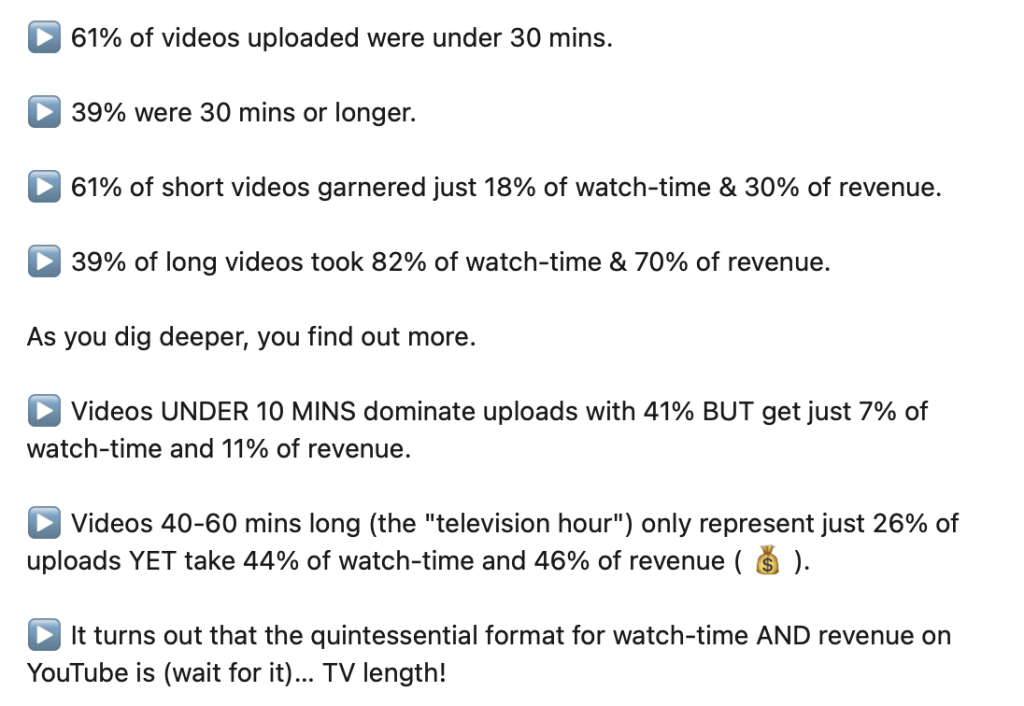
If there’s a buzz in the world of entertainment programming, it’s the rise of short-form video and micro-dramas, often shot in portrait mode for better “vertical” viewing on phones.
Platformed by YouTube and newly powered by AI tools, short form is changing video production before our eyes.
It’s disruptive. But is it premium entertainment?
Premium, schmemium. As media guru Doug Shapiro likes to say about this phenomenon, quality is what the audience consumes.
How viral will short-form go? Is it just a punk rock wave of a new entertainment niche or is it something bigger?
The other guru Shapiro, Evan, just posted this:
***
If you would like regular notifications of future posts from MediaPolicy.ca you can follow this site by signing up under the Follow button in the bottom right corner of the home page;
or sign up for a free subscription to MediaPolicy.ca on Substack;
or follow @howardalaw on X or Howard Law on LinkedIn.
COMMENTS ARE WELCOME. But be advised they are public once I hit the “approve” button, so mark them private if you don’t want them approved.
I can be reached by e-mail at howard.law@bell.net.
This blog post is copyrighted by Howard Law, all rights reserved. 2026.

 MediaPolicy.ca