Catching Up on MediaPolicy – European digital regulation in the crosshairs – performative press freedoms – ominous TV earnings

August 31, 2025

If you track news reports about President Donald Trump’s tariffs, you may recall that he struck a one-sided framework agreement with the European Union on July 28th. The headline was 15% American tariffs on imported goods arriving from the EU. On the flip side, the US gained tariff-free access to the EU market. 

Initially the deal seemed more of an armistice than a fully fledged agreement, since nothing was signed off until a one-page Framework was published three weeks later. Notably there was no repeal of the EU’s digital services taxes on American companies (like the one that Canada scrapped on June 29th). 

At the time, the White House made a point of describing EU DSTs as unfinished business while the EU news release stated that the agreement “fully respects the EU’s regulatory sovereignty.

Now for round two. 

Deal or no deal, this week Trump threatened to retaliate against 15 EU nations that maintain DSTs and also denounced as discriminatory the full gamut of EU tech regulation under its Digital Services Act (online harm and safety) and Digital Markets Act (anti-competitive practices).  The threats include new tariffs, presumably in excess of the 15% “deal.” Trump also threatened export bans or taxes on American AI micro processing chips. 

The European response was defiant: “it is the sovereign right of the EU and its member states to regulate economic activities on our territory, which are consistent with our democratic values.”

As for Trump’s new trade cudgel of export taxes, last month he reversed a Biden-era export-ban on Nvidia’s AI chips destined for China after meeting with CEO Jensen Huang. The New York Times published an illuminating feature story on why.

***

I have some updates on recent MediaPolicy posts. 

Earlier this month I wrote about the US State Department claiming that press freedoms are threatened in Canada. As I said at the time, the State Department’s Report was performative, written for the benefit of a majority-Republican Congress. If you found that post interesting, you’ll find Hugh Stephens’ bluntly worded post to your taste.

I’ll just add one more citation to my own post about North American press freedoms: this past week President Trump again invited his appointee as FCC chair to de-license ABC and NBC local news stations on the grounds that “they give me 97% bad news stories” and act as “an arm of the Democratic Party.”

MediaPolicy also posted an interview with Senatrice Julie Miville-Dechêne, the sponsor of Bill S-209 that will impede kids from accessing online porn by implementing age verification technology, an increasingly common public policy in the US and the UK. 

In the interview, Miville-Dechêne expressed doubts about the wisdom of extending age verification technology to social media apps. The state of Mississippi is not so doubtful and implemented a parental consent requirement for minors under age 18 with age verification of adult users as enforcement.

Last week the news sharing app Bluesky, a progressive alternative to the X app, responded by exiting that deepest of red states, Mississippi. A Bluesky statement described age verification regulation as too big a hassle for too small a company.

Perhaps the size of the “Mississippi progressive” market was a factor too. 

***

As the fortunes of broadcasting businesses rise and fall, certain bellwether events stand out among the steady drumbeat of quarterly and annual reports.

Here’s two you may not have noticed.

Québecor took the occasion of announcing its fall television programming line-up for its TVA network to make another plea for regulatory relief from the CRTC. 

What popped out in CEO P-K Pélédeau’s press release was that the combined revenue of TVA’s specialty and conventional television businesses has crossed the profitability line into negative territory. “In absolute terms, TVA and its specialty channels have lost $34.9 million in television advertising revenue over the past three years.” 

The MTM numbers from 2023 indicate that Québecor’s revenue situation is typical: as a group, Canadian broadcasters boasted a mere 1.6% net profit on total broadcaster revenues. The new CRTC chart (2023-24) below suggests it has become a net loss.

That calls into question the “regulatory bargain” cited by the Commission in 2016 that committed the major networks to paying for money-losing news programming out of the robust profits earned in specialty television, thanks to the majors holding Canadian distribution rights to high-margin American programming. 

The other ominous development for conventional broadcasting was the announcement by Wildbrain that it is exiting broadcast television and is removing the restriction on its non-Canadian shareholder voting that is required by broadcasting regulations. Wildbrain is (was) the only independent Canadian children’s programmer that operated Canadian children’s channels (Family Channel and WildbrainTV) until the CRTC blessed the decisions by Rogers and Bell cable to drop them. Steve Faguy’s blog has more.

[Update and correction: the original publication of this post inaccurately stated that Wildbrain was “selling its growing online business to American interests.”)

The prevailing financial and audience trends in Canadian broadcasting were updated in the CRTC’s new annual report (with now year-old data).

Here’s the Report:


***

I was very much saddened to read an obituary for Hudson Janisch who is well known to those in the telco community. He taught me Public Law in first year law school and made quite an impression. A great teacher and a mensch.

***

If you would like regular notifications of future posts from MediaPolicy.ca you can follow this site by signing up under the Follow button in the bottom right corner of the home page; 

or sign up for a free subscription to MediaPolicy.ca on Substack;

or follow 
@howardalaw on X or Howard Law on LinkedIn.

I can be reached by e-mail at howard.law@bell.net.

This blog post is copyrighted by Howard Law, all rights reserved. 2025.
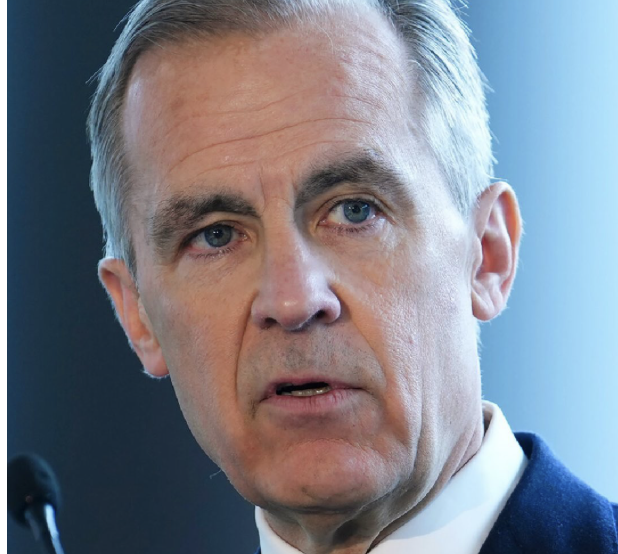
Carney blinked.

June 30, 2025

Mark Carney blinked. He blinked hard and killed the billion-dollar Canadian digital services tax on US tech giants. He did it because Donald Trump threatened to punch Canada in the nose. 

After years of calling the shots as a business CEO and bank governor, the Prime Minister is discovering how tough it is to play the weaker hand when negotiating —-well, trying to negotiate—- with a bully like the United States. 

Trump not only wanted the DST to be cancelled, he demanded on Sunday morning it be repealed as a condition of further negotiations over tariffs, trade and continental security.  On Sunday evening Canada folded.

Carney cancelled the DST literally hours before the Silicon Valley titans were obliged to send us about a couple of billion dollars in corporate tax remittances, after years of Canada delaying the tax in the hope of coming up with an alternative measure to address the problem of US tech giants reducing their global tax bill by offshoring revenues earned in Canada and countless other jurisdictions. A deal with former President Joe Biden fell through because US Congress would not ratify it.

The rapid chain of events on Sunday had a whiff of Kabuki theatre: it’s plausible that weeks ago Carney made the decision to clear ballast from his trade agenda, much as he did with a carbon tax he once endorsed, but he needed Trump’s threat of walking away from the trade talks to do so. Whether Carney and Canada got anything from Trump in exchange for this unilateral concession we may never know.

It’s an understatement to say there is a disturbing pattern taking hold. Canada spent $1.3 billion on border security to rebuff Trump’s first round of trade tariffs triggered on the phony pretext of fentanyl smuggling.

We enacted and then suspended most of our retaliatory tariffs in hopes of expedited trade negotiations.

We joined hands with NATO allies to click our heels at Trump’s demand that NATO countries more than double their defence spending to 5% of GDP.

And as a ten out of ten on the cringe scale, who can forget Ontario Premier Doug Ford’s bumbling bluff to cut electrical power exports to the United States.

Carney is gambling that Trump won’t see the DST climb-down as weakness and be emboldened. If Canada was the European Union of 400 million souls, an ocean away from the US, the Prime Minister might have chosen a different strategy.

What’s the right way for Carney to play this in the next few weeks?

I spent my trade union career negotiating against powerful companies, usually playing the weaker hand unless the rank and file were angry enough, for a long enough period of time, to face down their employers. One of the key responsibilities of the negotiator is to figure out your own strength.

This is Carney’s challenge. How resilient are Canadians in our collective commitment to economic defence against the Trump onslaught? We get riled up by Trump’s “51st state” threats. But are we tough enough for a grinding trade war of attrition that lasts until Trump’s economy tanks and he has to face mid-term voters next year?

This is a question that the Prime Minister must ask himself every day. It is a question we must ask ourselves.

Our first test of bargaining solidarity is for our politicians, especially our provincial premiers. I suppose we could ask them to just shut up and let the winner of the federal election speak for Canada and certainly not head south to cut their own deal with the US President at Mar-a-Lago. 

But voters expect their elected officials to speak up for their constituencies —-Alberta Premier Danielle Smith has every right to remind us that the oil patch is as important as the auto industry— or else they will no longer be elected officials. But there is a line to be drawn and respected.

The same test of solidarity can be expected of non-elected political agents. The chorus of domestic critics of the tax on Uber, Google, and the other digital titans has mischaracterized the tax as just another cynical cash-grab from Big Tech companies that are better left unregulated. 

Canadian journalists have tried to correct that misimpression, reporting on the DST as a story of global tax policy. The story is that Canada was a relative latecomer to the international consensus among OECD nations that US Big Tech was offshoring revenues earned in other countries to tax havens like Ireland and that national digital taxes were the best way to combat it until the cheating stopped. 

Most European Union nations have already implemented their digital services taxes. While the US President still has those levies in his trade crosshairs, any changes will come at the negotiating table where the EU can pursue a solution to the offshoring problem. In a recent announcement, US Treasury Secretary Scott Bessent said that the US was prepared to mirror OECD/G20 nations’ tax policies on a minimum corporate tax even though the US will not ratify a tax treaty on the matter. 

The details of this recent understanding between the OECD and the US are still hazy. 

The EU is keeping its DSTs, for now, because it has some things that Canada doesn’t. Like, the EU nations’ DSTs were already implemented and they had not delayed them out of good will as Canada did. Like the trade of EU nations is less exposed to the United States than Canada’s is. Like, the EU can fall back on an internal trading bloc of 400 million.

The EU will discover, as Canada is, that a solid front at the bargaining table is the only way to defend economic opportunity and political sovereignty against Trump’s trade war. 

If it’s all over quickly because we can’t keep a grip on our internal solidarity, we will have lost the trade war. And losing the trade war could mean losing our country

***

If you would like regular notifications of future posts from MediaPolicy.ca you can follow this site by signing up under the Follow button in the bottom right corner of the home page; 

or sign up for a free subscription to MediaPolicy.ca on Substack;


or follow @howardalaw on X or Howard Law on LinkedIn.

I can be reached by e-mail at howard.law@bell.net.

This blog post is copyrighted by Howard Law, all rights reserved. 2025.