
August 5, 2025
The Public Policy Forum has followed up its February report “The Lost Estate” on the state of local news with a study of news poverty at election time.
“Uncovered” advocates scaling up a philanthropy-funded news pilot project launched during April’s federal election in select Canadian cities and rural areas.
The harm identified in the Report is the lack of public engagement with federal MP candidates over election issues that have special resonance in the local area, for example fishery issues on either coast.
The report includes vignettes of five local races where news poverty might have been a big problem in April. The most glaring was the news desert of Bonavista in Newfoundland and Labrador, a rural riding won by the Conservatives in a razor-thin judicial recount.
On the other hand, the report finds that Yellowknife NWT was well served during election time by a robust local news ecosystem in an isolated regional hub.
The report echoes what TMU’s Local News Research Project identified some time ago: the worst effects of deteriorating news ecosystem are felt in rural areas but also in neglected suburbs of media-rich cities (Richmond BC and Vaughan ON are two such vignettes in the Uncovered study).
Uncovered recommends more philanthropic fundraising for local reporting in future federal elections.
The message running throughout the Report is the importance of local news as a gateway to civic engagement —-and voter education—- for Canadians that are exhausted by polarizing national and international news and hungry for information about local issues that more directly affect their daily lives.
***
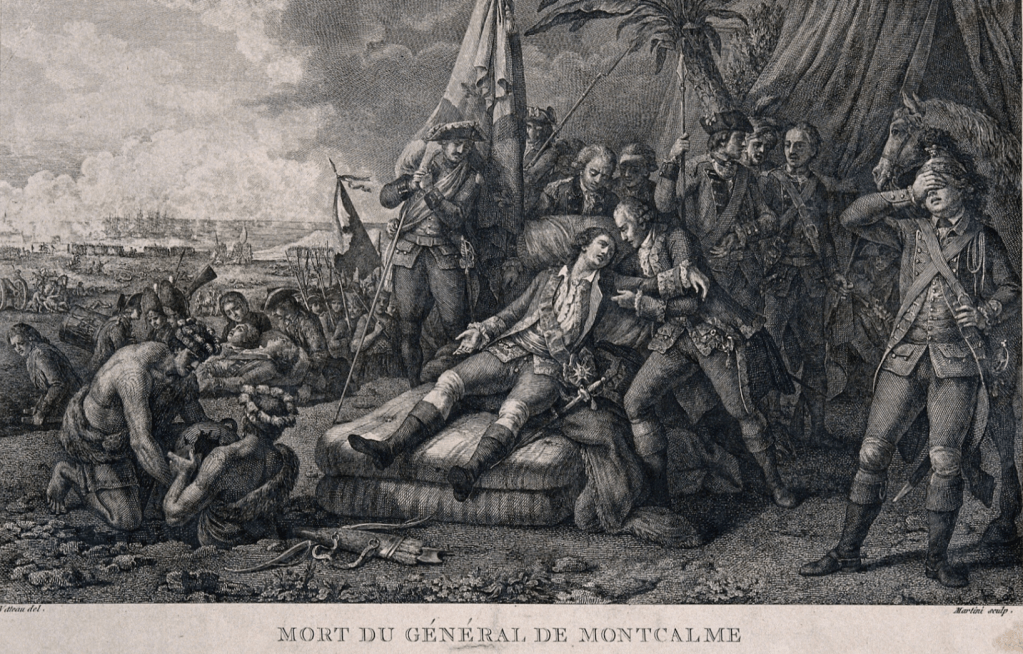
The meme of New France’s fall to the English runs throughout the L’Actualité feature story, “What will remain of our national idols?”
Québec’s Culture Minister Mathieu Lacombe enthusiastically reposted this feature story in L’Actualité written by Guillaume Bourgault-Côté on Bill 109. That legislation tabled just prior to the summer recess is the CAQ government’s bid to compel foreign streamers to make French language audio and video content more prominent in Quebec.
I’ve written about this issue more than once, I think it’s a political sleeper.
Lacombe’s bill is probably unconstitutional because the plan to make streamers offer a library of French language content as well as giving it prominence on the prime real estate of streamer and SmartTV home pages intrudes on federal jurisdiction over Internet broadcasting in the Online Streaming Act.
Were the CRTC already taking bolder steps to make French language content more easily discovered, his bill could be dismissed as performative politics. But the Commission hasn’t, at least not yet.
The L’Actualité story covers all of this familiar ground. Bourgault-Côté opines that “digital giants are now burying local cultures under tons of American productions. Quebec, supported by Senegal, France, and Switzerland, among others, is leading the resistance… while Ottawa dithers.”
Louise Beaudoin, the former provincial culture minister who wrote the key government report creating the policy foundation for Bill 109, is quoted saying “we absolutely must be as numerous as possible. Otherwise, the Americans will run us over.”
But the good inside baseball stuff comes at the end of the feature.
Bourgault-Côté chronicles the political tension between Lacombe and federal Culture minister Steven Guilbeault over the Carney government’s tip-toed support for Lacombe’s efforts to entrench stronger international legal standards, specific to Internet streaming, in amendments to the 2005 UNESCO convention on cultural diversity.
The energy in that tension is Lacombe’s opportunity to drive Bill 109 into the public eye during an election year in Québec and a minority Parliament in Ottawa.
Lacombe’s CAQ is trailing the Parti Québécois in the polls and language policy is one way to make up that ground.
In Ottawa, the Bloc Québécois may take up the standard. A federal Liberal minority government that owes its incumbency to its voter base in Québec cannot afford to leave too large a gap between a cautious approach to regulating foreign streamers and cultural nationalism.
And then there’s the uncomfortable situation for the new leader of the provincial Liberals, former federal Heritage minister Pablo Rodriguez (the sponsor of Bill C-11, the Online Streaming Act). If it comes to a federal-provincial scrap over Bill 109 or Canada’s approach to strengthening the UNESCO convention, whose side is Mr Rodriguez on?
The next UNESCO event is scheduled in Barcelona at the end of September and no doubt Lacombe will try to put the federal Liberals on the spot.
And when Lacombe’s Bill becomes law and his government implements regulations on French language content, there’s the strong possibility of a legal challenge by the foreign streamers. At that point, the federal government will have to decide whether to endorse the streamer argument that a provincial government has no jurisdiction over online broadcasting.
***
Here’s a short but interesting read. Harrison Lowman interviews Andrew Coyne in the The Hub.
I think we could designate Coyne as Canada’s best known English-speaking intellectual, thanks to his considerable talent but also his privileged positions in the Globe and Mail editorial pages and CBC’s At Issue television panel.
I’ve long written off Coyne as an irredeemable libertarian (sorry, libertarians) who is only brilliant when I agree with him (which is usually when he’s being pragmatic about domestic policy or commenting on international affairs).
In the interview, Coyne gives us some insights into his thinking about what it means to be Canadian as opposed to North American.
His comments about the Canadian Charter of Rights suggest his free market liberalism is tempered by a pragmatism and respect for collectivist public policy. It takes a true policy nerd to say I’m a fan of constitutionally reasonable limits on freedom.
But when it comes to media and cultural issues, what Coyne is missing or dismissing is an appreciation of the overwhelming, anti-competitive American market power in the Canadian attention economy.
That was why he could never see how the Online News Act was (at least in its original design) a competition remedy to Google and Meta abusing their gatekeeper power to stiff Canadian news outlets on a fair licensing fee for their content.
Same thing with the foreign media-tech juggernaut in video and audio entertainment. Same thing with his support for defunding the CBC.
***

The AI Death Star posts that recently appeared in this space raised the question of where the AI giants are going to get reliable information for their products if they put news outlets out of business.
That prompted a reader to remind me about the agricultural aphorism “don’t eat your seed corn.”
Wouldn’t you know it, the Globe and Mail’s Ian McGugan had the same thought in this insightful analysis.
***
If you would like regular notifications of future posts from MediaPolicy.ca you can follow this site by signing up under the Follow button in the bottom right corner of the home page;
or sign up for a free subscription to MediaPolicy.ca on Substack;
or follow @howardalaw on X or Howard Law on LinkedIn.
I can be reached by e-mail at howard.law@bell.net.
This blog post is copyrighted by Howard Law, all rights reserved. 2025.


Hi Howard, A quick note for those of us working in news when it comes to the lack of public engagement with political candidates. It’s a more serious problem in news deserts, to be sure, but even in a centre like Hamilton, we struggle with that. Often times, they refuse to engage with us, no matter how many times we ask. Many MPs and MPPs talk a good game when it comes to needing journalists and journalism, but then dodge us when we ask questions.
Keep writing. Love your stuff!
Greg O’Brien
LikeLiked by 1 person