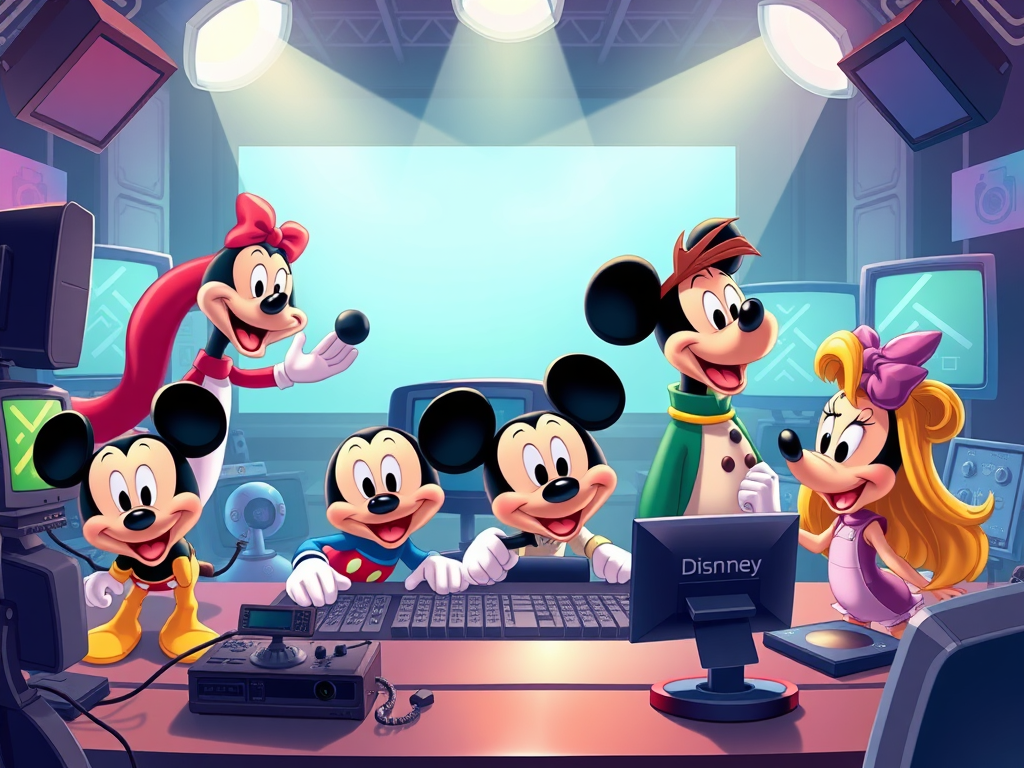
AI generated image from OpenAI
December 13, 2025
This week the Québec National Assembly unanimously passed Bill 109, its version of the federal Bill C-11, the Online Streaming Act.
MediaPolicy has been following this file since the CAQ government commissioned a blue-ribbon committee to recommend how to reverse the low availability and consumption of French language content on global streaming platforms. In reverse chronological order, you can update yourself on this story here, here, here and here.
The CAQ bill is a policy response to the federal cabinet’s and the CRTC’s hesitancy to implement the “content discoverability” provisions of the federal bill as written by Parliament.
The political consensus in Québec on regulating audio-visual and audio content to protect culture and language meant that Bill 109 didn’t spark the controversy that the federal Bill C-11 did two years ago.
But the tinder is dry and the sparks will fly.
The US Trade Representative will add Bill 109 to its list of American grievances over Canada regulating Hollywood streamers and Big Tech, to be tabled in CUSMA negotiations this spring. (When coincidentally the 2026 Québec election might be called).
So too there must inevitably be an impasse between the Mark Carney government and Québec over legislative jurisdiction. Though brief by comparison, Bill 109 is almost a carbon copy of Bill C-11. Until the Supreme Court says otherwise, Ottawa has exclusive jurisdiction over online broadcasting.
Québec’s culture minister Mathieu Lacombe has been pretending there’s nothing jurisdictional to talk about with Ottawa. According to the minister, there’s no conflict, only concurrent federal and provincial powers to do the same thing. Good luck with that. A caveat: he might have a provincial claim to the regulation of home screens on Smart TVs and streaming devices.
The Québec law is founded on a provincially claimed right to cultural discovery —props to that boldness. Importantly, all of the bill’s cultural measures are focussed on French language content, not Canadian French language content, so the political framing is more linguistic than cultural.
Mess with this if you dare, Ottawa.
From here, things will move slowly at first.
Québec will establish the minister’s Discoverability Office and begin drafting streamer requirements for French language content.
The CAQ’s Lacombe will find out if the streamers are willing to take up his offer to negotiate bespoke agreements in order to avoid cookie cutter regulations set by the province.
On video streaming, he will no doubt benchmark his regulations or voluntary agreements with streamers against the outcomes reached in France since 2021.
Despite a framework EU law that proposes a 30% catalogue minimum (numbers of shows), the French implementation of that policy focusses instead on production investments in French language content, based on a range of 20% to 25% of a streamer’s national operating revenues. So far, the result has been bigger budgets rather than a proliferation of mid-budget shows.
On other hand Lacombe could just stick with catalogue quotas, as the CRTC is expected to announce its own federal expenditure quotas soon.
As the Québec legislation doesn’t require the cash contributions to Canadian media funds that the streamers hate so much in the federal scheme, a deal with Netflix focussing on French language video catalogues doesn’t seem out of the question.
A deal with Spotify to do something dramatic to increase rock bottom consumption of French language music would be tougher.
Unless Lacombe’s process moves at lightning speed, CUSMA talks and the Québec election will intervene.
***
If you don’t have school age kids, you might have missed the seismic Big Tech event that just shook Australia: its government has banned social media accounts for children under age 16.
Social media companies are expected to rely on age estimation technology but also photo ID.
The Australian communications minister Anika Wells is the first politician in a liberal democracy to tell social media companies, “time’s up.” Apparently so, even Elon Musk says he will obey the law.
There’s a brief explainer in the New York Times on how harmful social media can be for teens and how we got to the point that Big Tech’s safety half-measures have worn out the patience of legislators.
Still, a ban. Wow. As our federal justice minister Sean Fraser eyes a revised online harms bill, what would be interesting is an opinion poll on a ban, taken from Canadian parents of tweeners and teenagers, parsed out separately for age and gender of the children.
***
In last weekend’s post, I speculated that Donald Trump would have some fun with the $87 billion USD Netflix-Warner Brothers merger deal, given his donor ties to the losing bidder, Paramount.
The next business day after Netflix officially announced its winning bid, and media analysts had their say on the prospects for Netflix obtaining the Trump administration’s anti-trust vetting, Paramount unveiled its Plan B: a $108 billion hostile takeover bid for all of Warner Brothers Discovery properties.
Warner Brothers has a week to respond but Paramount CEO David Ellison has already signalled an improved second bid is ready to go.
Among Paramount’s financial backers are the CEO’s dad and second richest man in the world, Larry Ellison, and various gulf state sovereign wealth funds. Oh, and President Trump’s son-in-law Jared Kushner.
The Ellison-Gulf-Kushner bid includes Warner Brothers’ television entertainment channels and the cable news network CNN.
Ellison-the-younger’s Paramount recently bought the CBS news network and appointed the Free Press’ Bari Weiss as CEO. Pa Ellison is also the key investor in the bid to buy TikTok’s US operations.
***
A significant AI content licensing deal has been struck between the IP-rich Disney and OpenAI, the developers of Chat GPT and the video-creation app Sora.
The deal will allow Sora subscribers to create videos with Disney’s classic animated film characters. Imagine making a birthday video card for your kids featuring them with their preferred cuddly creature or action hero.
As reported by The New York Times: “Sora users will be able to make videos with more than 200 characters from Disney’s library, including from “Encanto,” “Frozen,” “Moana,” “Toy Story,” “Zootopia,” “Inside Out” and other animated movies. Animated or illustrated versions of Marvel characters like Deadpool, Iron Man and Black Panther will also be available, along with “Star Wars” characters like Darth Vader and Princess Leia.”
Given all of the chatter about AI companies scraping copyrighted content, the Disney-OpenAI deal will set expectations that licensing deals are the way for Big Tech to make peace with content producers, especially the biggest ones. (Oddly the reporting on the deal noted Disney’s $1B USD investment in OpenAI but was mum on the value of licensing payments that Disney can expect).
The Hollywood Reporter has a good analysis of the deal, the gist of which is Disney isn’t going to rest on its IP laurels while other content companies get rich on AI monetization.
More broadly, the slow drip of licensing deals between AI and content companies might, in the news journalism space, begins to look like the years leading up to Australia’s NewsMedia bargaining code and the Canadian Online News Act: AI companies cherry pick the biggest and most popular news outlets for licensing deals while those left behind look to governments for action on content scraping and monetization.
***
If you would like regular notifications of future posts from MediaPolicy.ca you can follow this site by signing up under the Follow button in the bottom right corner of the home page;
or sign up for a free subscription to MediaPolicy.ca on Substack;
or follow @howardalaw on X or Howard Law on LinkedIn.
COMMENTS ARE WELCOME. But be advised they are public once I hit the “approve” button, so mark them private if you don’t want them approved.
I can be reached by e-mail at howard.law@bell.net.
This blog post is copyrighted by Howard Law, all rights reserved. 2025.

 MediaPolicy.ca