MediaPolicy’s First Explainer on the Safe Social Media Act

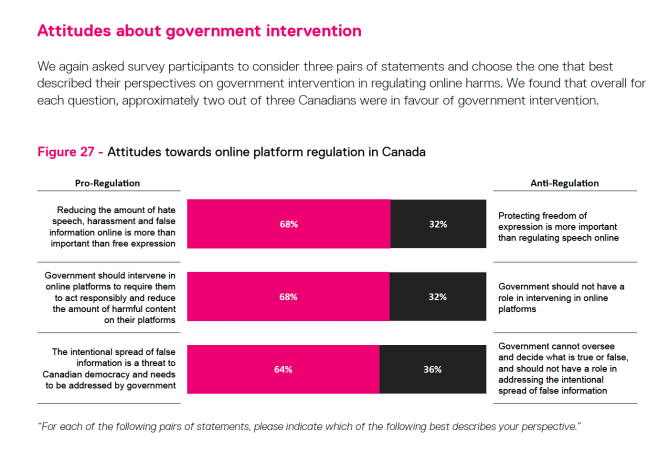
2024 Opinion Poll, The Dais

June 16, 2026

I will make a confession. I was at first overwhelmed by the breadth and detail of the federal government’s new Safe Social Media Act Bill C-34. The dense legalese of the bill is a terrific sleep aid. 

But of course both the good and bad vibes in the legislation deserve a hearing if you are keen to follow the ups and downs of the bill’s parliamentary journey, soon to unfold. 

In sorting all of that out, you really need to know: what does the proposed statute actually say and do?

Read the bill. But if I’ve discouraged you, here’s an explainer. 

The top of line summary is that the bill creates a Digital Safety Commission to shepherd in a regulatory regime to protect children from online harm and reduce harms for adults.

Some of the harms, like child porn, hate and some forms of the online incitement of violence, are already illegal. The bill is intended to supplement the state’s formidable powers of criminal investigation, arrest and prosecution. 

Other harms like revenge porn (my shorthand for posting intimate content without consent), bullying or inducing kids to self-harm, or the hate or incitement falling short of illegality is often called “awful but lawful” content because the speech embedded in the online content is free speech.

But free speech, like the banana peel on the sidewalk, has never been free of consequences or civil liability. 

Awful but lawful online content has been the subject of years and years of civil lawsuits launched against US-headquartered social media platforms around the world, slow walking towards a day of reckoning before the US Supreme Court. This Canadian bill is about making the awful unlawful in Canada if it’s harmful enough.

The legal breakthrough is that the bill creates a legal duty of care ——the one that an American or Canadian court may or may not create in some distant future—- that social media platforms, AI chatbots, and porn sites must live up to.

If you read the bill, you will see that it is organized by codifying those legal duties for social media, AI chatbots, and “other” regulated services. Then for each of those categories, the statute describes the content of those duties and how the online services can stay out of legal trouble for hosting it. 

Most of the action in the bill is for social media apps. I’ll get to that below.

As for AI chatbots, regulation is narrowed down to the AI companies doing or not doing a few simple things:

  • Not posing as a human, especially a lawyer or medical professional.
  • Not using emotionally manipulative techniques or being deceptive about being an AI agent.
  • Ending interactions with users by refusing to provide information on self-harm or harm to others and instead directing the user to health services. 

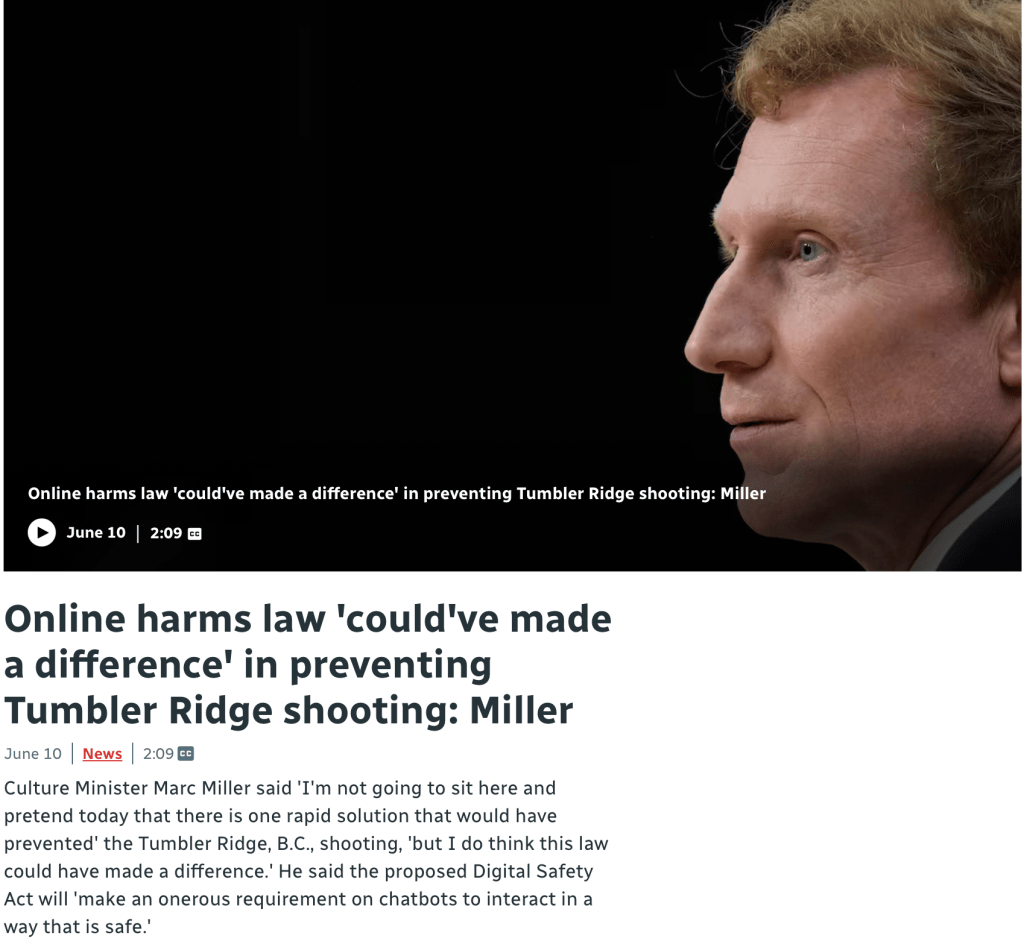
Interestingly, the bill does not require AI companies to report these dangerous or self-harming users to the police, something that took no small measure of political forbearance after the Tumbler Ridge shooting. Calling the cops will still be up to the AI company. 

Also as an overall safety measure, the bill requires AI chatbots to submit a Digital Safety Plan to the new Digital Safety Commission. The Plan must assess the potential harms in their services, the measures they take to mitigate those risks, and how effective those measures are. 

As for porn sites (just one of the potential members of the third “other” class of regulated online services) the main obligation is to protect children from viewing porn by setting up age verification or age estimation technology. 

This age gating raises concerns about the secure storage of private data, meaning the risk that porn viewers will be publicly embarrassed or blackmailed. A key provision in the bill, picked up from Bill S-209, is that online age verification services are supposed to delete the personal data the moment they have confirmed the age of majority. 

As for social media apps, they will be age gated for all users if they carry porn (sorry, not sorry Elon). 

Even if they don’t carry porn, social media apps will be temporarily age gated (below age 16) until such time their proprietors satisfy the Digital Safety Commission that they have a Digital Safety Plan that assesses harms to children and adults, puts online design features and measures in place that reduce harms, and then documents how effective they were. “Temporary” age gating may last months or years, although the mere requirement will light a fire under the social media platforms to submit their Digital Safety Plans to the Commission on day one.  

But any age verification requirement for social media apps, even if temporary, suggests that all adult users will be subject to it, or at very least those adults who don’t get through the gate with a minimum of fuss and information. For example, your social media platform may be satisfied by a quick scan of your social media profile and activity.

As for protecting kids from the proliferating harms on social media apps, the federal cabinet will have the power to set regulations (that first get published in the Canada Gazette for debate) detailing at least some of what is expected in a Digital Safety Plan. 

At the very least, the Carney government might see this regulation-making opportunity to take credit for some high level principles of child safety —- perhaps a command to “do something about addictive design”—- while leaving the fine points of implementation to the platforms drafting their Digital Safety Plans and the Commission that has to approve those Plans. 

In fact it will be important to hear the presentations made at parliamentary committees considering Bill C-34 as to how much of the line by line of the Digital Safety Plans will be left to the social media companies to conceptualize and design versus how much will be effectively dictated by cabinet regulation and the Commission’s own views of how tough the Plans must be. 

On that score, the bill already includes clear measures expected of the social media apps:

  • There must be blocking tools for users to shut out noxious harassers and child predators. 
  • There must be user tools for flagging harmful content to bring to the attention of platform. 
  • The social media companies must label “synthetic” content (deep fakes). 
  • Bot-driven content must be labelled once it is discovered. 
  • And there must be a public facing “resource person” to deal with user concerns. 

As for actual content take-downs by the social media platforms, they are only required in limited circumstances, i.e. child porn, revenge porn and terrorist material. 

These content take-downs are required on at least an interim basis within 24 hours of being flagged. But a final platform decision on the take-down is only due “as soon as feasible.” Since it’s likely there will be some contested judgments on making these difficult take-down calls, the social media companies must provide an internal appeal process (for both content viewer and content poster) and then ultimately a complaint can be made to the Commission. 

All of this will be superintended by the five commissioners appointed by cabinet to the Digital Safety Commission. 

The Commission’s powers are broadly similar to most federal administrative tribunals. After all, the whole point of the bill is to take the law and liability out of the hands of civil law and the civil courts and transfer them to a body capable of holding tech platforms accountable for harmful content on offer to 40 million Canadians.

Three Commission powers pop out already as notable.

The first is the ladder of substantial fines and “administrative monetary penalties” that the Commission can use, or threaten to use, to keep the Big Tech platforms in line. Depending on the circumstances, the fines can range from $5 million to $20 million, or from 1.5% to 5% of the tech platform’s global revenues.

The second is the possibility of secret Commission hearings that can be invoked when there a privacy concerns (for example revenge porn or anything concerning children).

The third is the Commission’s power to compel platforms to give data access to independent (but government-vetted) research academics. This will hopefully give the public interest independent information about how well the platforms are meeting their obligations.

This summary will have to do for now.

There’s enough in this lengthy and detailed bill to attract scrutiny and that has already begun.

As I wrote in my last post, this bill sits on at least two powder keg issues. One is protecting children and adults from poisonous content. The other is the possibility of creating a slippery slope of the state interfering with free speech through the proxy of platform accountability.

It would be easy to dismiss either policy perspective as being motivated by either nanny statism or, on the other hand, a dogged resistance to regulating any Internet content any time out of a fear for digital privacy, especially where porn is concerned. 

From what I have already read, and from my own observations, here is a short list of issues that will and should get attention during the parliamentary debate:

  • Flag-a-mania. The statute contemplates ordinary Canadians flagging harmful content, even if it is not about them. They (and those that posted the content) get due process from both the platform and the Commission.  It’s not hard to see that devolving into a new form of “lawfare.”
  • Age gating. This is going to happen no matter what because of the ban on children accessing porn. The question is not the digital security of personal data — leaks and hacks are always possible — but whether technology can reduce that unlikely event to something next to impossible. Social media platforms can make this easier by simply banning pornography from their platforms and leave that business to the porn sites. 
  • The statute gives the platforms a get-out-jail-free card by relieving them of any obligation to pro-actively search for harmful content. I am sure they already do this voluntarily and may even incorporate that into a Digital Safety Plan, but enshrining this grant of platform immunity into law could be controversial.
  • The statute leaves a lot of digital rule-making to be determined by a combination of cabinet regulations, Commission guidelines, and platform Digital Safety Plans. That is a lot of regulatory power held in reserve and without fulsome debate in Parliament. On the other hand, it may be practically unavoidable.

***

If you would like regular notifications of future posts from MediaPolicy.ca you can follow this site by signing up under the Follow button in the bottom right corner of the home page; 

or sign up for a free subscription to MediaPolicy.ca on Substack;

or follow 
@howardalaw on X or Howard Law on LinkedIn.

COMMENTS ARE WELCOME. But be advised they are public once I hit the “approve” button, so mark them private if you don’t want them approved. 

I can be reached by e-mail at howard.law@bell.net.

This blog post is copyrighted by Howard Law, all rights reserved. 2026.
Catching Up on MediaPolicy – Miller explains the Netflix bailout – Federal ad vouchers to support Canadian media? – US DOJ approves the Paramount/ Warner Bros merger

June 14, 2026

There are few things more refreshing than CTV’s Vassy Kapelos grilling cabinet ministers.

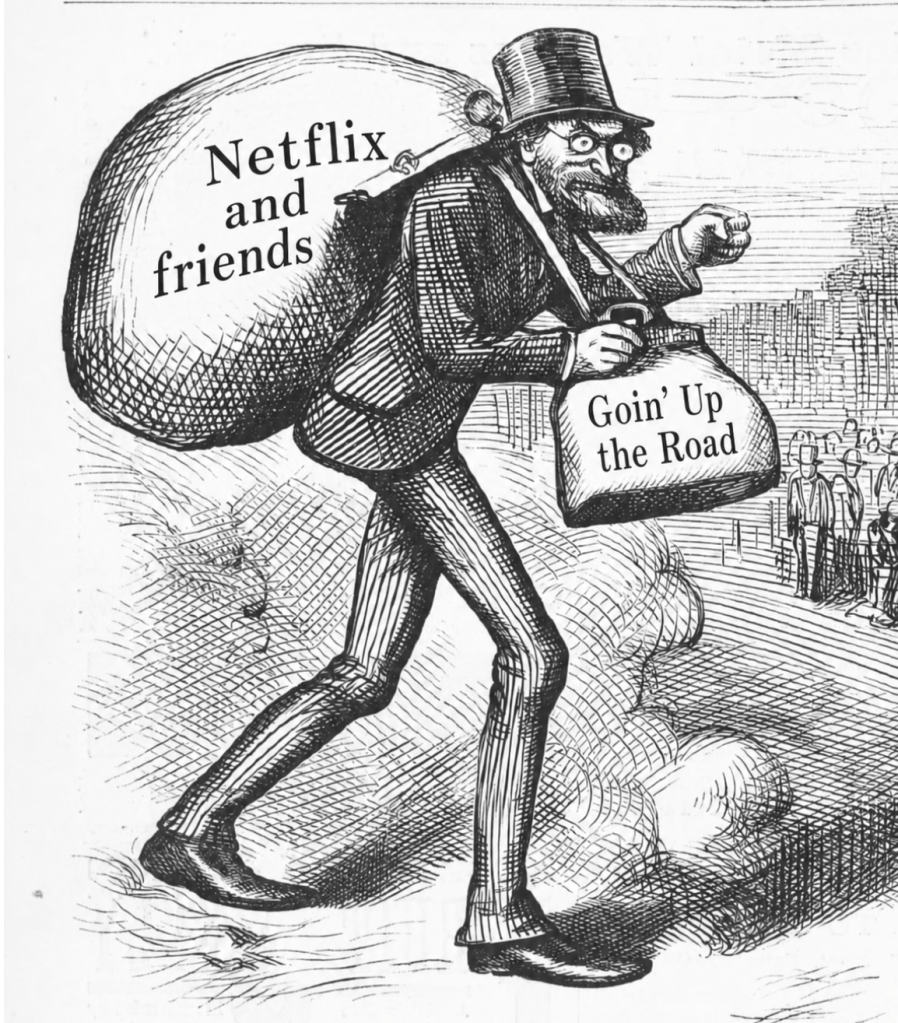
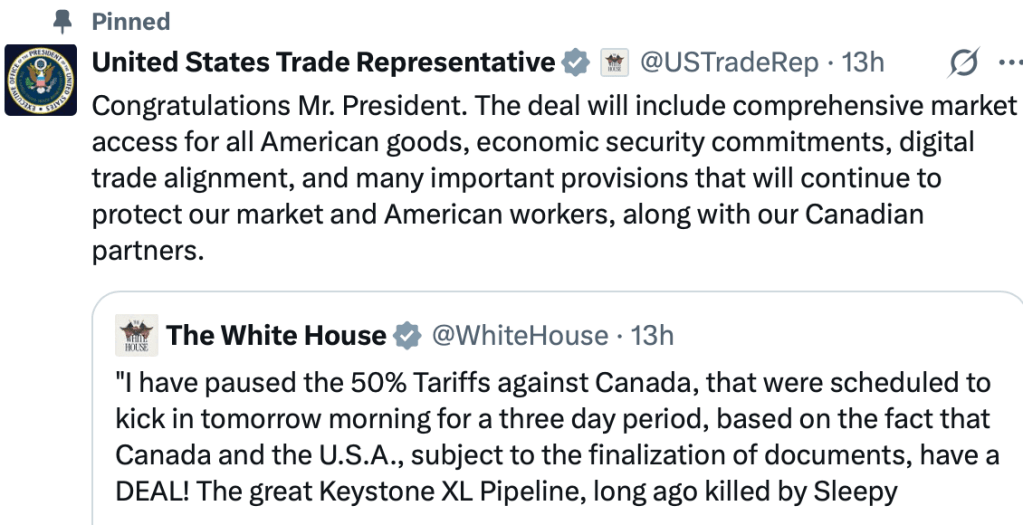
The host of Question Period had culture and identity minister Marc Miller in the dock on Saturday to ask him bluntly why Canadians would expect that his new Safe Social Media Act Bill C-34 won’t be given away upon President Donald Trump’s insistence, as were the Digital Services Tax and the CRTC’s assessment of cash and investment contributions to Canadian content by US streaming services.

Miller’s answer: there will be no surrender by the Liberals on his new bill. Protecting kids is not on the table, he said, “hard stop.” The minister thinks that similar legislative efforts being passed or proposed in Washington and various US state houses to protect children from online harms bodes well for Canada pursuing the same strategy.

Also, he said protecting children is more important than “redistributing money within an industry,” a reference to the CRTC ruling. (Public polling on conceding ground on the Online Streaming Act under US trade pressure is here.)

As for overruling the CRTC on streamer contributions, Miller said he wouldn’t comment publicly. That lasted about ten seconds once Kapelos went after him for “capitulation” to US trade pressure and American companies.

Kapelos asked Miller what Canada got, or might get, in CUSMA trade talks for coughing up the Digital Services Tax and the CRTC ruling.

“I’m not going to tell you,” replied the minister.

The minister then gave up some fresh talking points on the CRTC ruling and the $600M in federal funds that includes replacement of the streamer contributions:

  • The CRTC “is not the final arbiter” on implementing the Online Streaming Act, the government is.
  • The Prime Minister may have overruled the CRTC’s 15%-of-revenues assessment on foreign streamers but it is only because the 15% number wasn’t the right one. When the minister formally instructs the CRTC “in a few months” on the make-over of the overturned decision, there will be “a number.”
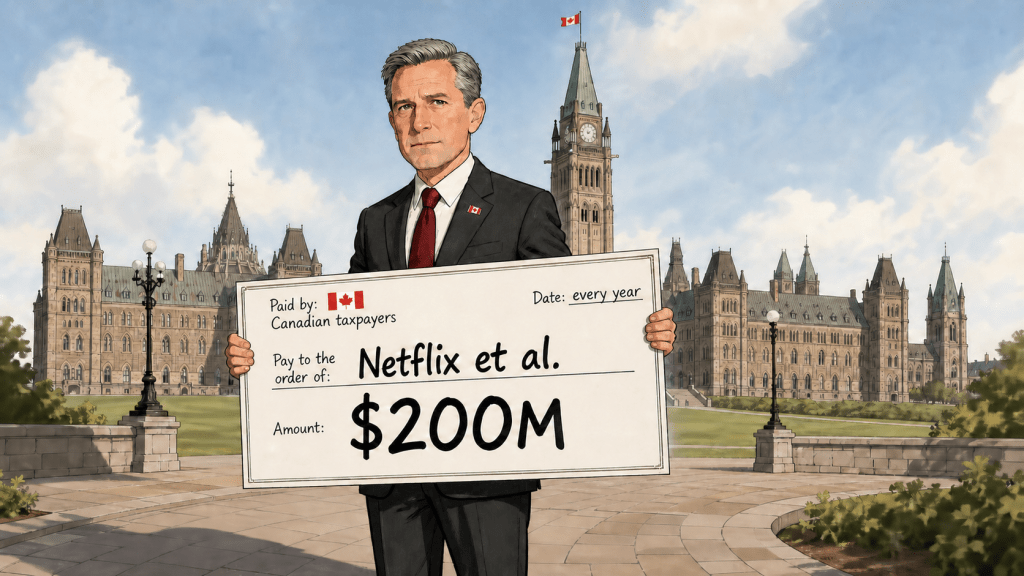
  • The annual $600M in federal funds announced on June 3rd will compensate for giving away the $200M in annual streamer contributions ordered two years ago by the CRTC in part because that streamer money is “tied up in court.” (The escrowed streamer funds from 2025-26 will have to be refunded to the streamers).
  • The federal $600M will include money for “independent journalism.”

***

There was an unexpected media policy post from Narcity publisher Chuck Lapointe last week that is worth reading.

Narcity is a Canadian news outlet with a heavy bent towards travel content. But it also publishes conventional news content and on a daily basis it re-posts Canadian Press news stories on Facebook in order to draw traffic to Narcity’s websites.

Lapointe can get away with this despite the Meta banishment of news from its Canadian platforms because he signed off a Meta waiver saying his news product is not the kind of content that triggers financial compensation from Meta under the Online News Act, Bill C-18.

Speaking of Meta, Lapointe’s policy post points out how foreign platforms now completely dominate the Canadian market in digital advertising with the well known impact on the ability of Canadian media to monetize their content.

A good policy move, he says, would be for Ottawa to put new federal dollars in the hands of Canadian advertisers on the condition they spend it on Canadian digital platforms. That kind of voucher system might spur innovation by Canadian digital outlets competing for that ad spend.

It’s a smart idea that’s been circulating in various US states for some time now. In Canada, Senator Andrew Cardozo and I included the recommendation of an advertising voucher in our recent report, Making News Media Sustainable.

***

The US Federal Department of Justice has signed off on the blockbuster Paramount-Warner Brothers Discovery merger.

As often happens in government reviews of big mergers, the field of competition is configured to offer a rationale for the thumbs up or down. In this case, the FCC is saying it’s “pro-competitive” for Hollywood studios and streamers to consolidate in order to compete more effectively with Silicon Valley tech/media companies.

The merger story isn’t over. Some US state attorney generals, including California, are banding together to litigate an anti-trust action against it.

The merger also hasn’t been approved by the Canadian Competition Bureau. The European Union and the United Kingdom are also reviewing it: an early approval or the launch of further EU investigations might be announced in July.

***

Back to the Online News Act for a moment and attention all journalists.

An independent researcher from Simon Fraser University is running a survey on newsroom opinions on the consequences of the Online News Act. (She confirmed to me that she isn’t getting funding from foreign platforms. Her research appears to be supported by a federal grants).

English  : The Online News Act and its consequences for Canadian Journalism 

En français : La Loi sur les nouvelles en ligne et ses conséquences pour le journalisme canadien

***

If you would like regular notifications of future posts from MediaPolicy.ca you can follow this site by signing up under the Follow button in the bottom right corner of the home page; 

or sign up for a free subscription to MediaPolicy.ca on Substack;

or follow 
@howardalaw on X or Howard Law on LinkedIn.

COMMENTS ARE WELCOME. But be advised they are public once I hit the “approve” button, so mark them private if you don’t want them approved. 

I can be reached by e-mail at howard.law@bell.net.

This blog post is copyrighted by Howard Law, all rights reserved. 2026.
Feds table Bill C-34, the Safe Social Media Act

June 11, 2026

Even if you haven’t, Prime Minister Mark Carney has moved on from last week’s announcement of a $600 million taxpayer bailout of US streamers who were scheduled to make cash contributions to Canadian media funds.

Within days, federal government announced two other big things that bear heavily upon Canadian media policy. 

The first was the “AI for all” federal policy which focusses mostly on AI investment, AI adoption by businesses and consumers, and some money for safety research. The words “creator copyright” or “content licensing” do not appear in the federal plan. That means that the unlicensed and uncompensated ingestion of online news and information content by AI companies will continue, although the Liberals say we should “stay tuned.”

The other big thing was Bill C-34, the Safe Social Media Act, a reprise and redesign of the old Bill C-63 that sets up a regulatory regime of self-policing against harmful content by social media companies and now AI chatbots too. It effectively overtakes Bill S-209, the Senate bill that targets youth access to online pornography available for free on social media apps.

C-34 was tabled by the Heritage minister Marc Miller for First Reading in the House and will likely go into the theatrical window of Parliamentary committee in October. You’re going to hear a lot about the merits or dismerits of the government’s plan over many months and MediaPolicy.ca will offer updates as we go along. Together I hope we can educate ourselves as the public commentary comes, which will be thick and fast I guarantee you.

What is the Bill?

Social media content can be addictive and harmful, especially to impressionable kids. No one is going to dispute that reality, the arguments over C-34 are going to be over how far the government should intervene. Public polling demonstrates mass popular support for federal regulation of online harms and in particular age bans for kids.

The bill focusses on harm to kids, revenge porn, fomenting hate, inciting violence, and content published by terrorist and extremist cells. Again, all of them consensus picks for government action.

The platforms to be regulated are social media companies and AI chatbots, the latter being a response to and a painful reminder of OpenAI’s culpability in the Tumbler Ridge shootings. 

The core of the bill is to make online platforms liable for harmful content by requiring them to meet a standard of self-policing the addictive and harmful content. Ultimately, a new government digital regulator (not the CRTC, praise be) will be the arbiter of whether the platform’s design features and content curation are good enough. 

There’s lots to dig into there, and more to explain, but later. 

As we go along you can expect that the contested features of the bill, wrapped in fine points of legalese or technological detail, are sitting to two powder kegs. One, is the harm to children. The other, is the fear that the age restrictions embedded in the legislation will usher in the end of anonymous online content consumption and create a treasure trove of personal data for hackers to steal. 

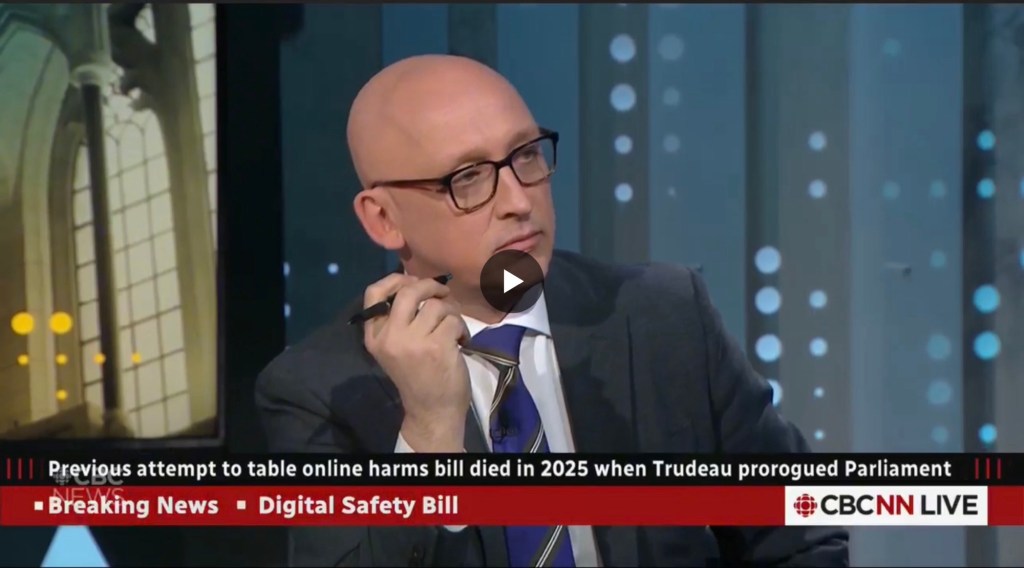
CBC interview with McGill’s Taylor Owen

***

If you would like regular notifications of future posts from MediaPolicy.ca you can follow this site by signing up under the Follow button in the bottom right corner of the home page; 

or sign up for a free subscription to MediaPolicy.ca on Substack;

or follow 
@howardalaw on X or Howard Law on LinkedIn.

COMMENTS ARE WELCOME. But be advised they are public once I hit the “approve” button, so mark them private if you don’t want them approved. 

I can be reached by e-mail at howard.law@bell.net.

This blog post is copyrighted by Howard Law, all rights reserved. 2026.
Catching up on MediaPolicy – journalism subsidies for news broadcasters ? – Australia lowers price on Big Tech news levy – Age verification bill tabled in House of Commons

AI Image

May 2, 2026

On Wednesday I posted about the new report written by Senator Andrew Cardozo and myself on the future of subsidies for news journalism

One of the not so surprising options we propose is to extend the federal QCJO  journalism labour tax credits to news websites operated by broadcasting companies. The Québec provincial government did it in March with their labour tax credit that parallels the federal QCJO. (A correction: the Québec labour credit directly supports news broadcasting on television and radio).

Entirely by an accident of timing (promise!), on Tuesday the Carney government announced a public consultation proposing to extend QCJO labour tax credits to “audio and audio visual news production,” which is not quite the same thing as digital news websites operated by broadcasting companies, but close enough. 

Law professor Michael Geist was out of the gate fast opposing public journalism subsidies being paid to major broadcasters, in particular the three owned by telco pantomime villains Bell, Rogers and Québecor. It’s fair to say, Geist won’t be alone on this. 

I have a long winded rebuttal which I will save for later. 

***

AI Image

The Australian government has taken the next step in responding to Meta’s refusal in March 2024 to reboot news licensing agreements under the News Media Bargaining Code (NMBC). The 2021 NMBC legislation was the prototype for Canada’s Online News Act.

To counter Meta’s exit from news licensing agreements, the Australian government announced in December 2024 that it would replace the NMBC with a News Bargaining Incentive (NBI). The key provision in the proposed NBI is a default cash levy on Meta, even if it tries to elude payments by banning local news. The NBI news levy would be reduced by any licensing deals struck between tech platforms and news outlets. It also would extend the levy net to catch TikTok, in addition to Meta and Google.

The calendar months have flipped by and it was not until this week that the Australian government at last announced the next step for the NBI, a public consultation.

The most newsworthy item in the announcement was the proposed price point for the cash levy: 2.25% of a company’s Australian revenues.

At first glance, that number suggests a climb down from an old levy rate of 4% of revenues that in 2021 generated $190 million in annual licensing payments by Google and Meta. The de facto 4% figure was identified by reverse calculation back in September 2023 by Canadian officials commenting on the monetary value of the 2021 Australian deals with Google and Meta.

Canadian officials said at the time that applying the Australian 4% target under our Online News Act would mean Canadian outcomes of $172 million from Google and $62 million from Meta. When Ottawa finally settled in December 2023 with Google for $100 million instead of $172 million, that converted the Canadian 4% into 2.32%.

Which is awfully close to the 2.25% proposed now by the Australian government.

But the lower Australian levy rate is still intended to produce the same $190 million contribution outcomes from 2021 because the legislation adds TikTok revenues and reflects the growth of Google and Meta revenues in the last five years.

Back in Canada, it’s unclear what Ottawa is going to do about the Meta ban on mainstream news (going forward I am calling it “Meta’s mainstream media ban” as it’s now clear that Meta permits certain Canadian news outlets to post on Facebook and Instagram provided these outlets sign off that they are not, or would not be eligible for federal QCJO labour tax credits or a share of the $100 million in Google money under the Online News Act. Effectively, this means the Meta news ban on Facebook and Instagram targets mainstream Canadian news organizations who produce original news).

This selective news ban gives the peripheral news organizations —whether they behave as honest news outlets or political activists — a leg up on mainstream media in the quest for audience. 

The policy boomerang that smacks mainstream media in the mug, whether you blame Meta or the legislators of the Online News Act for the ban, results in the loss of audience exposure and click-through referrals to news websites.

But there are self-help strategies.

On this, Torstar President Angus Frame appeared before the parliamentary Heritage committee on April 23rd and offered some interesting information. 

In the course of testimony about Big Tech in Canada, Frame said that since Meta imposed the news ban in August 2023 the Torstar chain of dailies and community weeklies has neutralized the loss of referral traffic.

I asked how and his answer, about leaning into web traffic generated by Google Discover and e-mail distribution strategies, is succinct enough to quote in its entirety:

There are always a bunch of variables in the mix, but the simple story looks like this:

In July 2023 (the month before Meta pulled out of news in Canada) our community sites generated 1.6M page views from Facebook referrals. This was typical for the first half of 2023 though the number had been declining since about 2018.

In July 2023 we generated 550K page views from newsletter click-throughs (people visiting from our own newsletters). We had 5.2M page views from Google.

Last month we had 1.55M page views from our newsletters, which almost completely replaces the views lost to Facebook. Google referrals were at 5.1M.

So the way that all came together is this:

-With the Meta ban, we shifted focus to optimizing for Google and in particular Google Discover. This gave us a good recovery heading into 2024 but it has since declined a bit with some reductions in Google traffic.

-Once Google was in better shape, we started to emphasize newsletter growth and newsletter effectiveness. This involved a number of tactics to get more people to sign up for our newsletters, to make sure our newsletters were landing in people’s inboxes properly and to optimize the newsletters (both design and story selection) for the best possible click-through rate. And that gets us to where we are today with newsletter traffic almost completely replacing the lost Facebook traffic. 

And the newsletter traffic is better for us — we have a direct relationship with that audience, they come back to us more frequently and we can continue to grow that audience channel without worrying about algorithm changes or other things that can disrupt the strategy.

***

The Senate Bill S-209 that would introduce age verification to block underage access to porn sites and porn on social media apps has now made its way into the House of Commons.

The Opposition Conservatives always supported S-209 and Saskatchewan MP Rosemarie Falk tabled it in the House for first reading on Thursday.

Now that the Liberals have a majority in the House, don’t expect the bill to get far, even if they find themselves on the wrong side of public opinion on this one.

The door isn’t completely shut. Heritage minister Marc Miller was quoted in the Globe and Mail as saying S-209 “has merit,” the opposite of what the Trudeau PMO used to say.

But Miller appeared to pour cold water on the bill anyway, simultaneously saying that age verification would not be in a Liberal online harms bill while referring the issue, along with the idea of a blanket age ban on social media, to his expert advisory committee.

As part of the debate over child safety and social media, expect the troubling privacy and compliance issues to keep bubbling up to the surface.

There are anecdotal reports of Australian teenagers circumventing the new social media ban in that country.

As well, the technical issues of privacy breaches keep arising, as they just did in Europe. The hacking of adult viewers’ age verification data is a problem that gets bigger depending on where the digital gatekeeping of age verification happens, from the narrow access to online porn sites to universally accessed social media or device operating system sign-ins.

***

Here’s a few things to read that follow up on issues followed in MediaPolicy:

The Paramount sneeze and the Canadian cold: The possibility that a soon-to-be- sanctioned merger between Paramount and Warner Brothers Discovery will sideswipe Bell Media, by cancelling HBO’s exclusive Canadian distribution through Crave, is further off in the future than previously thought. The Globe & Mail‘s Barry Hertz got Bell to talk.

Canadian book publishing: Hugh Stephens has reviewed Richard Stursberg’s Lament for a Literature. Stephens offers his skepticism of Stursberg’s “draconian” proposal for state intervention into the Canadian book publishing market. Knowing Stursberg, he wouldn’t flinch at “draconian” but would argue that drastic measures are required after 40 years of federal neglect.

CanCon: Cartt.ca is publishing Brad Danks’ seven-part series on the future of Canadian content in a small domestic market and a global streaming audience. So far there are two instalments and if you find the first one a little abstract, the second (“why Canadian media keeps missing the upside”) makes his arguments with brevity and persuasion. I won’t give away more than that. 

Journalism standards: Are you a Canadian journalist? Colette Brin of Laval University is shaking your tree to get involved a survey supporting a study on whether there are consensus standards for news coverage that we should be articulating for the industry. If you don’t help, consider your dissenting privileges revoked!

***

Lastly, a magnetic documentary to watch.

CBC is streaming Canadian filmmaker Ric Esther Bienstock’s two-part “Speechless,” profiling the pitched ideological battles staged on American university campuses and inside faculty lounges.

The film got a meh from Globe reviewer Kelly Nestruck, but I found it both riveting and kind of terrifying (after having tuned it all out for years for just that reason).

***

If you would like regular notifications of future posts from MediaPolicy.ca you can follow this site by signing up under the Follow button in the bottom right corner of the home page; 

or sign up for a free subscription to MediaPolicy.ca on Substack;

or follow @howardalaw on X or Howard Law on LinkedIn.

COMMENTS ARE WELCOME. But be advised they are public once I hit the “approve” button, so mark them private if you don’t want them approved. 

I can be reached by e-mail at howard.law@bell.net.

This blog post is copyrighted by Howard Law, all rights reserved. 2026.
Catching up on MediaPolicy – Liberal majority means business for Heritage MPs – Rebel News is back on the policy menu – Buddy cops are back

April 18, 2026

The new Liberal majority in the House of Commons puts the Carney government in command of Parliamentary committees, including Canadian Heritage.

That clears the path for the Carney government to bring forward its much (much) awaited online safety bill. It also green lights a bill to implement the Liberal election platform on the CBC: changes to the public broadcaster’s governance and the establishment of long term funding that is insulated from the federal budget cycle. 

The Liberals have not enjoyed majority control of House committees since prior to the 2019 general election. Their signature media legislation in the 2023 Online Streaming Act and the Online News Act of the same year needed support from the Bloc and the NDP to overcome Conservative filibusters in committee.

The lack of a committee majority also plays out in the cultural war prosecuted by the opposition Conservatives, especially against the CBC.

Only this fall, the Conservatives got their wish to turn the Heritage committee into a forum to fuel an attack on the CBC, with the Travis Dhanraj controversy as its fodder. 

Without control of the committee, the Liberals had to compromise by agreeing to a series of new committee hearings on “the state of the journalism and media sectors,” less than a year after the committee completed a report on “The Holding of a National Forum on the Media.”

The new hearings offer an oddly bifurcated narrative that features the Conservatives inviting witnesses to disparage the CBC or allege bias in mainstream media while the Liberals summon a string of private news organizations eager to endorse existing federal subsidies or advocate for more of them. 

In other words, the committee has been stuck in performative gear instead of legislative mode.

One of the legislative issues that we can expect to hear more of, possibly packaged into an online safety bill, is Senate Bill S-209 which just passed Third Reading in the upper chamber. It now goes to the House of Commons, provided it is sponsored by an Opposition or government MP.

Previously covered by MediaPolicy, S-209 would ban underage access to online pornography through the implementation of age estimation technology. While porn sites are clearly targeted, the bill also authorizes a government regulator to scope in social media apps such as Elon Musk’s X where children can access pornography for free.

This policy furrow has already been ploughed by legislation in the UK, Europe and 25 American states. In addition, many countries have imposed outright social media bans.

The recent Liberal Party policy convention voted for a total ban on underage access to social media and Heritage minister Marc Miller was quoted by Canadian Press as saying he was taking the proposal “very seriously.”

The sponsor of S-209, Senator Julie Miville-Dechêne, told MediaPolicy that she was gratified her bill passed the Senate unanimously in a voice vote, her third try over five years and three parliamentary sessions. 

When she first tabled the bill in 2020, age estimation technology was in its infancy and its development since then —and implementation in other countries—  has dulled the edge of privacy concerns expressed by critics. 

Miville-Dechêne said that support from parents and grandparents kept her going and described S-209 as a “magnificent victory” for child safety. 

Her previous bill in the last Justin Trudeau parliament also passed Third Reading in the Senate in 2024 and had support in the House from opposition parties as well as, according to Miville-Dechêne, a significant number of Liberal MPs. But the bill faced the implacable opposition of the Trudeau PMO. 

This time will be different for S-209, she said, and she would be happy to see the House either take up the bill or for the government to fold it into its own online safety bill. 

***

If things get boring in media policy, there’s always the chance that Rebel News will make it less so.

In December 2025 the CRTC published its letter to Rebel News explaining that the Commission could not entertain Rebel’s application filed in August 2025 asking for a share of Google’s $100 million in mandatory licensing payments under the Online News Act. The role of gatekeeping the fund is assigned by cabinet regulation to the news consortium chosen by Google to distribute the cash, the Canadian Journalism Collective.

The CJC confirmed to MediaPolicy that in spite of the CRTC ruling Rebel News has not asked them for recognition or money, raising the inference that Rebel was more interested in being denied by the CRTC than the Google cash itself.

Rebel also applied for federal journalism labour tax credits in 2021 but was denied by the CRA’s independent committee on a number of grounds, both with respect to its lack of original news reporting and its not meeting recognized standards of fair reporting. A federal judge upheld the CRA committee.

Most recently, the Quebec Press Council threw out a public complaint against Rebel and its controversial Quebec reporter Alexandra Lavoie on the grounds that Rebel is not a really a news organization.

The Conseil panel ruled that Rebel’s true identity is a political action group, not an independent news organization, evidenced by its registration as a federal lobbyist and with Elections Canada as a third party political action group seeking to “influence” elections.

The Conseil’s written decision includes a gratuitous aside about Rebel News being “an activist organization with ties to far-right circles,” however the key passage takes a “pith and substance” approach to characterizing Rebel:

Although it does not describe itself as an activist organization, the entity itself promotes its activist side, as demonstrated by its purported “Code of Journalistic Ethics and Professional Conduct,” which states: “We may launch crowdfunding campaigns, letter-writing campaigns, or petitions to support people affected by the events we cover.”  This has nothing to do with journalism.

By advocating for its political and ideological interests, Rebel News cannot cover the news independently and thus cannot offer its readers and listeners an accurate picture of reality. Its contributors, whom Rebel News calls “journalists,” are therefore not working in the public interest, but rather in the interest of its political causes.

The Rebel News platform cannot be considered a news outlet as defined by the Quebec Press Council, since it is not a publication of a “journalistic nature.”

The Conseil is a self governing assembly that has no coercive powers over news organizations but unlike the English-Canadian National News Council the Conseil accepts public complaints about news organizations that don’t belong to it or pay dues, such as Rebel News

***

On May 7th, the Raptors may still be in the NBA playoffs and the Blue Jays may be back over .500.

But what MediaPolicy is holding its breath over is the reprise of Bon Cop, Bad Cop on Bell Crave. 

The franchise has already produced two dramedy cop buddy movies that feature cheeky bilingual repartée and good humoured riffs on the cultural stereotypes of French and English Canadians. 

***

If you would like regular notifications of future posts from MediaPolicy.ca you can follow this site by signing up under the Follow button in the bottom right corner of the home page; 

or sign up for a free subscription to MediaPolicy.ca on Substack;

or follow 
@howardalaw on X or Howard Law on LinkedIn.

COMMENTS ARE WELCOME. But be advised they are public once I hit the “approve” button, so mark them private if you don’t want them approved. 

I can be reached by e-mail at howard.law@bell.net.

This blog post is copyrighted by Howard Law, all rights reserved. 2026.

Catching up on MediaPolicy – CRTC will adjudicate Meta’s ban on Canadian news outlets – US juries find Meta and YouTube liable for online harms to children

Narcity news post

March 30, 2026

Today is the CRTC’s deadline for the public to weigh in on the application by several independent television stations to officially designate Facebook and Instagram as digital news intermediaries under the Online News Act and force Meta to bargain news licensing fees with the broadcasters.

Despite Meta’s ongoing “ban” on Canadian news, there’s still plenty of Canadian news to consume on Facebook and Instagram.

Forty-four per cent of Canadians surveyed by Reuters in its 2025 Digital News Report said they still got news from social media.

But if news is banned from the two biggest social media platforms, Facebook and Instagram, how come so many Canadians find news on social media?

As you suspected, it’s because the Meta ban is selective.

For example, I follow the news site Narcity Canada on Facebook. I keep up with the biggest stories in the news cycle by reading its artfully presented posts linking to Canadian Press stories. Narcity also writes and posts travel and lifestyle news stories written by its own journalists, but not as much as it posts Canadian Press stories.

As the steady flow of Narcity posts suggest to the casual observer, Facebook appears to be a digital news intermediary that “makes news content produced by news outlets available to persons in Canada,” ban or no ban.

But the key is the phrase “produced by news outlets”: news publishers that would have a claim against Meta for licensing revenue if their news content wasn’t banned. If a news publisher has no claim, it isn’t banned.

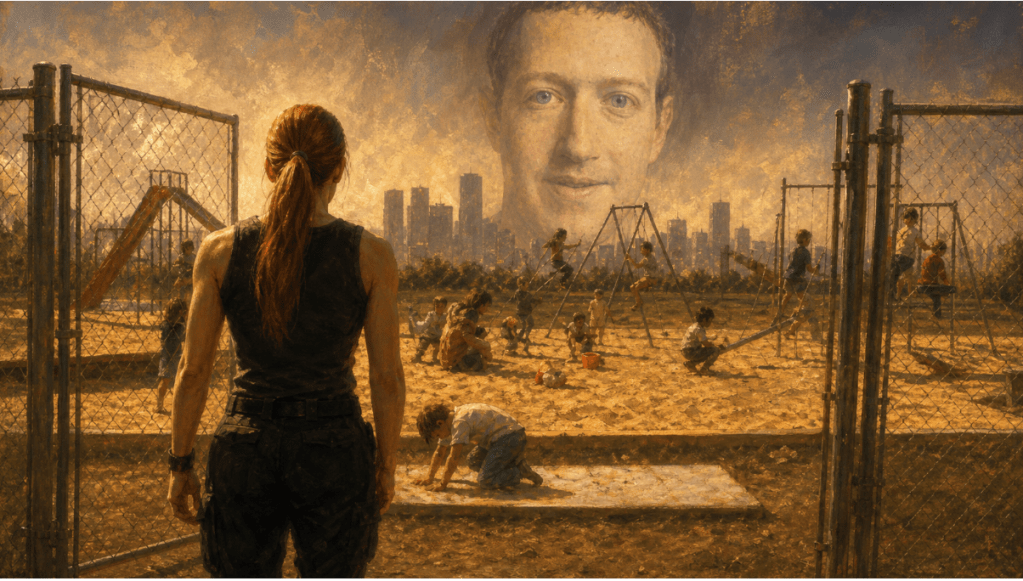
This is Meta CEO Mark Zuckerberg’s legal strategy and, so far, it seems to be working: if Meta forbids Canadian “news outlets” to post news stories, or refuses to suffer others posting their stories, then he figures Meta doesn’t trigger its legal obligation to negotiate the mandatory licensing payments that the Online News Act contemplates.

That’s his plan, in theory anyway. The practice is different. Meta’s swiss cheesey news “ban” has holes:

  • According to CRTC filings, Meta only half heartedly deletes user posts of news stories published by Canadian news outlets. Some posts remain for months or years as pointed out by the broadcasters who found their own news content posted by others on Facebook and Instagram.
  • My own observation is that Meta doesn’t appear to be deleting news items posted by persons employed by banned news outlets (I’m not outing anyone!)
  • As pointed out as a flagrant example by the litigating news companies, Facebook allows Rogers to post news videos from its Breakfast Television current affairs show, my guess is someone has decided wrongly that’s not news.

But most significantly to Meta avoiding cash liability, it seems to be quietly making its own calls on who is a news outlet, and who isn’t.

Despite the stream of Narcity top news stories of the day, the CRTC does not seem perturbed by this kind of thing in its December 2025 staff letter that wound up its staff investigation into the Meta ban.

Back in 2024, Narcity publisher Chuck Lapointe publicly celebrated Meta green lighting his publication’s return to Facebook. His post indicated this was a mindful decision by Meta and linked it to a ruling by the Independent QCJO Panel that Narcity doesn’t publish enough of its own news reporting to become eligible as a “news organization” to collect federal journalism subsidies under the Income Tax Act.

Replatformed by Meta, Narcity’s posts are a firehose of Canadian Press’s current events reporting, with less frequent posts of its own lifestyle and travel news.

Presumably Meta had Narcity sign-off on any compensation based on this policy:

In the meantime, social media influencers like Mario Zelaya can post their own news content on Facebook, as can Canada Proud or freelance journalists like Rachel Gilmore. Meta doesn’t owe Gilmore or Zelaya any compensation for their content because a “news outlet” must employ at least two journalists under the Online News Act.

The bottom line is that Meta is not banning all news or news reporting, it’s only banning news published by news organizations that might make a legal claim for compensation as a “news outlet.” The rest, it doesn’t ban.

That draws the eye to section 51 of the legislation. It’s the undue preference provision which prohibits Meta from giving “undue or unreasonable preference to any individual or entity” while unjustly discriminating against or disadvantaging a news outlet.

***

The first two in a string of consumer lawsuits against Meta and YouTube has resulted in jury findings of liability and multi-million dollar damages against the social media platforms in Los Angeles and New Mexico.

The civil convictions were based on Meta’s and YouTube’s addictive design features, causing mental health damage to children.

The New Mexico case, where the jury awarded $375 USD million in damages, was also based on Meta and YouTube concealing the risks of sexual exploitation of children.

The juries made their decisions against YouTube and Meta regardless of the fact that US juries are prohibited by federal law from considering the harmful nature of the posted content —-shielded under a 1996 law that gives immunity to online common carriers of content posted by third parties— so plaintiffs must convince juries that the platforms’ addictive design features and the lack of default safety mechanisms are to blame for human harm.

***

If you would like regular notifications of future posts from MediaPolicy.ca you can follow this site by signing up under the Follow button in the bottom right corner of the home page; 

or sign up for a free subscription to MediaPolicy.ca on Substack;

or follow @howardalaw on X or Howard Law on LinkedIn.

COMMENTS ARE WELCOME. But be advised they are public once I hit the “approve” button, so mark them private if you don’t want them approved. 

I can be reached by e-mail at howard.law@bell.net.

This blog post is copyrighted by Howard Law, all rights reserved. 2026.
Federal action on online harms is now a political no brainer

February 26, 2026

The most casual observer of public opinion on Ottawa taking action against harmful online content will have long concluded, this ain’t no battle.

Canadians categorically support government action against online harms.

The leading policy proposals focus on harms to kids with the prescribed remedies of bans on youth accounts and regulatory take-down laws to shield tweens and teens from porn, self-harm content and predators.

The only roadblocks to federal action in Canada —and they should not be underestimated— are the potential for Trump-induced trade chaos and on the other hand the possibility that the Official Opposition will keep a Liberal online harms bill, once tabled, bottled up in Parliamentary committee.

The Safer Online Spaces Coalition, a Canadian campaign group headed by the mother of the late Amanda Todd, just released a Léger poll making it clear how popular federal action on online harms will be. The thirst for government action is even higher than similar poll results from two years ago.

The poll shows extremely high levels of concern about addictive and otherwise harmful content, and similarly high support for regulation (90%) delivered by an independent regulator (79%). Significantly the support for regulating AI tools, in addition to social apps, is also strong (75%).

Broken down by the genre of harmful content, the Léger poll suggests Canadians are very concerned” about fake news (76%), harms to kids (74%), incitement to violence (67%), and hate speech (66%). The responses by parents versus non-parents were not very different.

There is a high degree of support for core of online harms policy contemplated in the Liberals’ earlier draft of online harms Bill C-63, which is the legal expectation that platforms will design safer algorithms and content controls and effectively take legal responsibility for content.

Perhaps counterintuitively, polled support for mandatory safety controls prescribed by government ran at a much lower level of approval, a narrow majority. As well, 65% agreed with the statement that “parents, not government, should make decisions about their children’s social media or online activity.” 

The Liberal vs Conservative disagreement over how to deliver enforcement of online safety —through a civil regulation scheme versus judges sitting in criminal courts— may be resolved in the Liberals’ favour: 76% of Canadians are good with federal regulation and even 61% of Conservative voters support it.

The poll didn’t solicit opinions on the wisdom of relying more heavily upon criminal charges, but demonstrated a high support (87%) for government launching criminal investigations and prosecutions of corporate executives in “severe cases” of online harm.

The poll was conducted before the tragic shootings in Tumbler Ridge and the revelation that OpenAI flagged concerning Internet activity by the shooter but elected not to notify the police.

And in a final point of opinion punctuation, the Léger poll also demonstrated high public support for the general notion that some level of collateral damage to freedom of expression was acceptable.

While 85% agreed to the statement that “my right to freedom of expression be maintained,” the principle of “freedom of expression online should not come at the expense of other people’s safety” won the same 85% level of high support.

As for joining the budding global movement to ban youth accounts, the support for different age cut-offs ranged from 12 to 17: but only 3% supported no minimum age at all.

As for the scenario of the US President coming to the rescue of Big Tech platforms in some kind of trade-related intimidation of Canadian government, 53% supported the federal government going ahead anyway with another 27% saying “it depends on the situation.” Those figures were heavily skewed by political allegiances, with Conservative voters more likely to be doing the hedging.

***

If you would like regular notifications of future posts from MediaPolicy.ca you can follow this site by signing up under the Follow button in the bottom right corner of the home page; 

or sign up for a free subscription to MediaPolicy.ca on Substack;

or follow @howardalaw on X or Howard Law on LinkedIn.

COMMENTS ARE WELCOME. But be advised they are public once I hit the “approve” button, so mark them private if you don’t want them approved. 

I can be reached by e-mail at howard.law@bell.net.

This blog post is copyrighted by Howard Law, all rights reserved. 2026.

BBC and YouTube get married – Social Media on trial in L.A. – MediaPolicy’s glitches

AI illustration

February 14, 2025

Today’s post is a mash-up (remember those?).

MediaPolicy follows a number of themes and story lines in Canadian media. One of them is our public broadcaster, CBC Radio-Canada. Another is the surging audience growth of YouTube

The travails of the CBC always beg comparisons to the British Broadcasting Corporation. Earlier this month, the BBC announced a formal partnership with YouTube that, if the BBC follows through over the long term, will make it a YouTube-first broadcaster. 

So happy Valentine’s Day.

The BBC’s idea is to fish where the fish are, at least when it comes to the younger demographic whose media consumption leans very much into short-form video content on YouTube and social media apps. 

The BBC says it’s going all in on micro-drama series and verticals (so called because video clips are shot in portrait mode, the better to consume on phones).

That means the Beeb will invest more heavily in developing its supply chain into the digital “creator community” of video artists and studios. It also plans to launch far more BBC YouTube channels built around popular genres and local communities and feed them with digital-first content. 

The BBC isn’t completely reinventing itself. It’s going to keep using the YouTube platform as a marketing strategy to push audiences back to its main streaming services BBC iPlayer and BBC Sounds. It would be reckless to do otherwise lest it put the BBC’s audience growth entirely within the grasp of a big US tech company that controls the discoverability of content through its algorithms (I mean, what could go wrong?).

A recent report in Britain marked the occasion of YouTube overtaking the once-dominant BBC as the UK’s market leader in video consumption. The early commentary on the YouTube-BBC partnership has been a mix of optimism and dread, here’s one insightful view. 

***

A big trial just started in Los Angeles where a 20-year old woman is suing YouTube and Meta’s Instagram for degrading her mental health by feeding her harmful content through addictive content algorithms.

The plaintiff KGM’s lawsuit is hardly frivolous: TikTok and Snap already settled to escape trial.

Her lawyer found his Johnny Cochran stride when he told the jury that his case was “easy as ABC…addicting the brains of children.”

The US maintains a Congressional exemption of Internet companies, especially social media apps, from liability for content uploaded by third parties (incidentally that litigation shield pops up in the digital chapter of the CUSMA trade agreement but Canadian courts have interpreted it narrowly). Given the exemption, KGM has to prove that YouTube and Meta are liable for creating addictive algorithms that push unhealthy content rather than paying a price for accepting the content in the first place. 

The US is a more litigious society than we are and lawsuits don’t create legislation: KGM may claim damages but it’s highly unlikely she will force Big Tech to do anything differently. 

***

I’m concluding this weekend’s post with something boring: weird publishing things happening with this blog.

Last weekend’s post included a three paragraph quote of the European Union’s regulatory indictment of TikTok for addictive algorithms pushing harmful content with inadequate safety features. Due to a WordPress software glitch, the e-mailed version to subscribers dropped out two of the paragraphs, which made for a strange narrative flow. If you found it jarring, you can go back and read the more fulsome EU statement.

The other oddity was an unprecedented two-day surge in MediaPolicy viewing in the US which puzzled me given the Canadian focus of MediaPolicy posts. It coincided with a MediaPolicy reader receiving a scam e-mail with an embedded link to MediaPolicy.ca (offering a marketing opportunity). The e-mail was associated with the digital marketing website Blogger Tuesday and I have nothing to do with it.

Please let me know if you received one. 

***

If you would like regular notifications of future posts from MediaPolicy.ca you can follow this site by signing up under the Follow button in the bottom right corner of the home page; 

or sign up for a free subscription to MediaPolicy.ca on Substack;

or follow 
@howardalaw on X or Howard Law on LinkedIn.

COMMENTS ARE WELCOME. But be advised they are public once I hit the “approve” button, so mark them private if you don’t want them approved. 

I can be reached by e-mail at howard.law@bell.net.

This blog post is copyrighted by Howard Law, all rights reserved. 2026.
Catching up on MediaPolicy – Europe indicts TikTok – Age verification bill S-209 clears Senate committee – Bezos and the WAPO layoffs – CPC frenzy over “the Canadian media summit”

February 8, 2026

The European Commission has fired a shot across the bow of TikTok, and by implication other social media, by finding the social media giant culpable of addictive algorithm design and inadequate safety measures.

The Commission explained its  preliminary ruling, which TikTok can either appeal or fix, as follows:

TikTok seems to fail to implement reasonable, proportionate and effective measures to mitigate risks stemming from its addictive design.

For example, the current measures on TikTok, particularly the screentime management tools and parental control tools, do not seem to effectively reduce the risks stemming from TikTok’s addictive design. The time management tools do not seem to be effective in enabling users to reduce and control their use of TikTok because they are easy to dismiss and introduce limited friction. Similarly, parental controls may not be effective because they require additional time and skills from parents to introduce the controls.

At this stage, the Commission considers that TikTok needs to change the basic design of its service. For instance, by disabling key addictive features such as ‘infinite scroll’ over time, implementing effective ‘screen time breaks’, including during the night, and adapting its recommender system.

The EU finding is made against the Chinese-owned app in the European market, not the American-owned TikTok across the Atlantic. But it will heat up the tension between the US and the EU over the regulation of online harms impacting US-owned apps operating in Europe.

The momentum of regulatory intervention around the globe picked up more steam when Spain indicated its intention to follow Australia and France in banning underage social media accounts. 

As for Canada, Heritage Minister Marc Miller isn’t saying yet if a ban on underage access is part of the online harms bill he is preparing.

Last Monday, the influential Taylor Owen and his McGill colleague Helen Hayes called for a moratorium on underage access to social media while online harms legislation gets tabled, works its way through Parliament, and gets implemented.

Judging from Canada’s last two pieces of media legislation, the Online Streaming Act and the Online News Act, the length of the entire process might be measured in years.

What might advance the timetable at the front end is Senate Bill S-209 that would require age verification for porn sites and possibly any social media site that permits porn. The bill passed committee last week and will likely get approved by the full Senate in the next few weeks, putting the governing Liberals on the spot.

Last week Senatrice Julie Miville-Dechêne, the bill’s sponsor, obtained committee approval for a series of technical amendments as well as a change that defined porn more narrowly to get at “X-rated” content and scope out the nudity and implied sexual activity common in mainstream drama. The new definition requires the exhibition of explicit sexual activity and exposed genitalia for the purpose of sexual excitement.

As drafted, S-209 still leaves the decision on whether to scope in porn-permissive social media apps to the federal government, either in a House vote on the bill or afterwards. 

***

Last weekend MediaPolicy noted the diverging fortunes of the New York Times and the Washington Post with the Times getting the Trump-bump in digital views and the Post sagging in the other direction. 

Then on Tuesday the Washington Post announced a breathtaking round of newsroom layoffs, 300 of 800 staff. By Saturday, publisher Will Lewis had resigned.

The public reaction was what you might expect: a mix of shock and anger. Former Post Editor-in-Chief Marty Baron posted his condemnation of the layoffs and put at least part of the blame on multi-billionaire proprietor Jeff Bezos’ decision to ingratiate himself to Donald Trump. That included Bezos killing a planned editorial board endorsement of Kamala Harris’ presidential candidacy, which reputedly cost the Post 200,000 subscriptions, as well as vocal support for Trump’s demolition of the White House east wing and making a donation to the ballroom project to be built on its foundations. Recently, Bezos’ Amazon Prime reputedly overpaid the Trump family for the streaming rights to the documentary Melania.

Then American anti-monopoly advocate Matt Stoller published a long Substack post where he suggested that Bezos bought the Post in 2013 as political insurance against the Obama administration taking anti-trust action against his Amazon e-commerce business. The insurance policy, Stoller suggested, has become unnecessary or overpriced as Bezos literally put his money on Trump. 

One piece of context is that while the Post’s declining audience numbers may be attributable to anti-Trump readers voting with their feet, the conservative and pro-Trump Wall Street Journal is experiencing the same decline, although not as steep as the Post.

There were also layoffs in Canadian journalism, suitably smaller in number. Bell Media CTV laid off 60, including 11 television journalists. 

***

The gong show otherwise known as the right-wing frenzy over mainstream media went viral last week when a video clip surfaced of Reynolds Mastin publicly thanking Prime Minister Mark Carney for “having our backs” and gushing that “we have your back too.” 

There it was, proof of the blood pact between the federal Liberal Party and the mainstream news media.

But who the heck is Reynolds Mastin?

Mastin is the President of the Canadian Media Producers Association (CMPA), the industry group representing independent Canadian production companies that make entertainment programming. He was chairing the CMPA’s annual Prime Time conference in Ottawa when he made the remarks.

Readers may know, Mastin is not a journalist and he (and the CMPA) has nothing to do with news journalism. He was encouraging Carney to resist American trade pressure on the Online Streaming Act which requires US streamers to contribute to the Canada Media Fund.

Independent movie and television producers draw CanCon subsidies from the Canada Media Fund to make dramas and comedies. The CMF doesn’t spend a dime on news, although some make the mistake of thinking it does.

Nevertheless, the timing was was perfect for frenzy: the Conservative Party was in the midst of its annual convention in Calgary.

Here is Conservative Heritage critic Rachael Thomas MP describing “the Canadian media summit” as a news journalism event:

Thomas’ falsehoods then found their way into Conservative fund raising e-mails.

At that point, some conservative pundits urged Conservatives to do a fact check. The managing editor of The Hub, Harrison Lowman, was as brave as he was blunt:

Now speaking of Mr. Lowman and The Hub, I can recommend an excellent podcast he did in January with ex-New York Times editorial page editor James Bennet. 

In June 2020, Bennet (whose brother is a Democratic Senator) cleared for publication an opinion column from Republican Senator Tom Cotton arguing that Donald Trump ought to deploy the military if necessary to deal with rioting and looting that flared in the aftermath of the police murder of George Floyd. 

Bennet’s employment did not survive the newsroom uprising that followed. 

A similar newsroom conflagration occurred the same month at Canada’s National Post when columnist Rex Murphy opined that Canada “is not a racist country.” 

In any event, I found myself gripped by the full 35 minutes of Lowman’s interview of Bennet and you may find it worth the time as well.

***

If you would like regular notifications of future posts from MediaPolicy.ca you can follow this site by signing up under the Follow button in the bottom right corner of the home page; 

or sign up for a free subscription to MediaPolicy.ca on Substack;

or follow 
@howardalaw on X or Howard Law on LinkedIn.

COMMENTS ARE WELCOME. But be advised they are public once I hit the “approve” button, so mark them private if you don’t want them approved. 

I can be reached by e-mail at howard.law@bell.net.

This blog post is copyrighted by Howard Law, all rights reserved. 2026.
Catching up on MediaPolicy – Miller is flexible on CanCon – WAPO sunk by Trump – CRTC is stil-l-l-l deliberating – ready for Digital Media@Crossroads 2026

AI illustration

January 31, 2026

Last week Heritage Minister Marc Miller walked back the tough talk of his predecessor Steven Guilbeault: cultural issues are no longer “off the table” in the upcoming trade talks with the US and Mexico.

In an interview with The Logic, Miller said Canada would have to be “flexible” in dealing with the US demands that Canada repeal the Online Streaming Act and the Online News Act although there are “lines that can’t be crossed.”

There will be no Davos speeches for Canadian culture. At least not in English. It probably escaped nobody’s notice that Guilbeault’s ultimatum was never repeated by the Prime Minister.

Miller also suggested that Canada needs to design its online harms bill with a clear eyed acknowledgement of Big Tech’s influence in the Trump administration. Miller said “we’re not oblivious to the fact that large American companies do have access to the administration, and colour a lot of the views coming out of the White House when it comes to the way they’re behaving.”

Despite an earlier news story that Miller was considering Australian and French bans on social media accounts for minors, he was quoted by The Logic as undecided about a Canadian ban.

“A simple ban, with doing nothing else, would be overly simplistic and probably wouldn’t achieve the goal that we’re trying to achieve, which is to make sure kids are safe, physically, emotionally and mentally,” he said. In a separate interview with the Globe & Mail, Miller said he was considering online harms legislation that would govern how AI chatbots impacted children.

That sounds very much in line with a new LinkedIn post from McGill University’s Taylor Owen, the most influential voice on online harms in Canada:

The core problem is that tech companies have failed to build safe products, and governments have failed to hold them accountable. Parents and teachers are rightly frustrated and so the impulse toward radical action is understandable.


But a ban treats exclusion as the end goal. It punishes users rather than the products causing harm. It restricts children’s rights rather than enhancing their safety. And when a kid turns 15, they enter an online ecosystem with no protections whatsoever.

Every jurisdiction that has studied this seriously—Australia, the UK, the EU—arrives at the same place: an enforcement body that can hold platforms accountable through risk assessments, mitigation plans, and transparency requirements. Age-appropriate design standards that eliminate targeted ads, auto-scrolling, data harvesting, and stranger contact for minors.

Canada had a bill [C-63] that did much of this. It should be retabled—and updated to include AI chatbots, which are now one of the main sources of consumer safety risk for young people.

(Update 2/2/26: The Globe & Mail published an op-ed by Owen and his colleague Helen Hayes recommending Ottawa proceed with an online harms bill based on a duty to protect children that obliges social media apps and AI chatbots to implement safety procedures. They recommend a moratorium, a temporary ban on underage access until such time that the bill is passed and tech companies have complied).

However, the challenges in legislating an online harms bill in a minority Parliament are considerable.

The Conservatives have a different vision of legislating online safety, preferring to criminalize online harms so the law is enforced by judges and not government regulators.

Unlike the last minority Parliament, the Liberals can’t just make a deal with the NDP to form a House majority to pass an online harms bill. The NDP’s loss of official party status in the 2025 election means they aren’t on Parliamentary committees and can’t team up with the Liberals to break filibusters that bottle up legislation in committee hearings.

The Liberals would need the Bloc Québécois to get them out of that jam.

***

I said there would be no Davos speeches for Canadian culture.

There almost was: Prime Minister Carney’s seven-minute hit at this week’s Prime Time conference sponsored by the Canadian Media Producers Association was funny and spontaneous and, by pointedly celebrating great home grown shows like Heated Rivalry “at this moment,” comes close enough to a bold statement of cultural sovereignty.

***

It would be easy to write a blog about the pyrotechnics going off inside American media so long as one was prepared to post, oh, about every fifteen minutes.

That’s not a segue into an update on the Netflix vs. Paramount bidding for Warner Brothers (although the latest is that Netflix is now making an all-cash bid).

What I am finding interesting is Bari Weiss’ ascendancy at CBS News as the new CEO appointed by Paramount owners David and Larry Ellison (after bagging $150M US for her news website The Free Press).

Unsurprisingly, Weiss is moving CBS news coverage to the right. How far to the right, and how deep into Donald Trump’s embrace, we shall see. There’s a fair amount of moral panic that CBS will just be a Fox News Two, as if the centre and left is not adequately populated by ABC, NBC, CNN and MSNBC. There’s an illuminating NPR story on Weiss’ shake up at CBS, here.

Speaking of NPR, the New York Times published a story noting that the Congressional revocation of federal funding of the now-dissolved Corporation for Public Broadcasting (which provided 15% of NPR and PBS funding) has not resulted in station closings, at least not immediately. For now, donations are filling the gap.

And speaking of the New York Times (and The Washington Post too), data-cruncher extraordinaire Nate Silver posted the following graph on his Substack that measures the news cycle buzz of political coverage:

It seems that the Jeff Bezos-owned WAPO did not get an attention-boosting “Trump bump” after the 2024 US Election but rather is experiencing something more like a “Trump sunk” effect.

Possibly that’s because Bezos alienated some readers by nixing a newsroom editorial endorsement of Kamala Harris and then, after Trump won, cuddled up to the White House. The eyeballs appear to be marching off to the Times.

All of it a damn shame: WAPO is replete with good watchdog journalism.

***

In November, the CRTC issued a major decision about on-screen Canadian content. Two biggies began with a revised point system to define the “Canadian” in Canadian programs under the Online Streaming Act, C-11.

The other opened the door for the first time to foreign streamers owning majority copyright rights in Canadian programs.

The Commission’s November ruling was the first of a two-part decision on video streaming: the crucial issue of streamer expenditures on Canadian programs remains outstanding.

Well, don’t hold your breath.

In a speech to the Canadian Media Producers Association on January 29th, the CRTC’s Broadcasting Vice-Chair said the Commission was not ready to issue new rulings.

“There is still more work to be done, and I cannot tell you exactly what to expect as we continue deliberating,” Nathalie Théberge told the crowd, who might have noted that the Commissioners are still deliberating seven months after hearings concluded.

“What I can tell you, however, is that there will be follow-up decisions in the coming months. This includes decisions to address spending on Canadian programs, distribution rules for services, measures to ensure discoverability of Canadian content, dispute resolution and audio policy.”

The coming months catches the attention. The Commission owes Canadians and the industry the aforementioned Part Two (“spending on Canadian programs”) as well as two separate files on the other topics Théberge mentioned.

All of this after the Commission was ordered, not asked, by federal cabinet in November 2023 to get the job done of implementing a new regulatory framework under Bill C-11 in two years.

***

This coming weekend February 6th-7th in Toronto the cultural nationalists and fellow travellers get together at Digital Media at the Crossroads. This is not to plug the panel I’m on; in fact there’s something for everyone and two of the boxes I’ve ticked on my dance card are the Nordicity report (Friday 2:15 PM) on the state of Canadian media and Globe & Mail reporters Angela Murphy and Mark Rendell speaking about news coverage of US/Canada relations (Saturday 10 AM).

And on Wednesday February 11th the Coalition for the Diversity of Cultural Expressions is holding a one day event in Ottawa to discuss the impact of AI on cultural production, a lead in to the federal government’s invitation-only policy summit, March 16th-17th in Banff.

***

If you would like regular notifications of future posts from MediaPolicy.ca you can follow this site by signing up under the Follow button in the bottom right corner of the home page; 

or sign up for a free subscription to MediaPolicy.ca on Substack;

or follow @howardalaw on X or Howard Law on LinkedIn.

COMMENTS ARE WELCOME. But be advised they are public once I hit the “approve” button, so mark them private if you don’t want them approved. 

I can be reached by e-mail at howard.law@bell.net.

This blog post is copyrighted by Howard Law, all rights reserved. 2026.