Catching Up on MediaPolicy – a Netflix tax? – Fawcett defends boss, subsidies – the Online News Act v. 2.0.

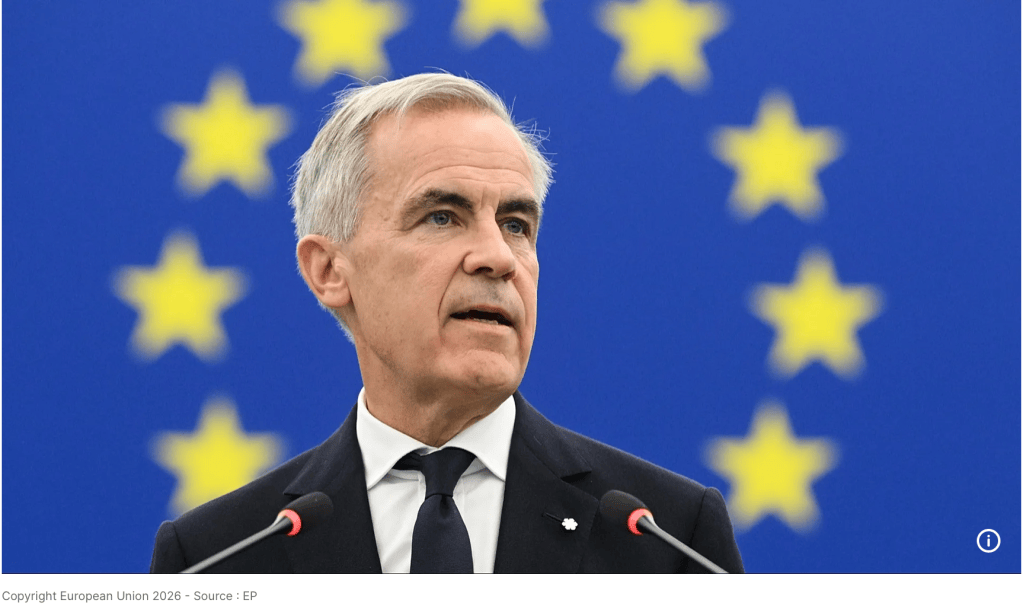
The Leader of the Opposition gets his sunglasses stuck in his teeth

May 30, 2026

Last week I published my take on the CRTC’s latest ruling on how much Netflix and the Hollywood streamers will have to invest in Canadian programming and how they will make that content highly visible on their platforms.

As for what the Commission did for Canadian broadcasters, I was harshly critical of the decision to relieve them of minimum investments in English-language dramas and documentaries based on the sanguine hunch that US streamers might do it for them. I wish I could be harsher.

I highly recommend a Substack column by Derrek Lennox who casts cultural sovereignty as a project of building an infrastructure of empathy among Canadian communities. Worth the short read.

***

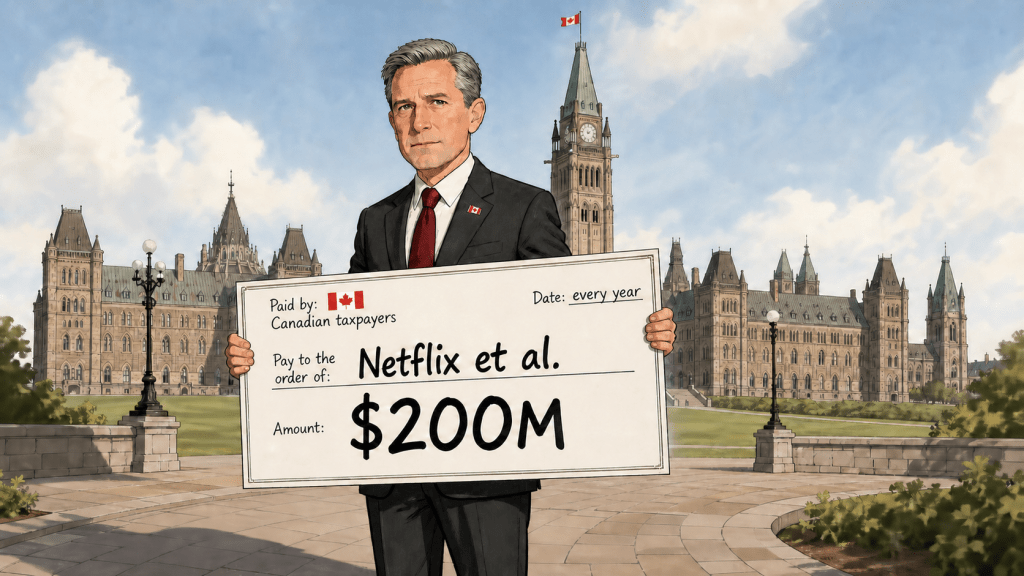
Opposition leader Pierre Poilievre is calling for the federal government to cancel the CRTC’s Netflix ruling on the grounds that it will cause subscription prices to rise —he’s calling it “a Netflix tax”—and goad the Trump administration into even more trade retaliation. 

As yet, Poilievre isn’t recycling his old accusation that the Online Streaming Act’s promotion of Canadian content is  “government censorship….pro-government, liberal-leaning, boring, statist content that is approved of by the establishment crowd in general and the liberal glitterati in particular.” Ouch!

Indeed according to Poilievre, the legislation is a Liberal tool intended to “favour certain kinds of pro-government content online while discouraging content that the government does not want us to see, in some cases taking that content off the Internet together.”

Sticking to the better messaging point, he says the new CRTC ruling is a consumer tax because the streamers will pass along regulatory charges to the public.

Poilievre isn’t wrong about that being possible, but here’s some context. 

Netflix upped the price on its standard plan from $14 monthly to $15 in 2020. Then to $16.50 in 2022. Then to $19 in 2025. That was twice the rate of inflation. 

As for the CRTC ruling, the cash cost to Netflix and the Hollywood streamers is not the 15% of Canadian revenues set as an overall investment in Canadian content, mostly in their own shows on their own platforms.

The out of pocket cash cost is not the 15% but an included 6.55% of revenues, paid to Canadian media funds supporting news, entertainment, and a short list of public service programming such as APTN, Omni multilingual, Ugavut TV or CPAC. 

The streaming market —the highly concentrated streaming market— will determine how much of this 6.55% cash levy that Netflix can pass along to subscribers.

Still, you would expect at least some of that 6.55% levy to drive the 2028 price increase higher. As much as, I dunno, twice the rate of inflation?

***

Kudos to Max Fawcett, the National Observer columnist who stepped up to take one for his team.

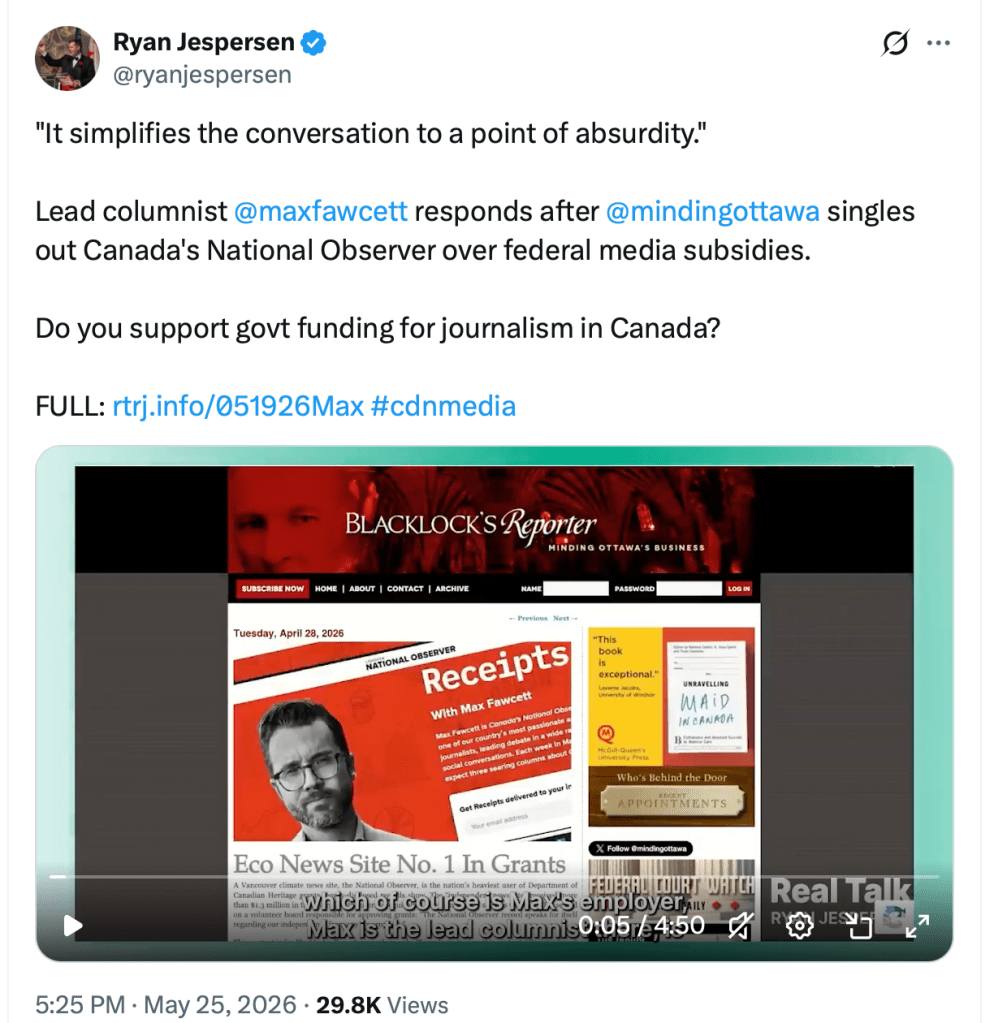
It began with a Blacklock’s Reporter story reporting on the journalism subsidies collected over the last ten years by the Observer from the three major federal programs. That wouldn’t be especially newsworthy except for the fact that Observer publisher Linda Solomon Wood is one of five news publishers sitting on a panel that decides which news outlets get a piece of the Local Journalism Initiative.

A past recipient of the National Newspaper Award for best columnist, Fawcett went on Ryan Jespersen’s Edmonton talk radio show and gave a scorching elevator speech defending the Observer and the federal programs. 

He didn’t address the point raised by Blacklock’s reporting that maybe his boss should not be sitting on the panel that carves up limited funds in the federal Local Journalism Initiative.

Wood and the other members of the judging panel did recuse themselves when their own publications were reviewed. The Observer was awarded two out of the 700 one-year job subsidies this year and three last year.

Still, Canadian Heritage would do well to consider putting academics and retired journalists in charge of the LJI disbursements, as it does for the QCJO program.

On the general topic of journalism subsidies, I came across a parliamentary brief that Torstar just submitted to the Heritage committee’s investigation into the state of news journalism. I confess to a love-hate relationship with Torstar (I was the Unifor union rep at the Toronto Star for many years) but I found this submission has a lot of policy gravitas.

***

The Online News Act, directing Google payments for news links, is under threat. But not just from looming CUSMA trade negotiations, rather from AI technology.

This has been known for some time. Google’s Search’s AI Overviews and AI Mode offer comprehensive answers to questions, before you get to the page after page of ten blue links.

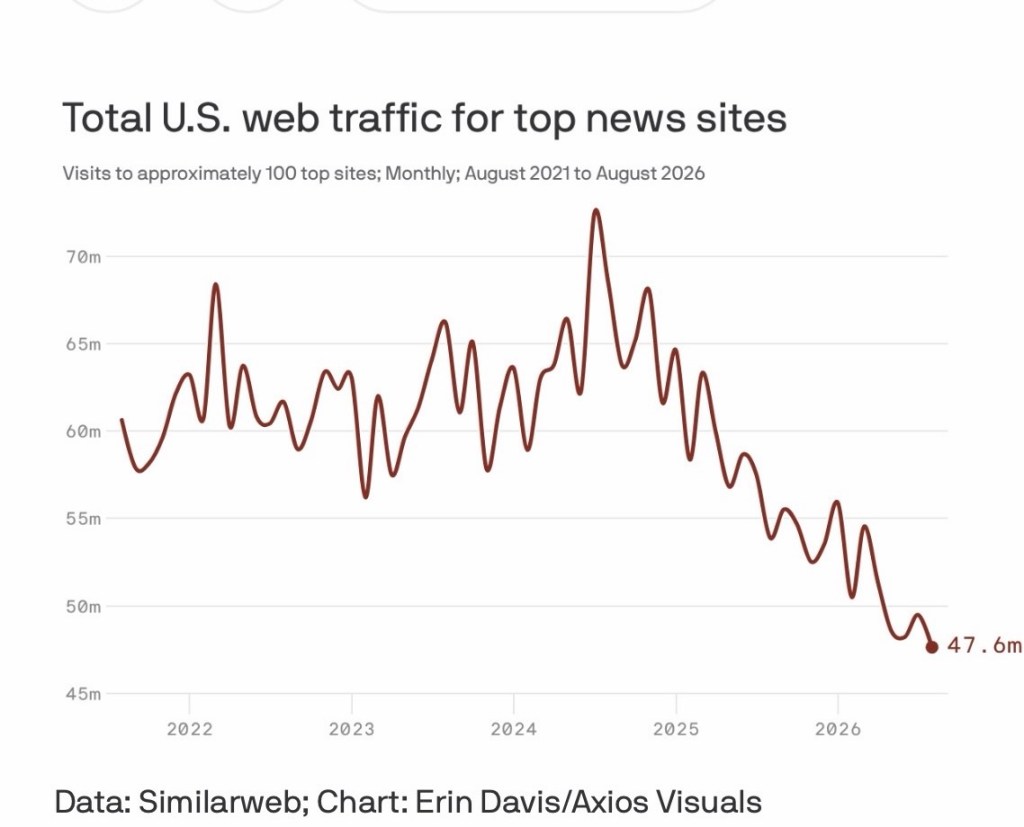
Google’s referral traffic to news sites has already plummeted and it will get worse as late adapters get comfortable with AI tools. If the Online News Act was intended to compensate news publishers for populating Google’s blue links, that intention is being steadily eclipsed.

The next AI wave is now hitting Google Search which enjoys a 90% world market share. You can read the long versions at TechCrunch or in Press Gazette, but two of the new features of an overhauled Google AI mode stood out to me.

The first is what you already get on most AI chatbots: Google Search will engage in a conversation with you, deducing your research mission and offering help. Its response will be gussied up by creating multimedia answers to your question. Clicking through hyperlinks to original news sources, even if these are still offered, will be for suckers. I will remain one of those suckers, but I expect most will not look the gift horse in the mouth and let AI mode take over their brains, although maybe not for the more discerning news consumers who still want to check the underlying reporting.

But the truly revolutionary AI feature will be creating autonomous research agents that become your auto piloted research apps for the next days, weeks or years and periodically bring to your attention breaking news and developments relevant to your search query. 

At some point, I may break down and create an AI agent for “what is happening in Canadian media policy.” Just as a science experiment, mind you. Right now, I read e-newsletters offering links to media news.

The point is, the new Google may well kill Search referrals to original news sites. Kill them dead.

That appears to be the goal, anyway. And with that death goes any Google argument that its intermediation of hyperlinks, as they currently argue, makes them a benefactor to the news industry whose content they ingest.

On the other hand, the alternative (and unofficial) government intention behind legislating the Online News Act was not just compensating news outlets for their journalism, but effectively levying an anti-competition fine against Google Search for its oligopoly power over advertising in the absence of any action by the federal Competition Bureau. Google isn’t able to exercise that kind of monopoly power in the AI market, at least not yet.

As for the impact on the Online News Act, any retreat from offering news hyperlinks means Google will certainly buck against renewing its $100M/yr deal to fund news journalism that expires in 2030.

That’s how much time the federal government has to wake up and acknowledge that Google and the other AI bots are ingesting Canadian news by scraping their websites without a license. What is needed are amendments to an Online News Act v.2.0, starting with a new definition of a “digital news intermediary.” 

***

If you would like regular notifications of future posts from MediaPolicy.ca you can follow this site by signing up under the Follow button in the bottom right corner of the home page; 

or sign up for a free subscription to MediaPolicy.ca on Substack;

or follow @howardalaw on X or Howard Law on LinkedIn.

COMMENTS ARE WELCOME. But be advised they are public once I hit the “approve” button, so mark them private if you don’t want them approved. 

I can be reached by e-mail at howard.law@bell.net.

This blog post is copyrighted by Howard Law, all rights reserved. 2026.
Catching up on MediaPolicy – media funding in Québec – innovation in news journalism – The Netflix Effect

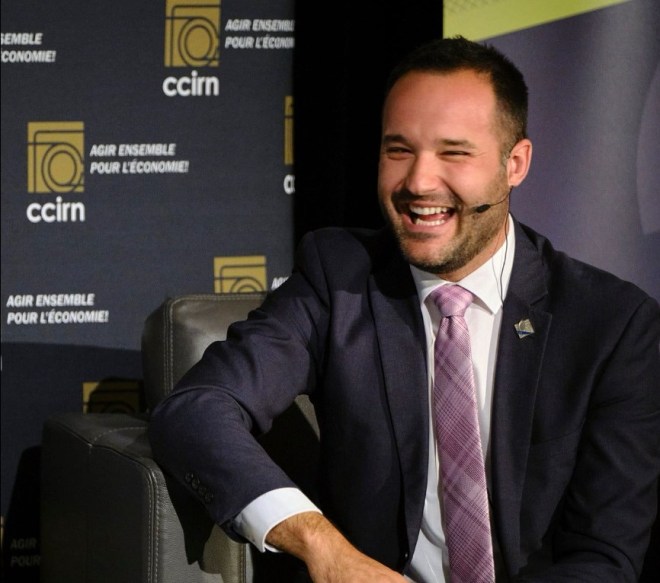
Québec culture minister Mathieu Lacombe

May 18, 2026

There’s an election upcoming in Québec this fall and the politics of media and culture can be expected to get a lot of attention. 

This past week media titan Pierre-Karl Péladeau delivered his remarks about Québécor’s most recent quarterly report by celebrating the strong growth in his expanding national telco business. He then tacked on a threat to cut more jobs and programming in his money-losing television business unless he gets what he wants.

Péladeau has cut 800 television jobs in the last four years and 20% of original programming. Citing a 14% drop in ad revenues over the last year, he told reporters that he has done his part by cutting jobs and programming, bringing his media division back to break-even after years of losses (owing to his cuts and stronger broadcasting revenues from Montréal Canadians hockey).

Now Péladeau wants to squeeze his suppliers. By that he means price reductions from independent producers who make his TV content and wage concessions from the crews that shoot them.

From the provincial government, Péladeau wants more television production tax credits and the removal of tax deductions for Canadian advertisers patronizing foreign tech platforms. His explicit “or else” is more job cuts and replacing original television content shot in Québec with foreign acquisitions.

The new CAQ Premier Christine Fréchette didn’t take the bait from Péladeau, the former leader of her rival Parti Québécois, preferring to reflect that her government “is closely monitoring developments in the cultural sector and in relation to digital media.”

But her culture minister Mathieu Lacombe, not so much. He was annoyed by Péladeau’s ultimatums, reminding the him that the province —which just increased its $50M annual budget to supplement federal contributions to French language television production—won’t overcommit to television programming on a “dying” cable television network. Salting it some more, Lacombe suggested that following Péladeau’s logic the province was being invited to go down the path of “nationalizing” Québécor’s TVA network. 

Also, Lacombe might not appreciate Péladeau’s public demands just two months after his government’s March 2026 budget that delivered on extending Québec’s journalism labour tax credit to licensed television and radio stations at a cost of $40M annually. At the time, Péladeau commented that “while we have been calling for this for many years, the Québec government’s decision represents a major step forward.”

***

The Québec government’s decision in March to extend journalism tax credits beyond print media to include television and radio stations did not get much attention in the English language press. The federal government is now considering the same move.

Under the radar, the Québec budget began its three-year phase out of an eight-year-old $8M/yr spending program for digital transformation of legacy media.

Québec has always been more aggressive than the federal government about supporting digital innovation through subsidies, both as one-of tech projects and the inclusion of IT staff in its labour tax credit.

As Senator Andrew Cardozo and I wrote in our recent report, La Presse credits Québec’s support for digital innovation as making a big contribution to its successful digital transformation as well as its ability to retain software developers who might otherwise abandon their employer for better paying jobs in the tech ecosystem.

But in the March budget, the province eliminated the IT salary subsidy and began the wind down of the digital transformation grants.

***

“Innovation” holds a magical place in media policy. 

Some see innovation and government subsidies as binary: one cancels out the other. The assumption is that the opportunity for innovation to grease the skids of transition from legacy media to a successful new business model will be stymied so long as news outlets can fall back on subsidies.

In our report “Making News Media Sustainable,” Senator Cardozo and I see innovation and subsidies as complimentary. We wrote a longish part of the report on innovation and observed that the nation’s best adapters to digital —the Globe & Mail, La Presse, Village Media— draw journalism subsidies. 

On either view, realizing the potential of innovation probably comes down to corporate leadership, something I think Ariel Freiman described well in this recent piece in J-Source.

It’s possible that if innovation and subsidies can elbow each other out, it will probably depend in part upon the particular market in which news outlets operate. Is that market national, regional, local or hyperlocal? What is the audience demographic? How saturated is the competitive landscape? What are the opportunities for scale? And so on.

We also tend to think about innovation as “tech.” There’s been plenty of that, with the above noted news outlets all hitting it out of the park by developing proprietary publishing software. 

Another innovation theme that keeps emerging in media commentary is “the bundle.” That refers to the digital reimagination of the old newspaper formula of packaging news content together with an array of local information, buy-sell classifieds, pastimes, and invitations to community participation.

Village Media is a constant innovator on this score, as the Senator and I discuss in our report. Last week I stumbled upon a good e-newsletter on news innovation written by a German journalist Ulrike Langer, located in the US. Her latest is an interview with Richard Gingras, the former Google VP who now serves as chair of CEO Jeff Elgie’s board of directors at Village.

After describing the ways in which Village is putting together its content bundle, Gingras is at pains to describe Village as a “community impact platform” (or alternatively a “community operating system”) that includes news publishing in that bigger bundle.

Gingras also thinks that as AI tools automate writing and publishing, the “human element” (journalists?) will increasingly be directed at gathering information and forming the community bonds and sources to provide it. 

In the course of the interview, Gingras let the cat out of the bag by revealing that the 27-location Village network is about to expand to 15 locations in the US with an American partner.

When I asked Elgie where and when, he replied in an e-mail that he isn’t ready to announce the move yet.

***

I will plead guilty to the charge of indulging, from time to time, in bitter sarcasm. Most often in response to the hubris of the Big Tech elite. You may have noticed.

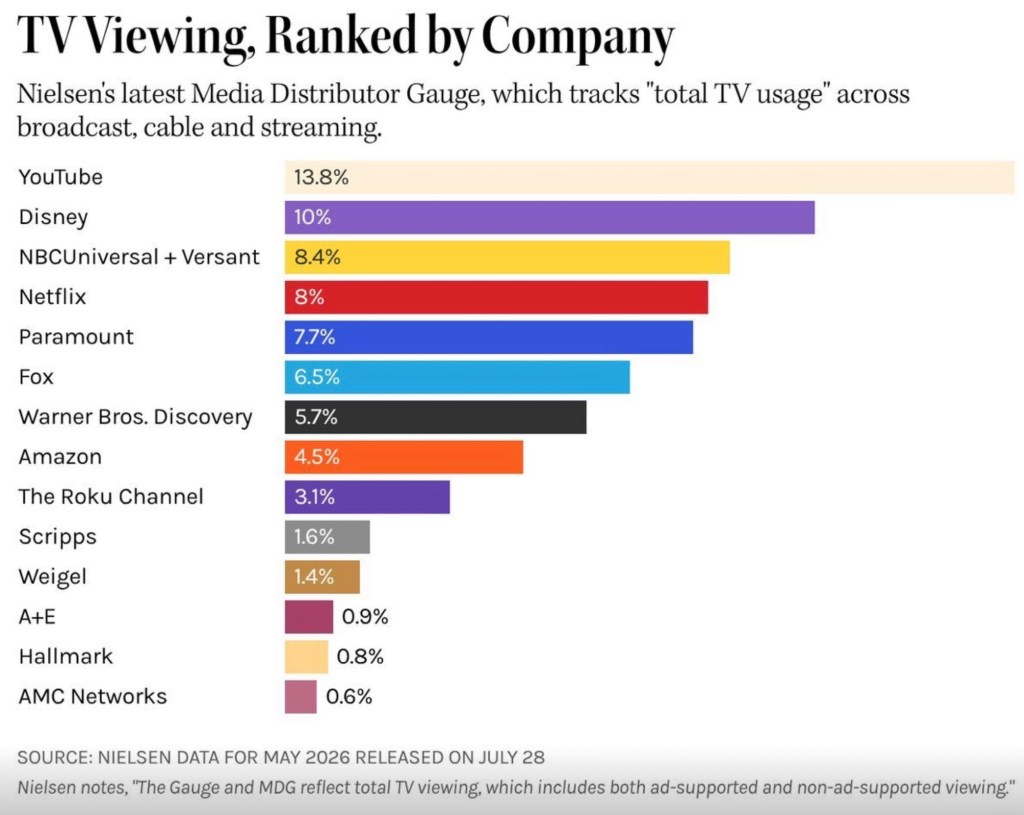
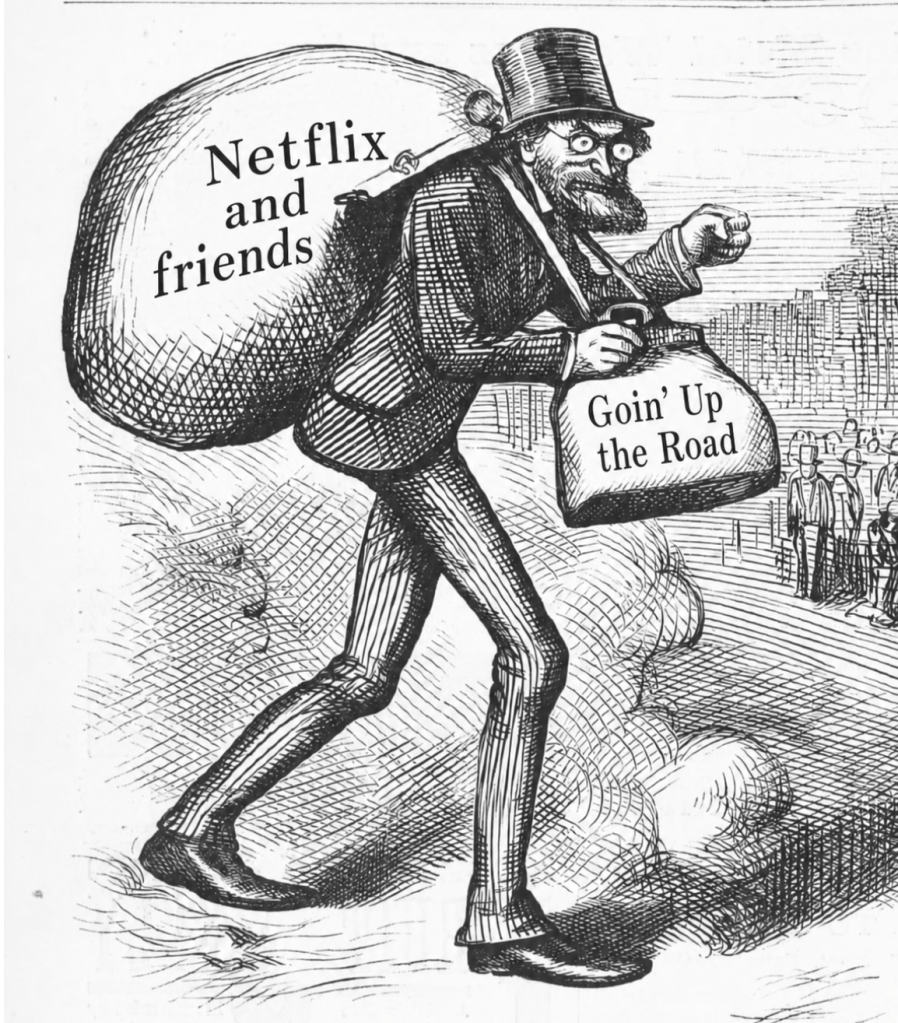
Netflix is the object of my disaffections this week. 

The studio-streaming colossus has some claim to my better angels and maybe your’s as well. After all, Netflix isn’t a social media platform that floods the digital airwaves with poisonous content.

Just ask Netflix CEO Ted Sarandos. According to him, Netflix is a benevolent force for good in the world. In a riff on the adage “what’s good for General Motors is good for America,” Sarandos dropped this pearl last week, modestly dubbed “the Netflix Effect”:

Over the last decade, Netflix shows and movies have consistently shaped what people read, buy, listen to, eat, wear and play. We’ve pushed old songs back up the musical charts, helped niche sports go mainstream, and boosted sales…Now we have a responsibility to keep that flywheel going. That’s why, while other entertainment companies pull back, we’re leaning in — spending tens of billions of dollars on content every year, investing in production facilities from Spain to New Jersey, and growing the entertainment industry through training programs that have reached over 90,000 people across more than 75 countries.

***

If you would like regular notifications of future posts from MediaPolicy.ca you can follow this site by signing up under the Follow button in the bottom right corner of the home page; 

or sign up for a free subscription to MediaPolicy.ca on Substack;

or follow 
@howardalaw on X or Howard Law on LinkedIn.

COMMENTS ARE WELCOME. But be advised they are public once I hit the “approve” button, so mark them private if you don’t want them approved. 

I can be reached by e-mail at howard.law@bell.net.

This blog post is copyrighted by Howard Law, all rights reserved. 2026.

Catching up on MediaPolicy – Québec’s Netflix-Spotify bill is in play – social media ban for teens – hostile bid for Warner Bros and CNN – OpenAI’s Disney video app

AI generated image from OpenAI

December 13, 2025


This week the Québec National Assembly unanimously passed Bill 109, its version of the federal Bill C-11, the Online Streaming Act.

MediaPolicy has been following this file since the CAQ government commissioned a blue-ribbon committee to recommend how to reverse the low availability and consumption of French language content on global streaming platforms. In reverse chronological order, you can update yourself on this story here, here, here and here.

The CAQ bill is a policy response to the federal cabinet’s and the CRTC’s hesitancy to implement the “content discoverability” provisions of the federal bill as written by Parliament.

The political consensus in Québec on regulating audio-visual and audio content to protect culture and language meant that Bill 109 didn’t spark the controversy that the federal Bill C-11 did two years ago.

But the tinder is dry and the sparks will fly. 

The US Trade Representative will add Bill 109 to its list of American grievances over Canada regulating Hollywood streamers and Big Tech, to be tabled in CUSMA negotiations this spring. (When coincidentally the 2026 Québec election might be called).

So too there must inevitably be an impasse between the Mark Carney government and Québec over legislative jurisdiction. Though brief by comparison, Bill 109 is almost a carbon copy of Bill C-11. Until the Supreme Court says otherwise, Ottawa has exclusive jurisdiction over online broadcasting. 

Québec’s culture minister Mathieu Lacombe has been pretending there’s nothing jurisdictional to talk about with Ottawa. According to the minister, there’s no conflict, only concurrent federal and provincial powers to do the same thing. Good luck with that. A caveat: he might have a provincial claim to the regulation of home screens on Smart TVs and streaming devices. 

The Québec law is founded on a provincially claimed right to cultural discoveryprops to that boldness. Importantly, all of the bill’s cultural measures are focussed on French language content, not Canadian French language content, so the political framing is more linguistic than cultural.

Mess with this if you dare, Ottawa.

From here, things will move slowly at first.

Québec will establish the minister’s Discoverability Office and begin drafting streamer requirements for French language content.

The CAQ’s Lacombe will find out if the streamers are willing to take up his offer to negotiate bespoke agreements in order to avoid cookie cutter regulations set by the province.

On video streaming, he will no doubt benchmark his regulations or voluntary agreements with streamers against the outcomes reached in France since 2021.

Despite a framework EU law that proposes a 30% catalogue minimum (numbers of shows), the French implementation of that policy focusses instead on production investments in French language content, based on a range of 20% to 25% of a streamer’s national operating revenues. So far, the result has been bigger budgets rather than a proliferation of mid-budget shows.

On other hand Lacombe could just stick with catalogue quotas, as the CRTC is expected to announce its own federal expenditure quotas soon.

As the Québec legislation doesn’t require the cash contributions to Canadian media funds that the streamers hate so much in the federal scheme, a deal with Netflix focussing on French language video catalogues doesn’t seem out of the question.

A deal with Spotify to do something dramatic to increase rock bottom consumption of French language music would be tougher. 

Unless Lacombe’s process moves at lightning speed, CUSMA talks and the Québec election will intervene.

***

If you don’t have school age kids, you might have missed the seismic Big Tech event that just shook Australia: its government has banned social media accounts for children under age 16.

Social media companies are expected to rely on age estimation technology but also photo ID.

The Australian communications minister Anika Wells is the first politician in a liberal democracy to tell social media companies, “time’s up.” Apparently so, even Elon Musk says he will obey the law.

There’s a brief explainer in the New York Times on how harmful social media can be for teens and how we got to the point that Big Tech’s safety half-measures have worn out the patience of legislators. 

Still, a ban. Wow. As our federal justice minister Sean Fraser eyes a revised online harms bill, what would be interesting is an opinion poll on a ban, taken from Canadian parents of tweeners and teenagers, parsed out separately for age and gender of the children. 

***

In last weekend’s post, I speculated that Donald Trump would have some fun with the $87 billion USD Netflix-Warner Brothers merger deal, given his donor ties to the losing bidder, Paramount. 

The next business day after Netflix officially announced its winning bid, and media analysts had their say on the prospects for Netflix obtaining the Trump administration’s anti-trust vetting, Paramount unveiled its Plan B: a $108 billion hostile takeover bid for all of Warner Brothers Discovery properties.

Warner Brothers has a week to respond but Paramount CEO David Ellison has already signalled an improved second bid is ready to go.

Among Paramount’s financial backers are the CEO’s dad and second richest man in the world, Larry Ellison, and various gulf state sovereign wealth funds. Oh, and President Trump’s son-in-law Jared Kushner.

The Ellison-Gulf-Kushner bid includes Warner Brothers’ television entertainment channels and the cable news network CNN. 

Ellison-the-younger’s Paramount recently bought the CBS news network and appointed the Free Press’ Bari Weiss as CEO. Pa Ellison is also the key investor in the bid to buy TikTok’s US operations. 

***

A significant AI content licensing deal has been struck between the IP-rich Disney and OpenAI, the developers of Chat GPT and the video-creation app Sora. 

The deal will allow Sora subscribers to create videos with Disney’s classic animated film characters. Imagine making a birthday video card for your kids featuring them with their preferred cuddly creature or action hero.

As reported by The New York Times: “Sora users will be able to make videos with more than 200 characters from Disney’s library, including from “Encanto,” “Frozen,” “Moana,” “Toy Story,” “Zootopia,” “Inside Out” and other animated movies. Animated or illustrated versions of Marvel characters like Deadpool, Iron Man and Black Panther will also be available, along with “Star Wars” characters like Darth Vader and Princess Leia.”

Given all of the chatter about AI companies scraping copyrighted content, the Disney-OpenAI deal will set expectations that licensing deals are the way for Big Tech to make peace with content producers, especially the biggest ones. (Oddly the reporting on the deal noted Disney’s $1B USD investment in OpenAI but was mum on the value of licensing payments that Disney can expect).

The Hollywood Reporter has a good analysis of the deal, the gist of which is Disney isn’t going to rest on its IP laurels while other content companies get rich on AI monetization.

More broadly, the slow drip of licensing deals between AI and content companies might, in the news journalism space, begins to look like the years leading up to Australia’s NewsMedia bargaining code and the Canadian Online News Act: AI companies cherry pick the biggest and most popular news outlets for licensing deals while those left behind look to governments for action on content scraping and monetization. 

***

If you would like regular notifications of future posts from MediaPolicy.ca you can follow this site by signing up under the Follow button in the bottom right corner of the home page; 

or sign up for a free subscription to MediaPolicy.ca on Substack;

or follow 
@howardalaw on X or Howard Law on LinkedIn.

COMMENTS ARE WELCOME. But be advised they are public once I hit the “approve” button, so mark them private if you don’t want them approved. 

I can be reached by e-mail at howard.law@bell.net.

This blog post is copyrighted by Howard Law, all rights reserved. 2025.