December 20, 2025
This week the US Trade Representative Jamieson Greer told US Congress what American stakeholders want from CUSMA trade talks with Mexico and Canada in 2026.
Greer’s report was an opportunity to be performative about US interests. As a member of President Trump’s cabinet, he wasn’t offering a blueprint for trade negotiations or even hinting at what’s the most important to his boss.
Only Donald Trump knows what he really wants. Does he want to run the table and steamroll Canada and Mexico?
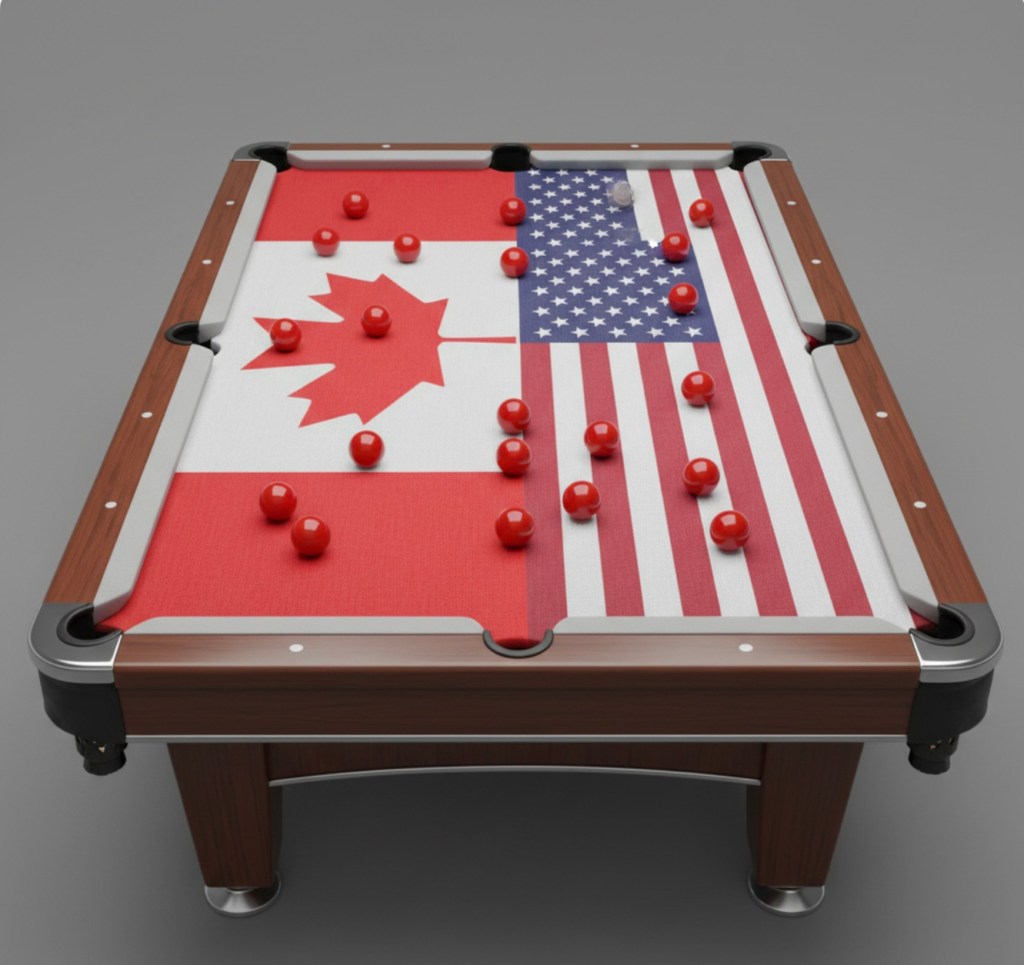
Well, imagine a snooker game with a full rack of balls on the felt. What strikes you immediately upon reading Greer’s report is how many meaty issues there are in a long list of industrial sectors.
For those concerned about Trump’s cultural hit list, you would be surprised how brief and perfunctory Greer’s comments were.
As we’ve known for some time, the US streamers hate our Online Streaming Act. Google and Meta hate our Online News Act. Prime Minister Mark Carney already gave away our digital services tax, the thing the US companies hated the most.
On the other hand, the American companies canvassed by Greer like the Digital Trade chapter in the CUSMA trade agreement just fine.
As a very permissive set of trade rules, it may be up to Canadian negotiators to carve out of the Digital Trade provisions a wider scope to exercise our sovereign right to set the terms of AI services.
***
In case you missed it, read my rant about the CRTC’s ruling on copyright and intellectual property in Canadian video content.
Sounds like a snoozer when I describe it that way, but Canadian ownership of CanCon copyright is central to whether the federal government’s Bill C-11 the Online Streaming Act accomplishes what it was meant to do.
My rant was that the CRTC effed it up. The Canadian Media Producers Association appears to agree: it just filed a court appeal against the ruling.
The CMPA’s legal filing, asking the federal court to hear its appeal, argues one of the things I wrote about in the blog post: Bill C-11 was written to ensure that Canadian TV and film producers reap the fruits of their labour, what industry insiders call the “long-term commercial exploitation of intellectual property.”
Mere copyright “in the title” of a show isn’t that, says the CMPA.
In the words of the statute, the Commission is supposed to consider whether Canadian producers enjoy “a right or interest in relation to a program, including copyright, that allows them to control and benefit in a significant and equitable manner from the exploitation of the program.”
That means revenue, in other words a stake in the profit earned by Canadian shows from distribution and other monetization opportunities until the lemon is squeezed dry.
***
This week the board of Warner Brothers Discovery rejected Paramount’s hostile takeover bid. That leaves the winning suitor Netflix as Hollywood Rex for now, but WBD shareholders vote on Netflix’s $82 billion offer in January.
Paramount isn’t rushing out an improved bid: CEO David Ellison is making the case to WBD shareholders for his all-cash bid, arguably better chances than Netflix of clearing anti-trust hurdles, and the fact that Netflix’s offer for the WBD studio and streaming assets doesn’t include taking WBD’s lagging television assets off the hands of shareholders.
In the meantime, Donald Trump’s son-in-law Jared Kushner withdrew from Paramount’s financing consortium. Then business analysts questioned whether Larry Ellison’s money was good: his participation in his son David’s takeover bid is through a revocable trust, subject to change by Ellison senior. (Update, 22/12/25 – Ellison Sr. responds with personal guarantee).
Almost unnoticed in all of this, Pa Ellison is now officially a part-owner of TikTok-USA after the Chinese company ByteDance completed the sale of its American operations to a consortium of US interests, including Ellison.
***
Netflix may be the undisputed king of streaming. But YouTube is the lord of video consumption.
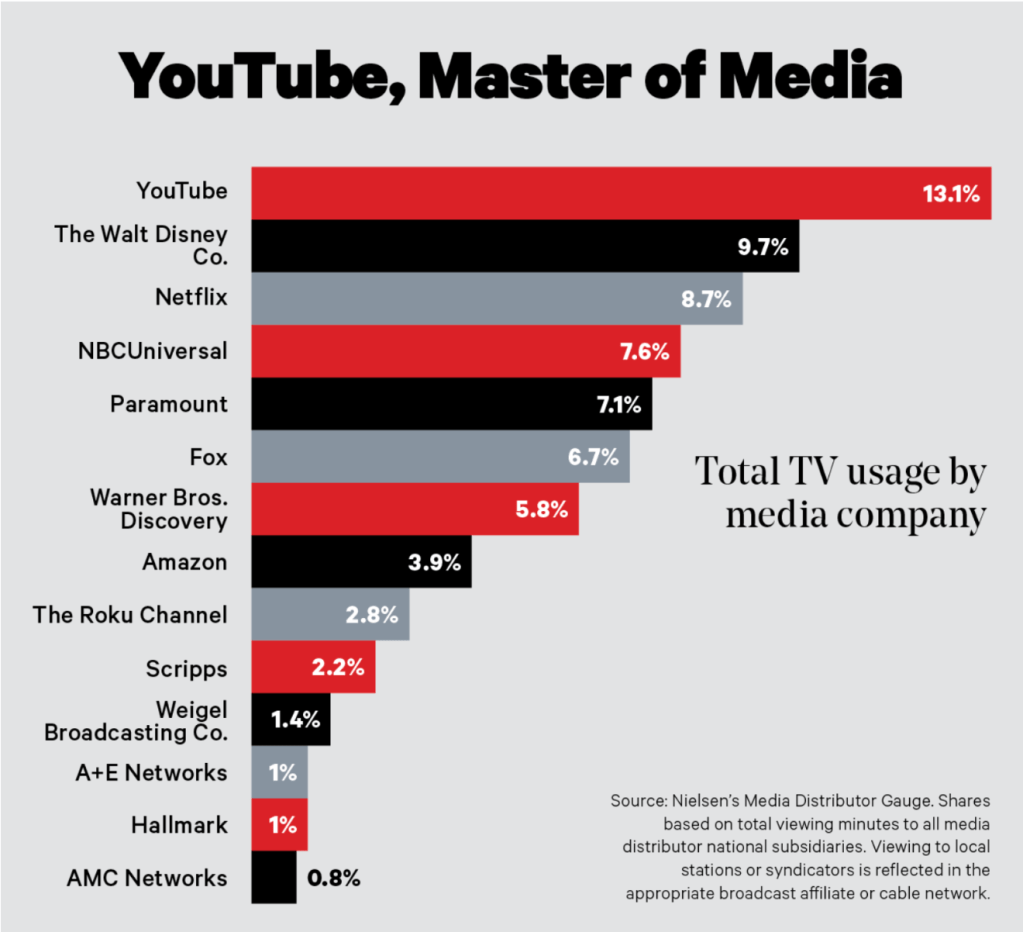
YouTube’s market dominance is a reflection on the growing popularity of short-form video of course. Yet not long ago I posted about YouTube’s plan to go all out into bidding for the rights to big events in premium, long-form video.
Last week YouTube scooped the exclusive global rights to the Oscar awards, beginning in 2029. That seems like a big deal for boomers raised on Hollywood glamour, although we could remind ourselves that at 20 million viewers, the Oscars trail the Super Bowl (130 million) and Game 7 of the World Series (50 million).
No word yet on the consequences for Bell Media’s CTV network which has held the Canadian distribution rights for the Oscars since 2003.
***
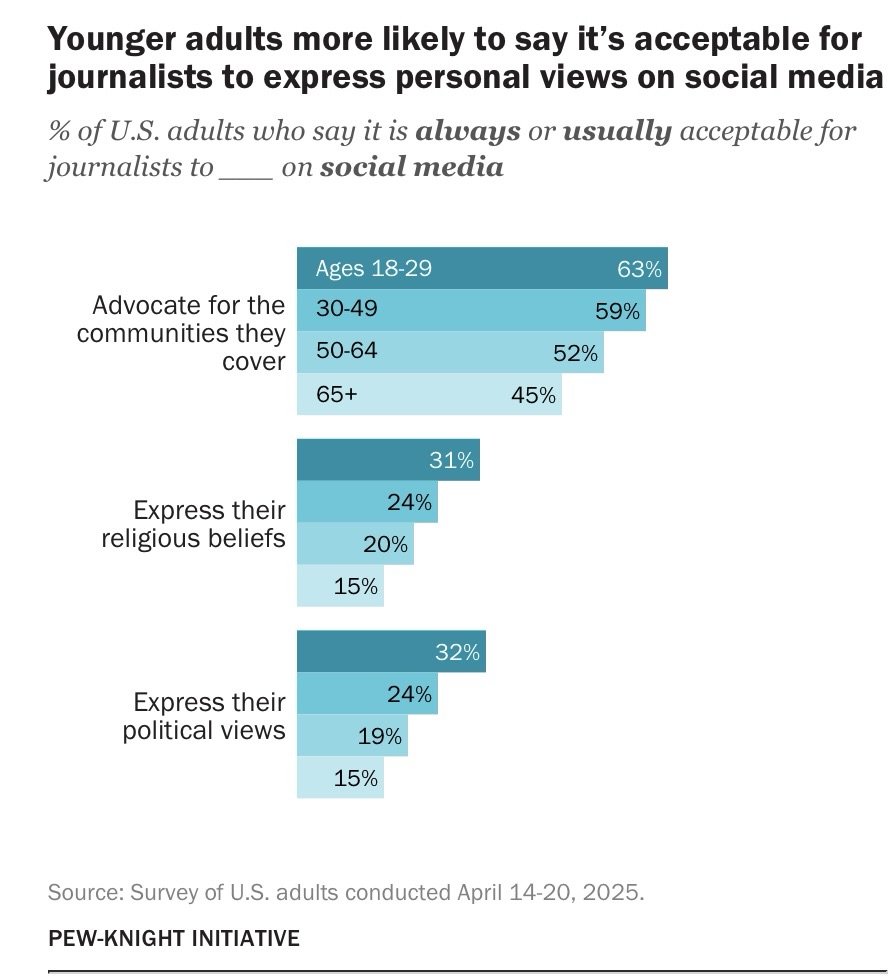
There’s a new American opinion poll published by Pew Research which rattled my optimism about the future of news journalism.
According to the poll, young people are more likely than older Americans to trust news influencers, concede a wide definition of who they recognize as a journalist, and are more likely to find it acceptable for journalists to be advocates for a cause and sport their ideological colours brightly.
***
The Washington Post’s newest AI widget (proprietor Jeff Bezos holds a minority interest in the AI app Perplexity) is in Beta. It has a long, long way to go.
A six minute daily podcast features two AI agents summarizing WAPO’s top three stories of the day. You can customize your topics or WAPO’s algorithm will figure you out.
Other than saving on two journalist salaries, the added value of this AI widget is a mystery. It’s a downmarket product offering from an upmarket news outlet.
Real life podcasters at the NYT Daily, fear not.
***
If you would like regular notifications of future posts from MediaPolicy.ca you can follow this site by signing up under the Follow button in the bottom right corner of the home page;
or sign up for a free subscription to MediaPolicy.ca on Substack;
or follow @howardalaw on X or Howard Law on LinkedIn.
COMMENTS ARE WELCOME. But be advised they are public once I hit the “approve” button, so mark them private if you don’t want them approved.
I can be reached by e-mail at howard.law@bell.net.
This blog post is copyrighted by Howard Law, all rights reserved. 2025.

 MediaPolicy.ca
One thought on “Catching up on MediaPolicy – CUSMA snooker – CRTC copyright ruling appealed – shareholder vote on Netflix v Paramount – the Oscars on YouTube”