In October 2022 Netflix was appearing at the Senate committee reviewing the proposed Bill C-11, the Online Streaming Act, when the Conservative senator FabianManning pitched a softball question: what was the Hollywood giant’s “main priority” in amending a bill it didn’t welcome?
The Canadian spokesperson for the streamer was succinct in his answer: “If I had to choose just one, it would be the issue of copyright ownership.”
The federal election is over and the CBC is still standing. That’s a milestone achieved, for now.
This next Liberal term of government will probably run light on media policy compared to the last four years of legislative turmoil that swirled around the Online Streaming Act Bill C-11, the Online News Act Bill C-18, the future of the CBC, and Online Harms Act C-63, the latter bill being split into two parts and then wiped off the Parliamentary agenda by the election.
If media or cultural issues appear front and centre of public attention during the 45th Parliament, it will likely be a result of trade negotiations with the Trump administration.
The exception is the CBC: the reinvigoration, rebranding, reinvention or re-whatever of the public broadcaster is a winning file for the Liberals and long overdue. The Carney campaign promised more money, more secure long term funding, more local news and more anything to counterweight online misinformation and foreign interference.
The money —a promised 11% increase of $150 million to the Parliamentary grant — will be in the budget bill. The rest must find its way into law through amendments to the Broadcasting Act. That means getting in and out of the procedural swamp of a Parliamentary committee (the new “Culture and Identity” committee) where there is no reason to expect the Conservatives or the Bloc to hand the Liberals a “win.”
It’s going to take a strong minister to get this CBC overhaul done. In March, the Prime Minister appointed Steven Guilbeault as Culture and Identity minister, doubling up with his Quebec lieutenant duties.
Guilbeault is the wrong guy for the job at this point in history. This seems harsh and counterintuitive in many ways. He’s done the job before (2019-2021). He’s smart, decent, competent and temperate. And he is fluently bilingual. So what’s not to like?
The minister’s number one job in this Parliament is the CBC make-over and selling it to EnglishCanada.
That requires gut-instincts about culture and popular attitudes that you can’t easily learn on the island of Montreal. To be pragmatic about the political task at hand, the face of the CBC’s redemption in English-Canada, particularly the west, cannot be the much vilified environmentalist Guilbeault, no matter how unfair that tag may be.
There are other candidates that fit better: fourth-term Toronto MP Julie Dabrusin knows the cultural file as Guilbeault’s former Parliamentary Secretary, she’s bilingual, and if it matters to anyone she was born and educated in Montreal.
The other media policy file that may move forward is a retabled online harms act. You may recall that when the Liberals put forward C-63 last year it contained a raft of amendments to the hate crimes provisions of the Criminal Code and a separate regulatory scheme that would require social media platforms to establish their own binding content codes that manage the online harms to kids, revenge porn, fomentation of hate, and incitement of violence or terrorism.
The Conservatives have no interest in the content codes other than to politicize them as censorship. The Tories have their own version of an Internet crime bill that focusses on harms to children and jailing the perpetrators.
If the Liberals have any sense they will ditch the anti-hate criminal amendments which will just chew up the Parliamentary agenda with public debate over jailing free speech. But they should go full steam ahead with the content codes: it’s a winning file and the Liberals can probably get the support of the Bloc to get it through committee.
Outside of Parliament, the battle at the CRTC over implementation of the Online Streaming Act is going to peak in the next few months.
In the next few weeks the Commission begins hearings on three major policy files covering the first-time regulation of video and audio streamers, as well as online distribution chokepoints. Also, the US streamers’ legal challenges to the initial “five per cent” cash contributions to Canadian media funds will be heard in Federal Court in mid June.
Assuming the court upholds the Commission’s levies, it all points to a crescendo of policy pronouncements and trade confrontations in the fall and winter of 2025-26.
Because of this, all other media policy files will probably get ignored.
One such file is the Meta ban on news distribution over Facebook and Instagram, the very unfortunate outcome of the Bill C-18 battle that hurts journalism start-ups and news websites in smaller communities. Pierre Poilievre’s campaign proposal was to just cave to Meta, which the Liberals are unlikely to do and in any event that would just be an invitation for Google to demand the end of its $100 million in annual licensing payments.
There is no principled way to solve this policy puzzle, which means it might be solved in trade negotiations.
Another file that needs attention but won’t get it is an overdue redesign of the federal QCJO subsidies to news journalism. The opportunity here is to do some good policy work that doesn’t require legislative amendments and Parliamentary bandwidth.
Lastly, now that we have a new Prime Minister maybe we can get the Liberals to reconsider their ill-tempered and ill-considered support of password sharing on news subscription websites in the government’s litigation with Blacklock’s Reporter.
The government has convinced itself (and a trial level judge) that it’s siding with the angels by giving an expansive and elitist interpretation of the “fair dealing” or “research” exception to copyright: it simply does not match up against the common sense reality of running a paywalled news business.
The fact that Blacklock’s is editorially a thorn in the side of the government is the bad energy behind all of this. It’s a vindictive abuse of state power, made possible only because Blacklock’s is not the Globe and Mail or the Toronto Star. It’s time for fresh government eyes on this.
***
If you would like regular notifications of future posts from MediaPolicy.ca you can follow this site by signing up under the Follow button in the bottom right corner of the home page;
or sign up for a free subscription to MediaPolicy.ca on Substack;
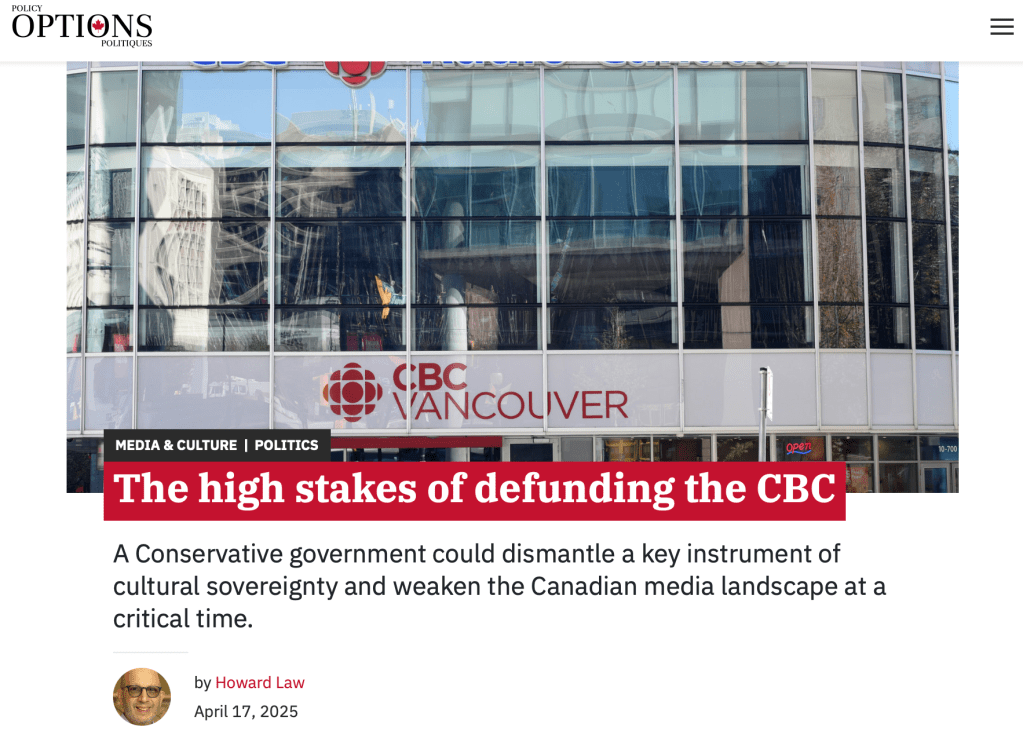
The gladiator stands staggered on the sandy floor of the Colosseum, waiting for the thumbs up or down. On federal election day, April 28, the CBC will discover its fate: live or die.
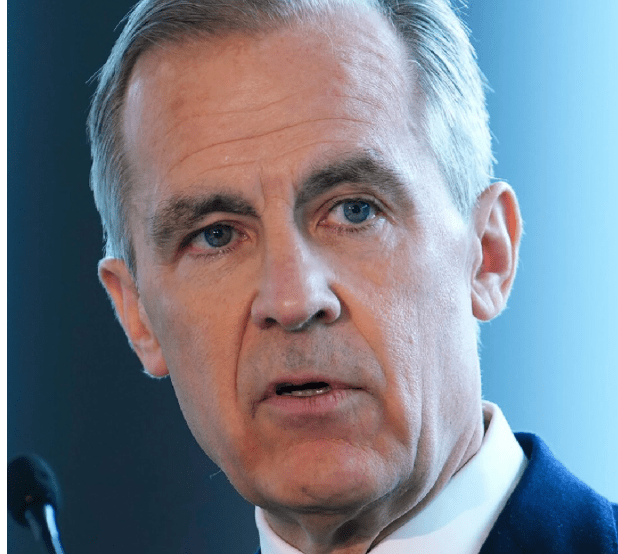
The Mark Carney Liberals have promised to defend the Canadian Broadcasting Corporation and even increase its funding.
On the other hand, Conservative leader Pierre Poilievre “can’t wait” to keep his promise to defund all English-language services of the public broadcaster as no longer needed. “The CBC provides opinions and coverage that are widely available in a competitive media marketplace,” states the CPC with confidence….

 MediaPolicy.ca