
December 27, 2024
It being the time of the year, retrospective lists abound.
The MediaPolicy 2024 wrapped list includes posts that are worth reading (again or for the first time) because they cover public policy that Pierre Poilievre has sworn to repeal or at least do something else that looks like he has wiped the Liberal policy slate clean.
***
Defunding or defending the CBC
The Poilievre banner campaign to defund the CBC is the right-wing answer to cancel culture. I don’t like you, I silence you.
A Sparks poll in January 2024 suggested overwhelming public support for the CBC, although a big slice of that is soft. Hence the importance of a public discussion of how to improve or re-engineer the public broadcaster.
MediaPolicy posted two interviews and a guest column from media commentators who know what they are talking about when it comes to the CBC: Chris Waddell, Richard Stursberg and Peter Menzies. I have a fourth instalment in this series on the way.
Online Harms

The Liberals’ Bill C-63 obliges social media platforms to come up with content moderation codes. It also empowers the government to order take-downs of revenge porn and content harmful to children. The Justice Minister has split off the more controversial portions of C-63 into a second bill: harsher criminal sanctions for Internet hate and access to human rights tribunals for victims.
The Conservatives are opposed to all of it (they have a more modest proposal) and none of it will pass before the next federal election.
When the Bill was tabled, MediaPolicy itemized C-63’s more controversial anti-hate provisions.
Federal Money for News Journalism
In 2019 the Liberals passed the so-called “$600 million bailout” for Canadian news organizations (except for licensed broadcasters). The $600 million was the over-budgeted amount for five years: the actual spending was less than half of that.
MediaPolicy posted about the alleged relationship between that federal program and declining trust in news organizations. Also I looked at some policy prescriptions that might carry over into a Poilievre government despite his pledge to abolish the program.
News licensing payments

You say “link tax,” I say “compulsory news licensing payments.”
The Online News Act Bill C-18 blew up on the Liberals when Google and Meta decided to play hardball with enough gusto that US legislators would think twice about following Canada, Australia and Europe in making Big Tech platforms share their advertising revenue generated by news links.
I tried to get past the noise on this bill and pinpoint what I believe are the deeper truths about the legislation. The post is now a year old, but still helpful.
Poilievre says he will repeal this bill and, it would seem, refund Google its $100M in annual news licensing payments.
The Netflix Bill C-11
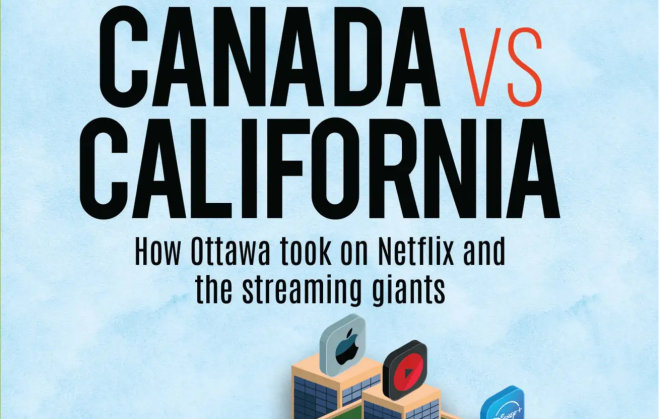
It took them forever, but the Liberals passed the bill that compels foreign streaming giants to share the responsibility with Canadian broadcasters to finance and distribute Canadian audio and video content.
The CRTC has to fill in the specifics but in its lumbering sort of way is beginning to do so. MediaPolicy posted a general context piece and then more detailed reports on the Commission’s plan for Netflix and the video streamers and another on Spotify and the music streamers.
Poilievre has been clear: he will “kill Bill C-11.”
Digital Services Tax
The DST is a stand-in for recouping $900 million in corporate tax avoidance by Big Tech in Canada. That doesn’t always come through clearly in news reports. Unfortunately, leading Canadian critics have displayed an obsequiousness (to Big Tech) or fear mongering (of US retaliation) that is unbecoming.
MediaPolicy posted what I will call a context piece on the DST that I hope is informative.
***
A note to readers, MediaPolicy posts will now be available on Substack. The MediaPolicy website on the WordPress platform will continue with its archive of previous postings and resource links.
If you are already an e-mail subscriber, you will continue to receive MediaPolicy posts and will not get a duplicate from Substack (unless you sign up for it).
Substack is a fascinating creature in the news ecosystem. Founded in 2017, it’s a platform for 17,000 writers, including journalists. You can find leading independent Canadian journalists: folks like Paul Wells (30,000 paid and unpaid subscribers); Jen Gerson of The Line (26k), Justin Ling (12k), Terry Glavin (12k), Ken Whyte (7k) and Patrick White (2k). On Subtstack, both writers and readers can pepper the blogosphere with rhetorical outbursts, à la Twitter/X. But for journalists and news junkies, the site’s real draw is full-length opinion and analysis.
A year ago, Substack had about 50 million unique visitors in the month of January. It boasts two million paying subscribers and over 20 million registered readers (after you have opened an account or surrendered your e-mail address to one of your favourite writers). The writer posts are usually partially paywalled, but not always (mine is not).
The most popular Substacker is Heather Cox Richardson (1.8 million), American historian and author of the non-paywalled Letters to an American. Popular Substackers, who usually charge a $5 monthly subscription fee, can make a decent living.
The question arises at to whether Substack is a candidate for stealing yet another big chunk of mainstream media’s franchise by peeling off well known staff journalists who are currently thankful for a regular paycheque.
Having lost classified ads, much of its display advertising, and a range of editorial products to the Internet leviathan, online newspapers have stayed in business by cutting news and news gatherers. To replace the lost news content, we have a great deal more opinion columns. Opinion is popular and, for the news proprietors, cheap. The key has been to concede more of the news hole to the best and well known opinionators.
What if Substack took those marquée writers and their audiences too?
If you mark off 45 minutes of your time, an engaging Canadaland podcast hosted by Jesse Brown and starring Paul Wells, Jen Gerson, and Chris Best (Substack’s Canadian co-founder) talks about the possibility of mainstream media losing its stars to Substack.
Gerson has a trenchant observation: the Canadian journalists enjoying success on Substack are generally those who made their bones and their reputations after years of service in mainstream media newsrooms. That career path, she suggests, doesn’t exist anymore.
Then there’s Substack’s Nazi problem. With that teaser, I recommend the podcast, here.
***
If you would like regular notifications of future posts from MediaPolicy.ca you can follow this site by signing up under the Follow button in the bottom right corner of the home page;
or e-mail howard.law@bell.net to be added to the weekly update;
or follow @howardalaw on X or Howard Law on LinkedIn.

 MediaPolicy.ca