If you track news reports about President Donald Trump’s tariffs, you may recall that he struck a one-sided framework agreement with the European Union on July 28th. The headline was 15% American tariffs on imported goods arriving from the EU. On the flip side, the US gained tariff-free access to the EU market.
Initially the deal seemed more of an armistice than a fully fledged agreement, since nothing was signed off until a one-page Framework was published three weeks later. Notably there was no repeal of the EU’s digital services taxes on American companies (like the one that Canada scrapped on June 29th).
At the time, the White House made a point of describing EU DSTs as unfinished business while the EU news release stated that the agreement “fully respects the EU’s regulatory sovereignty.”
Now for round two.
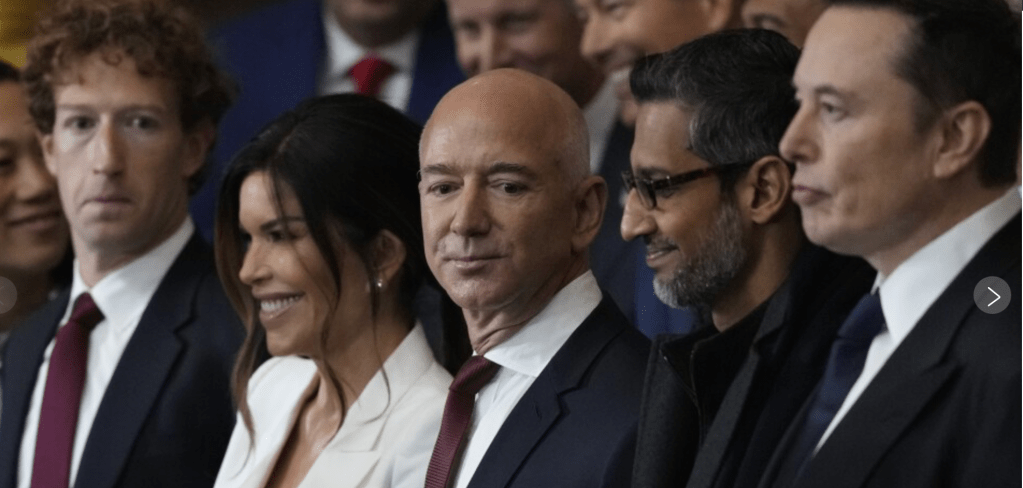
Deal or no deal, this week Trump threatened to retaliate against 15 EU nations that maintain DSTs and also denounced as discriminatory the full gamut of EU tech regulation under its Digital Services Act (online harm and safety) and Digital Markets Act (anti-competitive practices). The threats include new tariffs, presumably in excess of the 15% “deal.” Trump also threatened export bans or taxes on American AI micro processing chips.
The European response was defiant: “it is the sovereign right of the EU and its member states to regulate economic activities on our territory, which are consistent with our democratic values.”
As for Trump’s new trade cudgel of export taxes, last month he reversed a Biden-era export-ban on Nvidia’s AI chips destined for China after meeting with CEO Jensen Huang. The New York Times published an illuminating feature story on why.
***
I have some updates on recent MediaPolicy posts.
Earlier this month I wrote about the US State Department claiming that press freedoms are threatened in Canada. As I said at the time, the State Department’s Report was performative, written for the benefit of a majority-Republican Congress. If you found that post interesting, you’ll find Hugh Stephens’ bluntly worded post to your taste.
I’ll just add one more citation to my own post about North American press freedoms: this past week President Trump again invited his appointee as FCC chair to de-license ABC and NBC local news stations on the grounds that “they give me 97% bad news stories” and act as “an arm of the Democratic Party.”
MediaPolicy also posted an interview with Senatrice Julie Miville-Dechêne, the sponsor of Bill S-209 that will impede kids from accessing online porn by implementing age verification technology, an increasingly common public policy in the US and the UK.
In the interview, Miville-Dechêne expressed doubts about the wisdom of extending age verification technology to social media apps. The state of Mississippi is not so doubtful and implemented a parental consent requirement for minors under age 18 with age verification of adult users as enforcement.
Last week the news sharing app Bluesky, a progressive alternative to the X app, responded by exiting that deepest of red states, Mississippi. A Bluesky statement described age verification regulation as too big a hassle for too small a company.
Perhaps the size of the “Mississippi progressive” market was a factor too.
***
As the fortunes of broadcasting businesses rise and fall, certain bellwether events stand out among the steady drumbeat of quarterly and annual reports.
Here’s two you may not have noticed.
Québecor took the occasion of announcing its fall television programming line-up for its TVA network to make another plea for regulatory relief from the CRTC.
What popped out in CEO P-K Pélédeau’s press release was that the combined revenue of TVA’s specialty and conventional television businesses has crossed the profitability line into negative territory. “In absolute terms, TVA and its specialty channels have lost $34.9 million in television advertising revenue over the past three years.”
The MTM numbers from 2023 indicate that Québecor’s revenue situation is typical: as a group, Canadian broadcasters boasted a mere 1.6% net profit on total broadcaster revenues. The new CRTC chart (2023-24) below suggests it has become a net loss.
That calls into question the “regulatory bargain” cited by the Commission in 2016 that committed the major networks to paying for money-losing news programming out of the robust profits earned in specialty television, thanks to the majors holding Canadian distribution rights to high-margin American programming.
The other ominous development for conventional broadcasting was the announcement by Wildbrain that it is exiting broadcast television and is removing the restriction on its non-Canadian shareholder voting that is required by broadcasting regulations. Wildbrain is (was) the only independent Canadian children’s programmer that operated Canadian children’s channels (Family Channel and WildbrainTV) until the CRTC blessed the decisions by Rogers and Bell cable to drop them. Steve Faguy’s blog has more.
[Update and correction: the original publication of this post inaccurately stated that Wildbrain was “selling its growing online business to American interests.”)
The prevailing financial and audience trends in Canadian broadcasting were updated in the CRTC’s new annual report (with now year-old data).
I was very much saddened to read an obituary for Hudson Janisch who is well known to those in the telco community. He taught me Public Law in first year law school and made quite an impression. A great teacher and a mensch.
***
If you would like regular notifications of future posts from MediaPolicy.ca you can follow this site by signing up under the Follow button in the bottom right corner of the home page;
or sign up for a free subscription to MediaPolicy.ca on Substack;
The ka-ching is the responsibility of the Google-appointed gatekeeper, the Canadian Journalism Collective, to decide who gets what.
The conservative website The Hub gets $22,248 and is donating it to the March of Dimes charity. The Western Standard, operated by former Wildrose Party MLA Derek Fildebrandt, is down for $68,377. Rebel News didn’t apply.
None of that is surprising. The Hub and the Western Standard were previously vetted by the Canada Revenue Agency as Qualified Canadian Journalism Organizations, becoming eligible for federal news subsidies or reader tax credits (but not necessarilycollecting them). Rebel Newswas not.
An unusual outcome of the Canadian Journalism Collective’s distribution was that the CJC approved the licensing cash for the current affairs website The Conversation (sub nom the Academic Journalism Society) after the CRA rejected it as ineligible for the QCJO subsidy program. The CRA’s rejection (on the recommendation of its independent advisory panel) was upheld by the Federal Court of Appeal in 2024.
The difference in result appears to be how the CJC is interpreting what it means to produce “original news.” That’s a requirement under both the CRA guidelines for QCJO and the Online News Act regulation 2023-276 for Google news payments.
But the difference seems to be that CRA guidelines explicitly require first-hand news gathering “such as independent research, interviews, and fieldwork. For example, a news article orreport about an event would be original if it is written or reported by a journalist and is based on first-hand knowledge that journalist gained by conducting independent research, attending or witnessing the event, or interviewing people who organized, attended, or witnessed the event.”
The CJC guidelines are far less precise. Tersely, “news content should be original, produced on an ongoing basis.”
I did my best to get the Canadian Journalism Collective to explain how it arrived at a different assessment than the Canada Revenue Agency of whether The Conversation is now producing original news with first hand reporting, or if the CJC rules are somehow more forgiving.
All I got was that the CJC’s eligibility criteria was applied and the news content submitted by The Conversation, like all applicant news organizations, will be reviewed each time there is a new cash distribution.
The Conversation’s parent organization, the Academic Journalism Society, has an unusual structure. Its newsroom consists of staff editors who collaborate with university professors who do the writing, based on the academic work of others or their own scholarly writing.
AJS funding comes 80% from participating universities and 20% from readers, philanthropists or government programs. But its financial structure is not an obstacle to qualifying for either QCJO or Google funds. It still comes down to whether the content is original. The QCJO program requires first-hand reporting but it’s unclear if the Google cash distributed by the CJC requires it. In the end I couldn’t get a satisfactory answer.
It’s important to get that answer, in fact it’s vital.
If there is no requirement for first-hand reporting activity, then news organizations are either aggregators of first-hand reporting done by other newsrooms and contribute nothing of their own, or they are opinion websites.
Opinion is cheap to produce and plentiful in supply. Do we need to underwrite opinion writing, or in the case of the Online News Act, devote Parliamentary bandwidth to wresting cash out of the hands of Big Tech?
In a sea of online opinion, commentary and blather, talk is cheap. Meanwhile the far more costly endeavour of news gathering is the value proposition that journalism offers to the public. Looking in the mirror, MediaPolicy.ca isn’t “original news” and deserves no subsidy or special favour.
And there are more good reasons to draw the line between news gathering and opinion.
The Online News Act was opposed by some as an unwarranted state intervention into the ecosystem of online information that Google and social media platforms have provided.
Sure, the monopolistic platforms Google and Meta exploit their market power in content distribution, stiffing news organizations on fair (or any) licensing payments.
But to critics of the Online News Act, this was justified by the overriding public interest in free information, benefiting both liberal democracy and public education.
On the other hand, what the EU, Australia, and Canada did with their legislative intervention on behalf of news organizations was to carve out news journalism from the unregulated Internet as a special case because of the public interest in, well, political and educational information.
As I said, news gathering is the value proposition of journalism.
I could be wrong of course. When Scott White moved on from his role as editor of The Conversation a year ago, he published acri de coeur on LinkedIn. The gist was that the CRA ruling against his news outlet was narrow minded and rooted in legacy thinking.
In an academic article published earlier this year, Nicole Blanchett and her co-writers suggested that “rigid journalism definitions risk excluding hybrid platforms like The Conversation Canada, limiting innovation and diverse voice in public discourse.”
Not to be coy about it, the authors speculated that the troubles encountered by The Conversation should be seen through the lens of legacy media defending its turf:
Answers to these [research] questions were primarily analyzed through boundary work. Boundary work is at play “when the goal is expansion of authority or expertise into domains claimed by other professions or occupations” (Gieryn, 1983, p. 791). Specific to journalism, it includes “expansion” of journalistic practice that can lead to the attempted “expulsion” of outside actors or inside agitators, as a means to protect the professional “autonomy” of journalists (Carlson, 2015, p. 9). As media startups look to attract the same eyeballs as legacy organizations, “efforts to restrict or extend access to technologies, reporting resources, or press credentials are all acts of boundary work that are simultaneously material and discursive in nature. As such, talk about journalism cannot be isolated from practice and context” (Carlson & Lewis, 2019, p. 132).
If you would like regular notifications of future posts from MediaPolicy.ca you can follow this site by signing up under the Follow button in the bottom right corner of the home page;
or sign up for a free subscription to MediaPolicy.ca on Substack;
The Canadian Pressreported last week that the US State Department has an opinion on Canada’s respect for the independence of the press and freedom of expression. And it isn’t good. In fact, we got the MAGA raspberry.
The US produces “country reports” every year to satisfy US Congress that its foreign aid is going to the right place or, in our case, that we’re a suitable trading partner.
Some context first: the Report is a compliance document for Congress. It was not written for us. If the Report’s allegations against Canada happen to line up with Congressional trade complaints against the Online Streaming Act and the Online News Act, that’s part of the compliance.
Trade irritants or not, the Report picks up the vocabulary of Canadian opponents of public broadcasting, federal aid to journalism and any manner of mandatory payments to support Canadian news journalism such as the Broadcasting Act and the Online News Act. It’s “discriminatory,” it’s “censorship.”
The State Department’s special contribution to the debate is it’s view that our federal government’s $10 million enrichment of existing Canadian media funds to support news reporting in minority communities smacks of “DEI” and discriminates against white journalists.
Not that we needed the State Department to remind us, but the Report goes on to list incidents that occurred in 2024 which, in Washington’s opinion, raise “significant human rights issues including credible reports of serious restrictions on freedom of expression and media freedom, including unjustified arrests or prosecutions of journalists and activists.”
The Report gets one right, off the top, by reminding us that in January 2024 the RCMP arrested Indigenous journalist Brandi Morin when she refused to leave the federal police force’s inflated “media exclusion zone” at an Indigenous protest she was covering for Ricochet Media. What the Americans might have added was that this is hardly the RCMP’s first offence on media exclusion zones. The Crown withdrew the charges and the RCMP’s Civilian Review committee took Morin’s side and an apology was issued.
Another incident cited may or may not clear the bar of a “credible” report of press freedoms violated, that will be up to a judge if lawsuits proceed.
The State Department takes at face value the allegations raised by Rebel News against a venue landlord and a Liberal MP that Rebel was wrongly arm-twisted into paying $37,000 in security costs for a MAGA-themed rally it organized in Toronto, headlined by the US President’s son.
Canada doesn’t do country reports on American freedoms. It’s probably just as well. But the United Nations does. All UN signatories to the Convention of Human Rights participate in a five-year “peer review” of each other that includes press freedoms.
Here are a few items that might come up:
During street protests against the immigration-related arrests in Los Angeles in June, an LAPD officer deliberately aimed and shot an on-camera news journalist with a rubber bullet, hitting her in the foot.
The Federal Communications Commission initiated an investigation of Media Matters, a left-leaning critic of right-wing media, Elon Musk’s X platform and the Republican Party. A federal judge issued an injunction against the investigation on the grounds of 1st amendment rights of free speech.
US Congress withdrew all federal funding from the Corporation for Public Broadcasting, accounting for 15% of the overall financing of NPR and PBS. House Republican Marjorie Taylor Greene stated that Congress was acting because of alleged liberal bias.
While running for President, Donald Trump proposed that the FCC pull the broadcasting licenses of CNN, NBC, ABC and CBS because of their news coverage of him (although the FCC only licenses local stations, not cable news).
The President also sued CBS, alleging that a 60 Minutes interview with Democratic presidential candidate Kamala Harris had been edited and sanitized to her advantage.
The Trump lawsuit resulted in a $16 million settlement without any admission of wrongdoing from the network.
However credible news reports suggested that the FCC might have struck down the $8 billion sale of CBS-parent Paramount to Skydance were it not for a last-minute agreement between Paramount and the FCC that the new owners would scrutinize the CBS newsroom for “multiple viewpoints” and abolish all DEI hiring and personnel policies. According to the President, Paramount committed to providing him with $20 million in free advertising and public service announcements although that was refuted by Skydance.
***
As noted above, the State Department Report repeatedly criticizes the Online News Act and the Canadian Press story on the Report states that “Prime Minister Mark Carney indicated last week he is open to repealing the legislation.”
The CP and Post descriptions of Carney’s thoughts on repeal are based on a question and answer session with Kelowna Now.
Here is the reporter’s question:
“Bill C-18 stands in our [publication’s] way to get back onto Facebook and Instagram, are the Liberals looking at an alternative or rescinding that so that we can get that news [about wildfires] back on those platforms?
And here is Carney’s answer:
I’ll say this Steve thank you for the question. First thing and one of the things that we have done —and I will answer your specific question, but let me make a point on something we have done, and you may not like this part of the answer but I am going to give it to you— which is that one of the roles of CBC-Radio Canada is to provide unbiased, local, immediate information particularly in regards in situations such as you are referring to. And that’s why we made the commitment to invest and reinforce and actually change the governance of CBC-Radio Canada to ensure that they are providing those essential services.
Now to your specific question. Personally, this government is a big believer in the value of what you do. I’m going to use you as the representation in local news. And the importance for ensuring that that is disseminated as widely and as quickly as possible. So we will look for avenues to do that and I understand your question and it’s part of our thinking around that, thank you.
If we parse closely, the important nuance here is that Carney said he is “looking for avenues to do that and it’s part of our thinking around that.”
Grammatically, the “that” refers both todisseminating local news (especially in light of his comments about CBC-Radio Canada) and “in response to the question” which refers to “rescinding” and/or “alternatives” (or “avenues”). It’s hard to tell what he meant or whether he intended the ambiguity.
If Trump puts enough pressure on Carney, would the Prime Minister cave like he did on the DST ? Unlike the unimplemented DST, the $100 million in Google money is the bird in hand, not in the bush. The mandatory news licensing payments are already in the bank accounts of over a hundred Canadian online news outlets.
I have a long article to recommend: a New York Times feature that tells the story of Donald Trump’s lawsuit against Paramount’s CBS, the FCC’s approval of the Paramount-Skydance merger and the cancellation of Stephen Colbert’s The Late Show on CBS.
The reporting is based on embargoed access to Paramount owner Sheri Redstone. It’s sympathy for Redstone is not subtle, but it’s an informing read anyway.
***
If you would like regular notifications of future posts from MediaPolicy.ca you can follow this site by signing up under the Follow button in the bottom right corner of the home page; or sign up for a free subscription to MediaPolicy.ca on Substack; or follow @howardalaw on X or Howard Law on LinkedIn.
I can be reached by e-mail at howard.law@bell.net.
This blog post is copyrighted by Howard Law, all rights reserved. 2025.
Senatrice Julie Miville-Dechêne does not give up easily.
The senator appointed by Justin Trudeau in 2018 is now engaged in her third try to get the pornography-regulating Bill S-209 passed through Parliament before it gets killed off by another election call. Her previous bills died that way: S-203 by the 2021 election and S-210 by the 2025 election. Both times, her Bill passed the Senate but got a frosty reception from the governing Liberals.
Described in MediaPolicy’s post earlier this week, Bill S-209 would introduce age verification technology to force pornography websites to screen out children under 18 years of age so that impressionable kids don’t view, and internalize, violent sexual behaviour. Adult access to pornography remains uncontested.
The issue of children viewing porn is definitely down her feminist alley as the former head of Québec’s Council on the Status of Women, but the Senator works hard and champions many underdog and progressive causes.
In 2022 she and fellow Senator Paula Simons fought relentlessly (but ultimately not successfully) to carve out Canadian YouTubers from the scope of the Online Streaming Act. In vindication, the CRTC later agreed with them and exempted YouTube videos from broadcasting regulation for the foreseeable future.
In 2023 Miville-Dechêne initiated legislation in the Senate that requires Canadian governments and large companies to report on their global supply chains so that the federal government can enforce prohibitions against imports of goods manufactured by forced and child labour. The Liberals played ball on that one and it was sponsored in the House by Toronto MP John McKay and it passed with broad support.
Her pornography bill has already stirred the Kraken of a regulation-free Internet, so if S-209 does make it to a House of Commons Committee in the next few months, expect some debate, especially about age verification technology that could also be used to stop children from opening social media accounts, were the federal government to consider legislating that.
Media Policy: It’s a little unusual for a bill to have the support of the Senate and the opposition parties, but not the government. What can you say about any discussions you have had with the Justice Minister?
Julie Miville-Dechêne: Not much, I had a confidential discussion very late in the game [in 2024] with [former] minister Virani. But let me say that in general, my conversations with Liberals were mind boggling.
I don’t think they knew what pornographic sites have become, hardcore and violent, so our conversation was difficult. It’s not ‘70s era erotica, a form of sexual liberation. They brought up the importance for young people searching for their identity or sexual orientation to have free access to porn sites, as if seeing violent stuff was the path to sexual identity.
There’s a whole generation at risk, we need to get something done. Studies show a correlation between viewing and harm. Kids think this is what sex is all about. The British Commissioner for children did surveys and found that 47% of youth aged 16 to 21 stated that girls expect sex to involve choking.
MP: So the former Prime Minister didn’t see it that way?
JMD: In talking to media in 2024 he called S-210 a Conservative Bill which would do shady things with personal data. It was easier I suppose than to state that the sponsor was a feminist, an independent senator. The Trudeau government never proposed any improvement to the Bill as they do with private member bills that they like. On the other hand, there was support for the Bill from all the other political parties, not just the Conservatives, but the Bloc and the NDP as well.
MP: What was it about the government’s own online harms Bill C-63 that you thought did not adequately address underage access to hardcore porn?
JMD: I was very disappointed. Nowhere in their Bill did it say that, to minimize harms to minors, age verification or age estimation is expected. Nowhere. There was only an indication that digital operators must adopt “age-appropriate design” for their services. That’s not specific enough. In the UK’s Online Safety Act, social media platforms and large search engines must also prevent children from accessing pornography and material that promotes or encourages suicide, self-harm and eating disorders. This has to be kept off children’s feeds entirely. By comparison, the Liberal Bill C-63 was vague and weak.
MP: An important practical consideration for your bill seems to be the effectiveness of age verification and estimation technology. The most recent technology doesn’t require personal information or facial recognition but claims to be able to use videos of human hand movements. Privacy lawyer David Fraser dismisses age estimation as “magic fairy dust technology.” What is the current state of the age verification/estimation technology as you understand it?
JMD: It’s obviously improving fast. I did rely on the expert on privacy matters, Privacy Commissioner Phillipe Dufresne. Because I introduced two similar bills on age verification since 2020, M. Dufresne took it upon himself to research the matter and speak with his counterparts in other countries. He testified on my Bill before the House of Commons Committee and proposed stronger safeguards
I took his advice and I rewrote section 12 of the new Bill S-209 where Parliament instructs the government on what standards it should enforce for age verification technology. The bill says that government can only approve a verification method that is “highly effective,” operated by a third party and not the pornographers themselves, collects solely personal information strictly necessary for age estimation purposes, and requires the destruction of the data once age verification is completed.
We are not re-inventing the wheel here. Germany has been verifying age for a decade on national porn sites and it’s working fine. Around twenty US states are doing age verification. Also, age verification is already happening in Canada when gambling, buying alcohol or cannabis over the Internet.
Age assurance technology is getting better. I have added age estimation to age verification in the bill because facial age estimation is now more precise, two years plus or minus, and there are also other emerging technologies like estimation of age through hand scanning which is said to be 98% accurate. No identity card is needed.
As you know, the UK started age verification and age estimation on July 25th of this year and are engaged in five million new age checks. Opponents are claiming it is a disaster because a few sites were blocked without reasons. I would argue that tech platforms are the ones who have to adjust themselves to block only what is in the law. Some might say they are acting upon an interest in the law not working.
MP: Let’s say the technology is not here yet but reasonably close to happening, does this mean the government might not implement this law until cabinet is satisfied with the technology?
JMD: I would say at this point it is more a question of transparency than technology, in the sense that the public should know what government will ask age verifiers to do in terms of privacy before authorizing them to check the age of Canadians. Right now, the bill says it must be implemented in a year after Royal Assent, but I expect that will be discussed in the House review of the Bill.
But Europe and countries like France, Spain and the UK are already in the process of implementing age assurance, why should we be the only country to think the technology is not ready? I think this debate should be put in the context of protecting children as soon as possible, because harm is being done now.
In Canada, on this issue I have support from feminists, Christian groups and worried parents. It goes beyond left-right I think.
MP: Seems so. A Leger poll conducted last year says that public support for your bill is high. But that support might change if administrative overreach ends up including something as mainstream as hot sex scenes on Netflix or HBO. Is the definition of pornography in the bill —“dominant characteristic,” “sexual purpose”— too broad?
JMD: I don’t think it’s that broad. Depiction for a sexual purpose of a person’s genital organs or anal region and breasts must be the dominant characteristic of the film or video. It’s the same elsewhere. In the UK, pornographic material is defined as ‘primarily intended for sexual arousal’. But for movies or series on Netflix, we also have the “legitimate purpose” exemption in section 7 (2) which states that no offense will occur if there is a legitimate purpose related to arts, education, science, or medicine. Movies and television series are generally considered a form of art.
MP: Okay, but I was just watching an HBO show —I would definitely not consider it pornographic in any way—that had a teen aged sex scene, body parts under clothes, and they acted out a spin-the-bottle sex game where the girl choked the boy as he masturbated. Is that “pornography” or is it exempted as “artistic” erotica?
JMD: I don’t think a single scene meets the test of ‘dominant characteristic.’An expert scholar Janine Benedet wrote a brief to the House committee hearing on S-210 that stated: The scaremongering that accompanies any attempt to define pornography in legislation is depressingly familiar. I have over the years heard predictions that any legal interventions in this area would result in the “banning” of works such as Lolita, American Psycho, Fifty Shades of Grey, and now Game of Thrones.
MP:The US Supreme Court just ruled 6-3 in favour of a Texas age verification law not unlike S-209. Even the dissent was limited to the “level of constitutional scrutiny,” meaning how much of an intrusion on free expression or privacy is too much. If that means age verification laws take hold in the US, one will think that it will here too?
JMD: It’s interesting question, because historically, the American courts have upheld the 1st Amendment of their Constitution, the freedom of expression, more strongly than in Canada.
So, the latest decision, last June was an important one: the Texas government had a legitimate interest in preventing minors’ access to porn and the law is appropriately tailored because it permits age verification of users through established methods.
Opponents of age verification will point to the fact that the US Supreme Court is now controlled by a majority of conservatives. True, but in first instance, it was a conservative trial judge who blocked the Texas Law, and in appeal court, the conservative justices were divided for and against age verification. So, it is an oversimplification to say that this is only a conservative issue.
MP: I believe US Supreme Court Justice Alito observed that 15-year-olds are far more tech savvy than their parents?
JMD: He’s right on this. So, you can imagine I was flabbergasted to hear technology expert Michael Geist in a Senate committee stating the responsibility of protecting children from porn with parental controls is solely with parents, like him, not with public authorities. Professor Geist stated: I believed then and believe now that addressing the issue is my responsibility, which includes education, frank conversations and an assessment of whether to use internal blocking tools or filters.
Obviously, not all parents are as knowledgeable as Professor Geist, and this is why the State has long imposed age verification in stores selling alcohol and cigarettes.
MP:Many US states and the UK are looking at age verification for viewing all social media content, not just pornography. What’s your view of that issue?
JMD: There are pressure and policy being brought forward in Australia and France to restrict social media for children and permit only teenagers of a certain age. So yes, it is a trend, not only pushed by the conservatives. I’m still reflecting on the issue. I find it is more complicated than age verification to limit exposure to porn because social media is also a form of socialization for kids. But addiction to social media exists, harm exists, so it is not an easy proposal. A Québec commission recently recommended restricting social media to 14 years and over.
MP: David Fraser is on YouTube describing you personally as “oblivious” to freedom of expression concerns and that supporters of your legislation are “finger waggers and pearl clutchers.” What’s your view of the freedom of expression and privacy interests raised by this kind of regulation?
JMD: I’m not a puritan if this is what he means, far from it. I’m a feminist and I was a public proponent of strong sexual education when I was head of Quebec’s Council on the Status of Women.
I’m a strong believer in freedom of expression. I was a journalist for 25 years, and then the ombud for news and current affairs at Radio Canada, so I have reflected and written on these questions. I don’t believe an age verification for porn sites which takes seconds unduly limits the freedom of expression of adults. It’s a very limited restriction. Adults can still access the sites. Asking an adult to identify themselves in a sex shop has never been seen as a limit to his freedom of expression. I also think no right is absolute. Here, we have to balance the inconvenience of proving you are an adult with protecting all children from harm.
***
If you would like regular notifications of future posts from MediaPolicy.ca you can follow this site by signing up under the Follow button in the bottom right corner of the home page;
or sign up for a free subscription to MediaPolicy.ca on Substack;
The Toronto International Film Festival may impale itself on yet another disinvitation, this year it’s the documentary “The Road Between Us: the Ultimate Rescue.”
The documentary is directed by a Canadian, Barry Avrich and tells the dramatic story of retired Israeli general Noam Tibon driving his car straight into the Hamas killing fields on October 7, 2023 to save his family under siege by Hamas terrorists in their safe room in kibbutz Berri. CBS 60 Minutes did a television segment on this in 2023.
According to news reports, TIFF claims there are outstanding copyright liabilities that the documentary producers failed to clear regarding livestream video of the Hamas assault. TIFF also told the documentary’s producers that it was concerned about anti-Israeli protesters disrupting TIFF (though it now denies this was the reason for the disinvitation).
TIFF encountered the same controversy last year by cancelling Russians At War, a documentary focussing on Russian soldiers participating in the invasion of Ukraine. The Ontario provincial educational broadcaster TVO then followed suit and cancelled its own distribution of the documentary.
***
The National Postpublished a report suggesting US Congress is egging on the White House for trade war with Canada over Bill C-11, the Online Streaming Act. The story was based on the Post‘s access to an unpublished letter sent to the White House from 18 of the 26 Republicans on the Ways and Means Committee.
The Post story quotes Republican allegations that our CRTC is unfairly favouring Canadian broadcasters and discriminating against American and other foreign streamers.
I’m not going to dive deep into that complex issue here: it’s complex because the CRTC’s assessment of contributions to support Canadian content is always an apples and oranges exercise.
Differently situated Canadian and foreign media companies contribute in different ways either by paying in cash –to Canadian media funds that offer subsidies to creators of Canadian video and audio content– or in kind, by making available and promoting Canadian content on their own platforms.
It’s fair to say that the CRTC provided the Americans with a bullseye target by exempting Bell’s streaming platform Crave from the same cash contributions as the Californian streamers, but that’s a small part of the overall picture and Bell sponsors far more Canadian programming on Crave than Netflix, Disney+, Paramount+, AppleTV and Amazon Prime combined.
In any event, the CRTC is in the midst of assessing the cash and kind contributions of foreign streamers and so the Congressional objections are premature.
But clearly the Congressional report is an early volley in the coming trade confrontation with the US over the renewal of the CUSMA trade deal, including Canadian culture.
***
Reuters has published a story based on a confidential cables from the US State Department instructing US diplomats in Europe to the rattle cages of national governments over European regulation of Big Tech.
The disgruntlement is both US tech opposition to EU’s measures taken against online harms and misinformation as well as the alleged stifling of the MAGA political narrative in mainstream media.
The MAGA-tech strategic alliance fits comfortably with trade confrontation in which the US claims to be the aggrieved party, perhaps a signal that the recent tariff armistice between the US and the EU is temporary.
***
On the topic of Big Tech’s political action in foreign countries, I note that the US Chamber of Progress (ah, the branding!) is setting foot in Canada by hiring a Canadian policy director.
The tech titans already lobby the federal government and make representations to the CRTC both individually and through the Washington-based CICA and Digital Media Association. So presumably the Chamber of Progress is coming here to do something a little different. The organization has been accused in the past of “astroturfing” for corporate campaigns. Or perhaps the Chamber is seen as a better lobbying fit for a Carney government.
In any event, we already have an authentically Canadian campaign organization that does similar work in pushing back on regulation of the Internet —-Open Media—- with very little money from Big Tech.
***
Here are two recommendations, one joyful the other not.
Ezra Klein has an insightful podcast on “when is it genocide?” featuring legal expert Philippe Sands. Be prepared to invest a lot of time (almost two hours!) and at the end you may still feel that the arguments are incompletely litigated. But I think you will be better educated (I was) about the history of the UN Convention on Genocide, the legalities, and their application to Gaza.
The other is a repeat recommendation of my favourite show, Crave’s Empathie, thanks to the announcement that a second season of the funny-sad drama set in a Montreal mental health centre has been green lit.
***
If you would like regular notifications of future posts from MediaPolicy.ca you can follow this site by signing up under the Follow button in the bottom right corner of the home page; or sign up for a free subscription to MediaPolicy.ca on Substack;
It isn’t another child porn law (that’s already illegal). Rather it’s legislation that bans children (under 18) from viewing online porn and makes it a crime for porn websites to permit it, enforced by requiring the pornographers to subscribe to a commercial age verification service for all site visitors.
What follows is a cheat sheet describing the bill and some context.
The point of the bill, according to its sponsor Senator Julie Miville-Dechêne, is to stop the serious harm to impressionable kids and teens resulting from exposure to hardcore porn, particularly the violence and aggression that has become widely available even on free sites. The dangerous stuff —hitting, slapping, choking— normalizes sexual behaviour that boys and girls should practice and accept among themselves, both as youth and later as adults.
So far —and this bill has bounced around Parliament since 2022— no one is litigating the harm.
But how to fix it?
The first thing the bill does is to identify what pornography is going to be off limits. There is a series of legal fences drawing the line between regulated and unregulated websites and content:
The porn site must be a commercial service. But only website operators are responsible: search engines and ISPs are not liable.
Websites that allow kids to view porn aren’t breaking the law if the content is for a “legitimate purpose” relating to science, education, medicine or ——this is the question-begging loophole— “the arts.”
The definition of porn is carefully drafted: “pornography means any photographic, film, video or other visual representation, whether or not it was made by electronic or mechanical means, the dominant characteristicof which is the depiction, for a sexual purpose, of a person’s genital organs or anal region or, if the person is female, her breasts.” I italicized the words inviting interpretation.
Websites will be expected to implement age verification technology.
The characteristics of acceptable age verification technology will be set by government regulation described in section 12 of the bill. Notably the pornographer must contract with a third party service (of which there is a growing industry) that protects data privacy and destroys the data as soon as viewer age is verified.
Porn sites that violate the law can be convicted of a crime but the penalty is a large fine ($250,000 for a first offence) rather than jail. As the likely offenders will be foreign sites that ignore Canadian laws, the legislation provides for a yet-to-be-named government regulator to warn the site and back it up by going to court to seek a site-blocking injunction. The site blocking powers include a de minimus rule that tolerates blocking non-pornographic content on the same site.
The bill comes into effect one year after it passes the House.
The bill has the support in principle of a majority of MPs in the House. The NDP, Bloc and Conservatives support it. The Liberals do not.
An earlier, slightly less well tuned, version of the bill got through the Senate and made its way to the House of Commons, only to be wiped off the order paper by the April 2025 federal election. Prior to the election writ dropping, the bill had languished undebated in committee for nine months, suggesting the three parties in support of the bill in principle had other priorities.
The policy support for protecting vulnerable youth, especially girls, comes from both progressive and conservative directions. Getting tough on porn is a long time conservative issue, now making common cause with feminist-inspired safety concerns. Miville-Dechêne is in the latter camp having once led Québec’s Council on the Status of Women (and a 25-year career as a prominent television journalist).
The bill also has some solid polling support, I’ve provided a link to a Leger poll below.
The Liberals under Justin Trudeau fought the bill and held it up in the House until it died. An interview with Miville-Dechêne that I will publish this weekend provides some insight into that.
Now that the bill is back in a new session of Parliament we will have to see if the Carney PMO takes a different approach to the issue.
The bill has passed second reading in the Senate without serious opposition and third reading approval ought to happen quickly. Then the bill goes to the House where the all important gatekeeping in House committee must be navigated. Even if the bill is opposed by the Liberal government, S-209 is not a “private member’s bill” that can be shunted to the back of the queue. As a Senate bill, and without a majority government controlling committee votes, S-209 might grab the Parliamentary spotlight sometime in the next year.
The bill was once denounced by Michael Geist as “the most dangerous Internet bill you never heard of.” Canadian privacy activist David Fraser has a YouTube video that parses the legalities of the legislation, salted with some unlawyerly insults of the bill’s supporters.
The kind of things you will hear in opposition to the bill include:
Age verification technology may not protect privacy and we should rely on parental, not state, regulation.
Site blocking injunctions may go beyond “de minimus” intrusions on non pornographic content and usher in fast and loose censorship of the Internet.
Regulating porn is for Puritans, “finger waggers and pearl clutchers.” (Fraser’s words)
It’s also important context that age verification for porn bleeds into broader policy issues.
But age verification is also the enforcement mechanism for legislation that goes beyond access to porn to viewing all sorts of social media content deemed harmful, so opponents see S-209 as the proverbial slippery slope. The Americans and the British are well underway with this and Canada’s federal justice minister is contemplating the revival of the Liberals’ own online harms bill.
These kinds of debates echo the big question that you’ve read about here and elsewhere for the past five years: is policy based regulation of content over the Internet acceptable, or is the wild and free Internet untouchable?
If you would like regular notifications of future posts from MediaPolicy.ca you can follow this site by signing up under the Follow button in the bottom right corner of the home page;
or sign up for a free subscription to MediaPolicy.ca on Substack;
The Public Policy Forum has followed up its February report “The Lost Estate” on the state of local news with a study of news poverty at election time.
“Uncovered” advocates scaling up a philanthropy-funded news pilot project launched during April’s federal election in select Canadian cities and rural areas.
The harm identified in the Report is the lack of public engagement with federal MP candidates over election issues that have special resonance in the local area, for example fishery issues on either coast.
The report includes vignettes of five local races where news poverty might have been a big problem in April. The most glaring was the news desert of Bonavista in Newfoundland and Labrador, a rural riding won by the Conservatives in a razor-thin judicial recount.
On the other hand, the report finds that Yellowknife NWT was well served during election time by a robust local news ecosystem in an isolated regional hub.
The report echoes what TMU’s Local News Research Project identified some time ago: the worst effects of deteriorating news ecosystem are felt in rural areas but also in neglected suburbs of media-rich cities (Richmond BC and Vaughan ON are two such vignettes in the Uncovered study).
Uncovered recommends more philanthropic fundraising for local reporting in future federal elections.
The message running throughout the Report is the importance of local news as a gateway to civic engagement —-and voter education—- for Canadians that are exhausted by polarizing national and international news and hungry for information about local issues that more directly affect their daily lives.
***
The meme of New France’s fall to the English runs throughout the L’Actualité feature story, “What will remain of our national idols?”
Québec’s Culture Minister Mathieu Lacombe enthusiastically reposted thisfeature story in L’Actualitéwritten by Guillaume Bourgault-Côté on Bill 109. That legislation tabled just prior to the summer recess is the CAQ government’s bid to compel foreign streamers to make French language audio and video content more prominent in Quebec.
I’ve written about this issue more than once, I think it’s a political sleeper.
Lacombe’s bill is probably unconstitutional because the plan to make streamers offer a library of French language content as well as giving it prominence on the prime real estate of streamer and SmartTV home pages intrudes on federal jurisdiction over Internet broadcasting in the Online Streaming Act.
Were the CRTC already taking bolder steps to make French language content more easily discovered, his bill could be dismissed as performative politics. But the Commission hasn’t, at least not yet.
The L’Actualité story covers all of this familiar ground. Bourgault-Côté opines that “digital giants are now burying local cultures under tons of American productions. Quebec, supported by Senegal, France, and Switzerland, among others, is leading the resistance… while Ottawa dithers.”
Louise Beaudoin, the former provincial culture minister who wrote the key government report creating the policy foundation for Bill 109, is quoted saying “we absolutely must be as numerous as possible. Otherwise, the Americans will run us over.”
But the good inside baseball stuff comes at the end of the feature.
Bourgault-Côté chronicles the political tension between Lacombe and federal Culture minister Steven Guilbeault over the Carney government’s tip-toed support for Lacombe’s efforts to entrench stronger international legal standards, specific to Internet streaming, in amendments to the 2005 UNESCO convention on cultural diversity.
The energy in that tension is Lacombe’s opportunity to drive Bill 109 into the public eye during an election year in Québec and a minority Parliament in Ottawa.
Lacombe’s CAQ is trailing the Parti Québécois in the polls and language policy is one way to make up that ground.
In Ottawa, the Bloc Québécois may take up the standard. A federal Liberal minority government that owes its incumbency to its voter base in Québec cannot afford to leave too large a gap between a cautious approach to regulating foreign streamers and cultural nationalism.
And then there’s the uncomfortable situation for the new leader of the provincial Liberals, former federal Heritage minister Pablo Rodriguez (the sponsor of Bill C-11, the Online Streaming Act). If it comes to a federal-provincial scrap over Bill 109 or Canada’s approach to strengthening the UNESCO convention, whose side is Mr Rodriguez on?
The next UNESCO event is scheduled in Barcelona at the end of September and no doubt Lacombe will try to put the federal Liberals on the spot.
And when Lacombe’s Bill becomes law and his government implements regulations on French language content, there’s the strong possibility of a legal challenge by the foreign streamers. At that point, the federal government will have to decide whether to endorse the streamer argument that a provincial government has no jurisdiction over online broadcasting.
***
Here’s a short but interesting read. Harrison Lowman interviews Andrew Coyne in the The Hub.
I think we could designate Coyne as Canada’s best known English-speaking intellectual, thanks to his considerable talent but also his privileged positions in the Globe and Mail editorial pages and CBC’s At Issue television panel.
I’ve long written off Coyne as an irredeemable libertarian (sorry, libertarians) who is only brilliant when I agree with him (which is usually when he’s being pragmatic about domestic policy or commenting on international affairs).
In the interview, Coyne gives us some insights into his thinking about what it means to be Canadian as opposed to North American.
His comments about the Canadian Charter of Rights suggest his free market liberalism is tempered by a pragmatism and respect for collectivist public policy. It takes a true policy nerd to say I’m a fan of constitutionally reasonable limits on freedom.
But when it comes to media and cultural issues, what Coyne is missing or dismissing is an appreciation of the overwhelming, anti-competitive American market power in the Canadian attention economy.
That was why he could never see how the Online News Act was (at least in its original design) a competition remedy to Google and Meta abusing their gatekeeper power to stiff Canadian news outlets on a fair licensing fee for their content.
Same thing with the foreign media-tech juggernaut in video and audio entertainment. Same thing with his support for defunding the CBC.
***
The AI Death Star posts that recently appeared in this space raised the question of where the AI giants are going to get reliable information for their products if they put news outlets out of business.
That prompted a reader to remind me about the agricultural aphorism “don’t eat your seed corn.”
Wouldn’t you know it, the Globe and Mail’s Ian McGugan had the same thought in this insightful analysis.
***
If you would like regular notifications of future posts from MediaPolicy.ca you can follow this site by signing up under the Follow button in the bottom right corner of the home page;
or sign up for a free subscription to MediaPolicy.ca on Substack;
The latest development in the AI Death Star powering up to blast news journalism is Google’s AI Mode.
AI Mode is the longer form iteration on Google’s AI Overviews that presents brief information summaries in response to user inquiries on the Search platform. AI Mode has been released in the US and UK, but not Canada yet. It’s reported to be able to handle more complex information requests.
What AI Overviews and AI Mode have in common is they greatly reduce click throughs to news publishers’ websites that normally display as an algorithm-driven search response or links that might even be cited in the summary response. That means less eyeballs and less advertising revenue for news outlets. Way less.
That outcome raises the obvious question: if news outlets become AI road kill, who will feed fresh content to AI?
All of this ought to be on Evan Solomon’s mind. The former career journalist is now the federal AI Minister. In a recent interview in Toronto Life, he said “my job is to develop a sovereign AI strategy while asking, ‘How can we make sure it causes more good than harm?”’
Solomon touted the opportunity for Canada to thrive in a job-rich AI sector. A more vigorous follow-up question might have been how he saw that happening.
He didn’t point, but might have, to the recent announcement by Bell Canada and the Toronto-headquartered AI outfit Cohere of a co-venture targeting business and government clients in need of AI tools and the supporting infrastructure.
A Globe and Mail story makes it clear that Cohere is a favoured Canadian company, part of an evolving federal strategy for digital sovereignty.
That includes a $240M allocation from the federal government’s $2 Billion “sovereign compute” program that is aimed at match-making Canadian suppliers with Canadian consumers of AI tools.
Cohere, it might be noted, is being sued in the United States by various news publishers for ingesting copyrighted content without a license or compensation. As a former journalist, Solomon must have connected the public policy dots.
***
The plight of the Canadian “musician middle class” —maybe we could just acknowledge it is more accurately described as an artist working class— is the subject of the best thing I have read yet on the topic, Luc Rinaldi’s long feature “The Death of the Middle-Class Musician” that was just published in The Walrus.
There is a street narrative out there that says the music streaming gorilla Spotify is a soul-sucking, musician-impoverishing monster. Might be true, might not.
Rinaldi’s piece is sympathetic to musicians (hands up those who are unsympathetic) and, given the difficulty in obtaining data on musician earnings, provides strong indirect evidence that there is a real threat to Canada sustaining its supply of homegrown music. And that is despite the fact that Canada has a reasonably generous program of public and CRTC-generated subsidies, by international standards.
But Rinaldi also wisely puts his finger on the important thing, namely the supply and demand for music in a sea of global content:
“The carrot that’s being dangled in front of an artist is their dream,” says Kurt Dahl, a Saskatoon-based entertainment lawyer…. “When people’s dreams are in play, they’re often not as rational or reasonable as they might be in the regular business world.”…
“You’re up against everything, from everywhere, all the time,” says Patrick Rogers, chief executive officer of Music Canada, an organization that represents the country’s major labels. “And if you’re willing to take on that challenge, the industry is in a position to help you.”
The challenge for media policy in music streaming is that the Internet-driven fragmentation of media creation and consumption has over rewarded a tiny elite of hit-makers, well beyond what existed pre-Internet. Everyone else lives on scraps.
Or at least that’s the view of media thinker Doug Shapiro, and he’s a smart guy.
His latest blog puts forward his theory on this but i couldn’t get past the paywall ($18 per month, forget it) to read the whole thing. However his earlier and unpaywalled version is available here.
A crude summary of what he’s saying is that the “informational and reputational cascades” of popular content work fabulously well on the Internet.
Roughly translated, he’s saying that algorithms perfectly capture our human tendency to sift through an ocean of content by paying attention to what other people found to be good content (informational) or what we need to consume because its a pleasing experience to connect with other human beings through a common culture (reputational). Maybe a little too perfectly.
***
If you would like regular notifications of future posts from MediaPolicy.ca you can follow this site by signing up under the Follow button in the bottom right corner of the home page;
or sign up for a free subscription to MediaPolicy.ca on Substack;
It’s a sheepish admission I make this week, but sometimes American culture wars can be so darn entertaining.
Take the recent exchange of verbal gun fire between President Trump, the US cable lords, and late night TV hosts that began with Stephen Colbert slagging his show’s owner, Paramount, for paying off on a meritless Trump lawsuit against CBS.
In case you’ve been ignoring it all, here’s a short news report from Global News explaining it.
More to my low brow taste, I enjoyed Jon Stewart’s satiric bird-flip to all those bending the knee to Trump, “Go Fuck Yourself.”
***
And then there’s the end of the world as we know it, otherwise known as AI.
I say this only half facetiously. What AI tools like Google Overview appear poised to do to news journalism may well be catastrophic, it depends on consumer adoption.
But it’s entirely plausible that Big Tech’s scraping of copyrighted Internet content —-there are now third party web crawlers that steal and sell paywalled stories to AI companies —— could mean that a handful of global AI engines become our dominant “news” outlets so long as there remain employed journalists somewhere to be scraped.
The US Senate is holding some hand wringing hearings on AI scraping but, so far, it has a performative feel to it. Congress doesn’t do anything anymore without the White House saying so.
Our own federal government is taking a wait and see approach. Or to put it in their own words, AI Minister Evan Solomon is “closely monitoring the ongoing court cases and market developments.”
***
There are no obituaries written yet for public broadcasting in the United States.
Congress finally passed the defunding of NPR radio and PBS television. In the US, public broadcasting was not as robustly funded as it is around the rest of the world. The annual Congressional allocation of $500M (USD) was about half of CBC funding for eight times the population and ten times the number of stations.
The federal dollars were only a sliver of overall funding of 1,000 local NPR stations, 350 PBS outlets and the national flagship operations. But funding was always heavily weighted towards local stations and local programming: the “left wing” national content that Republicans so despise is almost entirely privately funded.
The precise consequences of defunding at the national and local level will unfold in the coming months after the scheduled September payment doesn’t arrive.
The real-life CBC drama of Travis Dhanraj’s lawsuit and public campaign against his former employer released another episode this week.
The National Postposted a story sporting a “leaked” audio clip of Dhanraj and his union representative in a meeting with CBC manager Andree Lau. The occasion was a discussion of his April 2024 X-post criticizing CBC President Catherine Tait for declining to be interviewed about CBC finances on his show, Canada Tonight.
The edited audio file is a bit of a nothing burger. Dhanraj tries to get Lau to spar with him about the journalistic ethics of CBC coming down hard on him for the post. He gets the better of the argument, mostly by default. That’s about it.
It’s not clear from the clip whether the meeting was a formal grievance meeting, normally a privileged and off the record discussion. CBC responded to the Post story by saying Dhanraj broke his promise not to record the meeting.
***
The McGill University Centre for Media, Technology and Democracy released a report on its two-year study of what is to be done about the CBC. The Hill Times covered it here and CBC Newsreported on it too.
You may recall that the Centre published an opinion poll in October 2024 that revealed very high public support for the CBC, qualified by strong desire for “changes.”
One of the weird things about this result is that the CBC-is-no-longer-needed vote goes up after a hypothetical addressing of major criticisms.
As the report authors observe dryly, it’s difficult to distill “a single perspective” about what needs improvement other than the fact that 78% of Canadians want to keep the CBC running.
One thing the report is very good on is that “Canadians need to be assured of the value of the product they will be paying for. Regular and in-depth demographic reviews of the audience should be established to determine the kind of content Canadians require and the way they need to receive it. Models for this form of consolation include nation-wide town hall meetings, citizens’ assemblies and comprehensive surveys of the public (not merely existing members of the CBC/Radio Canada’s audience).”
In addition, the report says that Parliament should enshrine a cycle of five-year mandate reviews of the CBC so that the relevance of the public broadcaster to what Canadians want keeps up to date.
Times two, I say.
The report goes on to say that the CBC must “create meaningful, not performative, representation [in its content]. This goal addresses equity, diversity and inclusion, but more broadly, political and regional diversity as well.”
Put bluntly, the CBC needs to convincingly reflect an audience that is broader than the heavily urban demographics of its newsroom if it’s going to be funded and enjoyed by all Canadians.
Parliamentary funding of CBC is of course the bottom line, whether up or down. The Carney government has adopted former Heritage Minister Pascale St.-Onge’s report on the CBC and made European levels of funding its aspirational long-term target. According to St.-Onge, that would mean the moving the yardsticks from $32 per Canadian annually to $62.
Give the authors of the report credit, they have broken the taboo on pointing out that French-language Radio Canada already matches European levels of funding of $79 per head while English-language services (from which Indigenous language programming is financed) languish at $25 per capita.
The taboo remains powerful enough that the report doesn’t recommend what to do about this funding gap.
In the end the authors suggest their own idea of what Canadians want out of the CBC: “information sovereignty.” In other words, a public broadcaster that protects the national interest in reliable news and information.
Their argument is made in the context of rising existential threats to our national security; including extreme weather catastrophes, pandemics, threats to our territorial sovereignty, and the surprising aggression from the United States, a country that controls much of the media we already consume. They might have added AI as yet another existential threat to information sovereignty, as noted above in today’s post.
If you would like regular notifications of future posts from MediaPolicy.ca you can follow this site by signing up under the Follow button in the bottom right corner of the home page;
or sign up for a free subscription to MediaPolicy.ca on Substack;
Travis Dhanraj’s lawyer is shovelling more coal into the litigation furnace by calling upon disaffected CBC staff to e-mail her with their complaints.
In a video interview with Candace Malcolm ofJuno News, Kathryn Marshall issued a series of claims to illustrate former news host Dhanraj’s allegation that there are systemic violations of employees’ human rights at the CBC. Marshall said her inbox was full of e-mails from former staff and invited more.
It’s doubtful that any e-mails Marshall solicits from CBC staff past and present would be legally admissible in the human rights proceedings she says she is initiating on Dhanraj’s behalf.
But they can be theatre props in the public trial that Conservatives hope to schedule at the Culture and Identity (formerly Heritage) parliamentary committee in the Fall.
The feeding frenzy of conservative attacks on the CBC occasioned by the Dhanraj controversy is hardly surprising, it’s a permanent feature of our political landscape.
The blood in the water would be salacious evidence of feuding between Dhanraj and the CBC Parliamentary bureau, described by Marshall in her Juno interview. Specifically, her claim is that “a very close knit gang of Ottawa correspondents” were resentful of Dhanraj’s success in getting Conservative Party guests on his show and tried to bar those guests.
Marshall said she has “names, receipts and e-mails.” Those revelations, says Marshall, are “the CBC’s nightmare.”
Marshall also told Juno News that the CBC sought to punish Dhanraj for his X-post about then CBC President Catherine Tait by taking away his show, demoting him, and demanding he sign a gag order. She described CBC’s actions as “Stalinist” and later in the interview accused Dhanraj’s union the Canadian Media Guild of collaborating with the CBC (which would be illegal).
You get the picture.
The point of this kind of public campaign as an accessory to a legal claim is to define the public narrative. So far that story is not only how Dhanraj was treated by the CBC, but the credibility of CBC news journalism itself.
The credibility of the CBC might appear to be in jeopardy according to Dhanraj and conservative critics, but that does not seem consistent with public polling.
Last week Pollara released its annual poll on Canadian news media. CBC News continues to top the charts on both consumption and public trust. In fact, it went up over the last year, as the graphic below shows.
Still, the endless right-wing barrage against the CBC destabilizes the public broadcaster (I exempt from this tar-brushing the perceptive podcast episode posted today by The Hub’s Full Press, which is worth your time).
The CBC has done nothing to counter the Dhanraj narrative of a corrupt news culture —-it’s issuing rote denials while awaiting the filing of Dhanraj’s human rights complaint. The result is that a bunkered public broadcaster leaves a vacuum for others to fill and they are obliging.
The appointment of a new CBC President in January is now seven months old. After an early spate of interviews given by Marie-Philippe Bouchard, we’ve heard very little about any new direction or bold plans to meet criticisms or disappointments expressed about the public broadcaster.
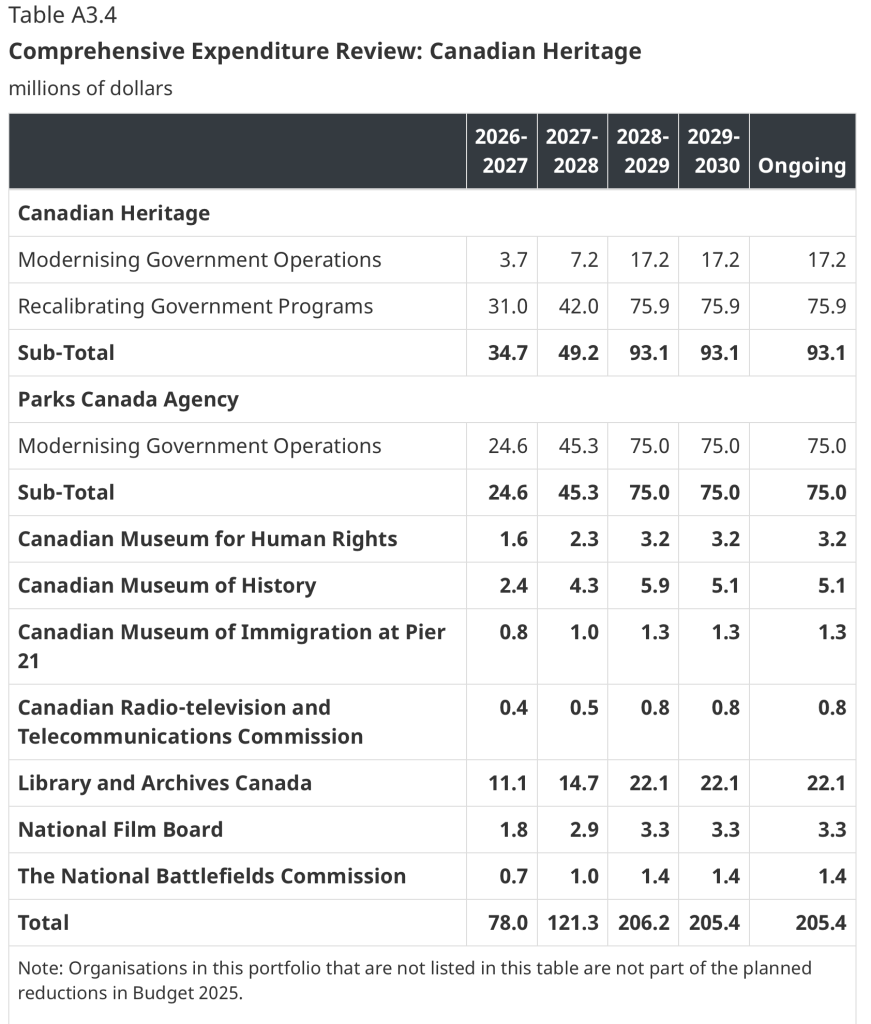
That might be because Bouchard doesn’t know yet if the Prime Minister intends to keep his campaign promise to boost CBC funding by 11% this year, and more over time. That was complicated by this week’s disclosure that as part of its spending review the Carney government has asked CBC to submit a draft plan for deep budget cuts in 2026-2027.
Or it could be that Culture and Identity Minister Steven Guilbeault is still working on a new bill to implement election promises of better CBC governance and long-term financial independence that would require amendments to the Broadcasting Act.
MediaPolicy asked the CBC if there are any significant announcements coming and was told to expect something in the Fall. A similar inquiry to the Minister’s office did not get a reply in time for publication.
***
AI-generated image
This past week TikTok ramped up political pressure to convince the Carney government to undo the federal government’s 2024 decision to ban TikTok the company from Canada, but not the app.
The Liberals’ decision on TikTok followed US legislation to ban both the company and the app on the grounds of national security. Subsequently it was given a stay of execution by Donald Trump in his effort to force a sale of the Chinese-owned social media company to American interests.
Like the US law, the Canadian ban is based on undisclosed and/or hypothetical national security concerns about data security and the distribution of malevolent content, sponsored by China.
TikTok says it is winding up its Canadian operations to comply with the federal ban. Meanwhile it has bought media advertising pleading its case to the Canadian public, posted a posturing letter asking for a meeting with Industry Minister Melanie Joly, planned layoffs of its 350 Canadian staff and withdrawn its funding of Canadian creator development and event sponsorships.
Aside from the sponsorship largesse, TikTok is a major distributor of Canadian cultural content. According to Scott Benzie of the creator group Digital First Canada, TikTok has engineered its algorithm to be a heavy distributor of local content for users that activate the location service on the app, perhaps as high as 50% of “Nearby” and “For You” video recommendations. That’s something that foreign streamers won’t commit to.
With a lawsuit against the federal government on the go, TikTok says Ottawa has taken “measures that bear no rational connection to the national security risks it identifies.”
For its part, the government insists its investigation under the Investment Act in 2023 revealed “clear and legitimate concerns.”
When the ban was announced in November 2024, then Innovation minister François-Philippe Champagne said “I’m not at liberty to go into much detail, but I know Canadians would understand when you’re saying the government of Canada is taking measures to protect national security, that’s serious.”
The entire mess feels a lot like the Facebook ban on Canadian news even though the circumstances are quite different.
Michael Geist has published several articles on the TikTok ban, including this one, which apart from the familiar Liberal-bashing on digital policy I found persuasive (and it’s worth marking the occasion).
Another angle on the problem is something every Canadian is painfully aware of these days: when the American elephant rolls over, we can easily get crushed. And the crushers run the White House.
The troubling question is who isn’t cynical about the merits of the American ban of TikTok in the first place? Or that we are just obediently playing a vassal state by following suit?
The answer to the dilemma is for Carney to publicly defend the ban with as much disclosure of the national security threat assessment as possible, or to repeal it.
***
The Big Tech/Big Hollywood court challenge to mandatory cash contributions to Canadian media funds might get an answer from the Federal Court of Appeal before Labour Day.
Until then, the MediaPolicy boycott of streamer subscriptions (Netflix, Amazon and AppleTV) continues. I don’t miss two of them.
In their absence, I’ve made better use of my CraveTV subscription. That allows me to recommend an excellent new Canadian series, Empathie, a sad and funny drama set in a Montréal mental health facility.
***
If you would like regular notifications of future posts from MediaPolicy.ca you can follow this site by signing up under the Follow button in the bottom right corner of the home page;
or sign up for a free subscription to MediaPolicy.ca on Substack;