Hola from the centre of the universe, Toronto, where the biggest snowfall since 1999 (50 cm) has everyone on the watch for the army to be deployed, shovels in hand.
Here are a few things happening in Canadian media policy:
Canadian culture and the 2026 CUSMA trade talks
I’m going to be giving a ten-minute explainer on this topic at the Digital Media at the Crossroads annual conference on February 6-7 in snow-bound Toronto. The program and registration link is here.
No foolish predictions from me other than taking note that the US trade agenda goes far, far beyond Canadian cultural legislation such as the Online Streaming Act, the Online News Act or a potential online harms bill.
US chief negotiator Jamison Greer is floating the idea of a North American customs union which sounds a lot like double-digit Trump tariffs in exchange for Washington blocking Canadian trade diversification.
Regarding the Canadian streaming legislation that Netflix wants Greer to kill, last week MediaPolicy published a guest column from Peter Grant on how the CRTC might extend an olive branch to Netflix by allowing foreign streamers (and Canadian broadcasters) a CanCon credit for licensing and distributing Canadian shows abroad.
MediaPolicy also posted a book review of Richard Stursberg’s Lament for a Literature, a call to revive the nearly dead Canadian-owned book publishing industry. The Globe’s John Ibbitson also reviewed it. Stursberg’s “what is to be done” menu of policy action requires CUSMA’s “cultural exemption” of CanCon to survive the trade talks.
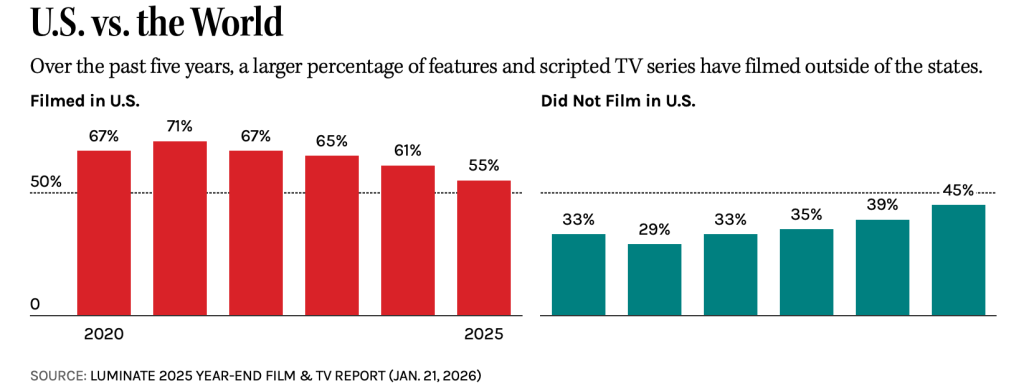
The context of this is the retrenchment of streamer spending on new productions since 2022. The Hollywood Reporter has fresh data about where US shows are being made and the only thing that is indisputable is that California is hurting and in an incremental way non-US foreign location shooting is taking a bigger share of a reduced production market . Canada’s volume is steady over time; UK and Irish shooting has gone up.
Within the United States, a game of musical chairs has resulted in New Jersey and New York gaining business, while Georgia and California have lost work.
The Trudeau government’s 2024 ban on the TikTok’s business activity in Canada (but not the app itself) followed a bipartisan Congressional ban in the United States on the grounds of national security.
Now that the Trump administration has completed the transition of the Chinese-owned TikTok into a separate US company, controlled by American interests with a minority Chinese ownership stake, the national security concern has evaporated in both the US and Canada.
Our federal government has agreed to a judicial consent order that reinstates TikTok’s right to carry on business in Canada (and presumably jump starts its investments in Canadian creators).
The odd thing: it’s the Chinese TikTok company, not the American-Chinese joint venture, that will operate in Canada. But the national security concern, which was never revealed by the federal government, has disappeared.
***
If you would like regular notifications of future posts from MediaPolicy.ca you can follow this site by signing up under the Follow button in the bottom right corner of the home page;
or sign up for a free subscription to MediaPolicy.ca on Substack;
This US President wants high tariff walls to keep Canadian goods out of America and to grab Canadian jobs. Going the other way he wants open borders and unregulated markets for US exports such as streaming services and social media apps.
Given the thousands of Canadian manufacturing jobs and family farms at stake in the trade talks, and the inevitable reprise of 51st state threats —-“we just have to have Greenland Canada”— it may seem parochial at first to focus on media policy. But with 660,000 jobs in our media and cultural sectors, focus I shall.
Here are some of the upcoming headlines.
The CUSMA trade talks
An internet meme recently popped up in my X feed that put two contemporaneous statements from Google spokespersons next to each other.
In the first, Google addressed the digital regulators of a foreign government —-in this case the European Union—- with the utmost respect. In the second statement to a much different forum, Google demanded US Congress stomp all over the EU.
So no surprise, when CUSMA talks begin the US is going to come loud and hard against Canada regulating media in our own country, whether it’s the Online Streaming Act C-11 or the Online News Act C-18. I don’t have a high degree of confidence that PM Mark Carney won’t flush them like he did the carbon tax, the digital services tax, the emissions cap, etc.
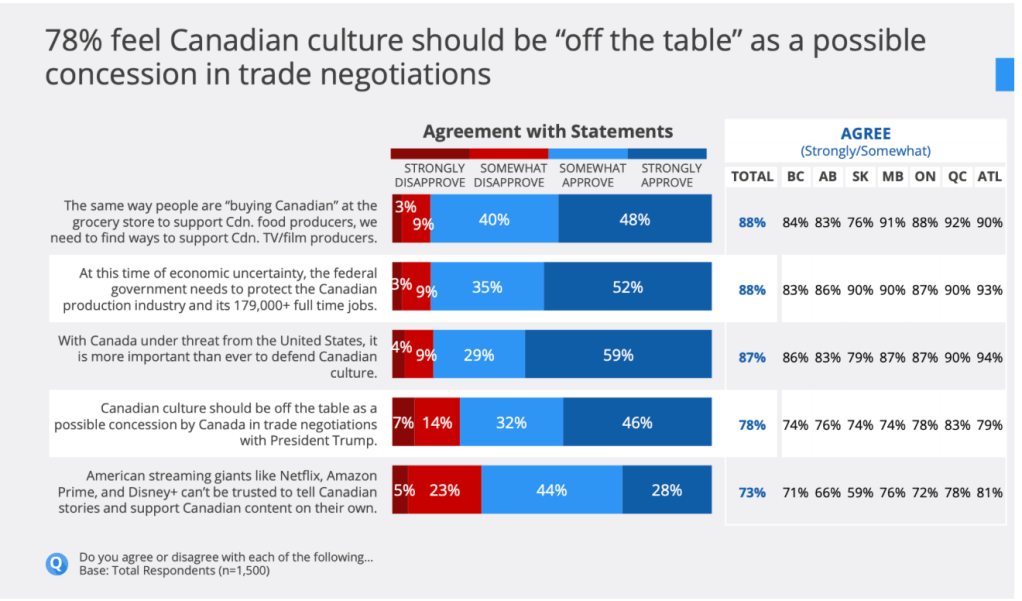
It’s not that we shouldn’t reconsider Canadian media policy any time we want, but it would be better to do so because Canadians wish it. The polls say we don’t: at least not during the trade talks.
What’s at stake here is not only those two pieces of legislation, C-11 and C-18, but our right to take future action on any media policy that might cost the tech bros money or convenience. Think AI. Or online harms.
I make no prediction. On the one hand, as a banker and a corporate lifer I think Carney would happily throw cultural regulation under the bus.
On the other, if he does that he can kiss his Québec caucus goodbye. Or, the NDP might find its gag-point and bring down the Liberal minority government.
The Commission has three big decisions to release in the new year, arising out of the Online Streaming Act (having missed the December 2025 deadline set by cabinet).
The most consequential is the second instalment of the aforementioned CanCon video streaming ruling which will deal with issues that could carve out regulatory conditions for a generation:
How much money will Netflix and the California streamers have to spend on Canadian shows?
Will the Commission reduce CanCon spending for Canadian broadcasters (it will) and by how much?
Will the Commission swap out obligations for Canadian broadcasters to make CanCon dramas in favour of underwriting their unprofitable news operations?
The Federal Court heard the streamers’ appeal against the $200 million levy in June and judgment is overdue.
The legalities of appeal are narrow and amount to whether the Commission dotted the i’s and crossed the t’s. They don’t allow the streamers to easily challenge the CRTC’s wisdom on the size of the levies, nor what they are spent on (i.e. CanCon dramas and broadcast news).
Still, if the Court strikes down the levies on technical grounds just before the CUSMA talks begin it will significantly assist American negotiators or, if our Prime Minister’s climb down on the digital services tax is any guide, assist him in dumping trade ballast.
Another wild card is Québec’s new streaming law, Bill 109. It’s the CAQ’s claim to regulate streamers in case the federal CRTC disappoints on French language content on screens and AirPods.
When CUSMA talks begin, Québec’s bill will be sited in the same American crosshairs as the federal C-11. With a Parti Québécois election victory in the offing, and possibly another referendum on separation we could hear a lot more about this provincial law.
Next, we can speculate on whether Global TV News makes it to 2027 in one piece. Its parent company Corus refinanced its debt this year and managed to land some new television programming to replace the profitable Disney and Discovery content that Rogers poached from them.
But Corus still lives hand to mouth, and the news division loses a lot of money. The Shaw family ownership can’t find a Canadian buyer. Even Mark Carney wouldn’t dare exempt the 15-city Global News network from Canadian ownership rules and watch Fox or one of the other US television chains march in and set up shop in every major Canadian city.
The last question mark is a boutique policy issue but carries huge consequences for the survival of the Canadian film and television industry. The CRTC’s ruling that allows US streamers to own majority copyright in their new Canadian dramas turned four decades of Canadian cultural policy on its head.
The domino that might fall is whether the Liberal government would harmonize the CRTC’s new rules about the ownership of intellectual property in Canadian dramas with its own rules that govern federal subsidies to Canadian programs. The CRTC ruling invites American trade negotiators to demand it.
Online Harms
If Justice Minister Sean Fraser tables an online harms bill in Parliament, it will be time for some soul searching by all of us.
How seriously do we take the online harms of race-baiting and anti-semitic hate, humiliation of women and girls, and harm to our adolescent and teenage children? Are we virtue signalling our concern or do we really want to do something about it?
You can see this debate play out in its beta-version with Bill S-209, tabled by an independent Senator. That bill is legislation that would require porn sites and social media apps to exclude minors from accessing hardcore porn by using third party age verification services.
Again, the harm is obviously serious, but how seriously do we take the harm? Even though the risks are remote, how much are we willing to gamble the privacy of porn site visitors and social media followers whose identities might be hacked and exposed?
All eyes will be on Australia which has grabbed global attention by banning teen access to social media, a move that requires age verification of adult social media accounts.
AI
It would be guesswork to predict what happens next with the amazing explosion of AI technology, its impact on economic growth and social harm, and government efforts to regulate it.
The most pressing policy questions are in the hands of AI Minister Evan Solomon who has frequently telegraphed his reluctance to impede the development of Canada’s fledgling AI industry by “over indexed” regulations.
But neither has Solomon warmed to the Big Tech campaign to create an American-style “text mining” exception in Canadian copyright law. If he did, he would be sinking any chances that Canadian news organizations and cultural creators have to force AI giants into paying license fees for scraping online content to feed their products. Hugh Stephens has an excellent summary of the current state of affairs, here.
The worst case scenario for content creators is very bad but grimly not a lot worse than the best case scenario.
Even if AI companies submit to paying license fees —-and there have already been a few licensing agreements struck between AI companies and a select group of big news publishers and content creators—– it’s entirely possible that in the next five years AI will so disrupt the direct interface between news organizations and news consumers that news outlets will pine for the days when Google and Meta were taking their hyperlinks for free but at least sending audience traffic their way.
Either the US or Canada may raise AI commerce or the mitigation of its harms at the CUSMA bargaining table. The Trump administration appears to be all in for making American AI into the global masters of the Internet.
But as many have pointed out there is a back eddy at state-level where MAGA politicians are as concerned about AI harms as anyone.
If the Prime Minister gives away the media policy store to the Americans, what the CBC does becomes even more important.
Bandwidth
Whatever the government wants to do on media and cultural policy in 2026, bandwidth could be a problem.
I don’t mean download speeds. I mean the administrative bandwidth in the federal Heritage Department. Bureaucrats will be on call 24/7 during trade talks; the department is already charged with developing legislation to overhaul the governance of the CBC; and there are any number of quiet policy reviews and projects going on.
This could be the busiest year ever for media and cultural policy and the unhappy timing of Steven Guilbeault’s exit from cabinet means that we have a rookie Heritage minister, Marc Miller (who may or may not be as invested in C-11 or C-18 as Guilbeault).
Compounding that lack of experience is Carney’s decision to shuffle the deputy ministers who do the grinding work of getting things done in government. Long time Heritage deputy Isabelle Mondou just got shuffled to the Privy Council Office. Good luck to the new guy, Francis Bilodeau.
***
If you would like regular notifications of future posts from MediaPolicy.ca you can follow this site by signing up under the Follow button in the bottom right corner of the home page;
or sign up for a free subscription to MediaPolicy.ca on Substack;
This week the US Trade Representative Jamieson Greer told US Congress what American stakeholders want from CUSMA trade talks with Mexico and Canada in 2026.
Greer’s report was an opportunity to be performative about US interests. As a member of President Trump’s cabinet, he wasn’t offering a blueprint for trade negotiations or even hinting at what’s the most important to his boss.
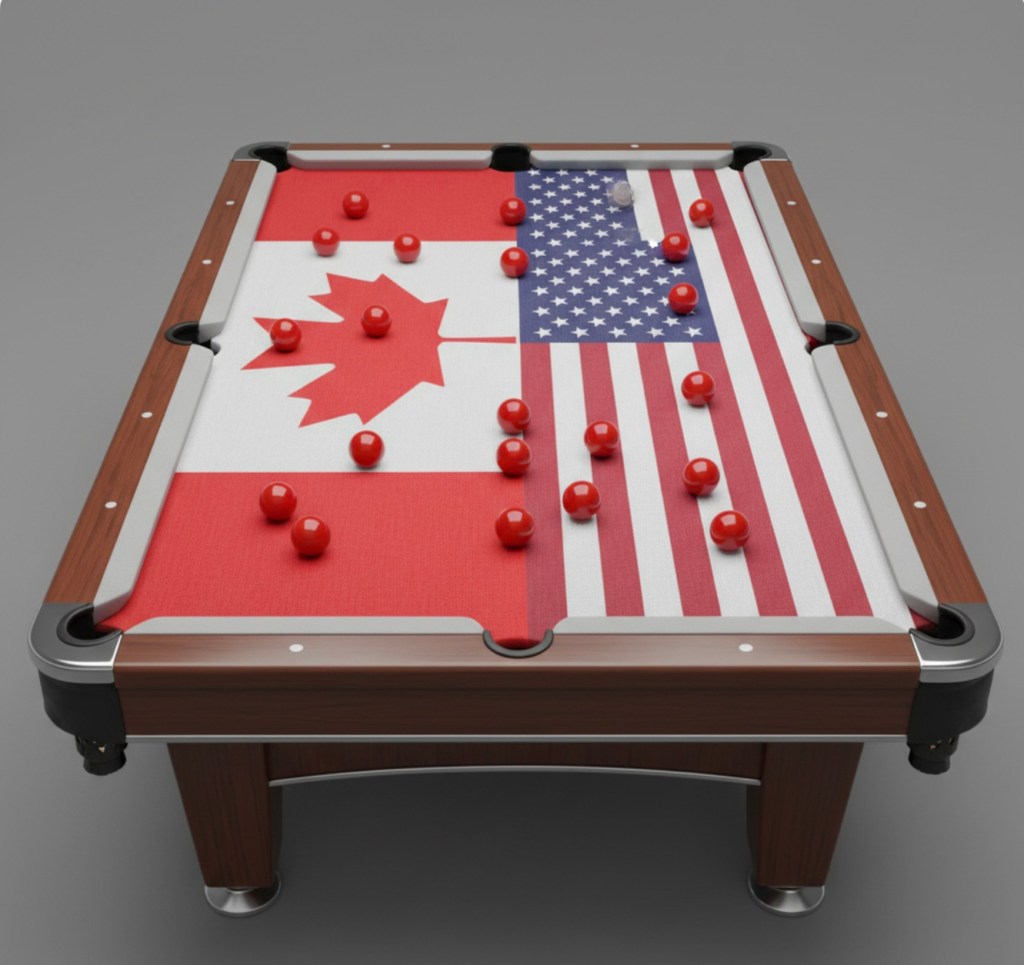
Only Donald Trump knows what he really wants. Does he want to run the table and steamroll Canada and Mexico?
Well, imagine a snooker game with a full rack of balls on the felt. What strikes you immediately upon reading Greer’s report is how many meaty issues there are in a long list of industrial sectors.
For those concerned about Trump’s cultural hit list, you would be surprised how brief and perfunctory Greer’s comments were.
As we’ve known for some time, the US streamers hate our Online Streaming Act. Google and Meta hate our Online News Act. Prime Minister Mark Carney already gave away our digital services tax, the thing the US companies hated the most.
On the other hand, the American companies canvassed by Greer like the Digital Trade chapter in the CUSMA trade agreement just fine.
As a very permissive set of trade rules, it may be up to Canadian negotiators to carve out of the Digital Trade provisions a wider scope to exercise our sovereign right to set the terms of AI services.
***
In case you missed it, read my rant about the CRTC’s ruling on copyright and intellectual property in Canadian video content.
Sounds like a snoozer when I describe it that way, but Canadian ownership of CanCon copyright is central to whether the federal government’s Bill C-11 the Online Streaming Act accomplishes what it was meant to do.
My rant was that the CRTC effed it up. The Canadian Media Producers Association appears to agree: it just filed a court appeal against the ruling.
Mere copyright “in the title” of a show isn’t that, says the CMPA.
In the words of the statute, the Commission is supposed to consider whether Canadian producers enjoy “a right or interest in relation to a program, including copyright, that allows them to control and benefit in a significant and equitable manner from the exploitation of the program.”
That means revenue, in other words a stake in the profit earned by Canadian shows from distribution and other monetization opportunities until the lemon is squeezed dry.
***
This week the board of Warner Brothers Discovery rejected Paramount’s hostile takeover bid. That leaves the winning suitor Netflix as Hollywood Rex for now, but WBD shareholders vote on Netflix’s $82 billion offer in January.
Paramount isn’t rushing out an improved bid: CEO David Ellison is making the case to WBD shareholders for his all-cash bid, arguably better chances than Netflix of clearing anti-trust hurdles, and the fact that Netflix’s offer for the WBD studio and streaming assets doesn’t include taking WBD’s lagging television assets off the hands of shareholders.
In the meantime, Donald Trump’s son-in-law Jared Kushner withdrew from Paramount’s financing consortium. Then business analysts questioned whether Larry Ellison’s money was good: his participation in his son David’s takeover bid is through a revocable trust, subject to change by Ellison senior. (Update, 22/12/25 – Ellison Sr. responds with personal guarantee).
Almost unnoticed in all of this, Pa Ellison is now officially a part-owner of TikTok-USA after the Chinese company ByteDance completed the sale of its American operations to a consortium of US interests, including Ellison.
***
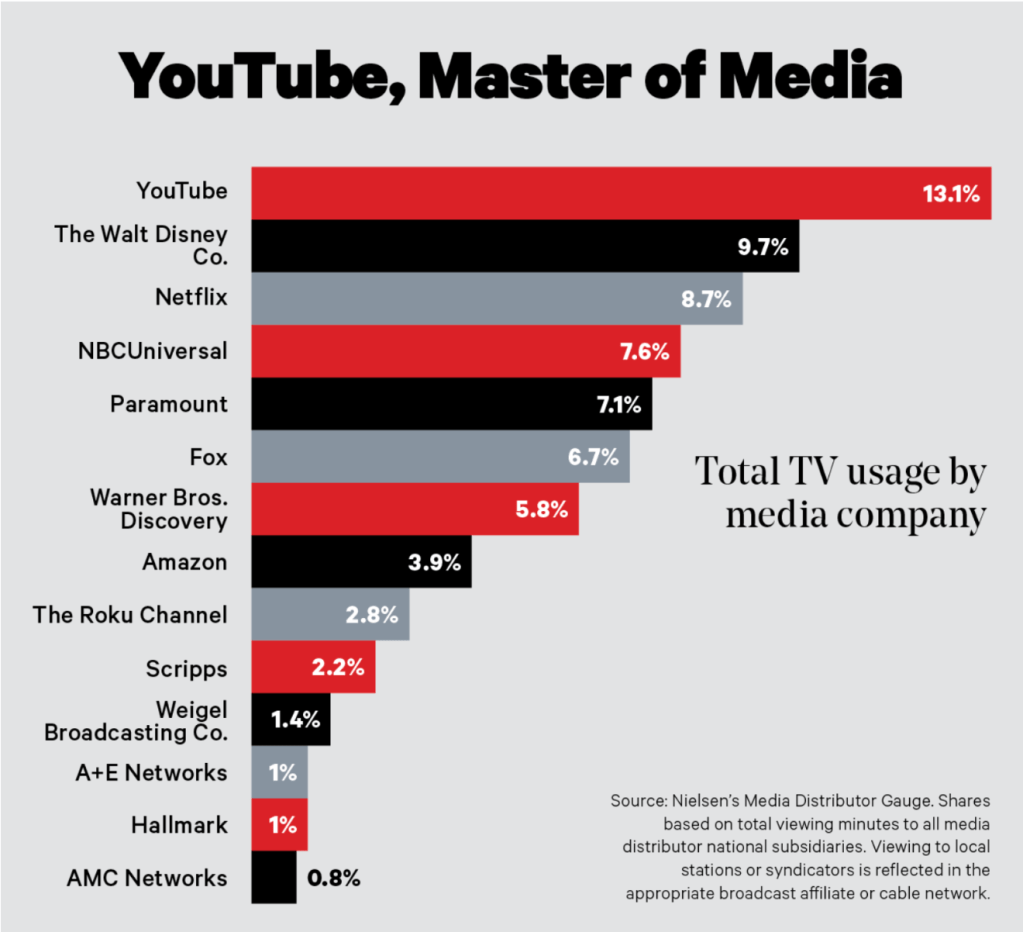
Netflix may be the undisputed king of streaming. But YouTube is the lord of video consumption.
YouTube’s market dominance is a reflection on the growing popularity of short-form video of course. Yet not long ago I posted about YouTube’s plan to go all out into bidding for the rights to big events in premium, long-form video.
Last week YouTube scooped the exclusive global rights to the Oscar awards, beginning in 2029. That seems like a big deal for boomers raised on Hollywood glamour, although we could remind ourselves that at 20 million viewers, the Oscars trail the Super Bowl (130 million) and Game 7 of the World Series (50 million).
No word yet on the consequences for Bell Media’s CTV network which has held the Canadian distribution rights for the Oscars since 2003.
***
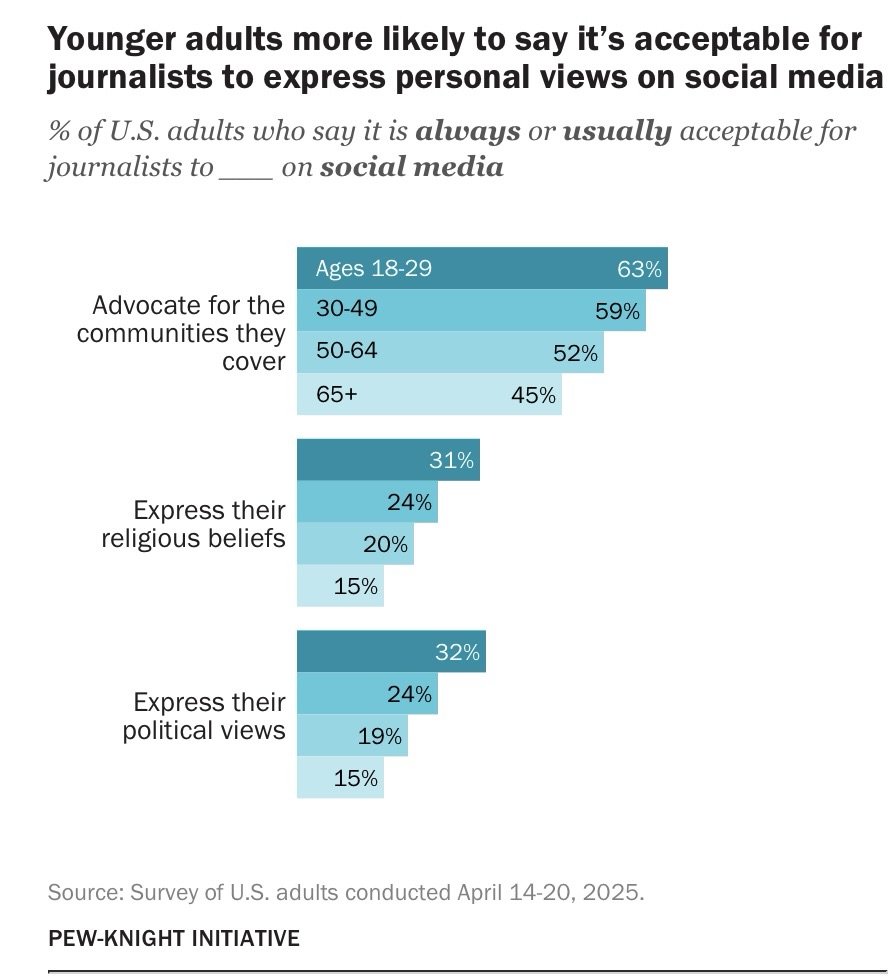
There’s a new American opinion poll published by Pew Research which rattled my optimism about the future of news journalism.
According to the poll, young people are more likely than older Americans to trust news influencers, concede a wide definition of who they recognize as a journalist, and are more likely to find it acceptable for journalists to be advocates for a cause and sport their ideological colours brightly.
***
The Washington Post’s newest AI widget (proprietor Jeff Bezos holds a minority interest in the AI app Perplexity) is in Beta. It has a long, long way to go.
A six minute daily podcast features two AI agents summarizing WAPO’s top three stories of the day. You can customize your topics or WAPO’s algorithm will figure you out.
Other than saving on two journalist salaries, the added value of this AI widget is a mystery. It’s a downmarket product offering from an upmarket news outlet.
Real life podcasters at the NYT Daily, fear not.
***
If you would like regular notifications of future posts from MediaPolicy.ca you can follow this site by signing up under the Follow button in the bottom right corner of the home page;
or sign up for a free subscription to MediaPolicy.ca on Substack;
This week’s blockbuster news is that Netflix edged out Paramount to buy Warner Brothers for $82 USD billion. The deal immediately depleted the supply of adjectives at the disposal of media analysts.
If the deal closes as scheduled in late 2026, Netflix buys up the world’s biggest movie archive and keeps it out of the hands of a major rival with the second biggest (Netflix is number three).
Netflix is paying a heavy price tag and arguably overpaid (you know who pays for inflated merger valuations, it’s subscribers and workers). Netflix goes from its status as the streaming industry’s 900-pound gorilla to, I dunno, T-Rex stature?
The public commentary on the deal is mostly doomsaying.
It speeds up the chiselling of the tombstone for the theatrical release industry.
In a press release, Netflix CEO Ted Sarandos said shareholder value would flow from adding HBO and the full Warner Brothers archive to the Netflix “best in class streaming service:” his pro forma commitment to theatre release was relegated to a subordinate sentence clause.
But if the merciless dispatch of theatrical-release seems inevitable, and just the law of the marketplace jungle, what is of long term concern is the anti-competitive effect on the pipeline of big-budget premium video entertainment. The Globe & Mail’s Barry Hertz has a good analysis here.
The Netflix deal is a prime candidate for anti-trust review by the Trump administration (especially as Netflix outbid Friend-of-Trump Paramount).
That review could go in any direction but things to watch for include (a) Trump reviving his threat to levy tariffs on foreign movies and the offshore shooting of Hollywood blockbusters, and/or (b) using the anti-trust hammer to get something that he personally wants, which could be commitments to US-based production or some vanity trophy we can’t imagine right now.
It’s not that Sarandos can’t see that coming. In his press release he said the acquisition would allow Netflix to expand its US based production, a gimme that doesn’t commit him to a rate of new releases equal to “Netflix plus Warner Brothers” but only “Netflix plus a dollar.”
Any Trump-driven re-shoring of studio production could hurt the two offshore leaders of Hollywood production, the UK and Canada (and hurt Hollywood too, but that’s a longer discussion).
Beyond that, the effect on Canadian-owned broadcasting could be massive. Netflix is buying Warner Brothers’ Home Box Office streaming service and catalogue which may or may not be integrated into the Netflix platform, once subscription pricing is figured out. The press release suggests HBO content will be on the Netflix platform, at least in the US.
Here in Canada, there is no HBO streaming service and Bell Media holds the exclusive license to distribute HBO on the only Canadian streaming service of consequence, Crave TV.
You would have to question whether Netflix has any interest in continuing that Canadian licensing arrangement when it expires and, in fact, Netflix has an excellent opportunity to severely wound its only Canadian-owned competitor.
Without that profitable HBO content, Bell’s ability to keep funding Canadian content takes a big hit.
***
Canada has a new Heritage minister, Marc Miller.
That’s the fallout from Steven Guilbeault’s cabinet resignation over Prime Minister Mark Carney scrapping the Trudeau/Guilbeault policies on oil production, emissions, pipelines, oil tankers and clean energy regulations.
Miller continues a long tradition of the Liberals appointing an MP from the island of Montréal to the Heritage portfolio.
But of course Miller is the first anglophone the Libs have picked for that job since Hamilton’s Shiela Copps —-who was born ready to butt heads with the US on cultural sovereignty. She did the job from 1996 to 2003 under Prime Minister Jean Chrétien.
The feisty Miller is prone to speaking with candour, as a rule. That’s already got him into a spat with CAQ premier François Legault who didn’t like Miller insisting on making a distinction between “the decline” and “fragility” of the French language in Canada and Québec. The Bloc dutifully piled on.
Guilbeault was the federal champion of Canadian and French language content in Québec and as the new Heritage minister no less will be expected of Miller. His life will get very interesting in about six months when CUSMA negotiations begin.
Will Miller become the political reincarnation of Shiela Copps? It’s up to Mark Carney, just as it was up to Jean Chrétien.
***
It looks like the CRTC’s investigation into whether Meta is selectively enforcing its made-in-Canada ban on news content has come an end. The CRTC’s brief discharge letter to Meta was published last week.
You can still find news items on Facebook and Instagram in Canada, despite Meta’s avowal that it banned news to take itself outside of the scope of the compulsory licensing of “news content” in the Online News Act.
Meta must have satisfied the Commission staff that it is sticking to its ban by taking down news items posted by Canadian users and by deleting user screenshots of articles. If you want to know how the Commission reached its conclusion, you won’t find it in the letter.
What remains unresolved, or perhaps resolved only to the Commission’s private satisfaction, is Meta permitting posts from news outlets like Narcity and The Peak who successfully applied to Meta for what they describe as “exemptions” from the news content ban.
Without more transparency, one can only guess if Meta’s exemption of hand picked news outlets violates the statutory prohibition against digital platforms discriminating for or against selected news outlets.
In the case of Narcity, its publisher claimed that Meta granted an exemption because Narcity was refused certification for federal journalism labour tax credits on the grounds that it doesn’t publish enough original news on current affairs.
But certification for federal subsidies program doesn’t mean that a news outlet isn’t producing some news content, or pieces of news content, as defined by the Online News Act, which Meta says its banning to avoid paying for it.
The Peak also recently announced that Meta gave it “an exemption” and I invite you to have a look at the news articles it’s allowed to post on Facebook and Instagram.
If you go looking, keep in mind that the “news content” that Meta is supposed to be banning in order to escape the gravitational pull of the Act includes “any portion” of news content.
The Commission’s original inquiry into the news ban appears to have been its own idea, so the fact that it hasn’t published its reasons at any length is not a total surprise. No Canadian news organization has filed a complaint.
***
If you would like regular notifications of future posts from MediaPolicy.ca you can follow this site by signing up under the Follow button in the bottom right corner of the home page;
or sign up for a free subscription to MediaPolicy.ca on Substack;
Earlier this week MediaPolicy published an interview with the chief spokesperson for Canadian broadcasters, Kevin Desjardins. The President of the CAB pitches his case for a new regulatory bargain between Canadians and the 68 private sector media businesses that form his Association.
However the CRTC’s hearings on said regulatory bargain are now on hold. As expected the Commission has paused three key Online Streaming Act files for the duration of the federal election period: video content policy, audio content policy and gatekeeping in media distribution.
The media policy scene now switches from the pageantry of CRTC hearings to the battlefield of electoral politics. The contestants in the run up to the April 28th election will no doubt spark debate over media policy. We’ll have to wait for their official election platforms.
But a reasonable prediction is that media policy won’t get much traction beyond the political class —with the exception of CBC funding, which will be consequential— while the leaders and voters will be focussed on whatever Donald Trump wants us to be, for example 25% auto tariffs and more coming next week.
In the coming weeks I will try to address both the trade war (if it affects Canadian media and cultural sovereignty) and media policy.
As for the trade issues, I was unsuccessful in provoking the CAB’s Desjardins on what Trump means for Canadian broadcasting. He only speculated that a tariff-induced recession would affect advertising revenues for everyone, including broadcasting.
That’s a bit like refusing to say “Voldemort.”
The main lobby groups for Hollywood and Big Tech have been demanding the White House begin a scorched earth trade war against Canada ever since Parliament enacted the Online Streaming Act and the Online News Act in 2023, followed by the much delayed Digital Services tax in 2024.
Those expected industry demands were dutifully transcribed into formal warnings delivered to Canada from the US Trade Representative (a member of the Biden cabinet) that the US considered Canadian legislation might violate our CUSMA free trade deal. But you will note that the Biden White House did not act on those threats.
Long before Donald Trump got the idea of launching illegal tariffs in defiance of the CUSMA agreement, US trade strategy included a Break-Glass option of just ignoring the cross border trade agreement and launching tariffs against Canada under section 301 of the US Trade Act.
The last time occurred in 1999 in response to Canadian legislation impeding split-run magazines like “Sports Illustrated Canada” that were trade dumping into our domestic market. At least in that case, the US had won the trade litigation at the World Trade Organization before it set a deadline for section 301 sanctions against Canadian steel, plastics, and wood products.
This time around, Hollywood and Big Tech definitely have their “Break-Glass” man in the White House.
The official spokesperson for Big Tech, the Computer & Communications Industry Association (CCIA), has been filing briefs on Capitol Hill and with Trump’s Trade Representative demanding retribution for Canadian legislation.
Note to file, Canada’s Shopify belongs to the CCIA.
CCIA briefs are always packed full of allegations that foreign countries are violating this or that chapter of trade agreements. The better to load up the bargaining table. For the benefit of US legislators, CICA’s rhetoric is salted with bewildered outrage that foreign legislatures are regulating global American enterprises.
The trade allegations should not be dismissed out of hand just because they are inflammatory. But the CCIA sometimes loses touch with reality. In 2023 a CCIA brief informed US legislators and the US Trade Representative that Canada had once agreed that in exchange for the US not retaliating against Canadian regulation of US television access to our domestic market we would never regulate broadcasting over the Internet. It was a brazen fabrication. And the Biden White House no doubt ignored it.
The CCIA’s opening salvo in the anticipated Trump trade war was delivered this past December in a 238-page aggregation of Big Tech’s trade allegations against 53 countries and the 27-state European Union.
Although trade deficits and surpluses are irrelevant to whether trade agreement have been breached, the CCIA got right to the politics by pointing out that “digital services and goods represent a key driver of US export power, with the technology industry delivering a hefty digital trade surplus of $266.8 billion for the United States in 2023.”
Put plainly, Big Tech does some heavy lifting in keeping the overall US trade deficit lower.
In a new filing in January, Big Tech put its emphasis upon America’s interests in intellectual property that, says the CCIA, is impacted by “discriminatory non-tariff barriers” (i.e. regulation) in Canada, Australia, New Zealand and the European Union.
The point of course is not whether such “non-tariff barriers” exist, it’s whether they are truly discriminatory against US companies competing in foreign markets and violate the trade agreements that the US negotiated, signed and ratified with these countries. “Non-tariff barriers” may be the pretext for Trump tariffs next week.
In February, the CCIA got down to brass tacks, providing the US Trade Representative with its list of priorities for trade action.
Top target: the Digital Services taxes imposed by 14 countries, including Canada.
Next: news licensing payments to journalism outlets (Google money) in Australia, Canada, and the EU.
Next: for US video and music streamers, domestic content requirements and cultural cash levies in Canada, France, and other EU countries. In other words, eliminating the Online Streaming Act root and branch.
Whether any of that fits into He-Who-Must-Not-Be-Named’s plan to hit Canada and the rest of the world with “reciprocal tariffs,” we may see that on April 2nd.
***
Canadian legislators aren’t the only politicians with a taste for staging show trials of public broadcasters.
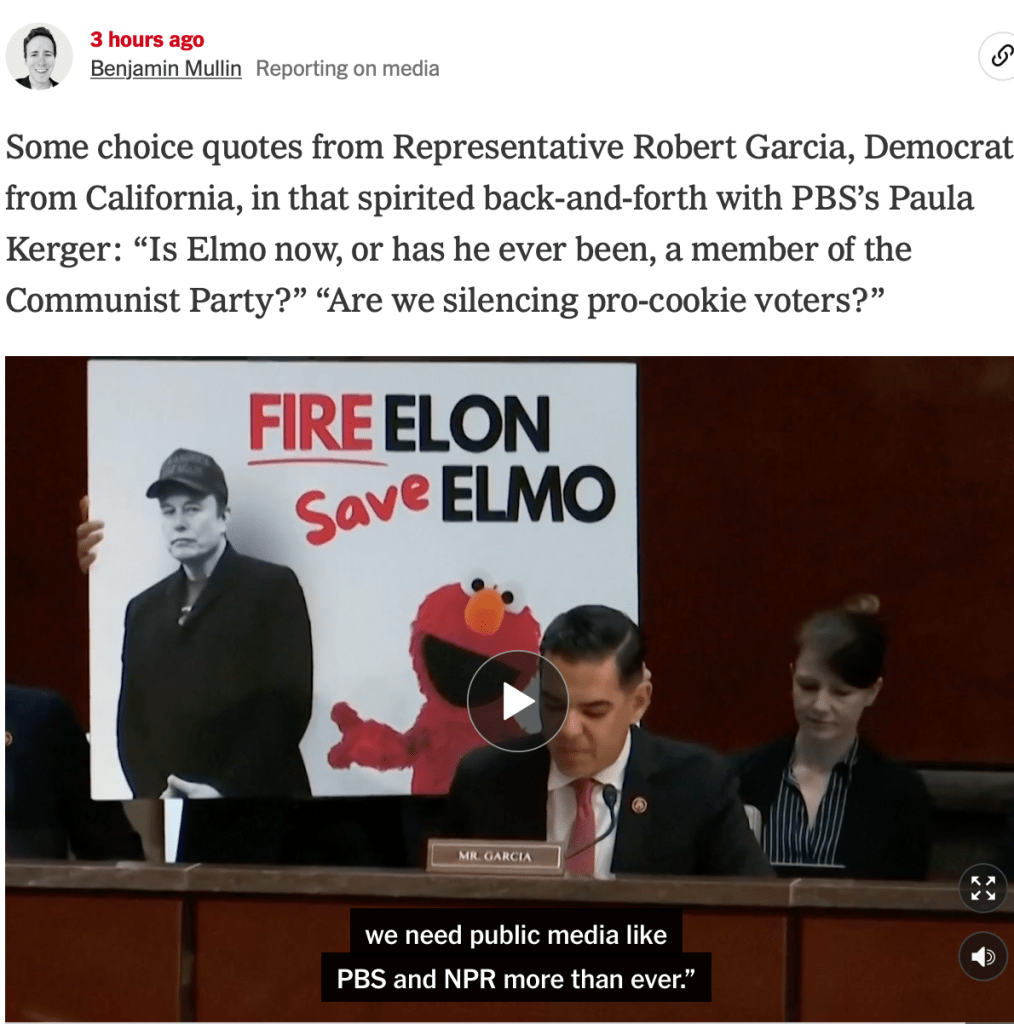
Yesterday MAGA ultraMarjorie Taylor Greene convened US Congress’ new Subcommittee on Delivering on Government Efficiency with subpoenas issued to PBS and National Public Radio.
The committee session was officially dubbed “Anti-American Airwaves.” No hidden agendas for Greene: “I think the important thing for Americans to ask is: Is this where our taxpayer money needs to go? To extremely left-leaning broadcasting and political bias that doesn’t represent all of America?
“[PBS and NPR are] radical left-wing echo chambers for a narrow audience of mostly wealthy, white, urban liberals and progressives who generally look down on and judge rural America.”
Greene did score a couple of points on the PBS refusal to cover the Hunter Biden laptop story (apology made) and the NPR chief’s pre-employment tweets calling Donald Trump a “racist and a sociopath” (also apology made).
It wasn’t all one way traffic as the Democrats on the committee had their turn. Theatre-goers were treated to political satire from Californian Congressman Robert Garcia.
Another Democrat, Jasmine Crockett of Texas, accused Republicans of the right-wing version of Cancel Culture.
“Free speech is not about whatever it is that you all want somebody to say,” she said. “And the idea that you want to shut down everybody that is not Fox News is bullshit. We need to stop playing because that’s what y’all are doing in here. You don’t want to hear the opinions of anybody else.”
The speculation is that Republicans in control of both chambers of US Congress will finally make good on threats to eliminate federal support for public broadcasting, currently budgeted at $535 million USD annually. That’s about 1% of NPR’s combined private-public financing and 15% of the total PBS budget.
The influential non-MAGA conservative opinion columnist George Will recently advocated defunding, saying that government contributions to PBS and NPR funding are a subsidy for affluent audiences.
***
If you would like regular notifications of future posts from MediaPolicy.ca you can follow this site by signing up under the Follow button in the bottom right corner of the home page;
or sign up for a free subscription to MediaPolicy.ca on Substack;





 MediaPolicy.ca